Featured Industrial Products & Components
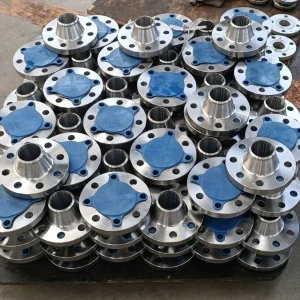
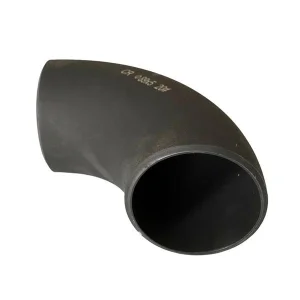
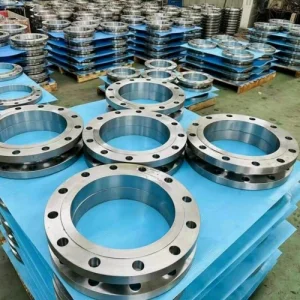
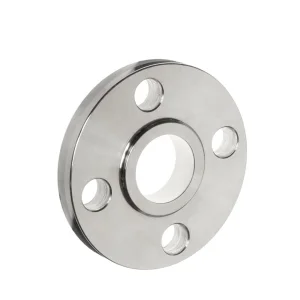
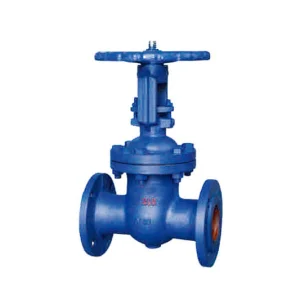
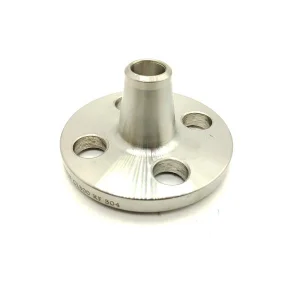
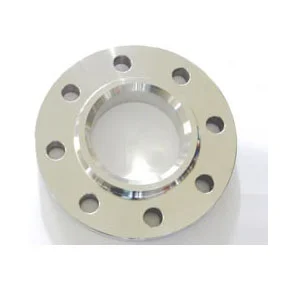
Factory-direct high-pressure butt-weld elbows, forged flanges, and process control valves manufactured to ASME/ANSI, EN, and JIS standards.
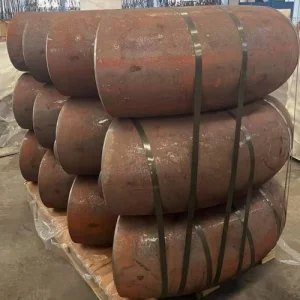
Industrial Steel Pipe Elbows: Technical Benchmark & Engineering Overview
An authoritative analysis of fluid-dynamic pressure drop mitigation, structural yield integrity, and dimensional tolerances under ASME B16.9 and EN 10253.
Fluid Dynamics & Pressure Loss Optimization
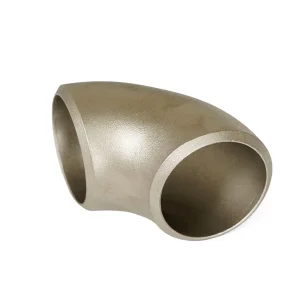
Steel pipe elbows serve as the primary directional change fittings in pressurized piping systems. The flow resistance coefficient (K-factor) of an elbow is dictated by its centerline radius-to-diameter ratio ($R/D$). Long Radius (LR) elbows ($R = 1.5D$) reduce dynamic frictional head loss by up to 35% compared to Short Radius (SR) elbows ($R = 1.0D$). In high-velocity fluid conduits—such as steam headers and natural gas compressor stations—minimizing turbulent eddy currents prevents localized wall thinning caused by flow-accelerated corrosion (FAC).
Metallurgical Classifications & Microstructure
Selection of elbow material must withstand internal hoop stress and thermal expansion cycles:
- Carbon Steel (ASTM A234 WPB/WPC): Standard killed steel utilized for non-corrosive hydrocarbons and medium-pressure steam up to 425°C.
- Low-Alloy Steel (ASTM A234 WP11/WP22/WP91): Chrome-Moly matrix offering superior creep rupture strength in supercritical thermal power boilers.
- Austenitic Stainless Steel (ASTM A403 WP304L/WP316L): Low carbon composition preventing intergranular chromium-carbide precipitation in acidic oilfield environments.
- High-Yield Steel (MSS SP-75 WPHY 52/60/70): Thermomechanically controlled processed (TMCP) steel for cross-country transmission pipelines.
Dimensional & Manufacturing Specification Matrix
| Elbow Type | Angle / Bend Radius | Manufacturing Norms | Material Grades | Bevel End Preparation |
|---|---|---|---|---|
| Seamless Butt-Weld Elbow | 45°, 90°, 180° (LR & SR) | ASME B16.9, DIN 2605, JIS B2311 | ASTM A234 WPB, A403 WP304/304L/316L | ASME B16.25 Plain/Compound Bevel |
| Large Diameter Welded Elbow | 30°, 45°, 60°, 90° Custom | ASME B16.9, GB/T 13401, EN 10253-2 | ASTM A234 WPB, MSS SP-75 WPHY 42-70 | Square Cut / Beveled with 37.5° Angle |
| Low-Temp Carbon Steel Elbow | 90° Long Radius (1.5D) | ASTM A420 / ASME SA420 | ASTM A420 WPL6, WPL3 (Charpy V-Notch -45°C) | Root Face 1.6mm ± 0.8mm |
| Duplex & Super Duplex Elbow | 45° & 90° LR Mandrel Pushed | ASTM A815 / ASME SA815 | UNS S31803 (2205), UNS S32750 (2507) | 100% Machined Precision Bevel |
| High-Yield Linepipe Elbow | 3D, 5D Induction Bends / Elbows | MSS SP-75, API 5L Annex F | WPHY 52, WPHY 60, WPHY 65, WPHY 70 | Custom Transition Counterbore |
Strategic Structural Advantages of China's Steel Pipe Elbow Industry
Why leading global EPC firms (Bechtel, Fluor, Technip Energies) source carbon, alloy, and stainless steel fittings from Cangzhou, Hebei.
Cangzhou Industrial Cluster Ecosystem
Known globally as the "Capital of Pipeline Equipment," Cangzhou houses over 70% of China's hot-pushing mandrel machine installations. This concentrated industrial hub provides localized raw material sourcing directly from tier-1 steel mills (Baosteel, TPCO, Shougang), minimizing intermediate freight logistics costs and guaranteeing rapid billet allocation.
Hot-Pushing Mandrel Technological Precision
Chinese factories utilize automated medium-frequency induction heating mandrel expansion systems. This method forces a raw seamless pipe preform over a horn-shaped die, expanding the diameter while simultaneously controlling wall thinning on the outer curve (extrados) and preventing wrinkling on the inner curve (intrados).
Cost-to-Performance Optimization
Through scale automation, fully integrated heat-treatment furnaces (normalizing, solution annealing), and localized CNC beveling operations, Chinese manufacturers offer a 30% to 45% cost reduction over European counterparts without sacrificing metallurgical integrity or standard compliance.
Global Industry Trends & Future Technological Innovations
How next-generation pipe fitting manufacturing is evolving to meet decarbonization, hydrogen transport, and deepwater extraction requirements.
1. Hydrogen-Ready Pipe Fittings & HIC Resistance
As energy infrastructure transitions toward blended green hydrogen transportation, steel elbows are engineered to resist Hydrogen-Induced Cracking (HIC) and Stress Corrosion Cracking (SCC). Modern China manufacturers utilize vacuum-degassed ultra-low sulfur steel billets ($S \le 0.002\%$) compliant with NACE MR0175 / ISO 15156 for wet sour environments.
2. Automated Ultrasonic Testing & 3D Laser Scanning
Replacing traditional manual ultrasonic testing, state-of-the-art Chinese plants implement automated Phased Array UT (PAUT) and full-body 3D laser dimensional scanners. This tech captures exact ovality, bevel alignment, and intrados/extrados wall thickness variances with micron-level accuracy before shipment.
3. Super-Heavy Wall Thickness Extrusion Tech
Extreme pressure installations (e.g., subsea manifolds operating at >10,000 PSI) require elbows with wall thickness exceeding 100mm. Advanced 3,000-ton hydraulic cold-forming presses allow seamless elbow production up to SCH XXS without requiring longitudinal seam welds.
4. Smart Digital Twin & QR-Coded Mill Test Reports
To eliminate fraudulent material certificates, top Cangzhou manufacturers laser-engrave unique QR codes onto every elbow body. Scanning the QR code instantly retrieves heat number chemical analysis, impact test certificates, and heat treatment charts certified under EN 10204 3.1 or 3.2.
Macro Industry Solutions & Engineering Scenarios
Tailored metallurgical and dimensional fittings engineered for harsh operating environments across key global infrastructure sectors.
Offshore Oil & Gas Topsides
Requirement: High marine atmospheric chloride resistance and structural weight reduction.
Solution: ASTM A815 UNS S31803 / S32750 Duplex elbows providing high yield strength ($>550 \text{ MPa}$) and PREN $>40$, reducing wall thickness while resisting pitting corrosion.
Ultra-Supercritical Thermal Power Plants
Requirement: Creep resistance at main steam temperatures up to 620°C.
Solution: ASTM A234 WP91/WP92 alloy elbows subjected to precise normalizing (1040°C) and tempering (760°C) heat treatment to guarantee martensitic microstructure stability.
Cryogenic LNG Receiving Terminals
Requirement: Low-temperature impact toughness at -196°C.
Solution: ASTM A403 WP316L or 9% Nickel steel elbows tested for Charpy V-Notch lateral expansion at cryogenic conditions, eliminating brittle fracture risks during boil-off gas handling.
Global Procurement & Third-Party Quality Verification Protocol
Standardized inspection checklists and mill documentation mandatory for international EPC contractors.
1. Material Traceability & EN 10204 3.1/3.2 Certification
Every steel elbow batch must be accompanied by full mill test records confirming chemical ladle analysis (C, Mn, P, S, Si, Cr, Ni, Mo, V) and mechanical properties (Tensile strength, Yield strength, Elongation, Hardness HBW/HRC). Independent inspection agencies like SGS, TUV, Bureau Veritas, or DNV verify heat treatments and countersign EN 10204 3.2 certificates for critical projects.
2. Dimensional & Bevel Inspection Standards
Strict conformity to ASME B16.9 tolerances is enforced:
- Off-center / Off-angle tolerance: Maximum 1.5mm deviation on 90° face alignment.
- Wall thinning allowance: Intrados wall thickness must not drop below 87.5% of nominal pipe schedule ($t_{\min} \ge 0.875 t_n$).
- Bevel Angle: Standard $37.5^\circ \pm 2.5^\circ$ with a root face of $1.6\text{mm} \pm 0.8\text{mm}$ to allow seamless orbital welding.
Technical Questions & Procurement FAQ
Expert engineering answers to common technical queries regarding pipe elbow specifications, standards, and global purchasing.
Comprehensive Fitting & Valve Product Offerings
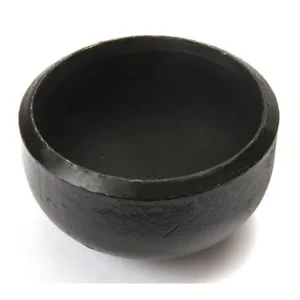
Complete your piping material take-off (MTO) with matching pipe caps, blind flanges, gate valves, and specialty fittings.