High-Precision Pipe Fittings & Industrial Components
Featured certified products engineered by Hebei Cangrun Pipeline Equipment Co., Ltd. for oil, gas, chemical, boiler, and heavy infrastructure applications worldwide.
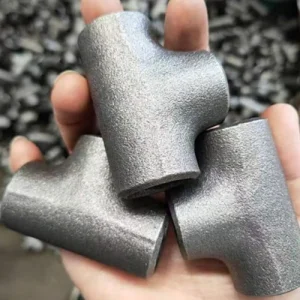
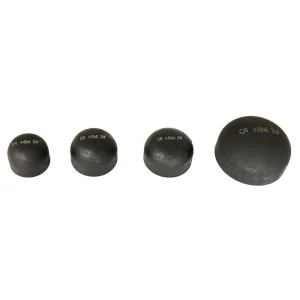
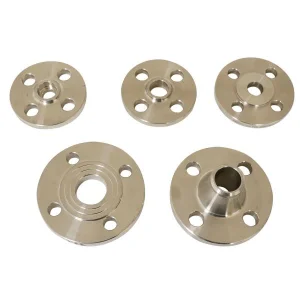
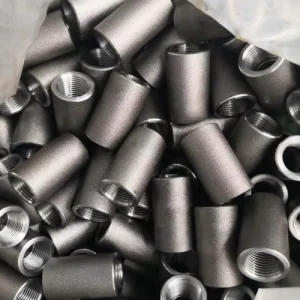
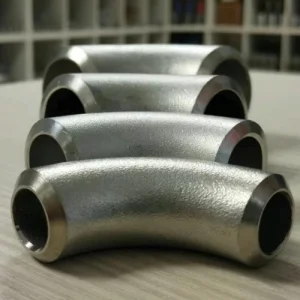
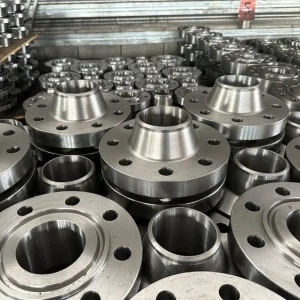
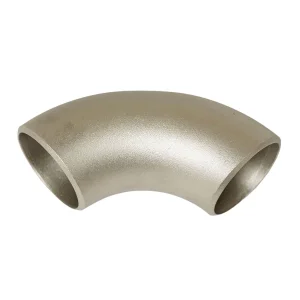
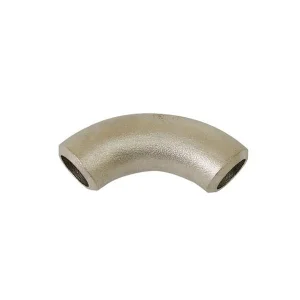
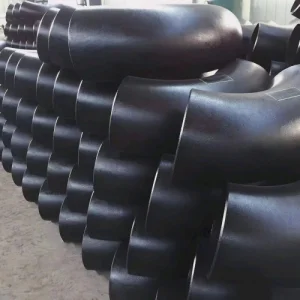
Industrial Pipe Bends Manufacturing Excellence by Cangrun Pipeline
In modern pipeline transport engineering—spanning long-distance natural gas trunk lines, offshore oil platforms, high-pressure steam power loops, and chemical refining facilities—pipe bends represent critical structural nodes. Unlike standard factory elbows (which feature short radii such as 1.0D or 1.5D), engineered pipe bends (typically 3D, 5D, 6D, 8D, and 10D radii) are designed to minimize pressure drop, eliminate turbulent flow dynamics, and facilitate continuous pipeline pigging operations.
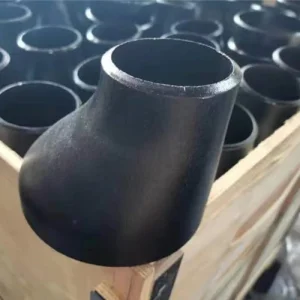
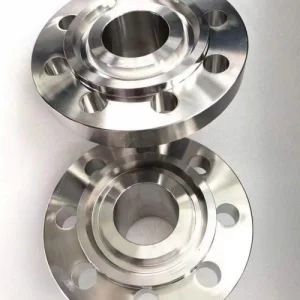
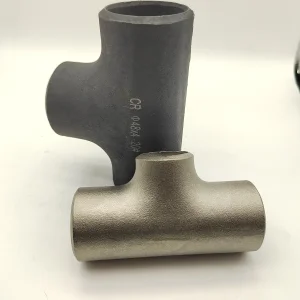
Operating as a premier global manufacturing conglomerate, HEBEI CANGRUN PIPELINE EQUIPMENT CO., LTD. (alongside specialized production entities CANGZHOU FEIWO METAL PRODUCTS CO., LTD. and CANGZHOU FEIXIANG METAL PRODUCTS CO., LTD.) manufactures custom high-yield induction bends, seamless elbows, forged flanges, structural tees, and industrial valves. Rooted in the industrial hub of Cangzhou, Hebei, China, Cangrun Pipeline delivers verified metallurgical consistency, precise wall thickness management, and zero-defect geometric stability to project engineering specs globally.
Core Enterprise Infrastructure
Full-spectrum compliance with ASTM/ASME, JIS, DIN, EN, and GB standards. Supported by ISO 9001:2015 QA systems and EN 10204 3.1/3.2 material traceability certification.
Global Pipeline Bends & Industrial Piping Market Trends
Market dynamics, technological evolutions, and decarbonization pressures reshaping global infrastructure procurement.
1. Transition to Ultra-High Yield Steels (API 5L X70 / X80)
Cross-country energy transmission lines demand higher operating pressure (up to 15-20 MPa) to optimize throughput. Pipeline bends must be manufactured using micro-alloyed, high-yield steels (e.g., API 5L X70M, X80M). Induction bending processes must strictly prevent microstructural grain growth and mechanical softening through automated post-bend heat treatment (PBHT).
2. Severe Sour Service & CRA Cladding Solutions
Offshore and deep-water extraction projects expose directional bends to aggressive sour environments containing H2S and CO2. The market is shifting rapidly toward Corrosion-Resistant Alloy (CRA) cladded bends, featuring carbon steel outer backings overlaid with Inconel 625 or 316L stainless steel layers via automated electroslag welding.
3. Hydrogen Ready & Clean Energy Transition
Existing and new pipeline networks are being re-engineered for hydrogen blending and pure H2 transmission. This requires pipe bends with low carbon equivalents (CE), minimal embrittlement susceptibility, tight ovality tolerances, and non-destructive examination (NDE) verifying zero micro-fissures along the extrados arc.
Macro Industry Solutions & Turnkey Supply Frameworks
Custom-engineered pipe bends and matched piping equipment optimized for high-risk industrial environments.
Subsea & Offshore Upstream Pipelines
Challenge: Heavy external hydrostatic pressures combined with internal abrasive multi-phase flow causing wall thinning and fatigue.
Cangrun Solution: Hot induction bends with controlled radius ratios (5D/6D), strict ovality management (<2.5%), and integrated straight tangent ends (500mm+) to simplify orbital field welding.
Supercritical Power & Thermal Steam Loops
Challenge: Creep rupture risks in high-temperature steam lines operating above 560°C and 25 MPa pressure.
Cangrun Solution: Alloy steel bends produced in ASTM A335 P91, P92, and WP91 grade materials subjected to full normalizing and tempering PBHT cycles, supported by 100% Ultrasonic Testing (UT) and Hardness verification.
Downstream Chemical & Petrochemical Refineries
Challenge: Rapid chemical corrosion from acids, solvents, and volatile hydrocarbons alongside rapid thermal cycling.
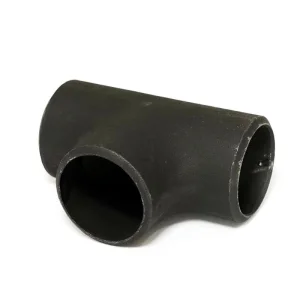
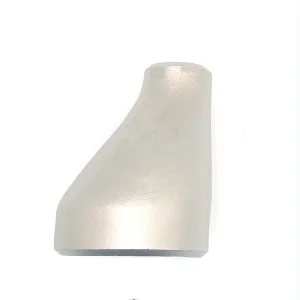
Cangrun Solution: Stainless steel (ASTM A403 WP304L, WP316L, WP317L) and Duplex/Super Duplex (2205, 2507) bends and matching butt-weld tees/reducers manufactured with full solution annealing treatment to restore corrosion resistance.
Engineering Mechanics: Bends vs. Standard Factory Elbows
Understanding wall thinning physics, pressure loss attenuation, and geometric tolerances per ASME B16.49 & ASME B16.9.
When designing piping layouts, engineers face critical decisions between specifying standard butt-weld elbows (ASME B16.9) or custom hot-induction bends (ASME B16.49). While standard elbows offer compact spatial footprints, induction bends drastically improve fluid dynamics by reducing friction loss coefficients ($\Delta P$) by up to 65% over long transmission distances.
1. Wall Thinning & Extrados Compensation Physics
During the thermal induction bending process, the outer arc (extrados) experiences tensile stress resulting in wall thinning, while the inner arc (intrados) undergoes compressive stress resulting in wall thickening. To ensure that the final extrados wall thickness ($t_{ext}$) meets the minimum design thickness ($t_{min}$) dictated by ASME B31.3 or ASME B31.8, Cangrun utilizes pre-calculation wall formulas:
Where: R = Bend Radius, D = Outer Diameter, t_nom = Starting Pipe Nominal Wall Thickness.
By using mother pipes with calculated extra thickness tolerances, Cangrun guarantees that post-bending NDT thickness checks never fall below design limits, eliminating localized stress concentration zones.
2. Comparative Technical Matrix: Bends vs. Elbows
| Engineering Parameter | Induction Pipe Bends (3D, 5D, 6D, 10D) | Standard Long Radius Elbow (1.5D) | Short Radius Elbow (1.0D) |
|---|---|---|---|
| Governing Standard | ASME B16.49 / ISO 15590-1 / EN 10253 | ASME B16.9 / GB/T 12459 | ASME B16.9 / DIN 2605 |
| Flow Friction Loss ($\zeta$) | Very Low (Optimal Flow Efficiency) | Moderate Pressure Drop | High Pressure Drop / Turbulence |
| Pipeline Pigging Capability | 100% Full Pigging Passage (Intelligent Pigs) | Limited (Requires Special Short-Pig) | Non-Pig-able (Blocks Inspection Tools) |
| Wall Thinning Rate (Extrados) | Controlled (<8% for 5D Radius) | Moderate (10% - 14%) | High (>15% Thinning Risk) |
| Tangential Weld Ends | Integrally Included (300mm - 1000mm) | None (Direct Fitting Edge Welding) | None (Direct Fitting Edge Welding) |
| Custom Bend Angles | Any Angle (1° to 180° Custom Bent) | Standard Angles Only (45°, 90°, 180°) | Standard Angles Only (90°, 180°) |
Global Enterprise Procurement & MTO Specification Guide
A structured framework for EPC contractors, procurement specialists, and plant operators to optimize pipe bend quotes.
Essential Material Take-Off (MTO) Checklist
To ensure precise engineering estimation and avoid revision cycles, engineering material requisitions for pipe bends should explicitly define:
- Nominal Size & Schedule: Outer Diameter (OD) and Schedule (e.g., 24" SCH 80 / 12.7mm WT).
- Bend Radius Ratio: Specify 3D, 5D, 6D, or exact millimeter centerline radius (CLR).
- Bend Angle & Tangent Lengths: Precise degree (e.g., 42° 30') and straight lead-in/lead-out lengths ($L_1, L_2$).
- Material Grade & Specification: ASTM A234 WPB, ASTM A335 P91, API 5L X65 PSL2, or Stainless 316L.
- Design Code & Test Requirements: ASME B31.8, Sour Service (NACE MR0175), HIC/SSCC testing, 100% Radiographic/Ultrasonic inspection.
Commercial Cost Optimization Strategies
1. Single Mother-Pipe Multi-Bend Processing: Ordering multi-bend continuous spools reduces field girth welds by up to 40%, significantly cutting field NDT inspection costs for cross-country contractors.
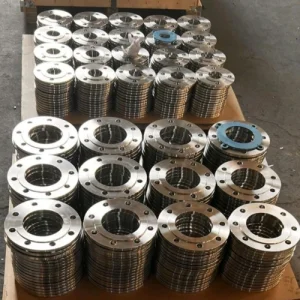
2. Consolidated Cargo Packaging: Purchasing matching pipe fittings, weld neck flanges, and gate/ball valves from Cangrun's three Cangzhou production bases eliminates split-shipment logistics overhead and minimizes port clearance fees.
3. Standardized Tangent Lengths: Aligning lead-in and lead-out straight lengths to factory-standard dimensions (e.g., 500mm) optimizes raw pipe yield and lowers per-unit fabrication cost.
Global Regulatory Compliance & Localization Support
Complete certification backing ensuring effortless project commissioning across European, American, Middle Eastern, and Asian jurisdictions.
International Quality Accreditation
Production processes are certified under ISO 9001:2015 Quality Systems, ISO 14001 Environmental Standards, and ISO 45001 Occupational Health Safety. European pressure vessel compliance is backed by PED 2014/68/EU Module H certification.
Material Traceability (EN 10204 3.1 / 3.2)
Every bend and fitting is stamped with a unique heat trace number tied directly to its original steel mill raw test certificate. Full EN 10204 Type 3.1 inspection certificates are provided as standard, with Type 3.2 Third-Party Inspection (TUV, SGS, BV, Lloyd's) available upon request.
Export Packaging & Surface Protection
Products undergo rigorous anti-corrosion treatments—including 3-Layer Polyethylene (3LPE), Fusion Bonded Epoxy (FBE), black varnish painting, or hot-dip galvanizing. Finished bends feature end caps and seaworthy wooden crate/pallet packaging designed to withstand long ocean transport transit cycles.
Technical Roadmap & Future Innovations (2025–2030)
Pioneering Next-Generation Manufacturing Intelligence in Heavy Piping Components.
AI-Driven Induction Temperature Control
Implementation of high-speed infrared closed-loop pyrometer arrays paired with AI thermal algorithms. Dynamic power adjustment ensures real-time temperature stability within ±5°C along the narrow heating band, completely eliminating thermal shock defects during continuous bending cycles.
Automated 3D Laser Geometric Scanning
Post-bent products are subjected to automated 3D laser coordinate mapping. Laser scanners verify bend angle precision, ovality tolerances, axis straightness, and face-to-face dimensions in seconds, generating digital twin dimensional inspection reports for buyers.
Sustainable Green Forging & Manufacturing
Incorporating energy-efficient high-frequency induction power units that cut electricity consumption by up to 28% per ton produced. Industrial water loops utilize closed-circuit zero-discharge cooling towers, supporting green infrastructure carbon-neutral targets.
Frequently Asked Questions (FAQ) & Technical Insights
Detailed engineering answers to technical queries regarding pipe bends, manufacturing limits, standards, and procurement options.
What is the exact technical difference between a pipe elbow and a pipe bend?
Which standards govern the manufacturing and testing of induction pipe bends at Cangrun?
How does Cangrun control extrados wall thinning during induction bending?
What post-bend heat treatment (PBHT) options are performed on alloy and carbon steel bends?
- Stress Relieving (SR): Performed on carbon steel bends to relieve residual bending stresses.
- Normalizing & Tempering (N&T): Standard for high-yield carbon steels (API 5L X65/X70) and low-alloy high-temp steels (ASTM A335 P11, P22, P91) to restore microstructural toughness and grain refinement.
- Solution Annealing: Applied to austenitic stainless steels (304L, 316L, 317L) and duplex alloys to re-dissolve chromium carbides and restore full corrosion resistance.
Can Cangrun supply pipe bends suited for sour gas environments (NACE MR0175 / ISO 15156)?
What size range and wall thickness capacities does Cangrun support?
How can procurement teams consolidate piping component orders with Cangrun?
Complementary Industrial Piping & Flow Controls
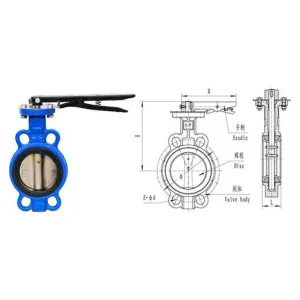
Explore matching heavy-duty pipe fittings, flanges, and valves to complete your pipeline material take-off package.