Industrial Pipe Nipples & Piping Component Lineup
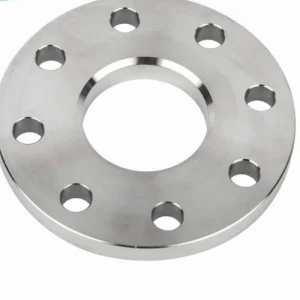
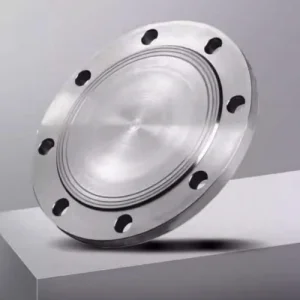
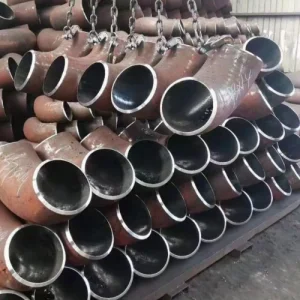
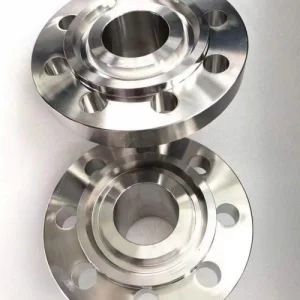
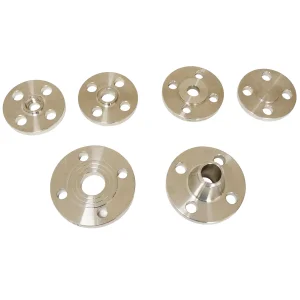
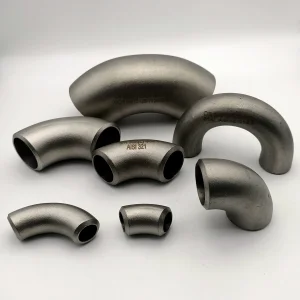
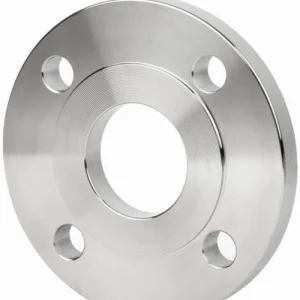
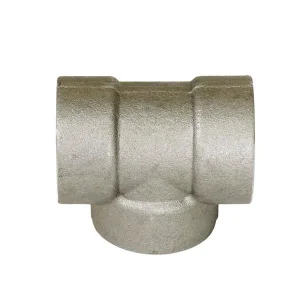
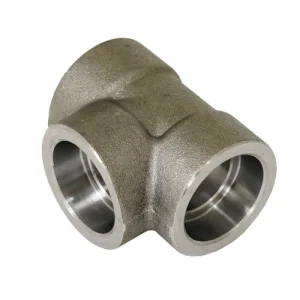
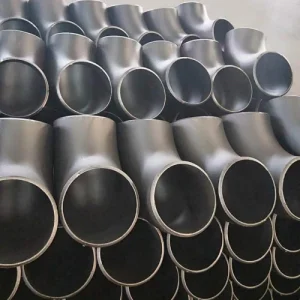
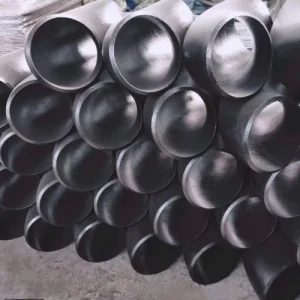
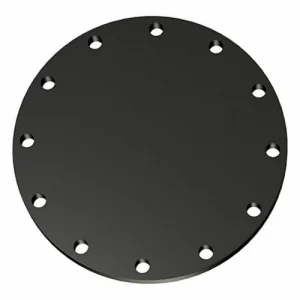
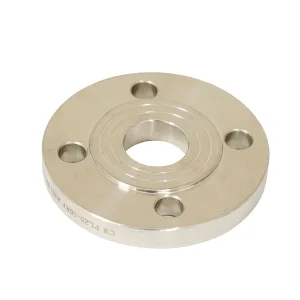
Explore our premium selection of carbon steel pipe nipples, forged socket weld fittings, butt-weld equal tees, concentric reducers, and high-pressure flanges designed for rigorous industrial applications.
Executive Summary: The Global Industrial Nipple & Piping Infrastructure Market
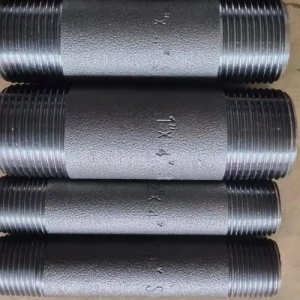
In modern industrial process engineering, the pipe nipple—a brief section of pipe featuring male threads at both ends or a combination of threaded, plain, and bevelled ends—serves as the critical connective backbone for fluid dynamics, pressure containment, and structural routing. Despite their compact physical footprint, pipe nipples, swage nipples, and associated forged fittings bear significant operational stress in chemical plants, offshore oil rigs, power generation facilities, and cryogenic transport systems.
The global industrial pipe fitting and nipple market is experiencing a profound technological transition. Driven by the expansion of liquefied natural gas (LNG) export infrastructure, ultra-deepwater exploration, green hydrogen delivery networks, and high-efficiency supercritical power generation, demand has shifted toward ultra-reliable, high-integrity mechanical connectors. Engineers no longer view nipples as basic commodity hardware; rather, they are recognized as safety-critical pressure boundary components governed by strict metallurgical, dimensional, and non-destructive examination (NDE) standards such as ASTM A733, ASME B16.11, and MSS SP-95.
According to empirical pipeline failure analysis, over 34% of localized piping leaks occur at improperly machined threaded connections or low-grade welded transitions. Specifying precision-threaded barrel nipples, hex nipples, and concentric swage nipples manufactured under ISO 9001 and API 5L compliance reduces lifecycle joint failure rates by up to 89% in high-vibration and sour gas (H2S) environments.
Classification, Geometry & Manufacturing Technical Roadmap
Industrial pipe nipples are defined by their structural configuration, wall thickness (Schedule), thread profile, and material composition. Understanding these variables is essential for piping design engineers and procurement officers.
Barrel & Close Nipples
Standard tubular nipples designed for straight-line connections in low to medium-pressure piping systems.
- Close Nipple: Threaded entirely from end to end; no unthreaded pipe section exposed when connected.
- Barrel / Long Nipple: Features an unthreaded smooth pipe body between the two end threads.
- Standards: ASTM A733, BS EN 10241, DIN 2982.
Swage Nipples (MSS SP-95)
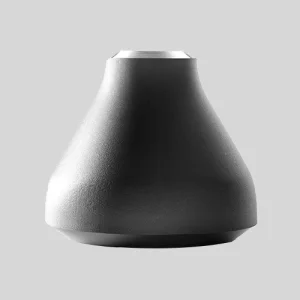
Heavy-duty forged fittings engineered to change pipe size between two different nominal diameters.
- Concentric Swage: Maintains matching centerlines for vertical liquid lines and straight gas runs.
- Eccentric Swage: Features an offset centerline to prevent air pockets or liquid pooling in horizontal lines.
- End Types: PBE (Plain Both Ends), TBE (Threaded Both Ends), BBE (Beveled Both Ends).
Hexagon & Forged Nipples
Machined from solid forged bar stock with an integrated central hex nut section for wrench application.
- High-Torque Performance: Enables tight mechanical seal engagement without damaging pipe walls.
- Ratings: 2000#, 3000#, 6000# pressure classes per ASME B16.11.
- Materials: Carbon Steel (A105), Stainless Steel (A182 F304/F316), Alloy Steel.
Industrial Nipple Material Grades & Performance Matrix
| Material Class | Material Grade Standard | Tensile Strength (MPa) | Temperature Range | Primary Industrial Application |
|---|---|---|---|---|
| Carbon Steel | ASTM A106 Gr. B / ASTM A53 / ASTM A105 | ≥ 415 MPa | -29°C to 425°C | High-pressure steam, oil & gas distribution, municipal hydraulics |
| Stainless Steel | ASTM A312 / A182 (TP304/304L, TP316/316L) | ≥ 515 MPa | -196°C to 815°C | Chemical processing, pharmaceutical cleanrooms, marine environments |
| Duplex Stainless | ASTM A790 / A182 (UNS S31803 / S32205) | ≥ 655 MPa | -50°C to 300°C | Offshore oil production, subsea manifolds, seawater desalination |
| Alloy Steel | ASTM A335 / A182 (P11, P22, P91) | ≥ 585 MPa | Up to 650°C | Supercritical boilers, power plant steam loops, refinery cracking units |
| Nickel Alloy | Hastelloy C276 / Inconel 625 / Monel 400 | ≥ 690 MPa | -196°C to 1000°C | Extreme acid services, wet chlorine gas, geothermal power generation |
Macro Industry Solutions & Localized Engineering Use-Cases
From extreme deepsea hydrostatic pressures to high-purity semiconductor cleanrooms, pipe nipples engineered by enterprise partners adapt to complex operational environments.
Upstream & Offshore Subsea Skids
Subsea Christmas trees and oil manifold skids demand zero-tolerance pipe fittings. Heavy-wall extra-strong (XS) and double extra-strong (XXS) swage nipples in UNS S32750 super duplex stainless steel are utilized to resist pitting corrosion in chloride-rich seabed environments while enduring internal pressures exceeding 10,000 PSI.
Refinery Acidization & Sour Gas Lines
Petrochemical refining processes involve hydrogen sulfide (H2S) exposure, triggering hydrogen-induced cracking (HIC). Pipe nipples compliant with NACE MR0175 / ISO 15156 undergo strict hardness testing (≤ 22 HRC) and specialized heat treatment (normalizing/stress relieving) to guarantee structural integrity.
Green Hydrogen Transmission
As the cleanest energy vector, hydrogen gas presents extreme leakage risks due to its tiny atomic radius. Precision-machined NPT taper threads coated with PTFE or micro-machined socket-weld nipples ensure gas-tight seals, preventing hydrogen embrittlement and micro-fugitive emissions across distribution networks.
Comprehensive Quality Assurance & Testing Roadmap
To ensure full compliance with international engineering codes (ASME B31.3, API 5L, Pressure Equipment Directive PED 2014/68/EU), every manufactured lot of pipe nipples undergoes multi-stage non-destructive and destructive testing.
1. Thread Profile & Gauge Calibration
Threads are cut or rolled to exact ANSI/ASME B1.20.1 (NPT), ISO 7-1 (BSPT), or ASME B1.20.3 (NPTF) specifications. L1 and L2 ring gauges ensure precise thread engagement length and taper consistency.
2. Positive Material Identification (PMI)
X-ray fluorescence (XRF) and Optical Emission Spectrometry (OES) analyze chemical composition to verify exact chromium, nickel, molybdenum, and carbon content prior to machining.
3. Hydrostatic & Pneumatic Proofing
Every high-pressure swage and barrel nipple is subjected to hydrostatic pressure testing up to 1.5x design operating pressure or 100% pneumatic bubble-leak examination.
4. Surface Finishing & Corrosion Coating
Depending on end-user requirements, components receive hot-dip galvanizing (ASTM A153), electro-polishing, black phosphating, or anti-corrosive varnish coating.
Technology Roadmap: The Future of Industrial Nipple Manufacturing
The manufacturing ecosystem for industrial pipe fittings is rapidly integrating AI-driven optical inspection, robotic CNC thread cutting, and automated material handling. Key technological vectors transforming the industry include:
- Automated Vision-Guided CNC Machining: Ultra-precise multi-axis CNC lathes equipped with real-time laser tool wear compensation achieve thread tolerances down to ±0.005mm.
- Additive Manufacturing & Hybrid Forging: Combining powder-bed metal 3D printing with traditional drop forging allows for internal fluid channels within custom swage nipples, reducing turbulence and pressure drop by up to 22%.
- Blockchain-Backed Material Traceability: Integration of QR-coded laser etching on every pipe nipple body links directly to EN 10204 3.1 Material Test Reports (MTRs), mill certificates, and heat batch histories.
Frequently Asked Questions (FAQ) on Nipple Products & Services
Detailed engineering answers to standard procurement, design specification, and technical compliance questions.
Complementary Pipeline Components & Industrial Assemblies
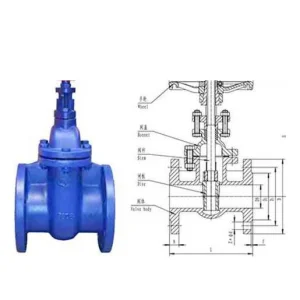
Complete your piping system with our matching high-pressure flanges, heavy-duty gate valves, RTJ flange connectors, and schedule 120 pipe fittings.