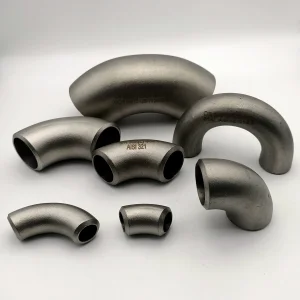
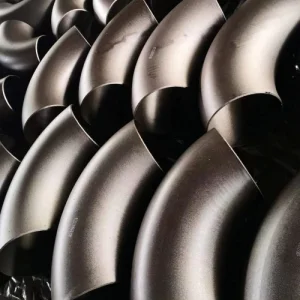
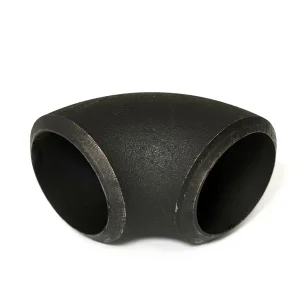
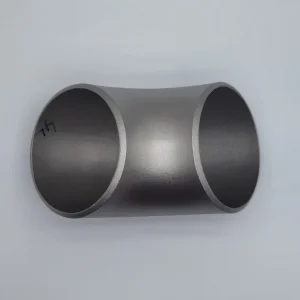
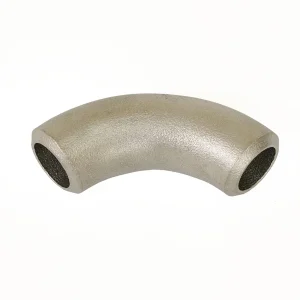
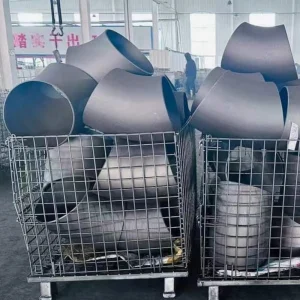
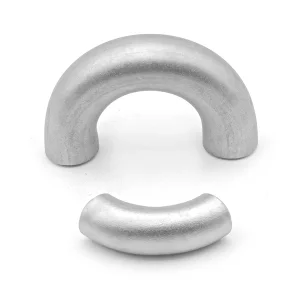
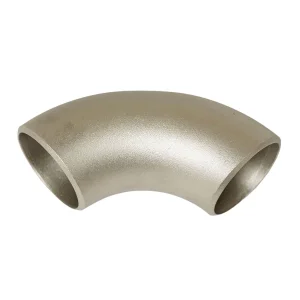
High-Performance Pipe Elbows & Industrial Butt-Weld Components
Engineered to ASME B16.9, DIN 2605, and EN 10253 standards. Precision-manufactured for extreme pressure, thermal stress, and corrosive environments.
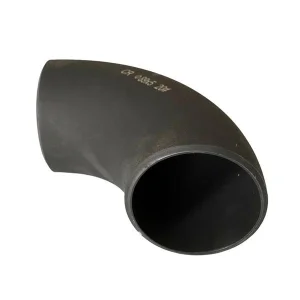
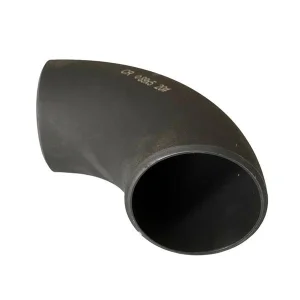
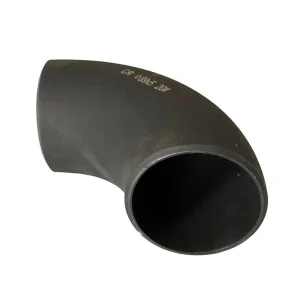
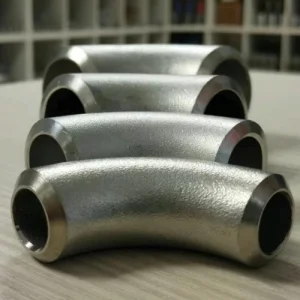
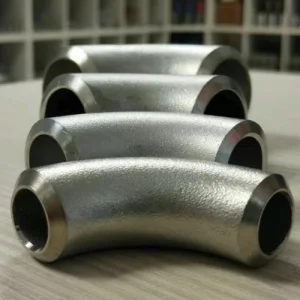
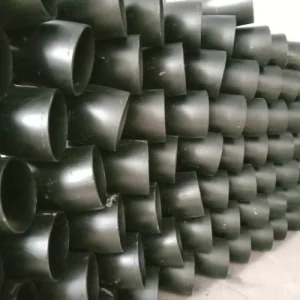
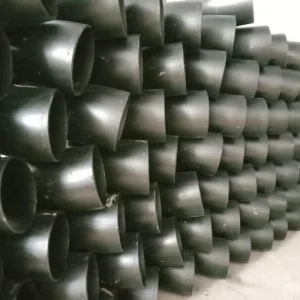
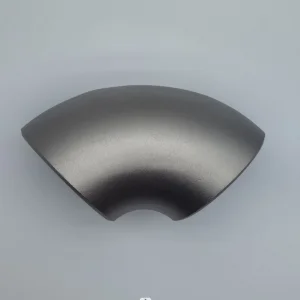
Fluid Dynamics, Stress Vectors, and Hydraulic Friction in Industrial Elbows
In modern process plants, thermal power stations, and subsea pipelines, the pipe elbow serves as much more than a simple directional connector. It represents a critical control volume within fluid dynamics where direction changes alter velocity profiles, generate secondary flow currents (Dean vortices), and induce localized pressure drops along with elevated structural stress concentration. When sourcing from premier elbow suppliers and companies, engineering specification teams must evaluate hydraulic efficiency alongside metallurgical durability.
Hydrodynamic Stress Factors in Piping Design
When high-pressure gas or liquid travels through an elbow, centrifugal forces create an asymmetrical pressure distribution. The highest hydrodynamic pressures occur along the outer extrados, inducing significant tensile stresses. Conversely, the intrados experiences localized compressive stresses. Piping stress analysts utilize finite element analysis (FEA) to ensure that the flexural rigidity and stress intensification factors ($i$-factors per ASME B31.3) remain well within allowable thermal expansion and sustained stress limits.
Global Commercial & Industrial Manufacturing Ecosystem
Key benchmarks driving procurement, quality assurance, and global distribution of industrial elbows.
Strategic Supply Chain Resilience & Global Sourcing Trends
The global market for industrial steel pipe fittings is experiencing structural demand shifts driven by energy transition projects, LNG infrastructure expansion, and regional refinery modernizations. Global contractors prioritize manufacturers that can supply full piping material packages (pipes, elbows, tees, reducers, and flanges) from integrated manufacturing hubs like Cangzhou, Hebei.
Procurement leaders look beyond initial unit cost, assessing suppliers on total cost of ownership (TCO), material traceability (EN 10204 3.1/3.2 certification), and lead-time reliability. Direct factory partnerships eliminate distributor markup while securing dedicated heat-treatment and NDT testing slots for major capital expenditure projects.
Material Specifications, Grades & International Standards Matrix
A detailed reference guide to material selection based on temperature, pressure, and corrosion requirements.
| Material Category | Standard / Material Grade | Design Temperature Range | Primary Industrial Applications |
|---|---|---|---|
| Carbon Steel | ASTM A234 WPB, WPC, ST37, A420 WPL6 | -46°C to +425°C | Oil & Gas transport, general steam, refinery utility lines, structural piping |
| High-Yield Carbon | MSS SP-75 WPHY 42, 52, 60, 65, 70 | -29°C to +150°C | Cross-country oil/gas transmission pipelines, high-pressure distribution lines |
| Alloy Steel | ASTM A234 WP11, WP22, WP5, WP91 Grade 91 | -29°C to +650°C | Ultra-supercritical thermal power boilers, steam turbines, hydrocracking units |
| Austenitic Stainless | ASTM A403 WP304/304L, WP316/316L, 317L, 310S | -196°C to +815°C | Chemical synthesis, pharmaceutical process, food & beverage, marine topsides |
| Duplex / Super Duplex | UNS S31803 / S32205 (2205), UNS S32750 (2507) | -50°C to +300°C | Offshore oil platforms, subsea manifolds, desalination plants, aggressive chloride media |
Hot-Push Mandrel Forming vs Cold Stamping Manufacturing
The structural integrity of a butt-weld elbow is fundamentally tied to its manufacturing process. Premium elbow suppliers and companies utilize two primary methodologies:
- Hot-Push Mandrel Process: A seamless steel tube segment is pushed over a horn-shaped mandrel at elevated temperatures (750°C – 950°C) using induction heating. This method guarantees uniform wall expansion, exceptional dimensional stability, and consistent grain structure refinement after normalizing heat treatment.
- Cold Forming / Press Stamping: Primarily utilized for stainless steel or large-radius bends where high heat could induce carbide precipitation or distortion. Half-shell stamping followed by longitudinal submerged arc welding (SAW) or gas tungsten arc welding (GTAW) allows for large diameter elbow production up to 78 inches (DN1900).
Application Scenarios Across Critical Industrial Sectors
Non-Destructive Testing (NDT) & QA/QC Safeguards
Ensuring absolute structural integrity through multi-stage inspection protocols prior to field deployment.
In high-pressure piping systems, fitting failure can lead to catastrophic environmental damage and unplanned plant outages. Reliable elbow manufacturers and suppliers implement comprehensive ISO 9001 quality management systems that enforce rigorous Non-Destructive Testing (NDT) standards across the entire manufacturing cycle:
Technical Roadmap: Next-Generation Manufacturing Trends
The industrial pipe fitting sector is undergoing rapid technological evolution. Leading manufacturing companies are adopting advanced digital transformation framework technologies to meet stringent energy-transition specifications:
- AI-Driven Induction Heating Control: Thermal feedback loops monitor mandrel push speeds and temperature profiles in real time, reducing wall thinning variability to less than $\pm 2\%$.
- Internal Weld Overlay Cladding (CRA): High-efficiency automated plasma arc welding applies corrosion-resistant alloys (Inconel 625, Hastelloy C276) to the inner diameter of carbon steel elbows, delivering high-corrosion protection at a fraction of solid alloy cost.
- 3D Digital Twin Scan Verification: Laser point-cloud scanning captures end-bevel angles, wall concentricity, and radius curvature, generating automated compliance reports directly linked to MTRs (Material Test Reports).
- Hydrogen-Ready Piping Infrastructure: Developing specialized heat treatment protocols to mitigate hydrogen embrittlement in high-pressure green hydrogen transport networks.
Frequently Asked Technical Questions by Procurement Engineers
What is the difference between a 90-degree long radius (LR) elbow and short radius (SR) elbow?
Which standards govern dimensions, tolerances, and pressure ratings for pipe elbows?
- ASME B16.9: Factory-Made Wrought Butt Welding Fittings (DN15 through DN1200).
- MSS SP-75: Specification for High-Test, Wrought, Butt Welding Fittings (for pipeline transmission systems).
- EN 10253 / DIN 2605: European standard for butt-welding pipe fittings.
- JIS B2311 / B2312: Japanese industrial standards for steel pipe fittings for general and pressure service.
How do I calculate the pressure rating of an ASME B16.9 butt-weld elbow?
Why is post-weld heat treatment (PWHT) necessary for alloy steel elbows (e.g., WP11, WP91)?
What end preparation bevels are standard for butt-welding pipe elbows?
How does buying direct from Cangzhou elbow manufacturers lower procurement costs?
Complete Carbon, Stainless & Alloy Steel Elbow Series
Explore quotes, specs, and stock availability across our direct manufacturing lines.