
Industrial Pipe Reducers & Butt-Weld Fittings
Direct factory supply from Cangzhou, China. Compliant with ASME B16.9, EN 10253, and ISO 3419 standards across carbon, alloy, and stainless steel formulations.
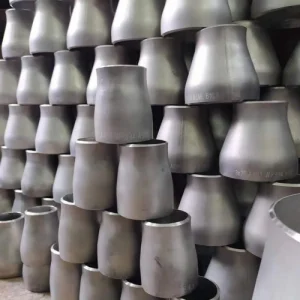
Wholesale Steel Pipe Reducer Manufacturer, Quotes
View Technical Specs →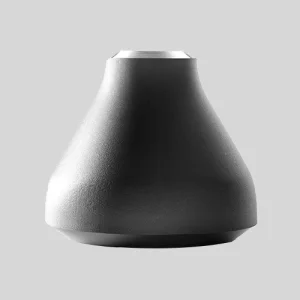
Discount Industrial Steel Con And Ecc Reducer Manufacturers
View Technical Specs →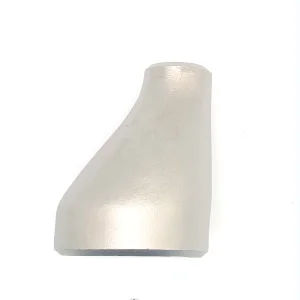
High-Quality Seamless Butt Weld Fittings Eccentric Reducers ASME B16.9
View Technical Specs →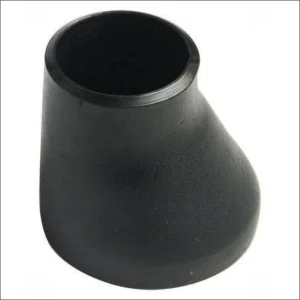
High-Quality Concentric / Eccentric Reducer Butt Weld Pipe Fitting
View Technical Specs →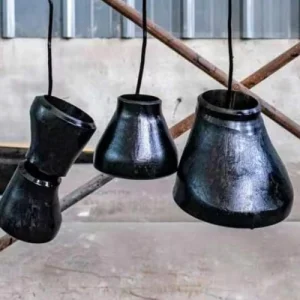
Famous Carbon Steel Eccentric Reducer Concentric Reducer Suppliers
View Technical Specs →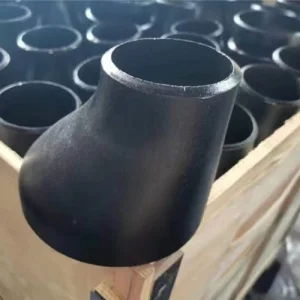
Buy 8*6 Inch Carbon Steel Eccentric Reducer Exporter
View Technical Specs →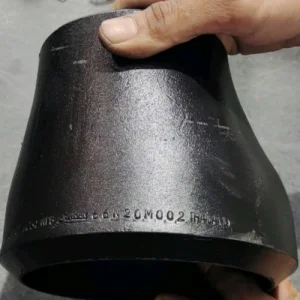
High-Quality Carbon Steel Eccentric Reducer Factories
View Technical Specs →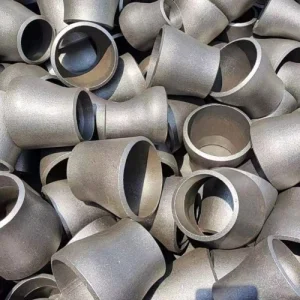
Wholesale How To Use Eccentric Reducer Manufacturers
View Technical Specs →Comprehensive Engineering Guide: Concentric vs. Eccentric Reducers in Pressure Piping
In high-pressure industrial piping systems, pipe reducers are indispensable components engineered to connect two pipes of differing nominal pipe sizes (NPS) or diameters. As a premier global reducer exporter, Hebei Cangrun Pipeline Equipment Co., Ltd. manufactures precision butt-weld, socket-weld, and threaded reducers designed to optimize fluid dynamics, manage pressure differential ($\Delta P$), and preserve structural integrity under intense thermal and mechanical stresses.
Industrial pipe reducers are fundamentally categorized into two distinct geometric designs: Concentric Reducers (CON) and Eccentric Reducers (ECC). Selecting the correct geometry is paramount to avoiding operational anomalies such as pump cavitation, air binding, liquid trapping, and excessive head loss.
Concentric Reducers (CON)
Concentric reducers feature a symmetrical, cone-shaped axis where the centerlines of both the larger and smaller ends remain perfectly aligned along a single longitudinal axis. They are predominantly utilized in vertical piping runs or straight horizontal lines where fluid flow velocity needs gradual acceleration or deceleration without disturbing axial symmetry.
Eccentric Reducers (ECC)
Eccentric reducers feature an offset geometry where one side of the fitting remains completely parallel (flat) to the pipe run, while the opposite side tapers linearly. This asymmetric design introduces offset centerlines, critical for horizontal piping configurations to prevent air or gas bubble accumulation at centrifugal pump suctions.
Engineering Rule of Thumb for Pump Suction: When fluid flows horizontally into a pump suction from a larger pipe, an eccentric reducer installed Flat-Side-UP (FSU) prevents vapor bubbles from coalescing at the top of the reducer cone, eliminating catastrophic cavitation risks in impeller chambers.
Fluid Dynamics & Pressure Drop Calculations ($\Delta P$)
The flow transition across a pipe reducer generates localized head loss due to wall friction and velocity gradient changes. Based on Bernoulli’s equation and the continuity equation ($Q = A_1 V_1 = A_2 V_2$), reducing the pipe cross-sectional area increases fluid velocity proportionally while altering static pressure.
| Flow Parameter | Concentric Reducer (CON) | Eccentric Reducer (ECC) | Engineering Impact |
|---|---|---|---|
| Centerline Alignment | Coaxial (0° Offset) | Offset ($E = \frac{D_1 - D_2}{2}$) | Determines pipe support elevation & stress distribution |
| Horizontal Pump Suction | Not Recommended (Traps Gas) | Mandatory (Flat Top / Flat Bottom) | Prevents gas accumulation and pump cavitation |
| Vertical Lines | Ideal (Uniform Velocity Profile) | Rarely Used | Ensures balanced thermal expansion & load distribution |
| Slurry & Solid Handling | Symmetrical Wear | Flat-Side-Down Prevents Solids Settling | Extends wear life in abrasive mining applications |
| Manufacturing Standard | ASME B16.9 / EN10253 / ISO3419 | ASME B16.9 / EN10253 / ISO3419 | Full dimensional inter-compatibility worldwide |
Hebei Cangrun Pipeline Equipment Co., Ltd.
Combining advanced forging technologies, automated CNC machining, and rigorous non-destructive testing (NDT) to supply global energy infrastructure.
Material Metallurgy
Seamless and welded carbon steel (ASTM A234 WPB/WPC), low-temperature alloy steel (ASTM A420 WPL6), high-yield steel (MSS SP-75 WPHY 42-70), and corrosion-resistant stainless grades (ASTM A403 WP304/304L, WP316/316L, Duplex 2205, Super Duplex 2507).
Quality Assurance & NDT
100% Radiographic Testing (RT) on welded seams, Ultrasonic Testing (UT) for wall integrity, Positive Material Identification (PMI via XRF), Magnetic Particle (MT), Hydrostatic Pressure testing, and Charpy V-Notch impact testing down to -46°C.
Global Certification
Full compliance with European Pressure Equipment Directive (PED 2014/68/EU), ISO 9001:2015 Quality Management, Canadian Registration Numbers (CRN), and EN 10204 3.1 / 3.2 Inspection Certificates.
Global Procurement Needs & Specialized Sector Solutions
Industrial pipe reducers serve as critical transitional elements across diverse engineering sectors. Understanding the operational stresses, thermal expansion profiles, and corrosive environments of each industry is crucial for optimizing piping system longevity.
Oil & Gas (Upstream & Midstream)
High-yield carbon steel reducers (API 5L / MSS SP-75 WPHY 60/65/70) engineered for cross-country gas transmission pipelines and offshore platforms. Heavy-wall schedules (SCH 120, SCH 160, XXS) withstand surge pressures and sour service conditions (NACE MR0175/ISO 15156 HIC & SSCC compliance).
Petrochemical & Refining
High-temperature alloy reducers (ASTM A234 WP11, WP22, WP91) designed for catalytic cracking units, hydrotreaters, and refinery furnaces operating above 500°C. Resists creep deformation and hydrogen attack during continuous thermal cycling.
LNG & Cryogenic Facilities
Austenitic stainless steel reducers (ASTM A403 WP304L, WP316L) retain impact toughness down to -196°C. Formulated to eliminate brittle transition failure during liquefied natural gas regasification and cryogenic transport.
Chemical & Fertilizer Plants
Duplex (UNS S31803 / 2205) and Super Duplex (UNS S32750 / 2507) reducers engineered for aggressive chloride, nitric, and sulfuric acid environments. Features high Pitting Resistance Equivalent Numbers (PREN ≥ 40) to combat localized corrosion.
Technical Roadmap: Next-Generation Pipe Reducer Manufacturing (2025–2035)
As global energy systems shift toward green hydrogen transport, ultra-deepwater exploration, and zero-carbon industrial processing, manufacturing technologies for pipe reducers must evolve. Cangrun Pipeline Equipment Co., Ltd. is leading this transition through key metallurgical and digital initiatives:
1. Hydrogen-Ready Metallurgy
Developing micro-alloyed carbon steel reducers optimized for 100% pure hydrogen pipelines. By controlling grain refinement and limiting ultra-low sulfur (≤ 0.002%) and phosphorus levels, our fittings mitigate Hydrogen Embrittlement (HE) under high operating pressures.
2. Smart Automated Forging
Integrating AI-monitored hot-mandrel expansion and induction heating lines. Continuous infrared pyrometer feedback ensures hyper-precise wall thickness uniformity, eliminating micro-cracking and localized stress points during concentric and eccentric cone shaping.
3. Green Steel & Digital Traceability
Transitioning toward Electric Arc Furnace (EAF) low-carbon steel billets. Every manufactured reducer is laser-etched with a QR-coded digital material passport linking directly to EN 10204 3.1 Mill Test Certificates and heat-number tracking.
Global Localization, Anti-Corrosion Protection & Export Logistics
Exporting industrial pipe reducers requires stringent quality packaging and customs compliance to guarantee project site readiness upon arrival. Hebei Cangrun Pipeline Equipment Co., Ltd. provides end-to-end export security:
Advanced Surface Treatments
Fittings are delivered with customized surface protection: Black Anti-Rust Varnish, Transparent Oil, Hot-Dip Galvanizing (HDG per ASTM A153), 3-Layer Polyethylene (3LPE), 3-Layer Polypropylene (3LPP), or Fusion Bonded Epoxy (FBE) coating for underground service.
Bevel End Protection & Packaging
Bevel ends are machined according to ASME B16.25 (37.5° ± 2.5°) and equipped with heavy-duty plastic bevel protectors. Small-size reducers are packed in fumigated wooden cases, while large-diameter fittings are secured on wooden pallets with steel strapping.
Frequently Asked Questions by Piping Engineers
Expert answers regarding design selection, standard tolerances, material compatibility, and fluid dynamics.
Specialized Reducers & Global Wholesale Catalog
High-grade carbon, alloy, and stainless steel pipe reducers engineered for high-pressure and corrosive fluid transport.
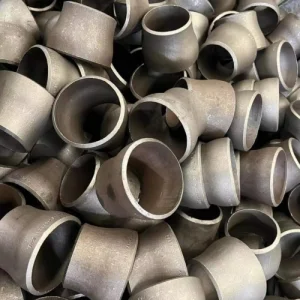
Best Concentric Reducer Factories, Pricelist
View Technical Specs →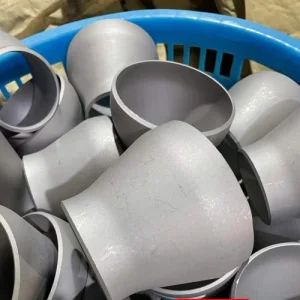
Wholesale Butt Weld Fitting SS304 Concentric Reducer SCH10
View Technical Specs →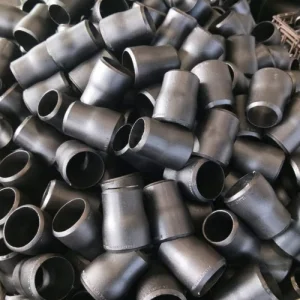
Carbon Steel Concentric Reducer SCH STD 6"*4" Manufacturer
View Technical Specs →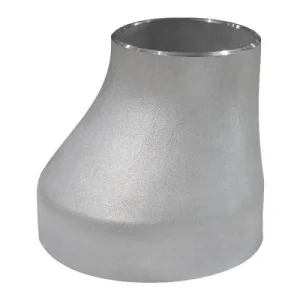
China Pipe Reducer 6"*4" SCH40 ASME B16.9 A234WPB
View Technical Specs →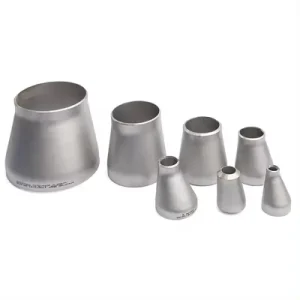
China High Quality 304/316 Steel Pipe Fittings Concentric/Eccentric Reducer
View Technical Specs →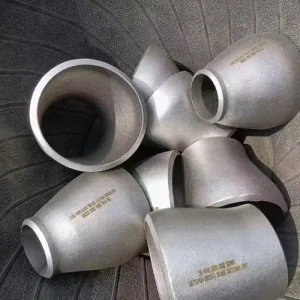
Famous Pipe Reducer Manufacturers & Exporting Companies
View Technical Specs →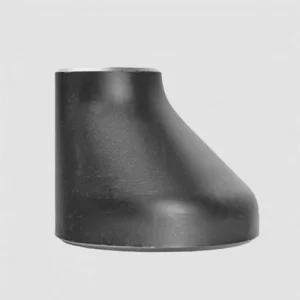
Wholesale Concentric & Eccentric Reducer A234WPB
View Technical Specs →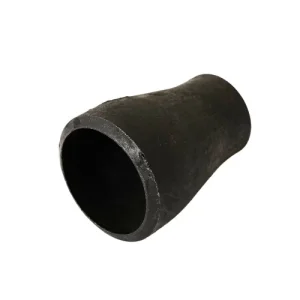
Butt Weld Carbon Steel Pipe Fitting Concentric Reducer
View Technical Specs →Request Instant Factory Pricing & Engineering CAD Drawings
Submit your material take-off (MTO) or project schedule to receive an itemized quote within 24 hours. Our export engineering team assists with material selection, wall schedule verification, and freight optimization.