
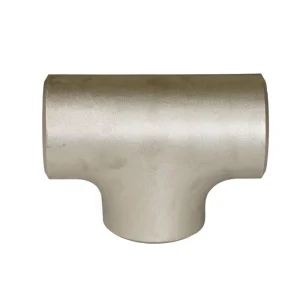
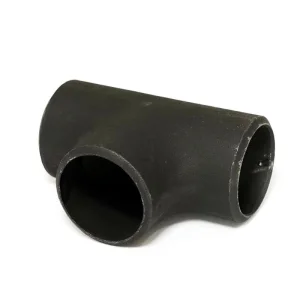
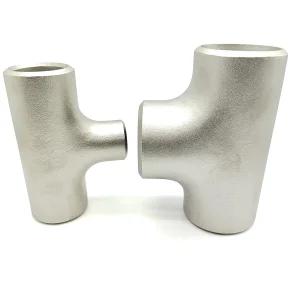
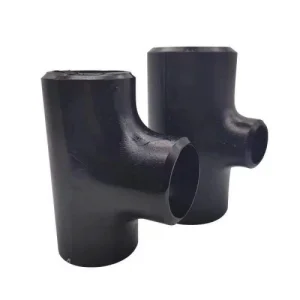
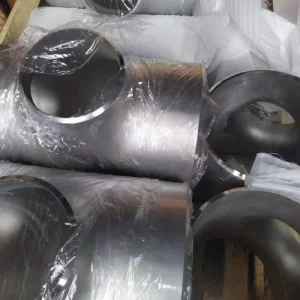
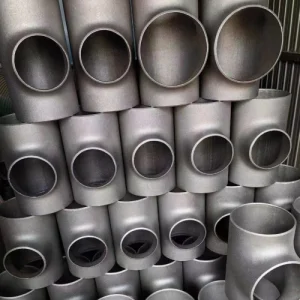
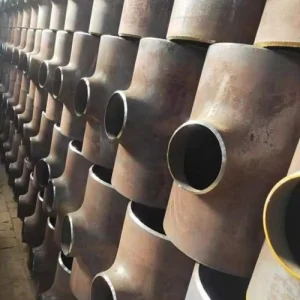
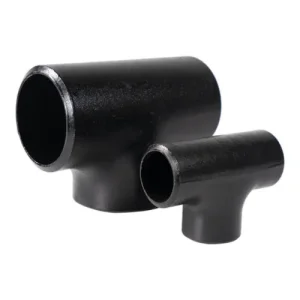
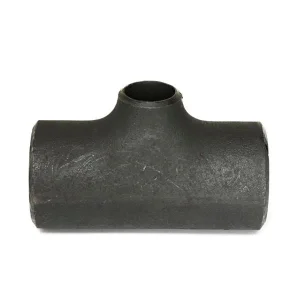
Featured Equal & Reducing Tee Inventory
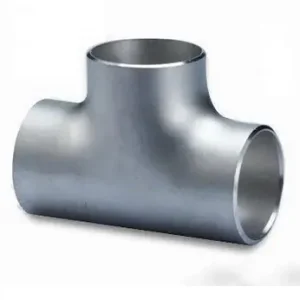
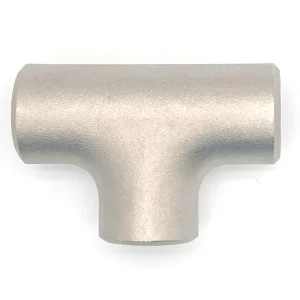
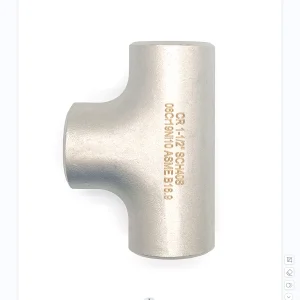
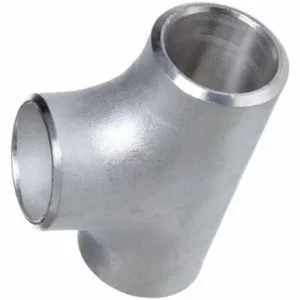
Explore our direct-factory seamless and welded tee inventory engineered according to ASME B16.9, DIN 2615, and EN 10253 standards.
1. Global B2B Procurement Dynamics & Macro Industrial Demand
Pipe tees—specifically 90-degree equal tees, reducing tees, and barred tees—represent one of the most critical pressure-containing components in industrial fluid handling. Global procurement strategies have undergone a structural shift toward suppliers capable of delivering high-yield, corrosion-resistant, and fully certified heat-treated piping components under rigid regulatory frameworks.
Oil & Gas Midstream / Subsea
Demands heavy-wall seamless tees engineered to ASME B16.9 and MSS SP-75 (Grades WPHY 42 to WPHY 70). Critical parameters include strict HIC (Hydrogen-Induced Cracking) testing, SSCC (Sulfide Stress Corrosion Cracking) validation according to NACE MR0175/ISO 15156, and flawless volumetric NDT inspection.
Nuclear & Fossil Power
Requires high-temperature alloy steel tees (ASTM A234 WP11, WP22, WP91, WP92) designed for high-pressure steam distribution. Procurement focuses on creep strength, microstructural stability, ultrasonic thickness testing, and 100% radiographic inspection on branch weld seams.
Petrochemical & LNG Processing
Relies on austenitic stainless steel (ASTM A403 WP304/304L, WP316/316L, WP321) and Duplex/Super Duplex stainless steels (UNS S31803, S32205, S32750). These systems operate under cryogenic or aggressive acid conditions, demanding dual-certified low-carbon chemistry and PREN values exceeding 40.
Key Sourcing Insight for EPC Procurement Officers:
Integrated pipeline projects require seamless coordination between straight pipe schedules and fitting dimensions. Manufacturers operating within integrated pipeline zones—such as HEBEI CANGRUN PIPELINE EQUIPMENT CO., LTD. and its subsidiary manufacturing centers CANGZHOU FEIWO METAL PRODUCTS CO., LTD. and CANGZHOU FEIXIANG METAL PRODUCTS CO., LTD.—offer significant risk reduction in material matching, joint bevel alignment, and unified EN 10204 3.1 certification packages.
2. Technical Deep-Dive: Manufacturing Processes & Metallurgical Specs
The structural integrity of a pipe tee under pressure relies heavily on the manufacturing method utilized during the forming process. Differences between hydraulic cold bulging, hot press forming, and welded fabrication directly influence grain structure, wall thinning rates, and burst pressure performance.
Cold Hydraulic Bulging Process
Primarily used for seamless carbon steel and stainless steel tees ranging from DN15 to DN600 (1/2" to 24").
- Mechanism: A straight seamless pipe section is placed into a hydraulic die. Internal liquid pressure pushes metal outward while two side cylinders compress the pipe ends to form the branch outlet.
- Advantages: Excellent surface finish, uniform wall thickness transition, consistent grain refinement after solution annealing or normalizing.
- Material Suitability: High ductility materials such as SS304L, SS316L, A106B, and ASTM A234 WPB.
Hot Press Forming (Hot Extrusion)
Utilized for large-diameter seamless and heavy-wall alloy tees (up to DN1200 / 48").
- Mechanism: The pipe segment is heated to forging temperatures (typically above 950°C for carbon steel). A hydraulic press pushes a shaping die into the pipe body to extrude the branch branch.
- Advantages: Ideal for thick-wall requirements (up to SCH XXS and wall thickness exceeding 150mm); reduces internal stress concentrations during hot deformation.
- Post-Process Heat Treatment: Full normalizing, quenching, and tempering to eliminate residual thermal stress and restore grain boundaries.
Material Grade Matrix & Chemical-Mechanical Compliance
| Material Category | Standard & Grade | Tensile Strength (MPa) | Yield Strength (MPa) | Core Application Environments |
|---|---|---|---|---|
| Carbon Steel | ASTM A234 WPB / WPC | ≥ 415 - 585 | ≥ 240 | General industrial pipelines, water treatment, district heating networks. |
| High-Yield Carbon | MSS SP-75 WPHY 52 / 60 / 70 | ≥ 515 - 635 | ≥ 360 - 485 | Cross-country gas pipelines, high-pressure oil transmission lines. |
| Stainless Steel | ASTM A403 WP304L / WP316L | ≥ 485 | ≥ 170 - 205 | Chemical processing, offshore platforms, pharmaceutical facilities. |
| Duplex Stainless | ASTM A815 UNS S31803 / S32205 | ≥ 655 - 880 | ≥ 450 | Desalination plants, marine engineering, sour gas refining. |
| Alloy Steel | ASTM A234 WP11 / WP22 / WP91 | ≥ 585 - 655 | ≥ 415 | Ultra-supercritical power plant boilers, high-temp refinery hydrocrackers. |
3. Tee Pricelist Benchmarks & Commercial Cost Drivers
Understanding the commercial pricing framework for industrial pipe tees requires analyzing the five core cost variables that influence factory-gate (EXW) and export-ready (FOB/CIF) pricelists. Avoid low-cost traps by evaluating full life-cycle quality assurance cost breakdowns.
Directly tied to global steel indices (LME, Shanghai Steel Index) for seamless tube hollows or plate stock.
Energy input costs for hydraulic pressing, solution annealing ovens, and tempering cycles.
Precision CNC end-beveling (ASME B16.25 compound bevels) and wall tolerance machining.
Radiographic (RT), Ultrasonic (UT), PMI chemical verification, and 3rd party inspector witness fees.
Commercial Pricing Drivers Comparison: Seamless vs. Welded Fabricated Tees
When analyzing an exporter’s pricelist, procurement specialists must differentiate between seamless formed tees and welded (fabricated) tees:
Seamless Pipe Tees (DN15 - DN600)
Command a 15–30% premium over welded fittings due to zero longitudinal weld risk, higher pressure containment safety factors, and simpler non-destructive testing requirements. Standard choice for critical nuclear, high-pressure steam, and offshore platforms.
Welded / Fabricated Tees (DN150 - DN2000+)
Manufactured from hot-rolled steel plates formed into two halves or extruded with longitudinal seam welding. Cost-effective for large-diameter municipal water, low-pressure gas, and HVAC distribution lines. Requires 100% X-ray inspection on weld seams to meet ASME B16.9 / EN 10253 standards.
4. Technical Roadmap & Future Outlook: Next-Gen Piping Technologies
The pipeline equipment sector is rapidly transitioning toward smart infrastructure integration, decarbonized energy transport, and AI-driven quality inspection workflows.
Green Hydrogen Piping Readiness
As the global energy matrix transitions toward hydrogen blends, standard carbon steel tees suffer from hydrogen embrittlement at branch weld transitions. The industrial roadmap focuses on low-hardness micro-alloy steels, specialized interior barrier coatings, and ultra-smooth internal hydraulic surfaces to eliminate micro-turbulences.
AI-Driven Automated NDT (AUT)
Traditional manual radiographic film interpretation is being replaced by machine-vision AI inspection platforms. Advanced exporters utilize real-time Phased Array Ultrasonic Testing (PAUT) coupled with deep-learning models to detect sub-millimeter volumetric flaws, slag inclusions, or wall thinning inside tee crotch regions.
Digital Twin & RFID Traceability
Future-proof piping infrastructure requires total material lifecycle tracking. Top-tier Chinese exporters are embedding laser-engraved QR codes and ruggedized passive RFID chips directly onto the outer collar of high-pressure tees, linking every installed fitting directly to its cloud-hosted EN 10204 3.1 MTR and raw heat batch numbers.
5. Global Exporter Compliance & Quality Verification Standards
To navigate international trade barriers and guarantee cross-border project compliance, international pipe tee buyers must verify exporter credentials against stringent global regulatory standards.
Essential Quality Certification Checklist
- ISO 9001:2015: Quality Management Systems governing forge shops and machining plants.
- PED 2014/68/EU Directive: Mandatory Pressure Equipment Directive compliance for CE-marked pipeline installations across the European Union.
- ASME Boiler & Pressure Vessel Code (Section VIII): Verifies pressure-temperature design stress compliance.
- EN 10204 3.1 / 3.2 Inspection Certificates: Full chemical composition, tensile/yield, impact toughness, heat treatment logs, and 3rd party inspection witness signatures (SGS, BV, TUV, DNV).
Geographic Exporter Expertise: The Cangzhou Advantage
Cangzhou City in Hebei Province stands as China’s largest manufacturing cluster for industrial pipe fittings, flanges, and steel tubing. Exporters rooted in this region leverage an unmatched supply chain eco-system:
- Direct Raw Material Sourcing: Immediate access to premier raw pipe mills (TPCO, Baosteel, Hengyang).
- Specialized Sub-tier Ecosystems: Integrated heat treatment facilities, galvanizing plants, and specialized sea-freight export packaging centers.
- Global Export Logistics: Proximity to Tianjin (Xingang) Port ensures reduced inland transit costs and flexible shipping schedules.
6. Frequently Asked Questions (B2B Technical Sourcing FAQ)
Direct answers to common technical, metallurgical, and commercial queries raised by piping engineers, QA inspectors, and procurement managers.
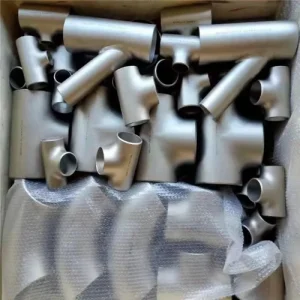
Additional Specialized Fittings & Exporter Catalog
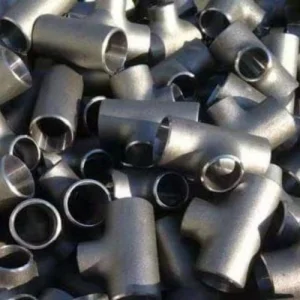
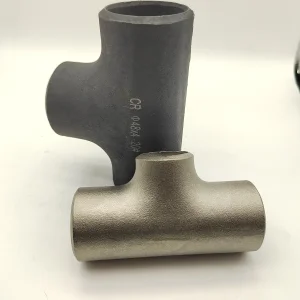
Browse additional high-performance duplex, stainless, and seamless steel pipe tees manufactured to global standards.
Need MTO-Specific Quotes & Engineering Drawings?
Submit your material take-off (MTO) schedules directly to our engineering group. We provide mill test reports, CAD dimensional approval sheets, and consolidated FOB/CIF pricelists within 24 hours.
Request Engineering Consultation & Quotation