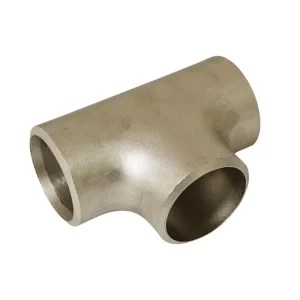
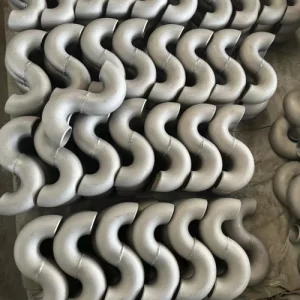
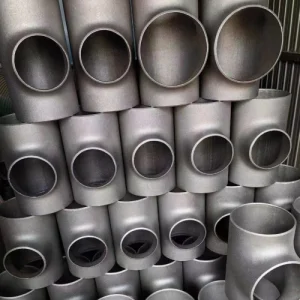
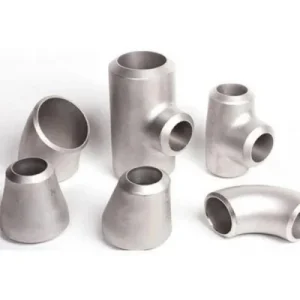
Featured Industrial Pipeline & Valve Components
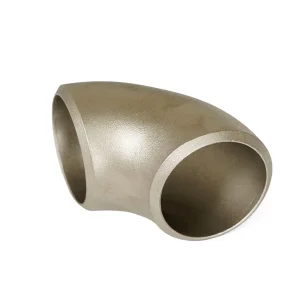
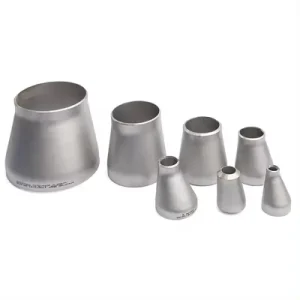
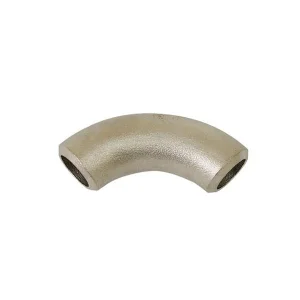
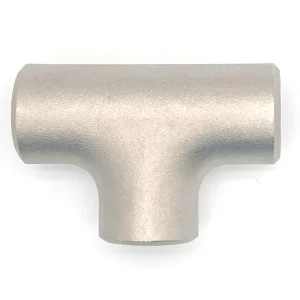
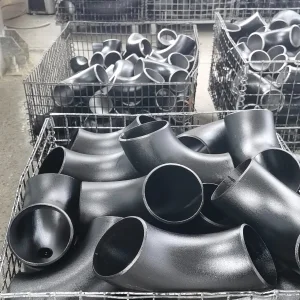
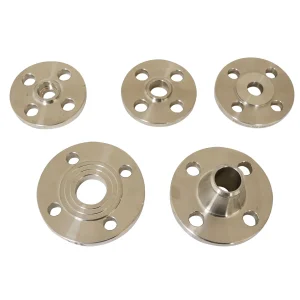
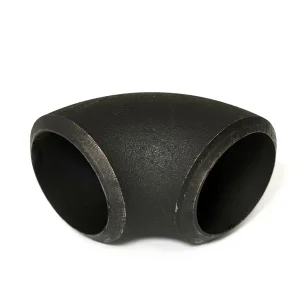
Examine our top-tier manufacturing output, ranging from high-yield stainless steel welded elbows to corrosion-resistant 316 ball valve fittings engineered for severe operational pressure.
The Structural Superiority of 316 Stainless Steel in Ball Valve Engineering
In modern process industries, the operational integrity of fluid transport networks hinges upon selecting appropriate alloy compositions for quarter-turn isolation devices. 316 Stainless Steel Ball Valves represent the gold standard for severe service environments, outperforming standard 304 grade alloys through superior resistance to pitting, crevice corrosion, and chemical degradation.
The fundamental distinction between 304 and 316 austenitic stainless steels lies in the addition of 2.0% to 3.0% Molybdenum (Mo) in Grade 316. This elemental inclusion vastly elevates the alloy's Pitting Resistance Equivalent Number (PREN), empowering China 316 ball valve manufacturers to deliver products tailored for aggressive chloride solutions, marine bio-fouling, and high-concentration acid streams.
| Alloy Parameter / Grade | AISI 304 (UNS S30400) | AISI 316 (UNS S31600) | AISI 316L (UNS S31603) |
|---|---|---|---|
| Chromium (Cr) Content | 18.0% - 20.0% | 16.0% - 18.0% | 16.0% - 18.0% |
| Nickel (Ni) Content | 8.0% - 10.5% | 10.0% - 14.0% | 10.0% - 14.0% |
| Molybdenum (Mo) Content | 0% (Trace) | 2.0% - 3.0% | 2.0% - 3.0% |
| Maximum Carbon (C) | 0.08% | 0.08% | 0.03% (Low Carbon) |
| Typical PREN Index | ~19.0 | ~23.0 - 25.0 | ~23.0 - 25.0 |
| Primary Risk Factor | Chloride Pitting Sensitivity | Sensitization at 450-850°C | None (Immune to Intergranular Corrosion) |
As demonstrated above, Chinese ball valve foundries leveraging Grade 316L (Low Carbon) ensure that welded inline valve bodies avoid carbide precipitation during high-temperature joining operations. This metallurgical nuance guarantees structural reliability across LNG regasification terminals, offshore FPSO topsides, and pharmaceutical synthesis plants.
Global Commercial & Industrial Status of 316 Ball Valve Manufacturing
The international industrial valve market, valued at upwards of $75 Billion USD, experiences unprecedented demand for high-reliability flow control hardware. Within this global ecosystem, China has transitioned from a high-volume component producer into a high-precision engineering epicenter. OEM procurement directors in North America, Europe, and the Middle East increasingly turn to specialized Chinese manufacturers for custom 316 ball valves compliant with stringent international standards (ASME B16.34, API 6D, ISO 17292, and CE-PED).
Leading Chinese manufacturing hubs in Cangzhou and Wenzhou employ automated NDT (Non-Destructive Testing), radiography, positive material identification (PMI), and hydrostatic pressure testing at 1.5x working pressure to ensure zero-defect exports.
By consolidating raw material sourcing, investment casting, precision CNC machining, and automated assembly within unified industrial zones, Chinese producers achieve unmatched price-to-performance metrics without sacrificing technical compliance.
Modern logistics networks facilitate seamless export under Incoterms (FOB, CIF, DDP), allowing EPC contractors worldwide to integrate Chinese 316 ball valves directly into complex, fast-track engineering projects.
Industry Development Trends: Intelligence & Decarbonization
The industrial valve manufacturing landscape is undergoing a paradigm shift driven by digital transformation, stricter environmental standards, and the transition toward green hydrogen energy vectors.
Modern 316 ball valves are increasingly fitted with intelligent pneumatic and electric actuators embedded with IoT diagnostic sensors. These sensors monitor real-time stem torque, thermal spikes, seat wear, and cycle counts, transmitting operational analytics via HART, Modbus, or WirelessHART protocols to enable predictive maintenance.
With global environmental regulations targeting VOC (Volatile Organic Compounds) leakage, top-tier Chinese factories design stem packing systems compliant with ISO 15848-1 Class AH and API 624. Utilizing live-loaded Belleville spring washers and engineered PTFE/Graphite packing rings guarantees leak-tight operations.
While soft-seated PTFE ball valves dominate standard temperature applications, high-pressure severe services demand metal-seated 316 ball valves. Chinese engineers employ Supersonic Flame Spraying (HVOF) to coat valve balls and seats with Stellite, Tungsten Carbide, or Chromium Carbide, extending operational thresholds past +500°C.
Localized Application Scenarios & Macro Industry Solutions
The versatile corrosion-resistant properties of 316 stainless steel ball valves make them essential across a vast array of critical infrastructure and high-purity processing applications.
Installed on FPSOs and drilling rigs, 316 ball valves withstand atmospheric salt spray and Sour Gas ($H_2S$) exposure. Valves engineered to NACE MR0175/ISO 15156 standards prevent sulfide stress cracking in high-pressure oil lines.
In chemical manufacturing plants utilizing sulfuric, acetic, and organic acids, 316 ball valves serve as reliable isolation points. The molybdenum content preserves wall integrity against oxidizing agents up to high thermal ranges.
Utilizing extended bonnet designs, 316 cryogenic ball valves operate effectively at temperatures as low as -196°C. The extended bonnet keeps stem packing out of the freeze zone, preserving gas tightness during LNG transport.
For bio-pharmaceuticals, food, and beverage lines, electro-polished 316L ball valves feature internal cavity-filled seats. This design eliminates internal voids where bacteria or particulate contamination could otherwise accumulate.
Technology Roadmap & Future Outlook (2025–2035)
As manufacturing paradigms evolve, Chinese valve developers are pioneering advances in materials science, computational fluid dynamics (CFD), and additive manufacturing to build the next decade's fluid control systems.
By leveraging 3D Finite Element Analysis (FEA) and Computational Fluid Dynamics, engineers refine internal flow passages to minimize turbulence, reduce head loss, and lower operational stem torque requirements by up to 22%.
Direct Metal Laser Sintering (DMLS) allows 3D printing of complex internal valve trim configurations and custom 316/Duplex alloy matrixes, creating lightweight valve bodies with optimized internal flow channels that traditional casting cannot replicate.
To combat hydrogen embrittlement in pure $H_2$ energy networks, researchers are perfecting low-permeability 316L micro-structures and specialized elastomer-free seating materials capable of containing ultra-small gas molecules under 700 bar pressures.
Frequently Asked Questions: 316 Ball Valve Engineering & Procurement
Get definitive technical answers regarding specifications, material selection, standard compliance, and operational best practices for 316 ball valves manufactured in China.
1. What is the main difference between 304 and 316 stainless steel ball valves?
2. When should I specify 316L over standard 316 for a ball valve body?
3. What soft seat materials are available for Chinese 316 ball valves, and how do their temperature ratings differ?
4. What manufacturing standards do top Chinese 316 ball valve factories comply with?
5. What is a stem blow-out proof design in 316 ball valves?
6. How do Chinese manufacturers verify the chemical composition of 316 stainless steel?
7. What is the difference between 1-piece, 2-piece, and 3-piece 316 ball valve body configurations?
- 2-Piece: Full port design, split body connection, standard flow capacity, easily replaceable.
- 3-Piece: Full port, central body swings out leaving pipe connections intact. Ideal for process lines requiring frequent inline seat replacement, cleaning, or maintenance.
8. How can I request customized torque ratings or actuator mounting pads?
Complementary Pipeline Fittings, Caps & Valve Assemblies
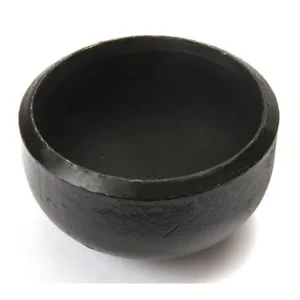
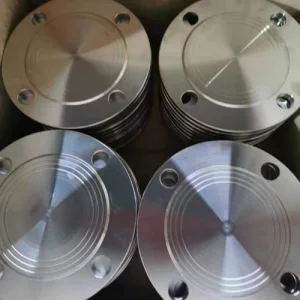
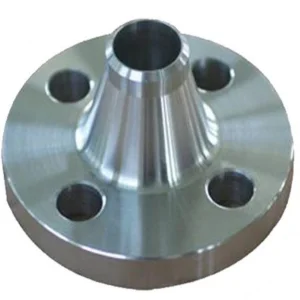
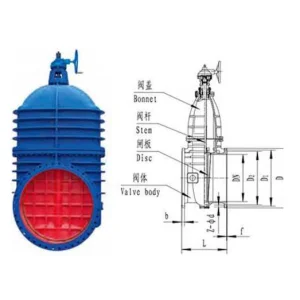
Explore our complete range of matching pipeline products, including carbon caps, blind flanges, dark wedge gate valves, and high-purity equal tees designed to complement your flow system.