Featured Industrial Gate Valves & Heavy-Duty Solutions
Global Industrial Valve Market & Economic Landscape
The global industrial valve manufacturing sector stands at the intersection of energy transition, infrastructure modernization, and advanced automation. Valued at over $78 billion dynamically expanding toward $112.4 billion by 2026, industrial valves serve as critical flow-control apparatuses across municipal waterworks, petrochemical refineries, thermal and nuclear power generation, marine transport, and chemical processing facilities. Understanding price quotations, manufacturing origins, and structural metallurgy is no longer merely a purchasing decision—it is a core risk-management discipline for EPC (Engineering, Procurement, and Construction) contractors worldwide.
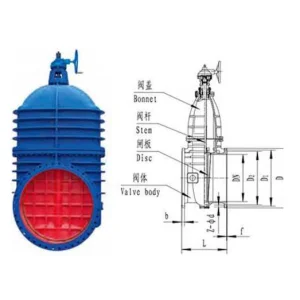
Currently, the market exhibits a bifurcated demand structure. On one spectrum, mature industrial hubs across North America and Western Europe emphasize severe-service valves—such as metal-seated ball valves designed for high-differential pressures and cryogenic butterfly valves engineered for LNG transport. On the other spectrum, rapidly urbanizing regions in Asia-Pacific, the Middle East, and Latin America demand massive volumes of resilient-seated gate valves (e.g., Z45X and Z41X series), centerline butterfly valves (D71X series), and cast steel gate valves (Z41H/W series) for potable water distribution, municipal sewage, district heating, and foundational infrastructure.
Information Gain Insight for EPC Buyers: When evaluating supplier quotes for large-bore gate valves and butterfly valves, quote variances exceeding 15-20% typically stem from metallurgical deviations (e.g., Grey Iron HT200 substituted for Ductile Iron QT450-10), seat elastomeric grades (recycled EPDM vs. 100% virgin peroxide-cured EPDM), or stem manufacturing shortcuts (rolled threads versus precision CNC-machined trapezoidal threads).
Furthermore, global supply chain realignments have positioned Chinese pipeline hubs—most notably Cangzhou in Hebei Province—as indispensable global manufacturing epicenters. Advanced regional manufacturing clusters provide integrated casting, forging, machining, rubber vulcanization, and hydro-testing capabilities within localized industrial ecosystems, dramatically reducing lead times and optimization costs for global buyers seeking OEM/ODM partnerships.
Technical Valve Classification & Material Matrix
Resilient & Soft-Seal Gate Valves
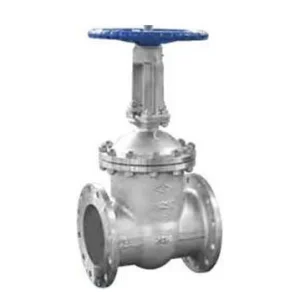
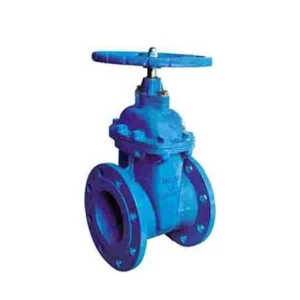
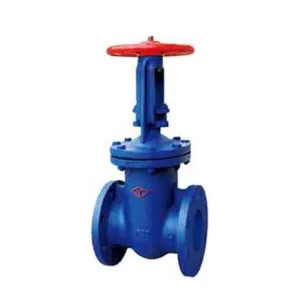
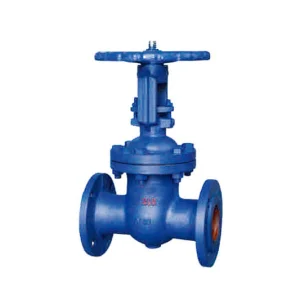
Engineered for zero-leakage fluid isolation in water supply networks. Utilizing encapsulated ductile iron wedges coated with EPDM or NBR, models such as Z45X-10Q/16Q/25Q prevent bottom-debris trapping and corrosion failure.
Double Eccentric & Butterfly Valves
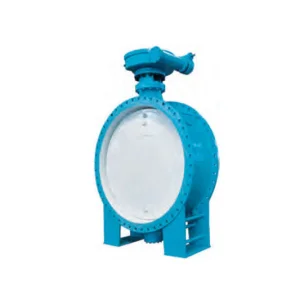
Offset stem geometries (D342X / D942X series) lift the disc off the seat during actuation, reducing friction, operating torque, and seat wear in high-flow municipal and industrial cooling water loops.
Cast & Stainless Steel Ball Valves
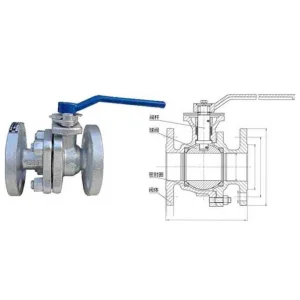
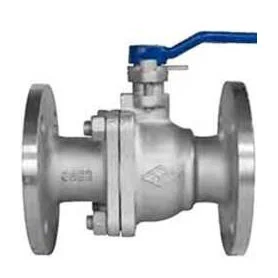
Q41F series ball valves in ASTM A216 WCB or ASTM A351 CF8/CF8M deliver quarter-turn, low-flow-resistance shutoff for aggressive chemical media, steam up to 2.5 MPa, and volatile hydrocarbon service.
Industrial Valve Engineering Specification Comparison Matrix
| Valve Family Code | Seating Type | Nominal Pressure (PN/Class) | Standard Materials | Temperature Envelope | Target Media & Scenarios |
|---|---|---|---|---|---|
| Z45X / Z41X | Resilient / EPDM Soft Seal | PN10 / PN16 / PN25 | Ductile Iron (QT450-10) | -10°C to 80°C | Potable Water, HVAC, Municipal Drainage |
| Z41T / Z41W / Z41H | Metal-to-Metal / Copper Ring | PN10 / PN16 / Class 150 | Cast Iron / WCB / SS304 | -20°C to 200°C | Industrial Steam, Crude Oil, Non-Corrosive Fluid |
| Z44T / Z944T | Parallel Double Gate | PN6 / PN10 / PN16 | Grey Iron / Ductile Iron | -10°C to 120°C | Low-Pressure Gas Lines, Ash Handling, Slurry |
| D342X / D942X | Double Eccentric Flanged | PN10 / PN16 / PN25 | Ductile Iron / Stainless Steel Disc | -15°C to 100°C | Raw Water Intakes, Power Plant Cooling |
| Q41F-16P/25P | PTFE / R-PTFE Soft Seat | PN16 / PN25 / Class 150-300 | SS304 (CF8) / SS316 (CF8M) | -40°C to 180°C | Nitric Acid, Organic Solvents, Petrochemical Process |
Macro-Industry Engineering Solutions & Application Scenarios
1. Municipal Water Supply & Potable Distribution Networks
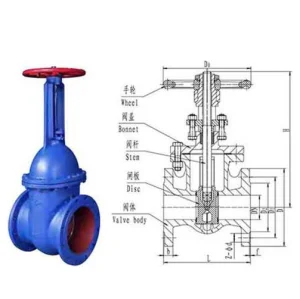
In municipal clean-water distribution, internal valve corrosion and water stagnation present severe public health and infrastructure risks. Traditional grey-iron wedge gate valves are susceptible to seat scaling and tuberculation. Modern engineering practice mandates the deployment of Non-Rising Stem Soft-Seal Gate Valves (Z45X series) fused with non-toxic electrostatic epoxy resin powder coating (minimum thickness 250 µm inside and outside). The straight-through bottom channel design eliminates sediment accumulation pockets, guaranteeing full-bore hydraulic efficiency and zero pressure drop penalties.
2. Petrochemical Refineries & Chemical Processing Plants
Refineries operating hydrotreating units, catalytic crackers, and distillation columns handle hazardous, volatile hydrocarbons under high pressures. In these environments, valve failure leads to catastrophic fugitive emissions or fire hazards. The solution requires API 6D and ASME B16.34 compliant Flanged Cast Steel Ball Valves (Q41F-150LB/300LB) and Stainless Steel Wedge Gate Valves (Z41W-16P/40P) featuring graphite fire-safe packing, anti-static grounding devices between stem and body, and blow-out proof stem design.
3. Thermal Power Generation & District Steam Networks
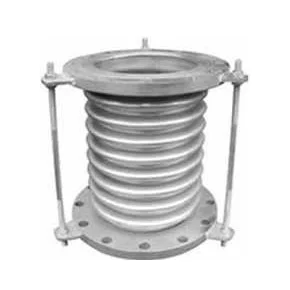
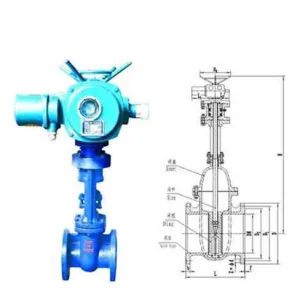
Steam lines present extreme thermal cycling challenges where piping expansion creates severe axial stresses. Piping engineers combine Electric Parallel Double-Gate Valves (Z944T/W series) with high-performance Stainless Steel Bellows Expansion Compensators. The double-gate mechanism prevents wedge thermal binding (jamming due to pipe contraction during shutdown), while the compensator absorbs thermal growth, mitigating pipeline fatigue and flange joint leaks.
4. Marine & Offshore Engine-Room Systems
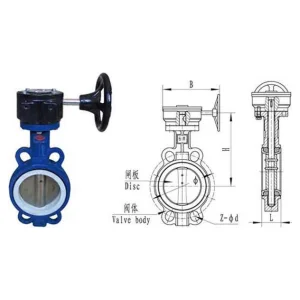
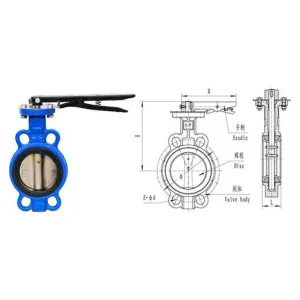
Shipboard sea-water cooling, ballast water management, and bilge systems demand compact, lightweight valves resistant to marine bio-fouling and chloride-induced pitting. Wafer and Lug-Type Centerline Butterfly Valves (D71X / D371X series) with Aluminum-Bronze discs (C95800) and vulcanized EPDM liners provide space-saving isolation with superior resistance to cavitation-erosion.
Technical Roadmap & Future Outlook (2025–2035)
Smart IoT Sensing & Predictive Maintenance
Integration of wireless pressure transducers, acoustic emission sensors, and digital positioners on motorized actuators (Z944W) enables real-time torque signature analysis, detecting packing degradation and seat leakage weeks before catastrophic plant downtime occurs.
Fugitive Emission Compliance (ISO 15848-1)
Strict environmental regulations targeting volatile organic compound (VOC) emissions mandate live-loaded PTFE and chevron graphite packing glands. Advanced valve manufacturing now guarantees stem leakages below 50 PPM (Class AH certified).
Cryogenic & Hydrogen Service Metallurgy
As green hydrogen and LNG bunkering expand, valve engineering shifts toward specialized austenitic alloys (316L, Hastelloy) and extended bonnet geometries that isolate stem packing assemblies from extreme cryogenic temperatures (-196°C).
B2B Procurement Strategy & TCO Quotation Framework
Evaluating commercial quotations for industrial valves requires looking far beyond the initial unit purchase price (CAPEX). A low-bid quote often masks hidden operating costs (OPEX) associated with premature seal failure, high operating torque requiring larger electric actuators, or non-compliant casting chemistry that causes stress corrosion cracking under pressure.
Key Pillars of a Rigorous Technical RFQ (Request for Quotation):
- Material Test Report (MTR) Verification: Demand EN 10204 3.1 certification for all pressure-retaining components (valve body, bonnet, wedge, disc). Ensure chemical composition (e.g., Nickel, Chromium, Molybdenum percentages) and mechanical tensile testing match ASTM / GB standards.
- Pressure Testing & Factory Acceptance Protocols: Every industrial valve must undergo shell hydrostatic testing (1.5× PN rating) and seat air/water tightness testing (1.1× PN rating) in strict adherence to API 598 or ISO 5208 standards prior to export dispatch.
- Coatings & Environmental Protection: For buried municipal gate valves or coastal applications, quotes must explicitly state coating type, thickness (minimum 250 microns FBE), and holiday test compliance (spark testing at 1.5 kV to 2.5 kV).
- Landed Logistics & Container Packing: Confirm robust seaworthy wooden crate packaging with moisture-barrier film and plastic end-cap covers to protect flanged faces during transoceanic shipping.
Frequently Asked Questions by Valve Buyers
What is the structural difference between Z45X resilient seat gate valves and traditional Z41T metal-seated wedge valves?
How do PN ratings (PN10, PN16, PN25) translate to American ASME pressure classes?
- PN10: 10 bar (1.0 MPa / approx. 145 PSI) – roughly equivalent to Class 75 rating.
- PN16: 16 bar (1.6 MPa / approx. 232 PSI) – intermediate rating between Class 75 and Class 150.
- PN25: 25 bar (2.5 MPa / approx. 362 PSI) – lower range of ASME Class 300.
- Class 150: Rated for approx. 20 bar (2.0 MPa / 285 PSI) at ambient temperature.
Why should buyers choose Double Eccentric Butterfly Valves (D342X) over Single Centerline Wafer Valves (D71X)?
What quality control documentation should accompany an industrial valve export order?
- EN 10204 3.1 Material Test Certificate (MTR) covering chemical composition and mechanical properties of body and trim.
- Factory Hydrostatic Shell & Seat Leakage Test Report (API 598 / ISO 5208).
- Non-Destructive Testing (NDT) reports (RT/UT/MT/PT) for high-pressure cast/forged components when specified.
- Epoxy Powder Coating Thickness & Spark Inspection Certificate.
- Certificate of Origin (CO) and Packing List detailing net/gross weights and heat numbers.
Can electric parallel double-gate valves (Z944T) be installed in vertical piping lines?
How do stainless steel ball valves (Q41F-16P/25P) perform under corrosive chemical exposure?
Butterfly Valves, Ball Valves & Expansion Compensators