High-Performance Piping & Fitting Components
Engineered for high-pressure, high-temperature, and corrosive industrial environments across global process sectors.
1. Global Procurement Demand & Supply Chain Dynamics for Industrial Tubing
Analyzing macroeconomic shifts, regional demand patterns, and strategic inventory modeling in modern industrial piping infrastructure.
The global market for industrial steel tubing, butt-weld fittings, forged components, and high-pressure flanges is experiencing a structural paradigm shift. Driven by energy transitions, mega-infrastructure modernization, LNG export infrastructure expansion, and deepwater offshore exploration, industrial procurement teams face an increasingly complex sourcing matrix. Selecting qualified wholesale tube suppliers and product manufacturers requires moving beyond simple per-ton unit pricing toward a holistic Total Cost of Ownership (TCO) evaluation framework.
In modern industrial procurement, supply chain resilience is anchored in material traceability, compliance with international pressure vessel codes (such as ASME, EN, DIN, and JIS), and seamless logistics execution. Enterprise buyers across North America, Europe, the Middle East, and Asia-Pacific are actively re-engineering their vendor lists to prioritize integrated group manufacturers capable of delivering fully documented, matched piping packages.
North American Energy Infrastructure
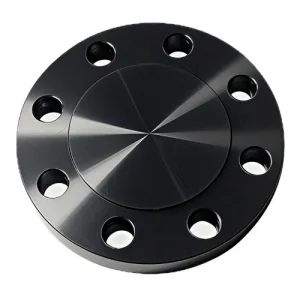
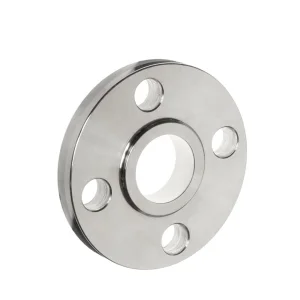
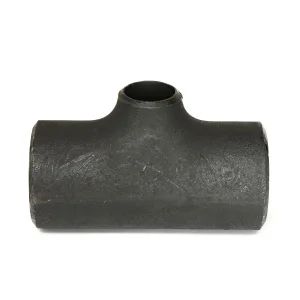
Demand is surging across the Gulf Coast for heavy-wall ASTM A106 Grade B seamless pipes, ASME B16.9 A234 WPB butt-weld fittings, and Class 600–2500 weld neck flanges for high-pressure gas processing and LNG liquefaction trains. Buyers mandate strict compliance with MTR EN 10204 3.1 certification and domestic or audited import origin approvals.
European Green Energy & Chemicals
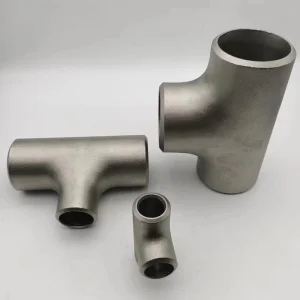
Strict environmental legislation (PED 2014/68/EU, REACH) and decarbonization drives have intensified sourcing for high-grade austenitic stainless steel (SS304L, SS316L, SS321) and Duplex/Super Duplex alloys (S31803, S32750). Sourcing focuses on zero-defect microstructures, low carbon content to prevent intergranular corrosion, and PREN > 40 ratings for aggressive offshore chemical environments.
Middle East Megaprojects & Desalination
National oil companies (NOCs) and EPC contractors demand vast inventories of large-diameter ERW and LSAW steel pipes, high-yield fittings (MSS SP-75 WPHY grades), and sour service carbon steel components tested against Hydrogen-Induced Cracking (HIC) and Sulfide Stress Cracking (SSC) in accordance with NACE MR0175 / ISO 15156.
2. Sector-Specific Macro Industry Solutions
Tailored piping engineering frameworks designed to overcome extreme operating pressures, thermal cycling, and aggressive chemical degradation.
Petrochemical & Downstream Refining Piping Systems
In refining process units such as hydrocrackers, fluid catalytic crackers (FCC), and delayed cokers, fluid containment systems are subjected to severe hydrogen attack, high-temperature sulfur corrosion, and cyclic thermal stresses. Enterprise solutions rely on seamless ASTM A335 alloy steel pipes (P11, P22, P91) paired with matching ASTM A234 WP11/WP22/WP91 fittings and ASTM A182 F11/F22 flanges.
For sour service containing wet H2S, carbon steel components must undergo specialized heat treatment (Normalizing & Tempering) and strict hardness control (≤ 22 HRC) to guarantee resistance to stress corrosion cracking.
Power Generation, Utility & High-Pressure Boilers
Supercritical and ultra-supercritical (USC) thermal power plants, heat recovery steam generators (HRSG), and nuclear secondary loops require steam piping engineered for ultra-high creep-rupture strength. Wall thicknesses frequently exceed 50mm to 150mm under heavy pressure regimes.
Suppliers must deliver precision-forged weld neck flanges and seamless elbows featuring full ultrasonic examination (UT) and radiographic testing (RT) to ensure zero internal voids or inclusions under long-term thermal fatigue.
Marine Engineering, Offshore Subsea & LNG Logistics
Offshore topside modules, subsea manifolds, and LNG regasification facilities require piping materials that combine extreme mechanical toughness with total resistance to chloride pitting and cryogenic embrittlement. Austenitic stainless steel SS321 (stabilized with titanium to prevent chromium carbide precipitation) and SS316L represent core baseline materials.
In cryogenic LNG operations at -161°C, Charpy V-Notch impact testing at cryogenic temperatures is mandatory to verify energy absorption capacity exceeding 27 Joules.
Hydrogen Economy & Clean Tech Process Piping
As gaseous hydrogen transport expands globally, pipeline materials face the risk of hydrogen embrittlement. Premium wholesale tube suppliers offer specially vacuum-melted low-alloy and stainless steels (such as 316L VIM-VAR) featuring ultra-smooth internal surface finishes (Ra < 0.25 μm) to minimize micro-fissures where hydrogen atoms can collect under extreme pressure (350 to 700 bar).
3. Metallurgical Roadmap, Material Standards & Technical Specifications
A complete engineering comparison of primary carbon, alloy, and stainless steel grades utilized across industrial pressure piping.
Selecting the correct material specification is critical to maintaining pipeline integrity, preventing catastrophic failure, and achieving a 30+ year plant operational lifespan. Industrial pressure components are manufactured under strict dimensional and chemical standards established by ASME, ASTM, EN, DIN, and JIS governing bodies.
| Material Category | Common Standard & Grade | Equivalent Fitting / Flange Standard | Tensile / Yield Strength (MPa) | Key Operational Environment |
|---|---|---|---|---|
| Carbon Steel | ASTM A106 Gr. B / A53 / API 5L Gr. B | ASTM A234 WPB / ASTM A105 / ASME B16.9 | ≥ 415 / ≥ 240 | General oil, water, steam, non-corrosive gas pipelines up to 400°C. |
| Low-Temp Carbon Steel | ASTM A333 Grade 6 | ASTM A420 WPL6 / ASTM A350 LF2 | ≥ 415 / ≥ 240 | Cryogenic and low-temperature service down to -45°C (Refrigeration, Cold Climate). |
| Chrome-Moly Alloy Steel | ASTM A335 P11 / P22 / P91 | ASTM A234 WP11 / WP22 / WP91 / A182 F91 | ≥ 585 / ≥ 415 (P91) | High-temperature, high-pressure steam power generation and hydro-processing (>550°C). |
| Austenitic Stainless Steel | ASTM A312 TP304L / TP316L / SS321 | ASTM A403 WP304L / WP316L / WP321 / A182 F316L | ≥ 485 / ≥ 170 | Chemical processing, marine environments, pharmaceutical, acid handling, wet H2S. |
| Duplex Stainless Steel | ASTM A790 UNS S31803 / S32205 (2205) | ASTM A815 UNS S31803 / A182 F51 | ≥ 655 / ≥ 450 | Offshore oil & gas, high-chloride desalination, marine piping, severe pitting environments. |
Corrosion Resistance Chemistry & PREN Value Calculation
In highly corrosive marine and offshore oil field environments, material resistance to localized pitting and crevice corrosion is quantitatively evaluated using the Pitting Resistance Equivalent Number (PREN) formula:
PREN = %Cr + (3.3 × %Mo) + (16 × %N)
Standard 316L stainless steel exhibits a PREN of approximately 23–25, which is susceptible to pitting in warm sea water. Conversely, Duplex 2205 achieves a PREN ≥ 34, while Super Duplex 2507 exceeds PREN 42, providing superior immunity against marine pitting and stress corrosion cracking (SCC).
4. Global Manufacturing Ecosystem & Industrial Cluster Strategy
How concentrated industrial clusters enable scale economies, ultra-tight dimensional tolerances, and world-class quality assurance.
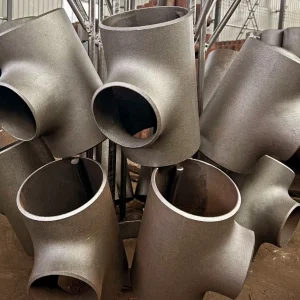
China's Hebei Province—specifically the Cangzhou pipeline equipment industrial cluster—stands as one of the world's most dense concentrations of heavy pipeline manufacturing infrastructure. Integrated group entities such as Hebei Cangrun Pipeline Equipment Co., Ltd. along with dedicated production subsidiaries (including Cangzhou Feiwo Metal Products Co., Ltd. and Cangzhou Feixiang Metal Products Co., Ltd.) represent an advanced manufacturing network engineered for massive output, rigid quality control, and direct factory export pricing.
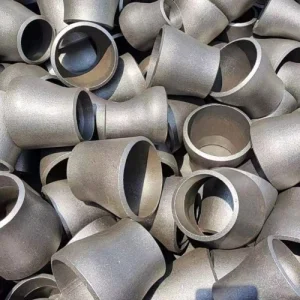
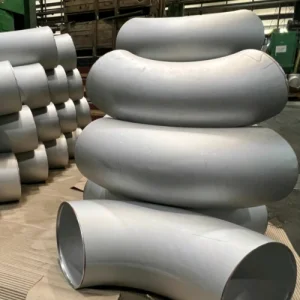
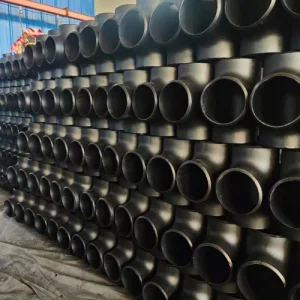
By consolidating raw pipe production, mandrel elbow forming, high-tonnage hydraulic tee forging, flange ring rolling, and valve assembly within unified regional industrial zones (e.g., Boerzhuang and Bobei Industrial Zones), production lead times are reduced by up to 35% compared to fragmented supply chains.
Advanced Forging & Forming Capability
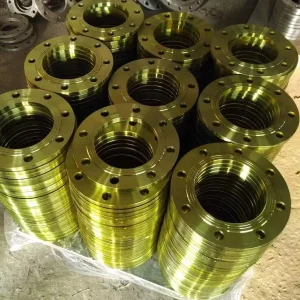
Utilizing high-capacity hydraulic hot-push elbow machines, cold-forming tee extruders, and computerized ring-rolling mills capable of forging seamless weld neck flanges up to DN4000 (160 inches) with wall thicknesses up to 150mm.
Precision CNC Machining & Facing
Multi-axis CNC turning centers ensure millimeter-precise beveling (ASME B16.25 37.5° bevel angle), smooth flange face serrations (Stock Finish Ra 3.2–6.3 μm or Smooth Finish Ra 1.6–3.2 μm), and exact bolt hole alignment.
Integrated Metallurgical Testing Lab
In-house laboratories conduct Positive Material Identification (PMI via portable XRF specs), Hydrostatic Pressure Testing up to 100 MPa, Ultrasonic Void Detection, Radiographic Weld Inspection, and Charpy Impact Testing.
5. Quality Control Protocols, Regulatory Compliance & Localized Support
Guaranteeing zero-defect international shipments through rigorous inspection regimes, document transparency, and end-to-end logistics tracking.
For international EPC contractors, procuring pipeline packages requires absolute adherence to rigorous regulatory standards. A single non-compliant component can halt a multi-billion-dollar refinery construction project or compromise pressure containment safety during commissioning. Premium wholesale tube suppliers maintain rigorous Quality Management Systems certified under ISO 9001:2015, ISO 14001:2015, and ISO 45001:2018.
Comprehensive Mill Test Report (MTR) Compliance
Every shipment is accompanied by Mill Test Reports fully verified in accordance with EN 10204 3.1 (or EN 10204 3.2 for independent third-party witnessed inspections such as SGS, TÜV, Lloyd's Register, or Bureau Veritas). MTRs detail complete chemical ladle analysis, mechanical yield/tensile/elongation results, heat treatment history, and NDT examination logs matching physical heat numbers hard-stamped on every fitting and flange.
Logistics, Port Clearance & Freight Risk Mitigation
Industrial piping products undergo heavy-duty export packaging: shot-blasted surfaces are treated with rust-inhibiting black lacquer, varnish, or yellow anti-corrosion oils; pipe bevels are fitted with plastic end protectors; flanges receive plastic face covers; and components are loaded into solid ISPM-15 heat-treated wooden crates or seaworthy steel-framed pallets.
Dedicated export teams actively monitor international ocean freight volatility, carrier surcharges (such as Peak Season Surcharges or port congestion fees), and regional tariff regulations (including US Section 301 tariffs, EU CBAM carbon tracking, and Anti-Dumping duties) to ensure transparent DDP/CIF landed cost delivery.
6. Comprehensive Whitepaper FAQ: Technical & Sourcing Inquiries
Expert answers to critical engineering, material selection, and procurement questions encountered during pipeline system specification.
Additional Industrial Flange & Fitting Series
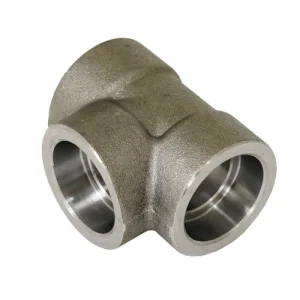
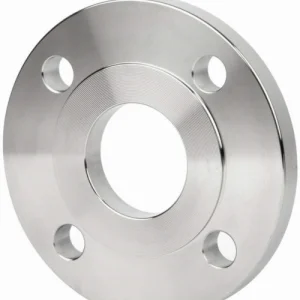
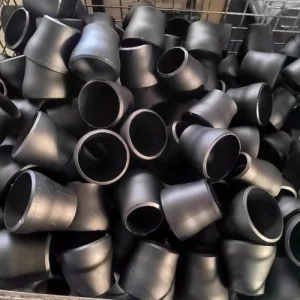
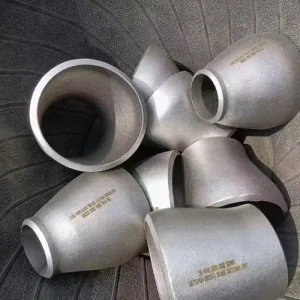
Explore our complete catalog of industrial flanges, specialized reducers, forged socket-weld fittings, and heavy-duty pipe bends.