
Featured High-Pressure Industrial Pipe Fittings (Catalog Part 1)
Precision-engineered forged and butt-welded piping components certified under ASME/ASTM, EN, and JIS specifications for severe service environments.
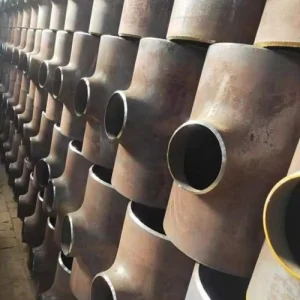
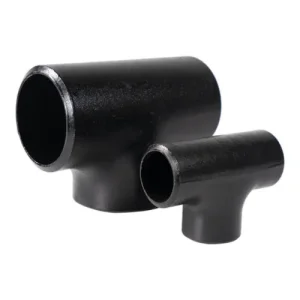
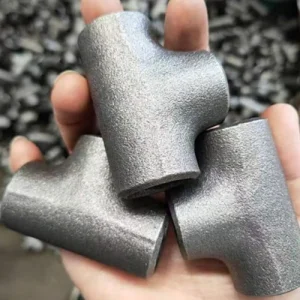
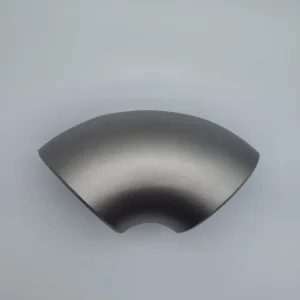
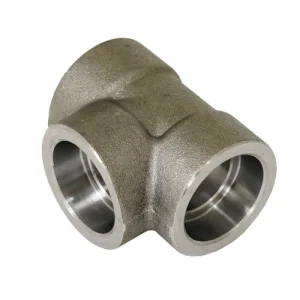
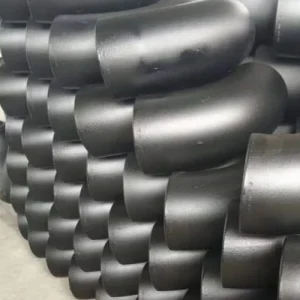
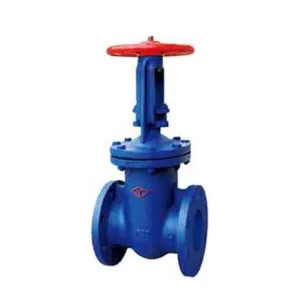
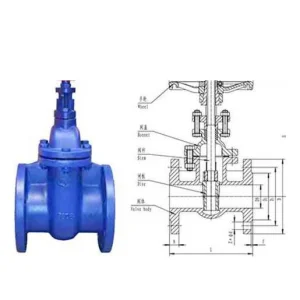
1. The Global High-Pressure Piping Landscape & Market Drivers
The international market for high-pressure pipe fittings, forged components, industrial flanges, and flow-control valves is undergoing a structural paradigm shift. Driven by ultra-deepwater oil extraction, green hydrogen transport, high-efficiency chemical processing, and nuclear power modernization, pipeline infrastructure requirements have moved far beyond standard pressure tolerances.
Global demand for ASME B16.11 Class 3000, 6000, and 9000 forged socket weld and threaded fittings has surged due to clean energy conversions. High-pressure hydrogen transport lines require ultra-clean inner walls and zero-porosity forged alloys to eliminate gas permeability and micro-fissuring.
Modern petrochemical cracking towers and boiler feed-water circuits operate at temperatures exceeding 600°C and pressures above 25 MPa. Component failure in these severe service environments causes catastrophic downtime, making certified material origin non-negotiable.
Global procurement teams must navigate complex compliance matrices including ASME BPVC, European Pressure Equipment Directive (PED 2014/68/EU), NACE MR0175/ISO 15156 for sour gas service, and stringent ISO 9001 quality management systems.
Global Industrial Manufacturing Metrics
2. Engineering Matrix: Materials, Standards & Pressure Ratings
High-pressure piping systems demand absolute engineering clarity across metallurgy, wall schedules, and pressure ratings. The table below outlines the core manufacturing scope for wholesale procurement.
| Fitting / Component Category | Applicable Standards | Material Classifications | Nominal Size & Pressure Ratings |
|---|---|---|---|
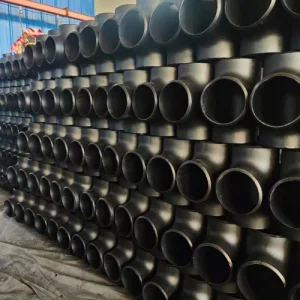
| Butt-Weld Fittings (Elbows, Tees, Reducers, Caps) |
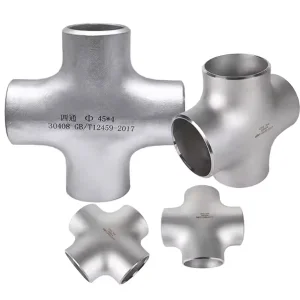
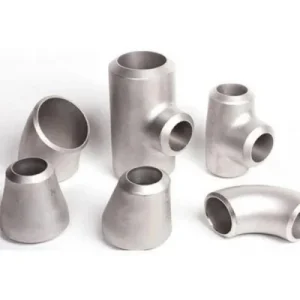
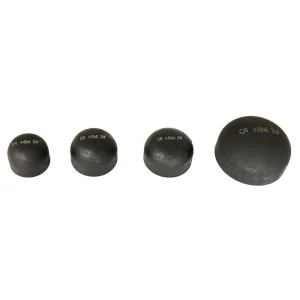
ASME B16.9, JIS B2311/B2312, GB/T 12459, EN 10253 | ASTM A234 WPB/WPC, A403 WP304/304L/316/316L, Alloy WP11/WP22/WP91 | Seamless: 1/2" to 24" (DN15-DN600) Welded: 4" to 78" (DN150-DN1900) WT: SCH5S up to XXS (Max 150mm) |
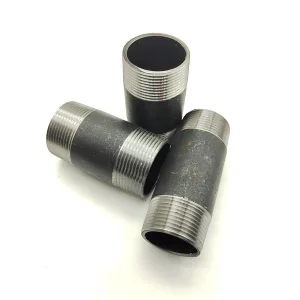
| Forged High-Pressure Fittings (Socket Weld & Threaded) |
ASME B16.11, BS 3799, MSS SP-83, MSS SP-95 | ASTM A105, A350 LF2, A182 F304L/F316L/F51/F53/F91 | Size: 1/8" to 4" (DN6-DN100) Pressure: Class 3000, 6000, 9000 Threads: NPT, BSPT, BSPP |
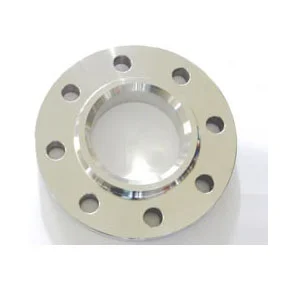
| Industrial Flanges (Weld Neck, Slip-On, Blind, Plate) |
ASME B16.5, ASME B16.47, EN 1092-1, JIS B2220 | Carbon Steel A105/ST37, Stainless Steel 304/316/317L, Duplex 2205/2507 | Size: 3/8" to 160" (DN10-DN4000) Pressure: Class 150 to 2500 / PN2.5 to PN400 Facings: FF, RF, G, MFM, RJ |
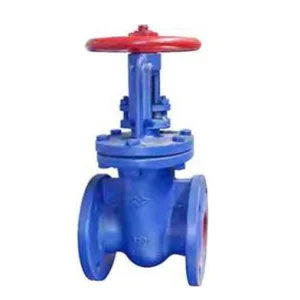
| Industrial Flow Control Valves (Wedge Gate, Soft Seal, Ball, Butterfly) |
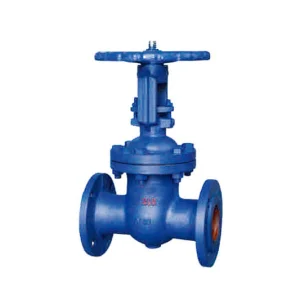
API 600, API 6D, BS 5163, DIN 3352, EN 593 | Ductile Iron (QT450), Cast Steel (WCB), Stainless Steel (CF8/CF8M) | Size: DN15 to DN1200 Pressure: PN10, PN16, PN25, Class 150-600 Temp Range: -20°C to +400°C |
For high-pressure regimes (>10 MPa), forged components (ASTM A105 / A182) offer vastly superior grain orientation compared to cast equivalents. Forging eliminates internal blowholes, shrink cavities, and micro-porosity, guaranteeing integrity under severe pressure pulsations.
Grade WP91 and P91 (9% Cr, 1% Mo modified with V/Nb) allow reduced wall thickness in high-temperature steam lines up to 600°C. Controlled normalizing and tempering cycles ensure precise tempered martensite microstructures required to prevent premature creep failure.
In offshore and acidic environments, Duplex 2205 (UNS S31803) and Super Duplex 2507 (UNS S32750) deliver yield strengths double that of conventional austenitic grades alongside extreme resistance to chloride pitting and stress corrosion cracking (SCC).
3. China's Supply Chain Resilience & Wholesale Manufacturing Efficiency
China's pipeline equipment sector, centered around specialized industrial hubs like Cangzhou in Hebei Province, has evolved from low-cost manufacturing to automated, high-precision metallurgical production.
Concentrated regional supply chains—integrating raw steel billet casting, heavy forging presses, CNC machining centers, heat-treatment facilities, and specialized logistics within a 50 km radius—drastically reduce lead times and production friction.
Modern Chinese factories utilize multi-directional closed-die forging presses (up to 10,000 tons) paired with 5-axis CNC machining, ensuring tight dimensional tolerances on bevel angles, root faces, and flange sealing surfaces.
Direct integration with major steel mills (such as Baosteel, TPCO, and Ansteel) guarantees continuous access to certified raw seamless pipe shells, billets, and plate with low sulfur and phosphorus content.
Streamlined energy utilization, high-volume production lines, and optimized export logistics deliver substantial price advantages without compromising stringent EN 10204 3.1/3.2 material certification standards.
4. Regional Application Scenarios & Engineering Field Deployment
High-pressure pipe fittings and valves must be selected based on localized environmental hazards, pressure regimes, and operational standards across different geographic zones.
Primary Environment: Permian Basin, Gulf Coast LNG Terminals.
Piping Requirements: High-yield carbon steel fittings (ASTM A860 WPHY 52/60/65/70) paired with ASME B16.5 Class 600/900 Weld Neck flanges. Must withstand cyclic hydraulic fracturing pressures and low-temperature gas processing down to -46°C (ASTM A350 LF2 testing).
Primary Environment: Arabian Gulf Offshore Platforms, Desalination Plants.
Piping Requirements: Strict NACE MR0175/ISO 15156 compliance to prevent Sulfide Stress Cracking (SSC). Forged fittings and flanges require HIC (Hydrogen-Induced Cracking) testing and CRA cladding (Inconel 625 overlay) for seawater intake manifold lines.
Primary Environment: North Sea Hydrogen Hubs, District Heating Networks.
Piping Requirements: EN 10253-4 stainless steel welded elbows, tees, and soft seal resilient gate valves (Z45X series). Focus on zero-fugitive-emission stem packing, tight tolerance face-to-face dimensions, and PED CE certification.
5. Technology Roadmap & Future Outlook (2025–2035)
The high-pressure piping sector is entering an era of digital metallurgy, additive manufacturing, smart monitoring, and advanced anti-corrosion coatings.
Transitioning from manual Ultrasonic Testing (UT) to Automated Phased Array UT (PAUT) integrated with AI algorithms. Identifies sub-millimeter inclusions in forged elbows and tees before final machining.
Integration of wireless strain gauges and piezoelectric leak detection sensors inside Ring Type Joint (RTJ) gasket grooves to monitor bolt tension and flange seat integrity in real time.
Combining 3D Wire Arc Additive Manufacturing (WAAM) with post-forge thermal compression for custom 4-way cross fittings and complex manifold geometries without tooling lag.
Development of ultra-pure low-carbon steel alloys engineered specifically to resist embrittlement in pure 100 bar hydrogen gas distribution backbones.
6. Quality Assurance, Localized Compliance & Procurement Protocol
Navigating global procurement requires rigorous quality control protocols and complete material traceability from ingot casting to site installation.
Every shipment must be accompanied by EN 10204 Type 3.1 or 3.2 inspection certificates detailing chemical composition (PMI testing), mechanical properties (tensile, yield, elongation), Charpy V-Notch impact testing at specified sub-zero temperatures, and heat treatment charts.
Fittings, valves, and pipes undergo 100% Hydrostatic Testing up to 1.5 times the design working pressure. Non-Destructive Testing options include Radiographic Testing (RT) for welds, Magnetic Particle Inspection (MPI) for surface cracks, and Liquid Penetrant Testing (LPT) for stainless grades.
Heavy forged fittings are treated with anti-rust black varnish, clear oil, or hot-dip galvanizing, followed by plastic end-cap protection. Products are packed in ISPM-15 compliant sea-worthy wooden cases or steel-framed crates designed for safe container loading and port handling.
Featured High-Pressure Industrial Pipe Fittings (Catalog Part 2)
Explore additional carbon steel, alloy, stainless steel, and industrial valve components available for direct factory export.
7. Frequently Asked Questions (FAQ) for Piping Engineers & B2B Buyers
Addressing essential technical, quality, logistics, and compliance queries standard in international pipeline procurement.