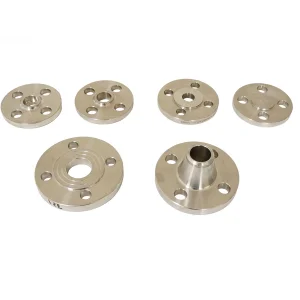
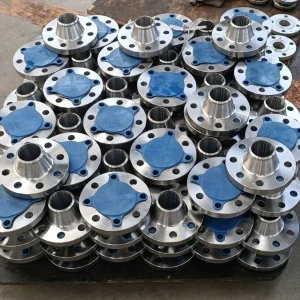
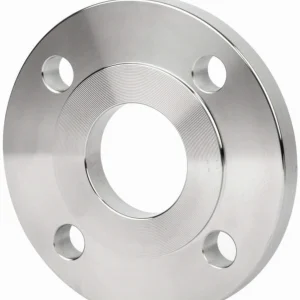
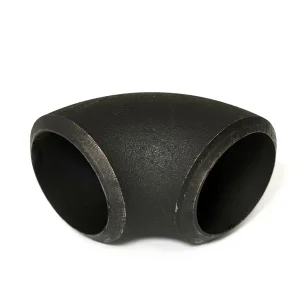
Essential Industrial Fittings & Flanged Components
Browse our factory-direct industrial fittings, flanges, and piping connection systems engineered for severe thermal and high-pressure operational environments.
Engineering Fundamentals & Fluid Dynamics of Flange Strainers
In high-velocity fluid handling, hydrocarbon refining, thermal power generation, and chemical processing networks, flange strainers serve as the primary defensive line for sensitive downstream assets including control valves, flow meters, centrifugal pumps, steam traps, and turbine nozzles. By mechanically arresting entrained rust scale, weld slag, debris, and solid particulates, flanged straining units prevent catastrophic mechanical seizures, seat erosion, and unplanned operational shutdowns.
Comprehensive Flange Strainer Typology & Selection Framework
Selection of the correct mechanical configuration depends on fluid phase (liquid, steam, gas), operating pressure class, permissible head loss, and maintenance accessibility requirements.
Characterized by a compact cylindrical body with a angled straining leg (typically 45° to 60° relative to the main flow vector). Y-strainers excel in gas, air, and high-pressure steam pipelines where debris concentration is low to moderate. They can be installed horizontally or vertically (downward flow) and feature a blow-off port on the strainer cap for fast self-cleaning flushing without total disassembly.
Built with a top-entry vertical chamber housing a large bucket-style mesh basket. Designed primarily for liquid services (cooling water, fuel oils, liquid chemicals) where high holding capacity for solid contaminants is mandatory. Basket strainers exhibit significantly lower pressure drop coefficients than Y-strainers and allow top-cover removal for ergonomic basket cleaning without fluid spillages.
Consisting of two parallel straining chambers linked by an integrated three-way diverter valve. Duplex strainers are engineered for critical 24/7 continuous process lines where fluid flow cannot be interrupted. When one basket chamber becomes fouled, a simple stroke of the diverter handle seamless diverts flow to the clean chamber, allowing safely isolated servicing and basket washdown while full plant operation continues uninterrupted.
Flat-ring sandwiched units installed directly between two standard ANSI or DIN pipeline flanges during initial plant commissioning. These lightweight, low-cost elements trap construction debris (weld spatter, mill scale, rags) during pipeline flushing. Once commissioning cleanups are verified, temporary strainers are removed or replaced with permanent inline Y- or basket strainers.
Technical Selection Matrix across Strainer Types
| Strainer Type | Primary Fluid Phase | Pressure Class Range | Dirt Holding Capacity | Relative $\Delta P$ Loss | Maintenance Downtime |
|---|---|---|---|---|---|
| Flanged Y-Strainer | Steam, Gas, Liquids | ANSI 150# to 2500# (PN10-PN400) | Moderate | Medium to High | Requires System Isolation / Blow-off |
| Simplex Basket Strainer | Liquids, Viscous Fluids | ANSI 150# to 600# (PN10-PN100) | High to Very High | Low | Short Shut-down / Top Removal |
| Duplex Basket Strainer | Critical Liquid Lines | ANSI 150# to 600# (PN10-PN100) | Maximum Continuous | Low to Medium | Zero Downtime (Inline Diverter) |
| Conical Temporary | Pre-commissioning Liquids/Gas | Sandwiched between RF/RTJ Flanges | Low | Varies by Mesh Area | Requires Flange Unbolting |
Metallurgical Engineering & International Compliance Standards
To survive aggressive chemical media, marine splash zones, and extreme temperature cycles, flange strainer bodies and internal mesh screens must strictly align with internationally standardized chemical and mechanical parameters.
Strainers are cast or forged in accordance with rigid metallurgical specifications:
- Carbon Steel (ASTM A216 WCB / WCC): Standard choice for non-corrosive industrial water, oil, and steam lines up to 425°C.
- Stainless Steel (ASTM A351 CF8 / CF8M / CF3M): Highly resistant to chemical corrosion, organic acids, and cryogenic fluids (-196°C to 537°C).
- Duplex & Super Duplex Steel (2205 / 2507 / ASTM A890): Selected for marine offshore platforms, seawater cooling, and high-chloride desalinization plants.
- Alloy Steel (ASTM A217 WC6 / WC9): High-temperature chrome-moly alloys optimized for power plant steam header lines.
The screen element typically features a heavy-gauge perforated backer cylinder lined with a fine wire mesh liner. Selecting mesh density requires balancing filtration accuracy against flow restriction:
- 20 Mesh (840 Microns): Coarse protection for pump suction & raw water lines.
- 40 Mesh (420 Microns): General purpose filtration for steam traps & meters.
- 80 Mesh (177 Microns): Medium fine filtration for oil burners & spray nozzles.
- 100 to 200 Mesh (149 to 74 Microns): Precision chemical process conditioning.
Global Engineering Compliance Standards
| Standard Body | Design & Manufacturing | Flange Dimensions | Pressure Testing | NACE Corrosion Standard |
|---|---|---|---|---|
| American Standards (ASME / API) | ASME B16.34 / API 598 | ASME B16.5 (Up to 24") / B16.47 (26" and up) | API 598 / ASME B16.34 | NACE MR0175 / ISO 15156 (Sour Gas) |
| European Standards (EN / DIN) | EN 12516 / DIN 3840 | EN 1092-1 Type 01, 11, 21 / DIN 2501 | EN 12266-1 | ISO 15156 Compliant Alloys |
| Japanese Standards (JIS) | JIS B2001 / B2071 | JIS B2220 (5K, 10K, 16K, 20K, 30K) | JIS B2003 | JIS Standard Metallurgies |
Wholesale Flange Strainer Cost Drivers & Procurement Benchmarks
Understanding B2B pricing structures allows EPC procurement teams and pipeline distributors to optimize capital expenditure (CAPEX) while maintaining rigorous engineering safeguards.
Body casting material represents 50% to 70% of total strainer manufacturing costs. Carbon steel (WCB) serves as the economic cost baseline. Upgrading to CF8M (SS316) introduces a 2.5x to 3.2x price multiplier, whereas Duplex 2205 or Super Duplex 2507 can increase unit prices by 4.5x to 6.8x due to nickel, chromium, and molybdenum commodity fluctuations.
As ASME pressure classes ascend from Class 150 to Class 900 or 2500, wall thickness, flange thickness, and bolt hole circle dimensions expand exponentially. Higher pressure ratings demand specialized NDT testing (X-Ray radiography, magnetic particle inspection), driving labor and inspection overhead upward.
Replacing standard bolted cap covers with quick-opening hinged covers (swing-bolt or davit-arm structures for large diameter basket strainers) adds convenience for operations personnel but incurs structural design and precision machining costs (typically a 15-30% premium).
Wholesale B2B Price Range Benchmarks (Indicative USD)
| Nominal Size (DN / Inches) | Class 150 Carbon Steel (WCB) | Class 150 Stainless (SS316 / CF8M) | Class 300 Carbon Steel (WCB) | Class 600 Heavy Duty Alloy |
|---|---|---|---|---|
| DN50 (2 Inch) | $85 - $130 | $220 - $340 | $140 - $210 | $380 - $550 |
| DN100 (4 Inch) | $240 - $380 | $650 - $980 | $390 - $580 | $1,100 - $1,650 |
| DN200 (8 Inch) | $680 - $1,050 | $1,850 - $2,900 | $1,150 - $1,700 | $3,200 - $4,800 |
| DN300 (12 Inch) | $1,450 - $2,200 | $4,100 - $6,200 | $2,400 - $3,600 | $6,800 - $9,500 |
| DN600 (24 Inch) | $5,200 - $7,800 | $14,500 - $22,000 | $8,900 - $13,500 | $24,000 - $35,000 |
China Industry 4.0: Supply Chain Resilience & Cangzhou Industrial Hub
Modern industrial valve and flange production has transitioned from manual forge work to fully automated, data-driven smart manufacturing eco-systems concentrated in Hebei Province.
Cangzhou, Hebei has established itself as the world's dense industrial cluster for pipeline fittings and pressure vessel components. With raw steel foundries, automated forge presses, CNC machining centers, and certified NDT testing facilities situated within a 30-kilometer radius, logistics friction is minimized, leading to lead time reductions of up to 40% compared to fragmented international supply chains.
Modern Chinese manufacturing facilities leverage digital twin flow simulations, robotic multi-axis CNC flange facing lathes, automated spectro-laser material verification (PMI), and computerized hydro-test rigs. Every single strainer body undergoes pressure holding tests at 1.5x working pressure in accordance with API 598, tracked digitally via mill test certification (EN 10204 3.1).
By retaining large stockpiles of standardized ANSI B16.5 forged flanges, un-machined raw castings, and wire cloth mesh rolls, Cangzhou production hubs can cushion global buyers against geopolitical container bottlenecks, material price spikes, and sudden emergency shutdown demands.
Global Demand Drivers & Sector-Specific Application Scenarios
Macro trends in green hydrogen production, LNG regasification, municipal district heating, and industrial wastewater treatment are driving global consumption of high-specification flanged straining units.
Liquefied Natural Gas regasification requires specialized stainless steel (CF8M) Y-strainers and basket filters operating down to -162°C. Extended bonnets and cryogenic gasket seal materials prevent fluid leakage, protecting boil-off gas compressors from microscopic pipe debris.
Reverse osmosis (RO) membranes in seawater desalination plants demand pre-filtration using Super Duplex 2507 strainers with 100-mesh screens. High corrosion resistance (PREN > 40) is essential to resist pitting and crevice corrosion under high salinity conditions.
Municipal heating networks utilize large-diameter (DN300 to DN1000) ductile iron or WCB flanged Y-strainers on boiler returns. These heavy-duty strainers prevent magnetite scale and calcium buildup from fouling high-efficiency plate heat exchangers.
Frequently Asked Questions on Flange Strainer Engineering
Expert answers to common engineering, procurement, and maintenance questions regarding pipeline strainers.
Explore Additional Factory-Direct Pipe Fittings & Flanges
Complete your plant piping requirements with our matched carbon steel, stainless steel, and alloy fittings, engineered to identical pressure ratings and flange standards.