Featured Industrial Components
Factory-direct pipeline and flange solutions engineered to international standards.
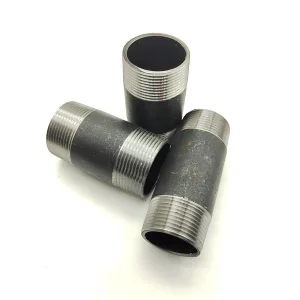
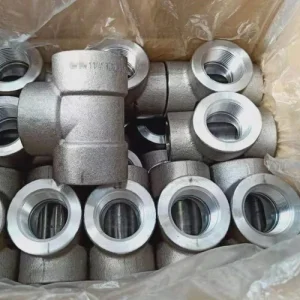
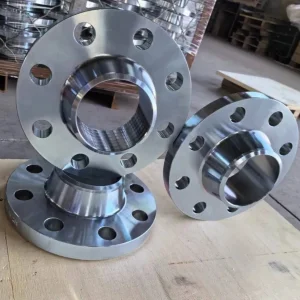
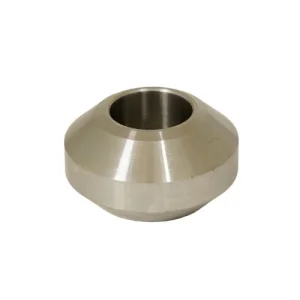
Macro Global Commercial & Industrial Landscape
The global industrial piping and flange market is experiencing a structural paradigm shift. Driven by clean energy transitions, deepwater offshore exploration, and ultra-supercritical (USC) thermal efficiency standards, procurement specifications for alloy flanges have evolved beyond basic mechanical connections into critical micro-engineered safety assets.
Energy Transition Dynamics
As conventional oil and gas facilities integrate with carbon capture, utilization, and storage (CCUS) projects, process lines demand alloy flanges capable of enduring cyclic supercritical CO₂ exposure. High-yield Chrome-Moly (ASTM A182 F91/F92) and Nickel alloys are replacing standard carbon steel grades to guarantee zero micro-fracturing under rapid thermal cycling.
Supply Chain Rationalization
Global Engineering, Procurement, and Construction (EPC) contractors are consolidating vendor lists. B2B purchasers now prioritize single-source manufacturing clusters capable of delivering certified forgings, matching butt-weld fittings, seamless pipes, and specialized industrial valves within unified quality management systems (ISO 9001, PED 2014/68/EU).
Comprehensive Alloy Metallurgy & Engineering Matrix
Selecting the optimal alloy grade requires a balance between tensile yield strength, creep rupture ductility, localized pitting resistance, and total cost of ownership. The table below outlines technical characteristics across our forging capability spectrum.
| Alloy Classification | Standard & Grade | Tensile Strength (MPa) | Yield Strength (MPa) | Operating Temp Range | Primary Industrial Applications |
|---|---|---|---|---|---|
| Low Alloy Chrome-Moly | ASTM A182 F11 / F22 | ≥ 485 / ≥ 515 | ≥ 275 / ≥ 310 | -29°C to 593°C | Steam lines, power boilers, cracking units |
| High Alloy Creep-Resistant | ASTM A182 F91 / F92 | ≥ 585 / ≥ 620 | ≥ 415 / ≥ 440 | -29°C to 650°C | Ultra-supercritical power generation, heat exchangers |
| Austenitic Stainless | ASTM A182 F316L / F347H | ≥ 485 / ≥ 515 | ≥ 170 / ≥ 205 | -196°C to 815°C | Cryogenic LNG, organic acids, high-temp exhaust |
| Duplex & Super Duplex | UNS S31803 / S32750 (F51/F53) | ≥ 655 / ≥ 750 | ≥ 450 / ≥ 550 | -50°C to 280°C | Desalination, marine offshore, high-chloride media |
| Nickel Superalloys | Inconel 625 / Hastelloy C276 | ≥ 760 / ≥ 690 | ≥ 415 / ≥ 283 | -196°C to 1000°C+ | Flue gas desulfurization, aggressive sour gas (H₂S) |
Macro Industry Solutions & Heavy-Duty Integration
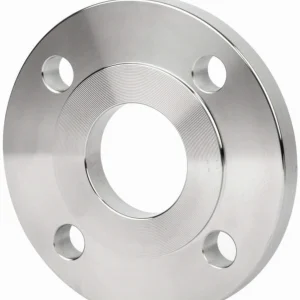
Alloy flanges serve as critical pressure-retaining components in systems where unexpected structural failure risks significant operational downtime and safety hazards. We design engineered flange assemblies optimized for demanding environments.
Subsea & Offshore Energy
For subsea manifolds operating at depth, our Swivel Ring Flanges and Compact Weld Neck Flanges utilize Duplex UNS S32750 forgings. These eliminate orientation misalignment during underwater tie-ins while resisting pitting corrosion in high-salinity marine environments (PREN ≥ 42).
Hydrocarbon Refining & Hydroprocessing
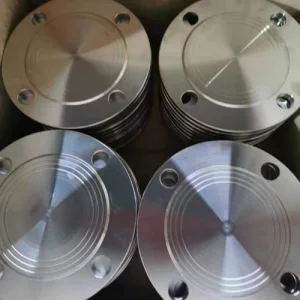
In high-pressure hydrocracking units subject to high-temperature H₂/H₂S media, our ASTM A182 F11 and F22 blind and weld neck flanges undergo 100% Ultrasonic Testing (UT) per ASME VIII Div 1 and conform strictly to NACE MR0175/ISO 15156 hardness limits (≤ 22 HRC).
Supercritical Power Generation
Main steam piping operating above 600°C requires ASME B16.5 Class 1500 and Class 2500 Ring Type Joint (RTJ) flanges crafted from modified 9Cr-1Mo-V steel (Grade F91). Precision-machined ring grooves prevent seal relaxation under severe cyclic thermal stress.
Technical Roadmap & Future Manufacturing Outlook
Industrial piping infrastructure is entering a transformation driven by advanced metallurgy and digital monitoring. Our research and development initiatives align with upcoming international engineering standards.
Additively Manufactured Alloy Flange Prototypes
By pairing traditional drop-forging techniques with Wire Arc Additive Manufacturing (WAAM), we are reducing production lead times for specialized custom flanges (e.g., Hastelloy C22, Monel 400). This hybrid approach creates dense microstructures that meet or exceed ASTM forging mechanical requirements while reducing material waste.
Smart Flanges with Embedded Strain & Temperature Sensors
To support predictive maintenance in remote pipelines, next-generation smart alloy flanges feature micro-machined internal channels housing piezoelectric strain gauges and fiber-optic temperature sensors. These transmit real-time bolt load relaxation and flange face warping metrics directly to SCADA systems.
Localized Support, Regulatory Compliance & Quality Assurance
Exporting high-pressure alloy components requires adherence to regional codes and quality inspection procedures. We maintain full traceability from raw ingot melting to final sea-freight packaging.
100% Positive Material Identification (PMI)
Every single alloy flange is subjected to X-ray Fluorescence (XRF) or Optical Emission Spectrometry (OES) testing prior to dispatch. Material Test Reports (MTRs) compliant with EN 10204 3.1 / 3.2 detail chemical element percentages, mechanical yield/tensile values, and heat numbers.
Global Code Compliance
Our production lines operate under verified quality frameworks: ASME Section VIII Div 1 & 2, ASME B16.5, ASME B16.47 (Series A & B), European Pressure Equipment Directive (PED 2014/68/EU), AD 2000-Merkblatt, and Japanese Industrial Standards (JIS B2220).
Logistics & Logistics Protection
Export components are protected against marine transit rust through heavy-duty oil coating, plastic end-cap edge protectors, and sea-worthy, heat-treated wooden crates conforming to ISPM-15 export regulations.
Localized Regional Application Scenarios
Global industrial projects operate under varying environmental stresses, regulatory mandates, and media conditions. Here is how our wholesale alloy flanges perform across regional operational landscapes.
Middle East (GCC Region): High-H₂S Sour Gas Processing
Operating in harsh desert climates with sour gas feeds containing elevated concentrations of hydrogen sulfide (H₂S) and carbon dioxide (CO₂), regional operators require ASTM A182 F22 and Nickel Alloy Incoloy 825 clad flanges. These products conform to NACE MR0175, resisting sulfide stress cracking (SSC) and hydrogen-induced cracking (HIC).
North Sea & Arctic Offshore: Low-Temperature Impact Toughness
Offshore floating production storage and offloading (FPSO) vessels in northern marine environments demand sub-zero notch toughness. Our Low Alloy ASTM A350 LF2 / LF3 and Super Duplex F55 flanges undergo Charpy V-Notch impact testing down to -46°C and -101°C, exceeding NORSOK L-005 requirements.
Technical & Procurement Q&A (FAQ)
Clear answers to common technical queries regarding specifications, testing, lead times, and global shipping.
Additional Industrial Piping Components
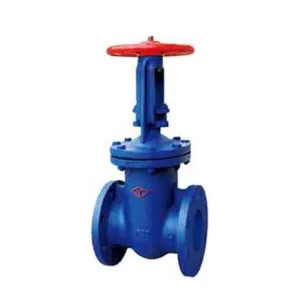
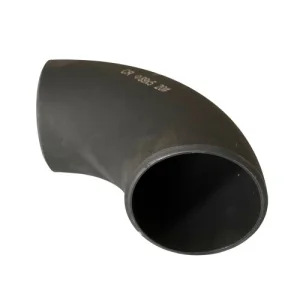
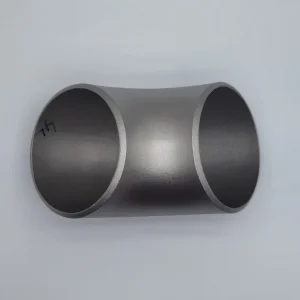
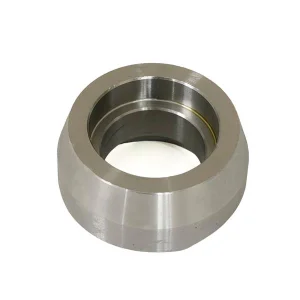
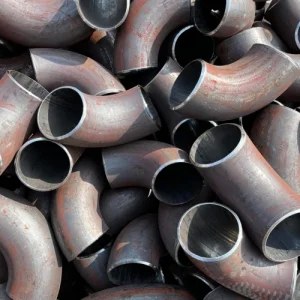
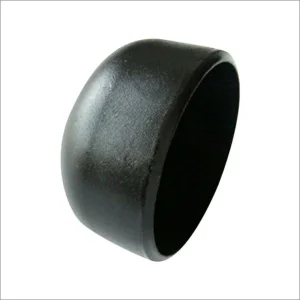
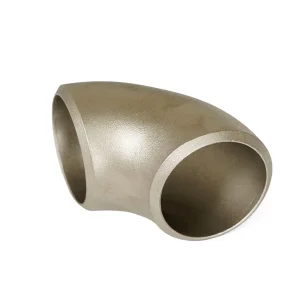
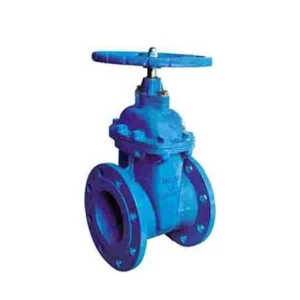
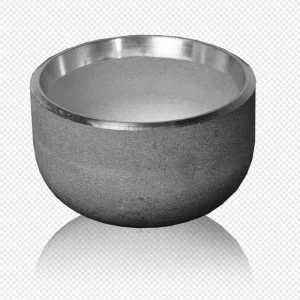
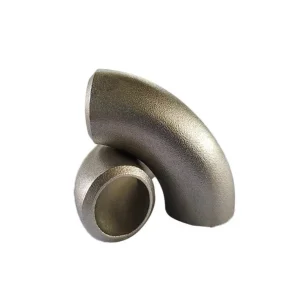
Complete your piping package with matching valves, elbows, caps, and specialized fittings.