
Featured Industrial Piping & Valve Catalog (Part I)
Direct factory engineering supplies certified under ISO 9001, API 6D, and CE-PED standards. Click details for technical specifications and direct RFQ quotes.
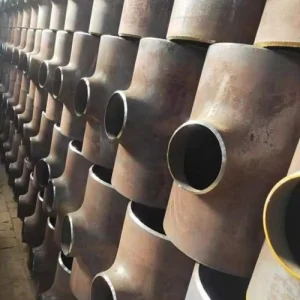
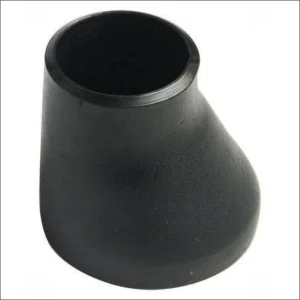
High-Quality Concentric /Eccentric Reducer Butt Weld Pipe Fitting Manufacturers, Product
Get Quote & Specs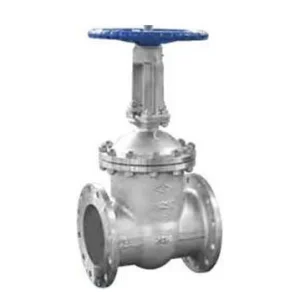
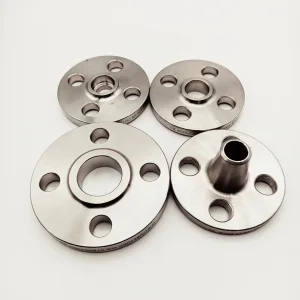
China ANSI B16.5/DIN/En1092/GOST/BS Forged/Forging Fitting Carbon/Stainless Steel Pn10/16 Weld neck /Blind/Slip on/Flat Plate/Socket Pipe Flange Manufacturer, Products
Get Quote & Specs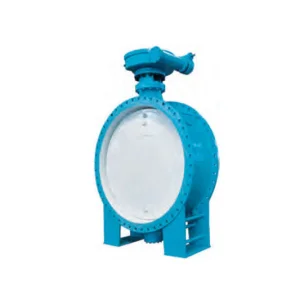
Wholesale Double eccentric flange butterfly valve D342X-10/10Q D942X-10/10Q D342AX-16 Factory, Company
Get Quote & Specs
Deconstructing the Two-Piece Ball Valve: Architectural Integrity & Engineering Principles
In high-stakes fluid handling environments—ranging from cryogenic chemical process piping to ultra-high pressure petrochemical refining—the selection of Quarter-Turn Isolation Valves dictates system safety, overall thermal cycle endurance, and operational reliability. Among standard quarter-turn isolation devices, the Two-Piece Ball Valve stands out as the optimal compromise between structural rigidity, maintainability, and procurement cost-efficiency.
Unlike single-piece unibody valves—which suffer from reduced port sizes (standard port design) and non-repairable internal trims—a two-piece ball valve features a split body consisting of a primary housing body and an end adapter connected via high-tensile body bolts or heavy-duty threaded joints. This split construction enables a true Full-Bore (Full Port) design where the internal diameter of the ball port matches the nominal pipe size (NPS), eliminating fluid friction, minimizing pressure drop ($\Delta P \approx 0$), and preventing turbulent fluid cavitation.
Comparative Structural Analysis: 1-Piece vs. 2-Piece vs. 3-Piece Ball Valves
Procurement specialists and piping reliability engineers frequently evaluate valve topologies against capital expenditure (CAPEX) and lifecycle maintenance costs (OPEX). Below is an engineering comparison matrix:
| Design Architecture | Flow Port Type | In-Line Repairability | Structural Leak Paths | Pressure Class Range | Primary B2B Application |
|---|---|---|---|---|---|
| 1-Piece Unibody | Reduced Port (Standard) | Non-repairable (Disposable) | 1 Body Joint (Minimized) | Class 150# - 600# | Low-pressure utility lines, water, compressed air |
| 2-Piece Split Body | Full Port / Full Bore | Requires removal from line | 1 Split Joint (Flanged/Threaded) | Class 150# - 2500# (PN10-PN400) | Petrochemical, high-pressure steam, oil & gas export |
| 3-Piece Swing-Out | Full Port / Full Bore | In-Line Swing-Out Repair | 2 Body Bolted Seals | Class 150# - 1500# | High-cycle sanitary lines, pharmaceutical processing |
Premium-grade two-piece ball valves incorporate an internal anti-static blowout-proof stem design according to API 608 specifications. The stem is inserted from the inside of the valve cavity with an integral collar. Under elevated internal cavity pressure, the stem collar seals tightly against the upper bonnet, preventing stem blowouts even if external packing hardware fails under thermal shocks.
Global Industry Trends & Technological Evolution in 2-Piece Ball Valve Manufacturing
Driven by global decarbonization initiatives, stringent Environmental, Social, and Governance (ESG) regulations, and the rapid expansion of Green Hydrogen ($H_2$) production, the valve manufacturing sector is undergoing an aggressive technical transformation. High-end valve exporters must adapt to five pivotal technological dynamics:
Metal-to-Metal Seating (MMS)
Moving beyond traditional PTFE, RPTFE, and PEEK soft seats, advanced two-piece ball valves utilize Supersonic High-Velocity Oxygen Fuel (HVOF) thermal spray technology to apply Tungsten Carbide (TC) or Chromium Carbide (Cr3C2) coatings (up to 400 microns) onto ball and seat surfaces, permitting continuous operation at temperatures exceeding $+650^\circ\text{C}$ with Class VI bubble-tight shutoff.
Fugitive Emission Containment
With methane leak abatement taking top priority for international gas exporters, modern two-piece valves are engineered with live-loaded Belleville spring packing sets and V-ring graphite matrix seals certified under ISO 15848-1 Class AH and EPA Method 21 TA-Luft compliance (< 100 ppm leakage).
Digital Twin & Smart Actuation
Integration of ISO 5211 direct-mount top flanges enables seamless mounting of intelligent electric and pneumatic actuators with HART, Modbus, and IO-Link protocols, facilitating real-time torque dynamic tracing, seat degradation telemetry, and predictive maintenance algorithms.
Global B2B Procurement Demands & Quotation Structure Analysis
When requesting competitive quotes for two-piece ball valves from overseas exporters, engineering procurement teams must navigate complex cost variables. Quotes vary significantly based on material metallurgy, destructive/non-destructive testing (NDT) mandates, and third-party inspection (TPI) requirements.
Metallurgical & Material Cost Breakdown Index
Selecting the appropriate valve body material is the primary driver of FOB/CIF unit pricing. The table below outlines material designations, chemical resistance profiles, and relative procurement cost factors:
| ASTM Standard Grade | UNS Number | Equivalent Cast Grade | Corrosion & Temperature Profile | Relative Cost Multiplier |
|---|---|---|---|---|
| Carbon Steel A105 | K03504 | WCB / LCC | Non-corrosive hydrocarbons, steam, oil ($ -29^\circ\text{C}$ to $425^\circ\text{C}$) | 1.0x (Baseline) |
| Stainless Steel 304 | S30400 | CF8 | General chemical service, organic acids, water supply | 1.8x |
| Stainless Steel 316 / 316L | S31600 / S31603 | CF8M / CF3M | Marine environments, chlorides, acetic acid, medium sour gas | 2.4x |
| Duplex Stainless 2205 | S31803 / S32205 | CD3MN | High chloride environments, seawater desalination, wet gas | 3.8x |
| Super Duplex 2507 | S32750 | CE3MN | Severe offshore pitting resistance (PREN > 40), acidic brines | 5.2x |
| Hastelloy C276 / Inconel 625 | N10276 / N06625 | CW12MW / CX2MW | Concentrated sulfuric/hydrochloric acid, extreme sour gas (NACE MR0175) | 9.5x |
Components of a Transparent Exporter RFQ Quote
A professional quotation from a tier-1 Chinese valve exporter must clearly itemize the following structural costs to eliminate hidden fees during EPC execution:
- Base Valve Body & Trim Unit Price: Cast vs. Forged body shell calculation, precision CNC machining, ball sphericity grinding costs.
- Seat Ring & Packing Matrix: Virgin PTFE, 25% Carbon-Filled PTFE, PEEK, or HVOF Stellite hard-facing treatments.
- Certifications & NDT Overhead: EN 10204 3.1 Mill Test Certificates (MTC), Radiographic Testing (RT) on pressure-retaining castings, PMI (Positive Material Identification) report fees.
- Export Packaging & Anti-Corrosion Treatment: VCI (Vapor Corrosion Inhibitor) plastic encapsulation, ocean-freight heavy-duty plywood crating compliant with ISPM 15.
Macro Industry Solutions & Severe Service Application Scenarios
Two-piece ball valves are the workhorses of process piping networks across global industries. Engineering the valve for specific operational environments requires tailored trim, seat, and seal selections:
Upstream Oil & Gas & Sour Gas Service
In pipelines carrying high concentrations of hydrogen sulfide ($H_2S$) and carbon dioxide ($CO_2$), two-piece valves are manufactured in compliance with NACE MR0175 / ISO 15156. Forged A105N or LF2 bodies are specified with Inconel 625 overlay on sealing faces to combat sulfide stress cracking (SSC).
Cryogenic LNG Storage & Regasification
Operating at temperatures down to $-196^\circ\text{C}$, cryogenic two-piece ball valves incorporate an extended bonnet stem to elevate stem packing above the cryogenic zone, preserving packing elasticity. Seats are constructed from PCTFE (Kel-F) to guarantee zero leakage during thermal shrinkage.
High-Pressure Steam & Power Generation
Boiler feed-water and superheated steam installations mandate metal-seated two-piece ball valves with forged alloy steel bodies (ASTM A182 F11, F22, F91). The quarter-turn design offers rapid isolation capability compared to traditional multi-turn globe or gate valves.
Quality Assurance, Compliance Standards & E-E-A-T Reliability
Our manufacturing facility operates under strict adherence to international quality protocols. Every single two-piece ball valve leaving our plant undergoes rigorous pressure testing and non-destructive inspection to verify structural integrity under maximum allowable working pressure (MAWP).
International Standard Compliance Matrix
- Design & Manufacturing Standards: API 6D, API 608, ASME B16.34, ISO 17292, BS 5351
- Face-to-Face Dimensions: ASME B16.10, EN 558-1, DIN 3202
- Flange Connection Ends: ASME B16.5, EN 1092-1, JIS B2220
- Threaded & Welded Ends: ASME B1.20.1 (NPT), ASME B16.11 (SW/BW), BS 21 (BSPT)
- Fire-Safe Testing Certification: API 607 7th Edition, API 6FA, ISO 10497
- Pressure Testing Standards: API 598, ISO 5208, EN 12266-1
Destructive & Non-Destructive Quality Inspections
To ensure zero defect delivery, our quality control lab executes:
- Hydrostatic Shell & Seat Test: Tested at 1.5x and 1.1x design rating respectively.
- High-Pressure Air/Gas Seat Test: Nitrogen gas testing at 80 PSI to verify micro-bubble tightness.
- Radiographic Testing (RT): Conducted on 100% of critical pressure-retaining castings for Class 600# and above.
- Positive Material Identification (PMI): XRF handheld analyzer inspection to verify chemical alloy percentages before assembly.
Localized Engineering Support, Freight Optimization & Global Logistics
As a major valve exporter located in the Cangzhou industrial hub, Hebei Province, our logistics network provides comprehensive end-to-end support for international EPC projects, regional valve distributors, and plant maintenance operations across Europe, North America, the Middle East, and Southeast Asia.
Vendor-Managed Inventory (VMI)
We offer safety stock reservation agreements for standard 2-piece stainless ball valves (DN15 to DN100, Class 150/300), enabling 48-hour emergency dispatch to major port hubs including Tianjin, Qingdao, and Shanghai.
Freight Protection & Custom Crating
Every shipment is protected against ocean humidity through heavy-duty desiccants, anti-rust oil film coatings, custom foam cradles, and heat-treated wooden boxes compliant with ISPM-15 international export rules.
Comprehensive Export Documentation
Complete document packages provided with every shipment: Commercial Invoice, Packing List, Certificate of Origin (Form E, Form F, FTA), EN 10204 3.1 MTC, NDT reports, and Third-Party Inspection (SGS, BV, TUV) certificates.
Technology Roadmap (2025–2035): Next-Generation Intelligent Valve Engineering
Looking ahead to the next decade of industrial process automation, our R&D pipeline focuses on three breakthrough technologies that will define the next generation of quarter-turn fluid control systems:
Additive Manufactured Trim
Utilizing selective laser melting (SLM) 3D metal printing to produce custom internal anti-cavitation ball matrices and labyrinth flow channels that reduce hydrodynamic noise by up to 25 dB in high-pressure drop gas throttling applications.
Green Hydrogen Zero-Emissions
Engineering specialized ultra-dense polymeric stem packing matrix and non-porous forged body materials to prevent hydrogen embrittlement ($H_2$ atom penetration) at pressures up to 700 bar.
Self-Healing Nanocomposite Seats
Integrating nano-particle self-healing polymers into seat matrices that dynamically seal microscopic surface scratches caused by abrasive slurry media, extending operational seat service life by 300%.
Complementary Piping & Valve Equipment Catalog (Part II)
Full industrial range designed to match two-piece ball valve installations across high-pressure flange and fitting systems.
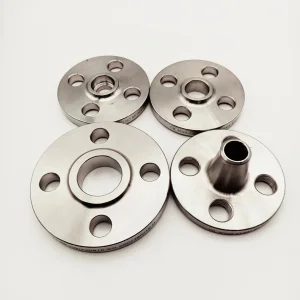
Buy ANSI/DIN/GOST/En A105 304L 316L Weld Neck/Slip on/Blind/Plate/Flate Flange Forged Steel Pipe Flange Factories, Company
Get Quote & Specs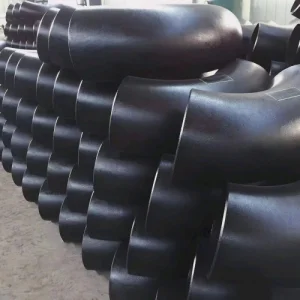
Best Butt Welded Pipe Fitting SS304L 1" Sch40 Short Radius Elbow Supplier, Suppliers
Get Quote & Specs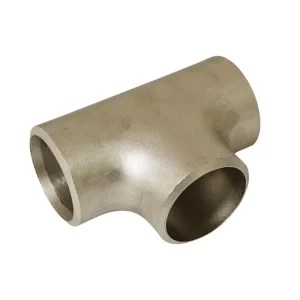
Famous SS304 316 Pipe Fitting-Butt Welding Stainless Steel Straight Tee Pricelist, Companies
Get Quote & Specs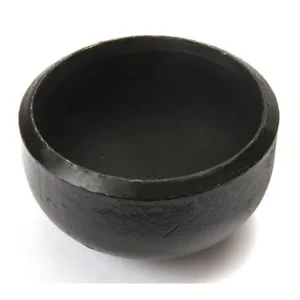
Buy ASTM Butt Welding Casting Forging A420 Wpl6 Carbon Steel Pipe Cap Supplier, Service
Get Quote & Specs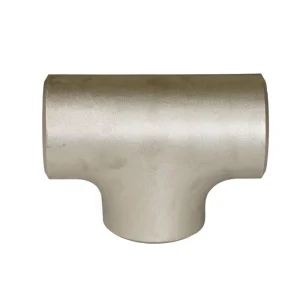
Discount Carbon Seamless Stainless Steel Pipe Fittings Reducer Tee Butt Welding Tee Supplier, Products
Get Quote & Specs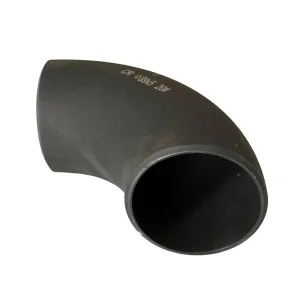
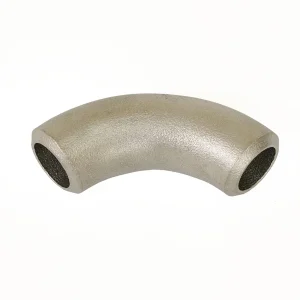
Buy Seamless Stainless Steel Butt Weld SS304/304L/316/316L Pipe Fitting Elbow Suppliers, Exporters
Get Quote & Specs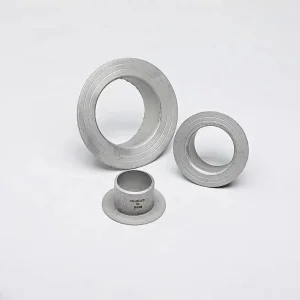
Frequently Asked Questions: Technical Procurement & Exporter Guidelines
Answers to critical engineering and commercial queries submitted by international procurement managers, quality inspectors, and project engineering leads.