
Precision Engineered Pipeline Components: Series 01
Top-tier manufactured fittings, flanges, and high-pressure components tested under extreme thermal and mechanical fatigue conditions.
Executive Overview: Strategic Imperatives of GOST Standard Flanges
In high-pressure energy transportation, heavy chemical processing, and extreme sub-zero fluid distribution across Eurasia, piping integrity depends fundamentally on standard-compliant mechanical joints. Among international flange specifications, the GOST Standard System—originally established by the State Committee for Standards of the Soviet Union and modernized under Interstate Eurasian Standards (EAC)—represents one of the most stringent mechanical engineering protocols globally.
Operating in harsh environments, such as Siberian oil basins, Central Asian natural gas corridors, and Eastern European power complexes, requires pipeline components capable of resisting severe thermal shock, cyclic pressure pulses, and hydrogen embrittlement. As premier manufacturers headquartered in Cangzhou, Hebei—China's primary hub for steel pipeline technology—Hebei Cangrun Pipeline Equipment Co., Ltd. along with its specialized manufacturing subsidiaries, Cangzhou Feiwo Metal Products Co., Ltd. and Cangzhou Feixiang Metal Products Co., Ltd., deliver fully certified, precision-forged GOST flanges engineered for ultimate operational reliability.
Comprehensive Breakdown of GOST Flange Standards & Metallurgy
Understanding the transition from historical GOST standards (12820-80, 12821-80) to the unified GOST 33259-2015 specification.
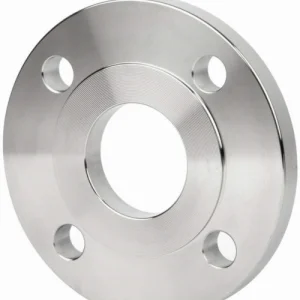
GOST 12820-80 (Plate Slip-On)
Designed for flat welding onto steel pipes, operating under nominal pressures ranging from PN 0.1 MPa (1 bar) to PN 2.5 MPa (25 bar). Ideal for medium-duty water, gas, and utility distribution networks where structural shear stress is moderate.
- Material: Steel 20, 09G2S, 12X18H10T
- Facing Types: Type 1 (Raised Face), Type 2, Type 3
- Installation: Double fillet weld connection
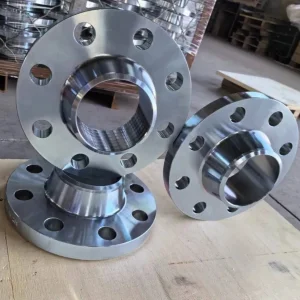
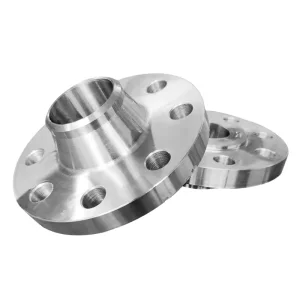
GOST 12821-80 (Butt-Welding Neck)
Engineered with a tapered hub that transitions stress directly into the pipe wall. Essential for extreme pressure regimes from PN 0.1 MPa to PN 20.0 MPa (200 bar), sub-zero fluids, and cyclic thermal shocks.
- Stress relief via smooth neck radius
- Full-penetration butt weld joint
- Zero internal turbulent boundary disruption
GOST 33259-2015 (Modernized Standard)
The unified interstate standard replacing older GOST protocols. It harmonizes flange dimensions, material groups, and facing designs into a single modular framework across EAC member nations.
- Flange Types 01, 02, 11, 21 classification
- Sealing Facings A, B, C, D, E, F, J, K
- Strict bolt load & gasket stress parameters
Cross-Standard Technical Equivalence Matrix
| Parametric Attribute | GOST 33259-2015 / GOST 12821-80 | ASME / ANSI B16.5 | EN 1092-1 (DIN) |
|---|---|---|---|
| Pressure Designation | PN (Bar): PN 1 to PN 250 | Class: 150# to 2500# | PN (Bar): PN 2.5 to PN 400 |
| Low-Temp Steel Grade | 09G2S / 10G2FB (Toughness down to -60°C) | ASTM A350 LF2 Class 1/2 | P250GH / A350 LF2 / 13CrMo4-5 |
| Stainless / Alloy Grade | 12X18H10T (Titanium stabilized) / 10X17H13M2T | ASTM A182 F321 / F316L | 1.4541 (X6CrNiTi18-10) / 1.4404 |
| Sealing Face Geometry | Types A–K (Includes Lens Gasket & Ring Joint) | RF, FF, RTJ (Ring Type Joint) | Types A, B1, B2, C, D, E, F |
| Quality Verification | EAC TR CU 012/2011, TR CU 032/2013, RTN | ASME Section VIII, API 6A | PED 2014/68/EU, CE Mark |
GOST Flange Technical Roadmap & Future Industry Outlook
Advanced material science and automated forging techniques transforming next-generation pipeline safety.
1. Ultra-Low Temperature Metallurgy (09G2S Modification)
As energy extraction moves deeper into Arctic liquefaction zones (e.g., Arctic LNG projects), standard carbon steel faces rapid brittle transformation. Modern GOST flange production incorporates controlled micro-alloying with Vanadium and Niobium, coupled with secondary vacuum degassed forging techniques.
Impact: Guaranteed Charpy V-notch impact energy absorption (>47 J at -60°C), eliminating catastrophic crack propagation in sub-zero pipeline networks.
2. Clad & Duplex Stainless Steel Integration
To resist severe hydrogen sulfide ($H_2S$) sour gas corrosion and chloride-induced stress corrosion cracking, manufacturers are deploying solid Duplex (08X22N6M2T / UNS S31803) and high-density Inconel weld overlay cladding on GOST 12821-80 neck faces.
Impact: Extends component lifecycle from 15 to 40+ years in highly acidic oil refining and offshore processing facilities.
3. Smart Flanges & Sensor-Embedded Joint Monitoring
Future GOST piping infrastructures are integrating localized piezoelectric sensors embedded directly into the flange bolt circles. Real-time telemetry detects microscopic gasket relaxation, pressure drops, and bolt tension decay before leaks occur.
Impact: Enables AI-driven predictive maintenance across thousands of kilometers of remote overland pipelines.
Macro-Industry Solutions & Field Engineering Applications
Engineered flange deployment across key energy, chemical, and municipal infrastructure domains.
Cross-Border Oil & Gas Trunklines
Trunklines carrying crude oil or natural gas under pressures up to 16.0 MPa (160 bar) utilize GOST 12821-80 / GOST 33259-2015 Type 11 Flanges in 09G2S steel. These flanges undergo full radiographical volumetric inspection to ensure complete absence of forge voids or micro-porosity.
Petrochemical Refining & Cracking Units
Refinery cracking units operating at elevated temperatures (350°C to 600°C) demand heat-resistant alloy flanges made from 15X5M (15Kh5M) or 12X18H10T stainless steel. Precision-machined lens gasket grooves (Facing Type 6 / Type J) maintain non-leak seals under severe thermal expansion.
District Heating & Thermal Power Plants
High-pressure steam boiler lines require robust, fatigue-resistant GOST 12820-80 Plate Flanges and Blind Flanges (GOST 12836-67) capable of enduring rapid pressure fluctuations and water hammer shocks in municipal heating grids.
Localized Support & Regulatory Compliance Assurance
Ensuring zero border clearance friction and instant project integration across Eurasian Economic Union (EAEU) customs territories.
Navigating global procurement requires strict adherence to regional legal frameworks. Importing industrial pressure equipment into Russia, Kazakhstan, Belarus, Armenia, and Kyrgyzstan requires mandatory certification under the Eurasian Customs Union Technical Regulations:
TR CU 032/2013 Compliance
Safety regulation for equipment operating under positive pressure. All Cangrun GOST flanges come accompanied by official declaration/certification passports, chemical heat analysis certificates, and destructive mechanical test results.
EN 10204 3.1 / 3.2 Traceability
Every single flange is laser-stenciled with steel grade, heat number, nominal size (DN), nominal pressure (PN), and standard designation. Full mill test certificates (MTC) are issued, with optional independent 3rd-party inspection (SGS, BV, TUV) prior to export.
Multi-Modal Logistics Express
Strategically situated in Cangzhou with direct connectivity to Tianjin Port and major rail freight terminals (China-Europe Railway Express via Manzhouli, Horgos, and Alashankou), offering delivery turnarounds to Moscow, Novosibirsk, and Tashkent.
China Factory 4.0: Supply Chain Resilience & Manufacturing Dominance
How Cangrun Pipeline's triple-factory production matrix lowers procurement costs while eliminating defect variance.
The manufacturing capabilities of Hebei Cangrun Pipeline Equipment Co., Ltd. and its specialized facilities—Cangzhou Feiwo Metal Products Co., Ltd. and Cangzhou Feixiang Metal Products Co., Ltd.—reflect advanced industrial automation. By combining automated forging, precision CNC machining, and digitized quality control, our production infrastructure sets the benchmark for high-volume, defect-free flange manufacturing.
10,000-Ton Hydraulic Forging Pressing
Ensures optimal internal grain structure flow lines aligned with the contour of the flange neck, enhancing yield strength and fatigue resistance by up to 35% compared to cheap plate-cut alternatives.
High-Precision CNC Facing & Drilling
Automated multi-axis CNC lathes machine sealing surfaces to exacting micro-inch tolerances (Ra 3.2 to Ra 6.3 $\mu m$), guaranteeing bubble-tight sealing against high-permeability gases like Helium and Hydrogen.
In-House Spectral PMI Verification
100% Positive Material Identification (PMI) using handheld XRF analyzers ensures zero material mixing across carbon steel (Steel 20, 09G2S) and alloy/stainless grades prior to shipment.
Global Enterprise Procurement Protocol & Checklist
Essential checklist for EPC engineering leads and procurement officers when evaluating GOST flange suppliers.
1. Dimensional & Facing Tolerance Verification
Confirm whether the pipeline specification mandates historical GOST 12815-80 facings (Facings 1–9) or updated GOST 33259-2015 codes (Types A–K). Ensure bolt hole circle tolerances match precisely to prevent field misalignment during bolt torqueing.
2. Cryogenic Impact Test Certification
For cold-climate pipelines, mandate Charpy impact testing at -40°C or -60°C on 09G2S billets. Standard mill certificates must document impact absorption energy values alongside chemical ladle analysis.
3. Surface Treatment & Packaging Protection
International rail and maritime transport requires heavy-duty anti-rust varnish, black bitumen coating, or VCI (Vapor Corrosion Inhibitor) plastic wrapping inside fumigated solid wooden crates to prevent sea-salt or atmospheric corrosion.
Frequently Asked Questions (Q&A)
In-depth technical answers for pipeline design engineers and global purchasing managers.
GOST 12820-80 refers to a plate slip-on flange that slides over the pipe end and is welded with two fillet welds. It is suitable for lower pressure applications (PN 0.1 to 2.5 MPa). GOST 12821-80 is a butt-welding neck flange with a forged tapered hub that connects directly to the pipe end via a full penetration butt weld, allowing it to withstand high pressure (PN 0.1 to 20.0 MPa), severe vibration, and extreme low temperatures.
GOST 33259-2015 consolidated multiple old standards (GOST 12815-80 through 12822-80). It introduced a unified classification system for flange types (Type 01 plate, Type 11 weld neck, etc.) and standardized sealing surface designations (Facings A through K). It also updated material quality groups and stress calculation methods for gasket seating.
Steel 09G2S is a low-alloy structural steel containing manganese and silicon. It exhibits excellent weldability and maintains high mechanical impact toughness at cryogenic temperatures down to -60°C. This prevents brittle fracture in pipelines deployed across Arctic and northern Eurasian climates.
Direct mating is usually not possible without modification because the Bolt Circle Diameter (BCD), bolt hole quantity, and flange thickness often differ between GOST, ASME B16.5, and DIN EN 1092-1 standards. Transition spool pieces or custom-machined crossover flanges with dual-standard drilling are required for interconnecting different piping systems.
All exports are supplied with EN 10204 3.1 Material Test Certificates (MTC) showing chemical composition, tensile and yield strength, hardness, Charpy impact test results (when specified), hydrostatic testing verification, ultrasonic flaw detection results, and EAC compliance documentation (TR CU 032/2013).
Precision Engineered Pipeline Components: Series 02
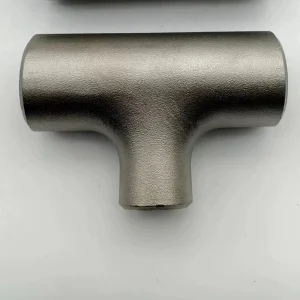
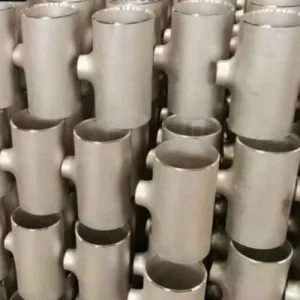
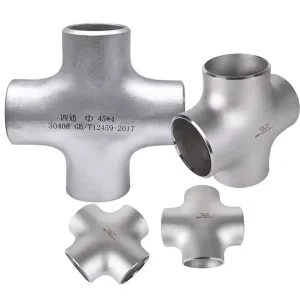
Comprehensive butt-weld, forged, and ASME/ANSI/JIS/GOST standard catalog fittings and flanges.
Require Certified GOST Flanges for Immediate Project Deployment?
Consult with our lead metallurgical engineers for dimensional verification, custom CAD drawings, EAC TR CU documentation, and direct factory quotation packages.
Request Technical Engineering Quote