
Featured Piping Components & Galvanized Nipple Series
Explore our high-performance, precision-threaded fittings manufactured to strict international engineering standards (ASTM, ASME, ANSI, DIN, JIS).
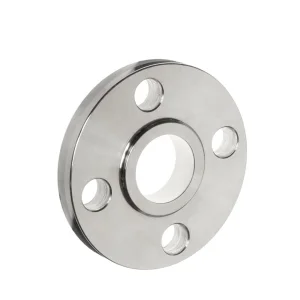
Buy ASTM A182 ANSI B16.5 304L 316L Casting Stainless Steel Flange Manufacturer, Company
Request Quote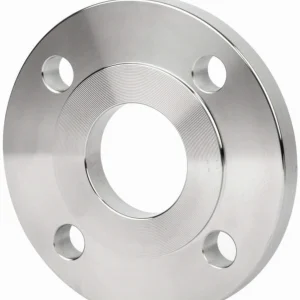
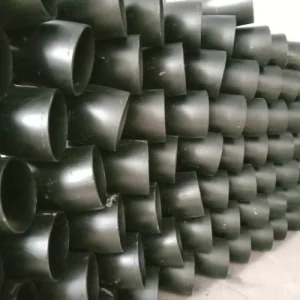
Best 1/2 Inch To 24 Inch Carbon Steel Elbow Seamless CS Pipe Fitting Factory, Exporters
Request Quote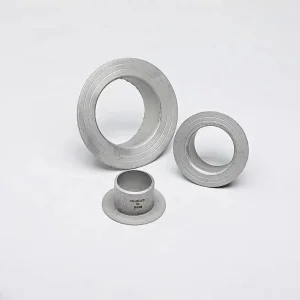
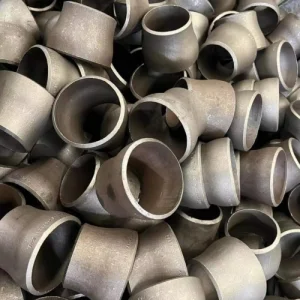
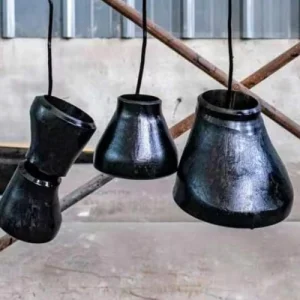
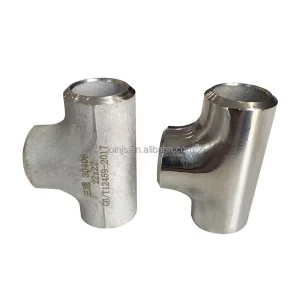
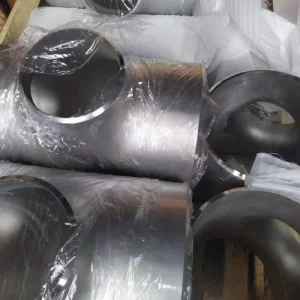
Best A335 P1 P2 P11 P12 P22 P23 P91 P5 P9 SA335 Alloy Steel Fitting Tee Reducer Elbows Bend Manufacturers, Factory
Request Quote1. Executive Summary & Technical Evolution of Galvanized Nipples
In modern industrial fluid conveyance and structural piping networks, galvanized pipe nipples serve as indispensable linear connection components. A pipe nipple is defined as a short length of pipe, usually provided with male pipe threads (NPT, BSPT, or Metric) at both ends or at one end, utilized to extend pipeline runs, connect valves, or integrate manifold assemblies. Galvanization—specifically Hot-Dip Galvanizing (HDG) per ASTM A153/A153M—introduces a metallurgical bond between elemental zinc and the underlying carbon steel substrate, establishing robust cathodic protection against aggressive atmospheric, chemical, and aqueous corrosion.
The global transition toward high-reliability fluid infrastructure has dramatically shifted procurement expectations. Legacy electro-galvanized fittings, which offered minimal zinc thickness (typically under 15 microns), are increasingly obsolete in heavy-industrial, fire protection, and municipal water supply sectors. Today's global EPC (Engineering, Procurement, and Construction) contractors demand thermal-infused, hot-dip galvanized carbon steel nipples complying with ASTM A733, ASTM A53/A53M, and ASME B1.20.1 standards. These components provide sacrificial zinc-iron alloy layer structures (Gamma, Delta, and Zeta layers) capable of enduring decades of harsh environmental exposure.
Key Metallurgy Insight: The intermetallic alloy layers formed during hot-dip galvanizing (ranging from FeZn13 to pure Zinc Eta layer) exhibit hardness levels higher than the base carbon steel itself (up to 250 HV). This unique metallurgical property provides exceptional mechanical abrasion resistance during high-torque threaded assembly in field installation.
2. Coating Technologies: Hot-Dip vs. Electro-Galvanized vs. Zinc-Nickel
Choosing the correct surface treatment for pipe nipples is critical to optimizing Total Cost of Ownership (TCO) and avoiding catastrophic piping failures caused by galvanic corrosion, stress corrosion cracking, or thread galling. The table below outlines the core engineering parameters comparing modern galvanization treatments applied to steel pipe nipples.
| Parameter | Hot-Dip Galvanized (HDG - ASTM A153) | Electro-Galvanized (ASTM B633) | Zinc-Nickel Alloy Plating |
|---|---|---|---|
| Zinc Layer Thickness | 45 – 85 µm (325–610 g/m²) | 5 – 15 µm (35–100 g/m²) | 10 – 20 µm |
| Bonding Mechanism | Metallurgical Diffusion (Fe-Zinc Alloys) | Electrostatic Mechanical Bond | Electro-deposited Alloy Matrix |
| Corrosion Resistance (Salt Spray ASTM B117) | 1,000+ Hours to Red Rust | 72 – 120 Hours to Red Rust | 720 – 1,000 Hours to Red Rust |
| Thread Integrity & Clearance | Requires Chase Threading Post-Coating | Exact Thread Tolerance Preserved | High-Precision Tolerance Preserved |
| Primary Application Environment | Outdoor, Marine, Petrochemical, HVAC, Water | Indoor Commercial, Decorative, Low-Humidity | Automotive, High-Vibration Hydraulics |
Standard Specifications Compliance
Premium galvanized pipe nipples manufactured for global export must conform strictly to recognized engineering standards:
- ASTM A733: Standard Specification for Welded and Seamless Carbon Steel and Stainless Steel Pipe Nipples. Defines nominal lengths (Close, Short, Long) and diameter schedules.
- ASTM A53 / A53M: Standard Specification for Pipe, Steel, Black and Hot-Dipped, Zinc-Coated, Welded and Seamless. Regulates chemical composition (C, Mn, P, S) and tensile strengths.
- ASME B1.20.1: National Pipe Thread Taper (NPT) standard defining thread angle (60 degrees), pitch, and taper (1/16 taper ratio or 3/4 inch per foot) to ensure pressure-tight seals.
- EN 10241 / BS 1387: European standard for steel threaded pipe fittings and tubular nipples widely used across EMEA markets.
3. China Industry 4.0: Supply Chain Resilience & Manufacturing Efficiency
The global pipeline industry has witnessed a paradigm shift in supply chain sourcing. As the largest steel-producing hub globally, Cangzhou, Hebei (China) has evolved into an advanced Industry 4.0 manufacturing cluster for industrial pipe fittings, flanges, and nipples. Modern Chinese manufacturing facilities integrate automated raw material handling, real-time laser spectroscopy, and automated CNC threading systems that eliminate dimensional variations inherent in legacy manual production.
Automated CNC Threading
Multi-axis CNC thread-cutting machines ensure absolute pitch diameter consistency, eliminating leakage risk under high-pressure testing up to 300 PSI.
Intelligent HDG Baths
Computer-controlled dipping duration, temperature regulation (440°C–460°C), and automated centrifuging guarantee uniform zinc distribution without thread clogging.
Spectrometric Quality Control
In-line Optical Emission Spectrometry (OES) verifies steel heat numbers and raw material chemistry before cutting, delivering 100% traceability.
Supply Chain Agility
Integrated supply chains from raw ERW/Seamless pipe rolling to galvanizing and export packaging enable industry-leading lead time reductions of up to 35%.
For international buyers, sourcing from certified Chinese manufacturers yields substantial Total Cost of Ownership advantages without sacrificing compliance with Western specifications. Mill Test Certificates (MTCs) issued in strict accordance with EN 10204 3.1 accompany every lot, documenting chemical analysis, tensile testing, hydrostatic test pressure verification, and zinc coating thickness measurements.
4. Global Commercial & Industrial Application Scenarios
Galvanized pipe nipples perform vital roles across diverse commercial, municipal, and industrial fluid transmission applications:
HVAC & Chilled Water Lines
Galvanized steel nipples effectively withstand oxygenated condensation water and chemical rust inhibitors used in commercial high-rise HVAC cooling tower loops.
Fire Protection Sprinkler Systems
UL/FM compliant galvanized nipples are mandatory in wet and dry pipe fire suppression networks, preventing internal scaling that could clog sprinkler nozzles.
Municipal Potable Water Systems
Non-toxic hot-dip galvanized nipples certified under international drinking water safety codes ensure hygienic water distribution without metallic contamination.
Petrochemical & Off-Shore Support
Heavy-wall Schedule 80 galvanized nipples provide rugged connection points for auxiliary utility air, nitrogen purging, and non-corrosive drain lines on offshore rigs.
Agricultural & Irrigation Networks
Resistant to soil acidity, fertilizer chemicals, and UV degradation, HDG nipples deliver decades of service in high-pressure farm irrigation headers.
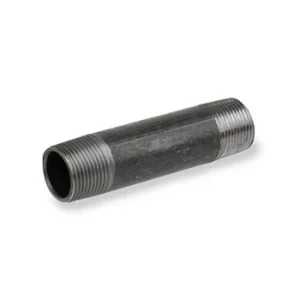
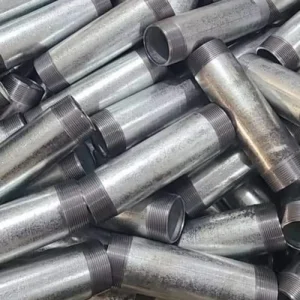
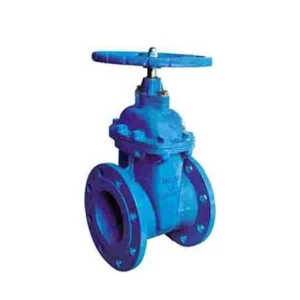
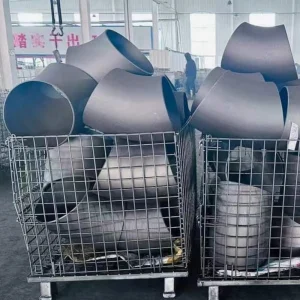
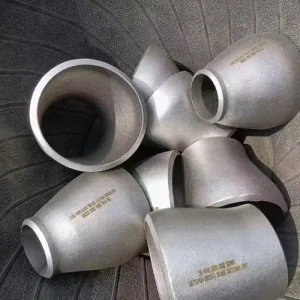
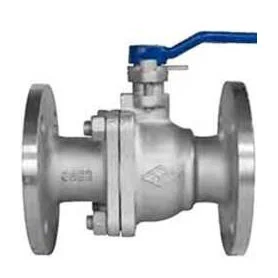
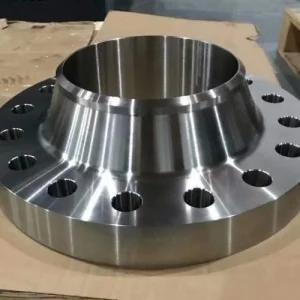
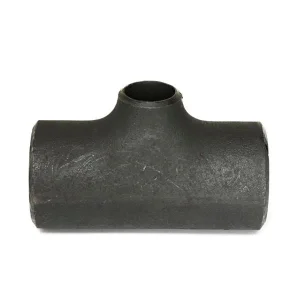
High-Quality Pipe Nipples, Valves & Flanges
Browse additional high-demand inventory items designed to seamlessly integrate into complete industrial piping assemblies.
5. B2B Procurement Strategy: Draft an Optimized RFQ for Galvanized Nipples
Procurement directors and engineering buyers often encounter cost overruns or field fitment issues due to incomplete RFQ (Request for Quote) specifications. To ensure accurate pricing and seamless manufacturing execution, an industrial RFQ for galvanized nipples must specify the following six engineering criteria:
- Nominal Pipe Size (NPS) / DN Dimension: Specify diameter (e.g., NPS 1/2" to NPS 4" or DN15 to DN100).
- Wall Thickness / Schedule: Clearly designate Schedule 40 (STD) or Schedule 80 (XS) per ASTM A733. Schedule 80 features thicker walls for higher-pressure or corrosive systems.
- Length Type: Indicate whether Close Nipples (threads extend end-to-end with no unthreaded pipe space) or Short/Long Nipples (e.g., 2", 3", 4", 6", or custom length in mm) are required.
- Thread Specification: Designate NPT (ASME B1.20.1) for North American markets or BSPT (ISO 7-1 / BS 21) for European and Asian project locations.
- Galvanization Standard: Explicitly mandate Hot-Dip Galvanized (HDG) per ASTM A153 or ASTM A53 to avoid receiving low-durability electro-galvanized alternatives.
- Certification Requirements: Mandate EN 10204 3.1 Mill Test Certificates with original material heat numbers and zinc coating weight logs.
Procurement Pro-Tip: Consolidating your galvanized nipple orders alongside matching carbon steel tees, elbows, reducers, and forged flanges from a single source manufacturer minimizes freight cubic volume costs and streamlines customs clearing processes under unified HS Codes (HS 7307.19 / 7307.99).
Frequently Asked Questions (FAQ)
Expert engineering answers to common technical queries regarding galvanized pipe nipples, corrosion standards, and installation.
What is the difference between a Close Nipple and a Long Nipple?
A Close Nipple features continuous threading across its entire body length. When screwed tightly between two female fittings, virtually no unthreaded pipe remains exposed. In contrast, a Long Nipple possesses a section of unthreaded smooth pipe between its threaded ends, allowing easier wrench placement during assembly and enabling longer spatial spans.
Can galvanized nipples be welded into structural piping lines?
Direct welding of galvanized steel pipe nipples is strongly discouraged without proper localized stripping of the zinc layer. Welding over zinc generates toxic zinc oxide fumes (causing metal fume fever) and creates microscopic zinc inclusion defects in the weld bead, compromising joint ductility. Threads or flanged transitions should be utilized instead for galvanized pipeline sections.
How does hot-dip galvanizing prevent internal and external corrosion?
Hot-dip galvanizing provides two-fold corrosion protection: first, as a physical barrier shielding the carbon steel from moisture and oxygen; second, via cathodic (sacrificial) protection. Because zinc has a lower electrochemical potential than iron, it sacrifices itself preferentially if the coating is scratched or damaged, protecting the exposed steel substrate.
What is the temperature rating for galvanized pipe nipples?
Standard hot-dip galvanized pipe nipples are suitable for continuous operating temperatures up to 200°C (392°F). At temperatures exceeding 200°C, the zinc-iron alloy protection layer may experience accelerated peeling, and a polarity reversal can occur in liquid water where zinc becomes cathodic to iron, increasing baseline steel corrosion.
Are NPT and BSPT galvanized nipples interchangeable?
No, NPT (60° thread angle) and BSPT (55° thread angle) threads have different thread profiles, pitches, and tapers. Forcing an NPT nipple into a BSPT threaded valve will result in thread galling and fluid leakage. Always confirm your regional standard before placing volume RFQs.