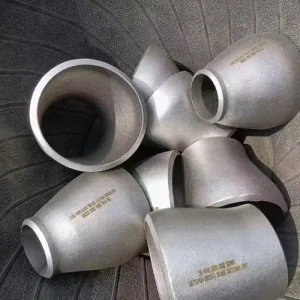
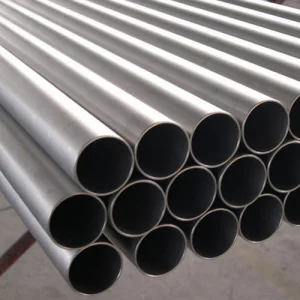
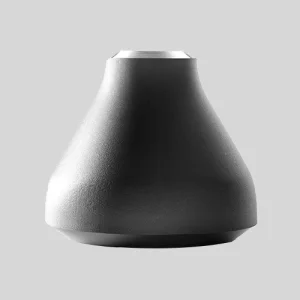
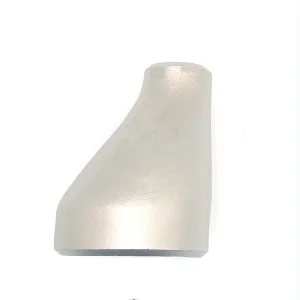
Featured Industrial Steel Fittings & Valves
Direct factory supply of certified ASME/ANSI, DIN, JIS, and GB standard butt-weld fittings, forged flanges, and process control valves manufactured to stringent quality standards.
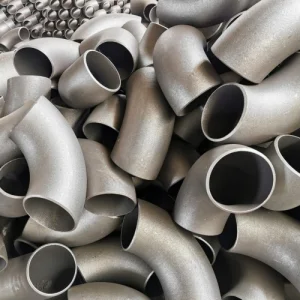
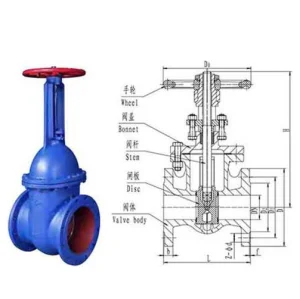
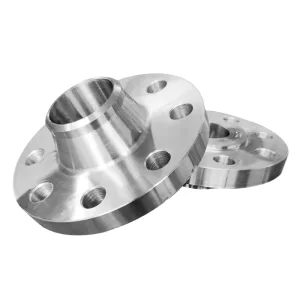
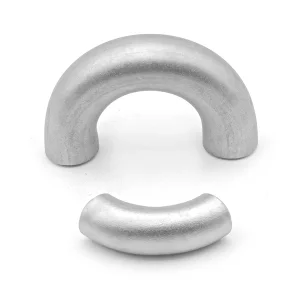
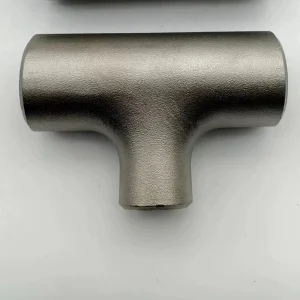
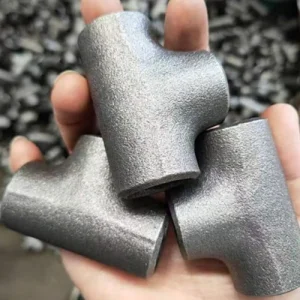
SS 304 Pipe Tee Metallurgy, Manufacturing & Structural Physics
An exhaustive technical evaluation of 18/8 austenitic stainless steel equal and reducing branch pipe tees, detailing chemical compositions, mechanical stress distribution, hydroforming techniques, and fluid-dynamic performance.
1. Chemical Microstructure & Passive Film Mechanics
Stainless Steel 304 (UNS S30400 / Werkstoff 1.4301) represents the global standard for corrosion-resistant piping components. The metallurgical foundation of an SS 304 Tee relies upon a stable face-centered cubic (FCC) austenitic crystal structure, maintained through a minimum 8.0% Nickel content. Chromium content between 18.0% and 20.0% reacts spontaneously with atmospheric oxygen to build a self-healing, microscopic passive layer of Chromium Oxide (Cr₂O₃) roughly 1 to 3 nanometers thick.
During manufacturing, heat treatments must avoid the temperature window of 450°C to 850°C to prevent Chromium Carbide precipitation along grain boundaries (sensitisation), which leads to intergranular corrosion. Our mill process incorporates solution annealing at 1040°C–1120°C followed by forced air or water quenching, restoring full corrosion resistance and structural ductility.
2. Hydraulic Cold Bulging vs. Hot Extrusion Molding
Production of high-integrity SS 304 tees employs two main technical routes depending on diameter and wall thickness:
- Cold Hydraulic Bulging: A seamless steel pipe tube blank is placed inside a female split die. Internal hydraulic fluid is injected at pressures exceeding 100 MPa while axial punches compress the pipe ends simultaneously. The fluid forces the branch out through the die aperture, ensuring uniform wall thickness across both run and branch sections without structural weld seams.
- Hot Extrusion Molding: Utilized for heavy-wall or large-diameter tees (DN300+). The raw pipe segment is heated above recrystallization temperatures. An internal die ball or ram punches out the branch opening while maintaining mechanical grain alignment.
Chemical & Mechanical Specification Matrix (ASTM A403 WP304 / ASME SA403)
| Element / Mechanical Prop. | ASTM A403 WP304 Requirements | ASTM A403 WP304L (Low Carbon) | Engineering Impact on Piping Systems |
|---|---|---|---|
| Chromium (Cr) | 18.0% - 20.0% | 18.0% - 20.0% | Establishes passive oxide film against oxidizing acids. |
| Nickel (Ni) | 8.0% - 11.0% | 8.0% - 12.0% | Stabilizes austenitic structure, increases toughness at low temp. |
| Carbon (C) max. | 0.08% | 0.030% | Lower carbon in 304L prevents carbide precipitation during welding. |
| Tensile Strength (min.) | 515 MPa (75 ksi) | 485 MPa (70 ksi) | Defines maximum internal hoop stress endurance before rupture. |
| Yield Strength (0.2% offset) | 205 MPa (30 ksi) | 170 MPa (25 ksi) | Governs maximum allowable stress design factors under ASME B31.3. |
| Elongation (min. in 2 inches) | 28% to 35% | 28% to 35% | Provides plastic deformation capability to absorb water hammer shocks. |
Global Procurement Demand & Strategic Cost Optimization
Analyzing macroeconomic shifts, raw material nickel index fluctuations, and direct OEM manufacturer contract advantages for EPC contractors and stocking distributors.
Direct Factory Discounts
Sourcing discount SS 304 tees directly from established Cangzhou manufacturers eliminates intermediary markup layers. Bulk procurement models allow EPC contractors to secure competitive tier-pricing structures while ensuring strict mill test report (MTR) compliance matching original melt heat numbers.
Supply Chain Vulnerability Reduction
Global logistics disruptions highlight the necessity of partnering with manufacturers maintaining massive raw material billet inventories. Direct export capabilities ensure streamlined sea freight container consolidation with matched fittings, flanges, and valves from a single industrial cluster.
Total Cost of Ownership (TCO)
High-grade SS 304 pipe tees eliminate maintenance downtime caused by pitting or stress corrosion cracking in clean-water, steam, and chemical transfer lines. The long-term lifecycle savings far outweigh initial material capital expenditures.
Macro Industry Piping Solutions
Custom engineered SS 304 equal tees and reducing branch fittings tailored for extreme operating environments across oil & gas, chemical processing, cryogenic LNG, and sanitary industries.
Petrochemical & Chemical Process Networks
In chemical plants handling organic acids, mild nitric compounds, and refinery hydrocarbons, SS 304 equal tees serve as vital branch points. The smooth interior finish achieved via advanced hydraulic forming reduces turbulence, erosion-corrosion, and pressure drops, maintaining steady volumetric flow rates across complex piping manifold trees.
Cryogenic Storage & LNG Transfer Infrastructure
Austenitic SS 304 remains ductile even down to cryogenic temperatures (-196°C). In Liquefied Natural Gas (LNG) bunkering stations and regasification plants, SS 304 butt-weld tees resist low-temperature embrittlement, ensuring containment integrity during severe thermal shock cycles and high-pressure blowdown operations.
Food, Beverage & Pharmaceutical Hygienic Systems
Sanitary applications require pipe fittings with ultra-smooth interior surface roughness (Ra < 0.8 µm or electro-polished to Ra < 0.4 µm). Our SS 304 tees undergo precise acid pickling and surface passivating treatments, completely removing embedded iron particles and preventing bacterial biofilm accumulation in Clean-In-Place (CIP) systems.
Thermal Power Plants & Boiler Feedwater Lines
Auxiliary high-pressure steam utility piping and feedwater lines demand seamless SS 304 reducing tees capable of enduring continuous vibration and thermal expansion stress under ASME B31.1 power piping code regulations.
Localization Support, Certification & Testing Rigor
Ensuring complete technical alignment with regional engineering specifications, statutory import codes, and third-party quality verification standards.
Standard Compliance
Our SS 304 tees are fully compliant with global standard dimensional requirements: ASME/ANSI B16.9 (Factory-Made Wrought Butt-welding Fittings), MSS SP-43, EN 10253-4, DIN 2615, and JIS B2312. Wall thickness schedules range from Light-Wall SCH 5S/10S up to Heavy-Wall SCH 160/XXS.
EN 10204 3.1/3.2 Certification
Every shipment is accompanied by a certified Material Test Report (MTR) according to EN 10204 3.1. Chemical compositions, physical tensile/yield strengths, hardness tests, and intergranular corrosion tests (ASTM A262 Practice E) are verified. Independent third-party inspection (SGS, BV, TUV, Lloyd's) is fully supported under 3.2 certification.
Export Packaging & Logistics
To eliminate maritime transit corrosion and physical mechanical damage during long-distance vessel transport, all SS 304 tees are cleaned, passivated, fitted with plastic end caps, wrapped in protective moisture-proof foil, and secured in fumigated ISPM-15 wooden cases or steel-framed crates.
Technical Roadmap & Smart Manufacturing Future
Pioneering next-generation fitting production through automated hydroforming robotics, AI ultrasonic testing, and low-carbon industrial manufacturing processes.
Automated Robotic Hydroforming & Laser Machining
Integrating 6-axis robotic arms into cold hydraulic bulging lines enables mill-second synchronization of end-punch thrust and internal fluid pressure injection. This eliminates manual variation, securing dimensional bevel tolerance control within ±0.3mm across large-scale manufacturing runs.
AI-Driven Non-Destructive Volumetric Inspection
Transitioning from traditional manual film radiography to automated Digital Radiography (DR) and Phased Array Ultrasonic Testing (PAUT). Real-time AI algorithms scan branch-to-run transition zones, detecting subsurface micro-voids, wall thinning, or inclusions automatically.
Frequently Asked Questions (FAQ)
Direct answers to common procurement questions, technical selection criteria, and installation guidelines for SS 304 tees.
Explore Related Industrial Piping Components
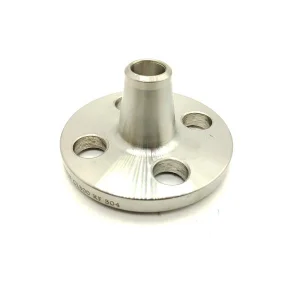
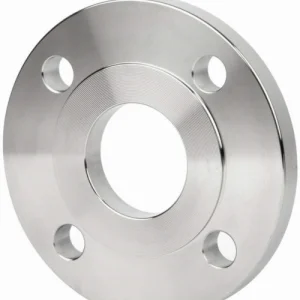
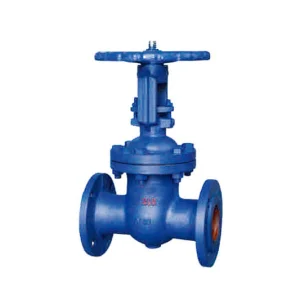
Browse our complete line of industrial steel reducers, resistance welded pipes, specialized ANSI/ASME flanges, equal tees, and heavy-duty process valves.