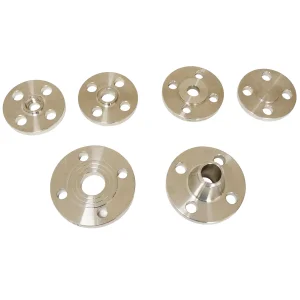
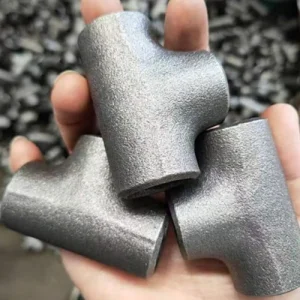
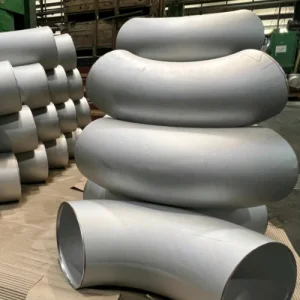
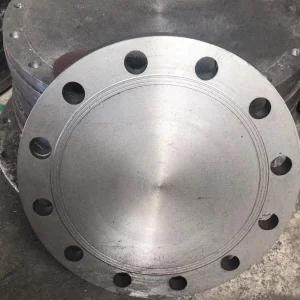
Buy Flange Joint Manufacturers & Companies
Technical Engineering Architecture, Global Procurement Demands, and Advanced Metallurgical Solutions for High-Pressure Piping Systems
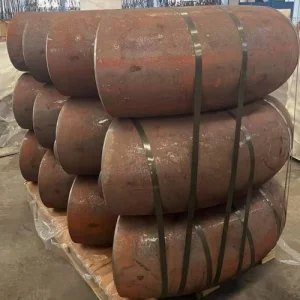
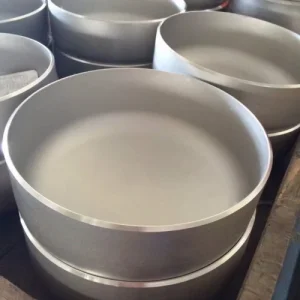
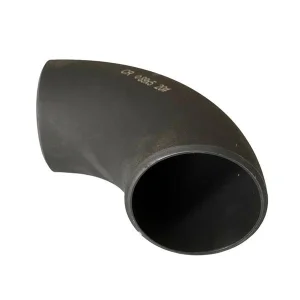
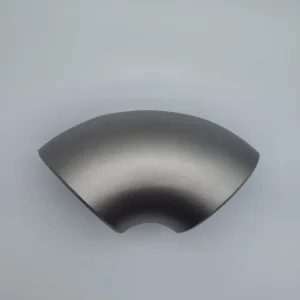
Featured Industrial Flanges & Pipe Fittings
Direct Factory Supplies with Global Compliance Standards (ASTM, ASME, JIS, EN, GB)
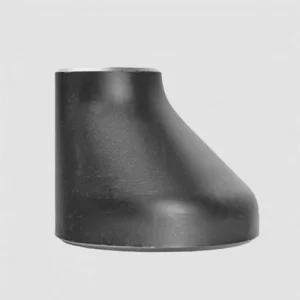
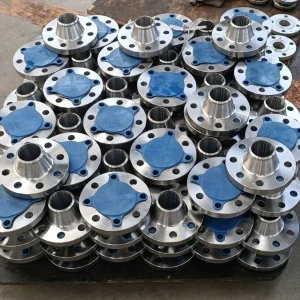
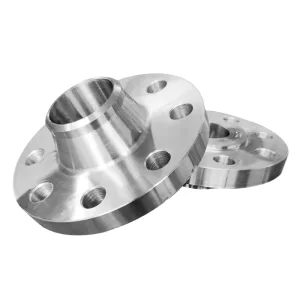
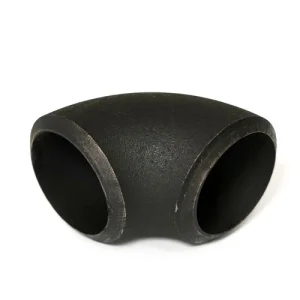
Global Procurement Demand Analysis for Flange Joints
In modern industrial process engineering, the flange joint assembly—comprising the mechanical flange, sealing gasket, and high-tensile stud bolting—serves as the backbone of demountable fluid containment systems. Across global energy markets, chemical refining infrastructure, power plants, and marine logistics, procuring certified, high-integrity flange joints is a mission-critical objective. Global supply chain shifts require Engineering, Procurement, and Construction (EPC) firms to evaluate manufacturers not merely on immediate cost per unit, but on comprehensive E-E-A-T (Experience, Expertise, Authoritativeness, and Trustworthiness) indicators, metallurgical traceabilities, and long-term joint integrity under cyclic thermal and pressure loading.
Energy Infrastructure Expansion
Liquefied Natural Gas (LNG) liquefaction facilities, regasification terminals, and cross-border cryogenic pipelines demand specialized stainless steel (304L, 316L) and nickel alloy flange joints capable of preserving mechanical ductility at temperatures dropping below -196°C.
Deep-Sea Hydrocarbon Extraction
Offshore floating production storage and offloading (FPSO) vessels require high-yield forged steel blind and weld neck flanges engineered to withstand seawater corrosion, extreme hydrostatic pressure, and dynamic fatigue loads.
Decarbonization & Hydrogen Integration
Transitioning process facilities to transport clean hydrogen gas requires leak-proof flange joints featuring precision-machined Ring-Type Joint (RTJ) or Raised Face (RF) geometries to eliminate fugitive micro-emissions under ultra-high pressures.
Flange Joint Engineering Architecture & Classifications
Selecting the precise flange joint geometry is vital to operational safety and system longevity. Manufacturers must strictly adhere to standardized dimensional tolerances specified in ASME B16.5, ASME B16.47 (Series A & B), EN 1092-1, and JIS B2220. Below is an engineering overview of key flange joint typologies produced across industrial supply chains:
Information Gain Insight: The structural reliability of a bolted flange joint depends heavily on maintaining uniform bolt pretension to achieve target gasket seating stress. Poorly forged or inaccurately machined flanges induce non-uniform stress distribution, leading to thermal-cycling leaks even when pressure ratings are nominally respected.
| Flange Type | Primary Application Scope | Pressure Rating Range | Facing Geometries | Key Structural Advantage |
|---|---|---|---|---|
| Weld Neck (WN) | High-pressure, severe cyclic loading, extreme thermal variations | Class 150 to 2500 / PN10 to PN400 | RF, FF, RTJ, Male/Female, Groove | Tapered long hub transfers stress to pipe wall, reducing stress concentration at hub base. |
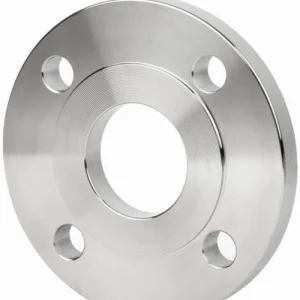
| Slip-On (SO) | Low-to-medium pressure applications, rapid field assembly | Class 150 to 1500 / PN2.5 to PN100 | Flat Face (FF), Raised Face (RF) | Lower initial material cost; easy alignment during fabrication with dual fillet welds. |
| Blind Flange (BL) | Pipeline terminations, pressure vessel maintenance access ports | Class 150 to 2500 / PN2.5 to PN400 | RF, FF, RTJ | Seals end of piping system; engineered to sustain maximum system internal hoop stress. |
| Plate Weld Flange | Utility lines, low-pressure municipal water, district heating networks | PN2.5 to PN40 / Class 150 | Flat Face (FF) | Economical manufacturing footprint; suitable for non-critical, low-vibration fluid transport. |
| Threaded / Screwed | Highly explosive fluid lines where welding is prohibited | Class 150 to 2500 | Raised Face (RF) | Assembled without hot-work permits; ideal for small-bore piping circuits (DN15-DN50). |
Metallurgical Roadmap: Selecting Superior Material Grades
Material selection determines how a flange joint responds to mechanical stress, thermal expansion, and chemical corrosion. Reputable flange joint companies must maintain strict heat treatment protocols—such as Normalizing, Quenching, and Solution Annealing—to guarantee optimal grain structures within forgings.
Carbon Steel Series
Grades: ASTM A105, ASTM A234 WPB, Q235, ST37.2
Representing the workhorse of general industrial fluid movement, forged ASTM A105 carbon steel flanges offer exceptional yield strength and structural ductility for ambient to elevated temperature utility networks.
Alloy Steel Series
Grades: ASTM A182 F11, F22, F91, 15CrMo, 12CrMo
Formulated with chromium and molybdenum for high-pressure power plant boilers, steam turbines, and hydro-cracking processes. These grades resist hydrogen attack and thermal creep deformation under continuous high temperatures (up to 650°C).
Stainless & Duplex Series
Grades: A403 WP304/304L, WP316/316L, 316Ti, 2205 Duplex, 2507 Super Duplex
Designed for chemical processing plants and offshore subsea lines. Duplex grades combine high pitting corrosion resistance (PREN > 40) with twice the yield strength of standard austenitic stainless steels.
Macro Industry Solutions: Tailored Flange Engineering
Standardized components often fail when subjected to unique operating environments. Qualified flange joint manufacturers deliver targeted engineering customizations across various industrial sectors:
Petrochemical & Refining Solutions
Refining heavy crude oil releases corrosive sulfur and naphthenic acids. Our manufacturers provide solid or cladded flanges engineered with specialized facings (such as Ring Type Joint - RTJ) to maintain leak-proof seals under extreme pressure and thermal cycles.
High-Pressure Boiler & Thermal Power Lines
Ultra-supercritical power generation demands flange joints capable of surviving immense steam pressure. Forged alloy steel flanges (F91/WP91) undergo full-thickness non-destructive testing (NDT) to prevent creep fatigue failure.
Municipal Water & HVAC Infrastructure
High-volume distribution lines require large-diameter plate and slip-on flanges (DN500 up to DN4000). Factory-applied anti-corrosive epoxy coatings and hot-dip galvanizing safeguard infrastructure against soil oxidation and moisture exposure.
Supply Chain Ecosystem: The Cangzhou Manufacturing Advantage
Situated in Hebei Province, China, the Cangzhou Pipeline Industrial Cluster represents one of the world's most concentrated ecosystems for pipe fitting and flange production. Enterprise groups like Hebei Cangrun Pipeline Equipment Co., Ltd.—alongside integrated manufacturing subsidiaries such as Cangzhou Feiwo Metal Products Co., Ltd. and Cangzhou Feixiang Metal Products Co., Ltd.—operate dedicated forging hammers, ring rolling mills, heat treatment furnaces, and high-precision CNC machining centers within the Boerzhuang Industrial Zone.
This industrial density enables seamless vertical integration: from raw billet sourcing to precision drop-forging, CNC flange face phonographic serration finishing, chemical spectrographic validation, and export packaging.
E-E-A-T Quality Assurance Protocol: Reliable manufacturers issue standard EN 10204 3.1 or 3.2 Material Test Reports (MTRs) detailing heat number traceabilities, positive material identification (PMI), mechanical tensile/yield testing, Charpy V-notch impact values, and hydrostatic test certifications for every production lot.
Precision CNC Machining
Flange sealing face micro-finish serrations are cut using automated CNC lathes to achieve precise spiral or concentric phonographic grooves ($R_a$ 3.2 to 6.3 $\mu m$), guaranteeing perfect gasket seating.
Advanced NDT Quality Inspection
Flanges undergo rigorous non-destructive evaluations, including Ultrasonic Testing (UT) for internal voids, Magnetic Particle Inspection (MPI) for surface cracks, and Liquid Penetrant Inspection (LPI).
Custom Dimension & Forging Capability
Heavy hydraulic ring-rollers forged custom non-standard flanges up to 160 inches (DN4000) in diameter, engineered to withstand extreme internal pressure vessels and custom pump housings.
Technical Roadmap & Future Outlook: Smart Flange Joints
As heavy industry shifts toward digital monitoring and decarbonization, the traditional mechanical flange joint is evolving into an intelligent, sensor-integrated assembly capable of real-time operational diagnostics.
IoT Bolt-Tension Sensors
Integrating acoustic strain sensors directly into stud bolts allows refinery operators to continuously monitor bolt pretension dynamically, preventing thermal-relaxation leaks before catastrophic failure occurs.
Fugitive Emission Sealing
In accordance with ISO 15848-1 environmental containment standards, next-generation flange joint sealing faces are engineered with micro-textured surface geometries that reduce gas micro-leakage to near-zero thresholds.
Frequently Asked Questions (FAQ) for Engineering Procurement
Detailed technical answers addressing common operational, metallurgical, and purchasing inquiries encountered by piping design engineers and procurement officers.
ASME B16.5 covers pipe flange standards and flanged fittings for nominal pipe sizes from NPS 1/2 through NPS 24 (DN15 through DN600) in pressure classes ranging from 150 to 2500. ASME B16.47 covers large-diameter steel flanges from NPS 26 through NPS 60 (DN650 through DN1500). ASME B16.47 is divided into Series A (MSS SP-44 based, heavier and stronger for general pipeline service) and Series B (API 605 based, lighter and more compact for compact space or equipment piping connections).
Weld Neck flanges feature a long, tapered hub that provides structural reinforcement and smoothly transfers mechanical stress from the flange to the pipe wall, making them ideal for extreme high-pressure, high-temperature, or cyclic-loading environments (such as power generation or steam lines). Slip-On flanges slide over the pipe outer diameter and are secured using two fillet welds (inside and outside). While SO flanges cost less to purchase and align in the field, their calculated structural strength under internal pressure is approximately one-third that of a Weld Neck flange, restricting their use to lower-severity applications.
Flange facing finish is specified by surface roughness ($R_a$). Standard raised face (RF) flanges intended for soft flat gaskets or metallic spiral wound gaskets typically require a serrated concentric or phonographic spiral finish ranging between 125 and 250 micro-inches AARH ($3.2 \text{ to } 6.3 \mu m$). Ring Type Joint (RTJ) facings, which use solid metallic octagonal or oval gaskets, require a ultra-smooth mirror finish not exceeding 63 micro-inches AARH ($1.6 \mu m$) to achieve a metal-to-metal tight pressure seal.
PMI testing uses X-ray fluorescence (XRF) or Optical Emission Spectrometry (OES) to verify the precise chemical composition of alloy and stainless steel forgings without damaging the component. It ensures that critical alloying elements—such as Chromium, Molybdenum, and Nickel—meet specification requirements, preventing catastrophic component failures caused by accidental material mix-ups in high-temperature or corrosive process environments.
Yes. Custom flange joint manufacturers regularly engineer forged components according to client CAD drawings or non-standard dimensions. Parameters such as flange thickness, hub taper angle, PCD (Pitch Circle Diameter) bolt pattern, counterbore diameters, and heavy wall matching (up to 150mm WT) can be tailored to match unique pressure vessel nozzles, pump casings, or specialized equipment flanges.
Complete Industrial Pipeline Solutions
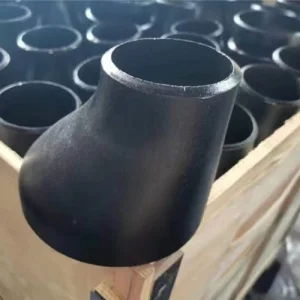
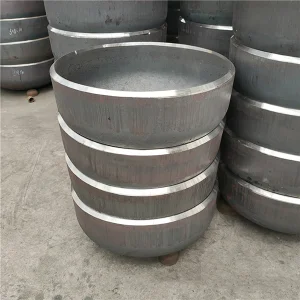
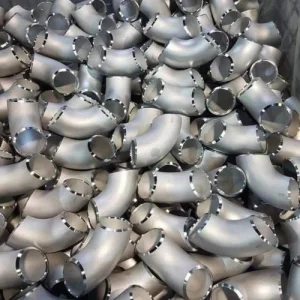
Explore High-Performance Pipe Reducers, Flanges, Caps, and Steel Bends