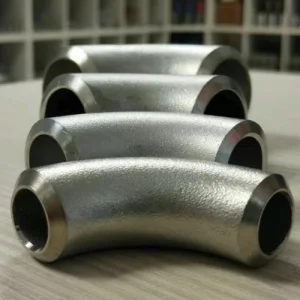
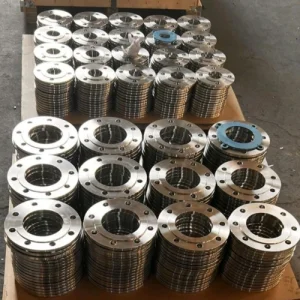
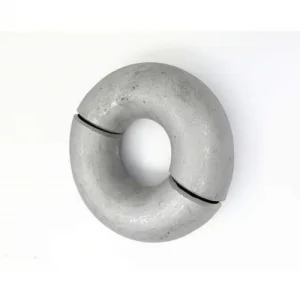
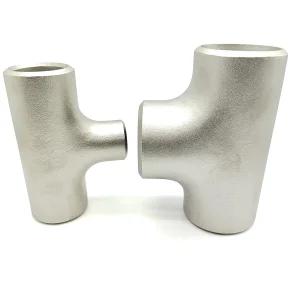
Featured Industrial Pipe Tees & Fittings Inventory
Factory-direct certified industrial pipeline fittings engineered to ASME, ANSI, DIN, and JIS specifications for critical fluid transport systems worldwide.
1. Executive Summary: The Global Commercial & Industrial Landscape of Pipe Tees
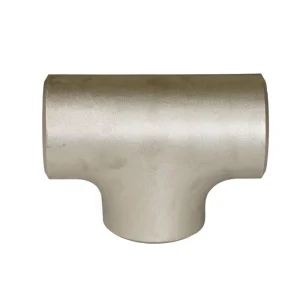
In modern fluid mechanics and industrial process piping, the pipe tee represents one of the most critical structural components. Designed to join or divide fluid flow at a 90-degree angle, pipe tees are indispensable across petrochemistry, thermal power generation, nuclear energy plants, LNG liquefaction networks, marine engineering, and urban utility infrastructures. As global energy demand transitions toward higher efficiency and zero-emission architectures, the mechanical performance, metallurgical integrity, and dimensional accuracy of butt-welding and forged tees have come under heightened scrutiny by EPC (Engineering, Procurement, and Construction) contractors worldwide.
Commercial buyers no longer evaluate pipe tee exporters solely on price per kilogram. Modern purchasing matrices evaluate suppliers based on comprehensive criteria: metallurgical homogeneity, grain structure verification via non-destructive testing (NDT), adherence to ASME B16.9 and MSS SP-75 standards, and verifiable trace-ability guaranteed by EN 10204 3.1 certification. High-pressure applications demand seamless equal tees and reducing tees capable of enduring extreme cyclic pressure surges, thermal expansion gradients, and severe corrosive fluid dynamics.
2. Technical & Metallurgical Engineering: Equal vs. Reducing Tees
In engineering design, a pipe tee is structurally divided into two primary geometric configurations: Equal Tees (Straight Tees) and Reducing Tees. The selection between these two configuration modes dictates fluid dynamics, pressure drops, and shear stress distribution along the pipeline intersection.
Seamless Equal Tees
Featuring uniform branch and run diameters (e.g., 8" × 8" × 8"), equal tees are deployed where full flow capacity must be split or combined without altering main line velocities. Seamless cold-drawn or hydraulic bulge manufacturing prevents heat-affected zone (HAZ) vulnerability.
Butt-Weld Reducing Tees
Engineered with a branch outlet smaller in diameter than the main run (e.g., 12" × 12" × 8"). Reducing tees optimize pressure differential, eliminate the requirement for secondary pipe reducers, and significantly minimize structural welding joints in tight skid modules.
High-Pressure Forged Tees
Produced via precision die forging per ASME B16.11 in ratings of 2000#, 3000#, 6000#, and 9000#. Available in Socket Weld (SW) and Threaded (NPT) ends, these components provide ultra-dense grain structure for high-vibration instrument lines.
Metallurgical Spectrum: Carbon, Alloy, & Stainless Steel Performance Matrix
Material selection directly governs operating temperature limits, tensile yield strength, and resistance to environmental stress cracking (SCC). Below is a comprehensive engineering matrix of standard materials supplied by tier-one exporters:
| Material Grade | Standard Specification | Yield Strength (Min. MPa) | Tensile Strength (MPa) | Primary Industrial Application |
|---|---|---|---|---|
| Carbon Steel (A234 WPB) | ASTM A234 / ASME SA234 | 240 MPa | 415 - 585 MPa | General steam, oil, water transmission lines lines (-29°C to 425°C) |
| High-Yield Carbon (MSS SP-75 WPHY65) | MSS SP-75 | 450 MPa | 535 - 760 MPa | Cross-country high-pressure gas trunklines, Arctic oil transport |
| Low-Temp Carbon (A420 WPL6) | ASTM A420 / ASME SA420 | 240 MPa | 415 - 585 MPa | Cryogenic process piping, LPG storage, sub-zero offshore installations |
| Alloy Steel (A234 WP91) | ASTM A234 / ASME SA234 | 415 MPa | 585 - 760 MPa | Supercritical steam boilers, power station main steam piping (>600°C) |
| Austenitic Stainless (A403 WP316L) | ASTM A403 / ASME SA403 | 170 MPa | 485 MPa | Petrochemical acids, offshore marine, pharmaceutical process lines |
| Duplex Stainless (UNS S31803 / 2205) | ASTM A815 / ASME SA815 | 450 MPa | 655 - 880 MPa | Desalination facilities, sour gas wells, severe chloride environments |
3. The Cangzhou Industrial Cluster: Unrivaled Supply Chain & Manufacturing Efficiency
China's dominance in the global pipe tee export market stems from specialized industrial ecosystems, most notably centered in Cangzhou, Hebei Province—acknowledged globally as the capital of pipeline equipment manufacturing. Chinese factories have evolved from labor-intensive forging shops into fully automated, AI-monitored smart manufacturing centers.
Hydraulic Bulge Forming Tech
Modern Chinese exporters utilize cold hydraulic bulge technology. By applying internal liquid pressure while compressing the pipe segment axially, the tee branch extrudes seamlessly without micro-cracks, ensuring 100% stress-free grain boundary distribution.
Integrated Raw Material Supply
Direct integration with major steel conglomerates (such as Baosteel, Shougang, and TPCO) ensures batch-to-batch raw seamless pipe quality. Ultra-low sulfur and phosphorus steel billets ensure superior notch toughness during impact testing at -46°C.
Rigorous NDT Quality Control
Every high-pressure tee undergoes comprehensive non-destructive examination, including Radiographic Testing (RT), Ultrasonic Testing (UT), Magnetic Particle Testing (MT), and Positive Material Identification (PMI) using X-ray fluorescence spectroscopy.
Unrivaled Cost-to-Performance
Scale economics allow Chinese manufacturers to offer 20% to 35% cost savings compared to European or American counterparts without compromising wall thickness tolerance (+12.5%/-12.5% per ASME B16.9) or mechanical integrity.
4. Regional Application Scenarios & Market Integration
Industrial tee requirements vary significantly across different global geographic and regulatory zones. Exporters must tailor their manufacturing specifications, surface treatments, and certification packages to align with regional engineering standards.
Middle East: Oil & Gas Manifolds
In regions like Saudi Arabia, the UAE, and Qatar, tees are specified for sour gas service (H2S environment). Exporters must supply NACE MR0175/ISO 15156 compliant heavy-wall tees made of ASTM A234 WPB or Duplex 2205, featuring HIC (Hydrogen-Induced Cracking) and SSCC (Sulfide Stress Corrosion Cracking) certified steel plates.
North America: LNG & Shale Gas
US and Canadian projects require ASME B16.9 compliance alongside strict Buy America or CRN (Canadian Registration Number) documentation. High-yield WPHY65 and WPHY70 tees are utilized in gas compressor stations, requiring 100% bevel check, wall thickness scanning, and 3-layer PE (3LPE) exterior coating.
Europe: Power Plants & Chemicals
European markets demand PED 2014/68/EU (Pressure Equipment Directive) certification and CE marking. Applications focus heavily on high-temperature alloy tees (13CrMo4-5, 10CrMo9-10) for superheated steam networks and low-carbon 316Ti stainless tees for chemical processing plants.
5. Industry Trends: AI, Green Hydrogen, and Advanced Additive Manufacturing
The pipe fitting export landscape is undergoing a digital and environmental transformation. Exporters adopting cutting-edge technologies are securing a competitive edge in next-generation infrastructure projects:
AI-Powered Defect Inspection
Automated visual and ultrasonic inspection systems powered by AI algorithms now scan tee inner radii during hydraulic forming, detecting micro-laminations down to 0.05mm before heat treatment.
Hydrogen-Compatible Alloys
With the rise of green hydrogen, exporters are manufacturing ultra-clean stainless steel (316L with electropolished inner surfaces) and special low-alloy tees to resist hydrogen embrittlement at pressures up to 700 bar.
3D Laser Cladding
To extend service life in abrasive slurry lines, manufacturers apply laser-clad Inconel 625 or Stellite inner linings inside carbon steel tees, combining outer structural strength with inner extreme corrosion resistance.
Digital Twin Traceability
QR codes laser-etched onto every exported tee link directly to a digital twin cloud repository containing the raw material heat number, heat treatment curves, NDT reports, and dimensional inspection sheets.
6. Strategic Purchasing Guide: How to Evaluate & Audit Pipe Tee Exporters
Procuring pipe fittings for industrial-scale EPC contracts requires a robust risk mitigation strategy. Mistakes in fitting selection or supplier vetting can lead to catastrophic site leaks, project delays, and legal liabilities. Follow this step-by-step audit framework when engaging Chinese pipe tee exporters:
- Verify raw material heat numbers against the original Steel Mill Test Certificate (MTC per EN 10204 3.1 or 3.2).
- Confirm bevel end preparation angles (37.5° ± 2.5° with a root face of 1.6mm ± 0.8mm per ASME B16.25).
- Require 100% PMI testing on all alloy and stainless steel tees prior to export packaging.
- Ensure heat treatment procedures (Normalizing, Quenching, or Solution Annealing) include recorded furnace charts.
- Validate export packaging: wooden boxes must be IPPC heat-treated (ISPM 15) with plastic end protectors fitted.
7. Frequently Asked Questions (Technical & Commercial FAQ)
Q1: What is the primary dimensional difference between ASME B16.9 and MSS SP-75 tees?
ASME B16.9 covers factory-made wrought butt-welding fittings in sizes NPS 1/2 through NPS 48 for standard industrial piping. MSS SP-75 specifically governs high-test wrought butt-welding fittings designed for high-pressure gas and oil transmission pipelines (NPS 16 and larger, with yield strengths ranging from Grade WPHY42 to WPHY80). MSS SP-75 imposes tighter dimensional tolerances and mandatory notch toughness testing.
Q2: How does seamless tee manufacturing differ from welded tee manufacturing?
Seamless tees are manufactured from a single piece of seamless steel pipe using hot hydraulic bulging or hot extrusion processes, leaving no longitudinal weld seam. Welded tees (commonly used in sizes above 24 inches) are fabricated from steel plates pressed into shell halves and longitudinally welded, followed by 100% Radiographic Testing (RT) along the welded seams.
Q3: Why is heat treatment essential for carbon steel and stainless steel tees after hot/cold forming?
Deformation during hydraulic forming creates internal residual stress and alters microstructural grain boundaries. Heat treatment (Normalizing for carbon steel, Solution Annealing for stainless steel at ~1050°C followed by rapid water quenching) restores microstructural ductility, eliminates mechanical stress, and re-establishes optimal corrosion resistance.
Q4: What certifications should I request from a Chinese pipe tee supplier?
At a minimum, buyers should require an ISO 9001 Quality Management Certificate, ISO 14001, OHSAS 18001, PED 2014/68/EU Directive Certificate, AD2000-W0 for European projects, API 5L/API 6H where applicable, and an EN 10204 3.1 Mill Test Certificate specifying chemical analysis and mechanical testing values.
Q5: Can reducing tees be used in place of an equal tee paired with a pipe reducer?
Yes. Using a single reducing tee eliminates two welding joints compared to combining an equal tee with a concentric reducer. This significantly reduces installation labor, decreases non-destructive testing costs, reduces total pipeline weight, and minimizes potential leak paths.
Q6: What surface protection options are standard for overseas container export?
Standard protection includes black rust-preventive paint, transparent varnish, hot-dip galvanizing (HDG), 3-layer Polyethylene (3LPE), or FBE (Fusion Bonded Epoxy). Bevel ends are fitted with plastic caps to prevent physical impact damage during ocean transit.
Complete Pipeline Product Catalog & Accessories
Explore our broader range of seamless elbows, forged flanges, industrial valves, and customized reducers for complete piping package fulfillment.