
Featured Industrial Pipe Fittings & Flanges Series (1–8)
Direct factory engineering products manufactured under ISO 9001, ASME, API, and EN standards for critical infrastructure systems.
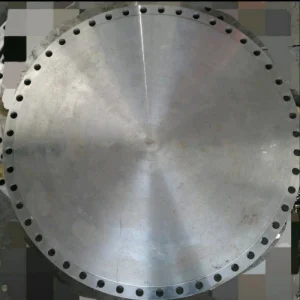
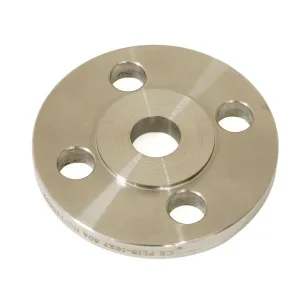
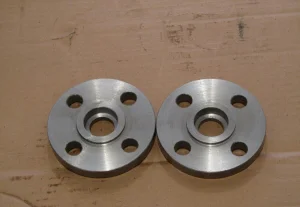
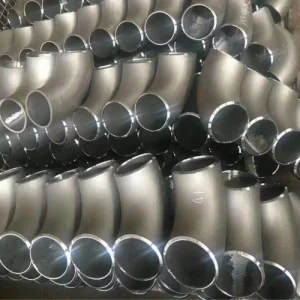
1. Global Industrial Landscape of Large-Diameter & Big Size Flanges
Analysis of critical piping architecture, stress distribution parameters, and global market dynamics driving heavy flange manufacturing.
In modern industrial engineering, large-diameter piping systems—typically defined as nominal pipe sizes (NPS) from 26 inches up to 160 inches (DN600 to DN4000)—form the arterial network of world energy, municipal water management, offshore extraction, and heavy petrochemical processing. The selection of a top-tier Big Size Flange Factory is not merely a purchasing decision; it is a fundamental safety and risk-mitigation strategy for multi-billion-dollar infrastructure assets.
Large-diameter flanges operate under complex multi-axial mechanical stresses, cyclic thermal expansion, internal hydraulic surges, and severe environmental loading. Unlike standard commodity flanges (1/2" to 24" covered under ASME B16.5), big size flanges manufactured to standards such as ASME B16.47 (Series A and Series B), MSS SP-44, API 605, EN 1092-1 Type 01/11, and DIN 2501 demand specialized metallurgical control, advanced ring-rolling forge lines, and rigorous non-destructive evaluation (NDE).
Material Engineering & Metallurgical Selection Matrix
Best-in-class flange factories utilize forged carbon steel, high-yield micro-alloyed steel, austenitic/super-duplex stainless steels, and nickel-base alloys tailored to specific operating media:
| Standard Material Grade | Specification Framework | Yield Strength (Min.) | Primary Application Environment |
|---|---|---|---|
| ASTM A105 / A105N | Carbon Steel Forgings (Normalized) | 250 MPa (36 ksi) | General high-temperature, high-pressure industrial fluid lines. |
| ASTM A350 LF2 Class 1/2 | Low-Temperature Carbon Steel | 240–250 MPa | Cryogenic LNG systems, Arctic cross-country pipelines (-46°C charpy impact). |
| ASTM A694 F52 / F60 / F65 / F70 | High-Yield Carbon Steel | 360 to 485 MPa | High-pressure cross-country oil & gas transmission headers. |
| ASTM A182 F304L / F316L / F321 | Austenitic Stainless Steel | 170 to 205 MPa | Corrosive chemical process lines, marine desalination, food/pharmaceutical. |
| ASTM A182 F51 / F53 / F55 | Duplex & Super Duplex (2205 / 2507) | 450 to 550 MPa | Offshore FPSO topsides, subsea manifolds, highly acidic SOUR gas services. |
2. Ecosystem Superiority & Efficiency Advantages of Chinese Flange Factories
Why Cangzhou and major Chinese manufacturing hubs lead the world in large-diameter forging throughput, precision CNC machining, and lead-time optimization.
Massive Heavy Forging Infrastructure
Chinese production clusters house state-of-the-art 10,000-ton hydraulic forging presses and automated radial-axial ring rolling machines capable of seamlessly forming heavy ring flanges up to 9 meters in outer diameter with uniform grain refinement.
Integrated Raw Material Ecosystem
Proximity to Tier-1 steel mills (Baosteel, Ansteel, Shougang) ensures instant access to certified clean-steel ingots, forged billets, and heavy plate stock with complete heat-traceability and zero supply chain delay.
Unmatched Production Velocity
By pairing 5-axis CNC vertical turning lathes (VTL) with automated multi-spindle drilling rigs, leading Chinese factories achieve 40% to 60% faster project turnaround times compared to traditional Western European forging yards.
The manufacturing velocity of Chinese industrial hubs like Cangzhou, Hebei is bolstered by complete vertical integration. Within a single industrial park, operations progress seamlessly from raw ingot heating and open-die forging to heat treatment (normalizing, quenching, tempering), CNC facing, bolt hole drilling, automated anti-corrosion coating, and packing. This concentrated supply chain eliminates inter-facility transportation friction and enables strict quality oversight governed by ISO 9001 quality assurance frameworks.
Global Engineering Impact & Supply Performance
Quantifiable operational capabilities delivered by leading Big Size Flange manufacturers to international EPC contractors.
3. Specialized Industrial Applications & Deployment Scenarios
Where large-diameter weld neck, blind, slip-on, and custom plate flanges are deployed across global mega-projects.
Offshore Floating Facilities & FPSOs
Subsea risers, turret mooring systems, and top-side processing modules utilize heavy-wall ASME B16.47 Series A Weld Neck Flanges forged in Super Duplex F53 or Ni-alloy cladded carbon steel to resist severe pitting corrosion, fatigue, and wave-induced shear stress.
LNG Liquefaction & Regasification Terminals
Cryogenic loading arms and storage tanks require cryogenic-grade ASTM A350 LF2 and A182 F316L large-diameter blind and companion flanges tested at -196°C to prevent sudden brittle fractures during high-pressure liquid natural gas transfers.
Hydroelectric Power Plant Penstocks
High-head hydro turbines require custom-designed large plate weld flanges and spectacle blinds exceeding 3000 mm in diameter, manufactured to tight tolerance limits to withstand water hammer pressures and severe hydrodynamic turbulence.
Cross-Country Energy Pipelines
Natural gas trunklines operating under Class 600 and Class 900 pressures specify high-yield MSS SP-44 / ASME B16.47 flanges (Grades F52 through F70) to allow thin-wall, high-strength matching with API 5L X70/X80 line pipes.
Desalination & Civil Water Megaprojects
Large municipal water headers use AWWA C207 and EN 1092-1 plate flanges (DN1200 to DN3200) with heavy epoxy or rubber lining to prevent galvanic corrosion and ensure leak-free seal longevity across 50+ year lifespans.
Nuclear Containment & Thermal Power
Main steam systems in thermal and nuclear stations demand heavy alloy steel flanges (ASTM A182 F91 / F92) that maintain high creep rupture strength under continuous operation above 580°C.
4. Industry Trends: Technological Innovations Shaping Flange Manufacturing
The transition toward smart digital manufacturing, automated cladding, FEA stress simulation, and green hydrogen compatibility.
A. Finite Element Analysis (FEA) & Custom Flange Geometry
Modern engineering standards are shifting from static empirical design tables to dynamic Finite Element Analysis (FEA) modeling. Top big size flange factories utilize 3D non-linear FEA software to simulate bolt pre-load, gasket crushing stresses, thermal gradients, and internal pressure thrust. This prevents localized flange rotation and gasket unloading, particularly on non-standard custom flanges operating in extreme environments.
B. Automated Corrosion-Resistant Alloy (CRA) Weld Overlay Cladding
To optimize project expenditure without sacrificing corrosion resistance, factories increasingly employ CRA Weld Overlay Cladding. By applying a 3mm to 5mm layer of Inconel 625 (UNS N06625) or Stainless 316L onto an ASTM A105N or A694 carbon steel flange sealing face using automated hot-wire GTAW/GMAW equipment, engineers achieve super-alloy performance at a fraction of solid-alloy material costs.
C. Smart Traceability & IIoT Integration
Industry 4.0 has transformed flange quality tracking. Modern Chinese factories etch 2D DataMatrix QR codes and embed industrial RFID tags onto outer flange rims. Scan data connects instantly to digitized MTCs (Material Test Reports according to EN 10204 3.1 or 3.2 certified by independent inspectors like TÜV, SGS, or Lloyd's Register), holding full heat chemistry, mechanical yield/tensile values, and NDE test reports.
D. Green Hydrogen & Clean Energy Readiness
As global energy transitions toward hydrogen transport, flange manufacturers are refining forging practices to mitigate Hydrogen Embrittlement (HE). This involves strict vacuum degassing of molten steel, ultra-low sulfur chemistry (< 0.005%), and precision post-weld heat treatment (PWHT) to guarantee structural ductility under high-pressure gaseous hydrogen service.
5. Global Enterprise Procurement Framework & Quality Audit Standards
Crucial quality control metrics and certification requirements required by international EPC procurement managers.
When procuring large-diameter flanges for capital projects, procurement directors must evaluate vendors against rigid Quality Assurance and Quality Control (QA/QC) criteria. A failure in a DN1500 flange can lead to millions of dollars in downtime, environmental cleanup, and safety hazards. Leading factories undergo rigorous audit protocols:
Non-Destructive Testing (NDT)
100% Volumetric Ultrasonic Testing (UT) per ASME Sec V to detect internal forging voids or laminations; Magnetic Particle (MT) and Liquid Penetrant (PT) testing to verify surface defect-free status on raised faces and ring joints (RTJ).
Dimensional & Serration Audit
Laser tracker inspection verifying bolt hole pitch circle diameters (PCD), flange thickness, hub taper angle, and facing finish roughness (125–250 AARH smooth stock finish or spiral serration per ASME specifications).
Destructive Metallurgical Validation
Batch-level destructive testing including room and low-temperature Charpy V-Notch impact tests, Tensile/Yield testing, Hardness mapping (NACE MR0175/ISO 15156 compliance for sour gas), and Microstructure grain size analysis.
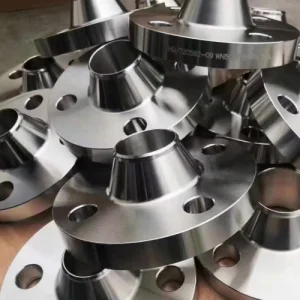
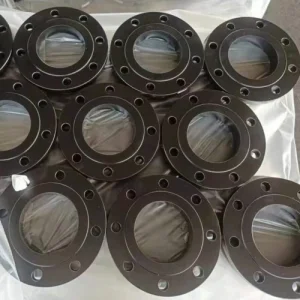
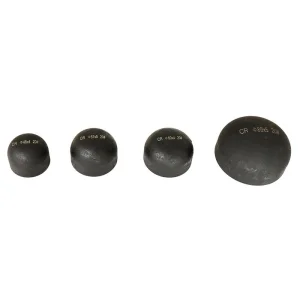
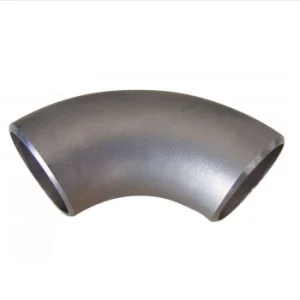
Industrial Pipe Fittings & Flanges Series (9–16)
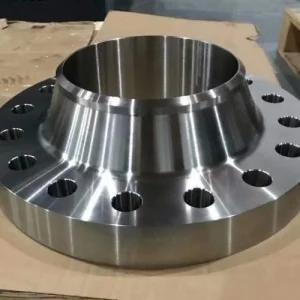
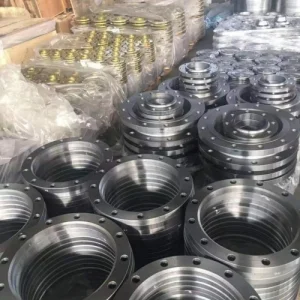
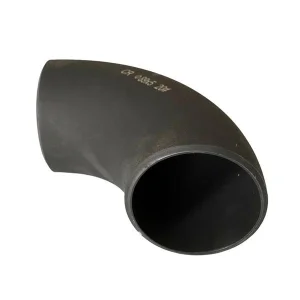
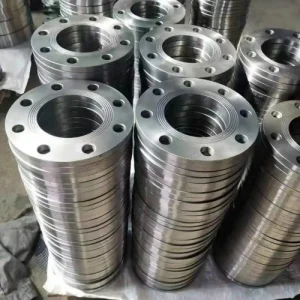
High-performance pipe fittings, blind flanges, and custom weld neck components engineered for severe service environments.
6. Technical FAQ: Frequently Asked Questions by Project Engineers & Buyers
Expert answers addressing dimensional standards, pressure ratings, flange facing choices, and manufacturing lead times.