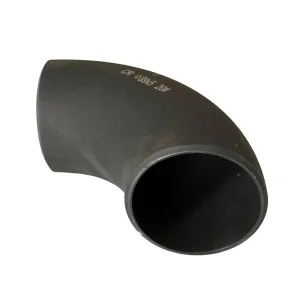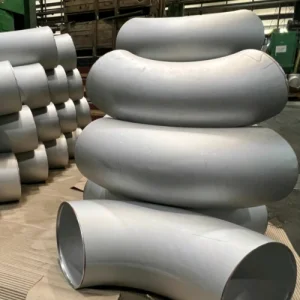
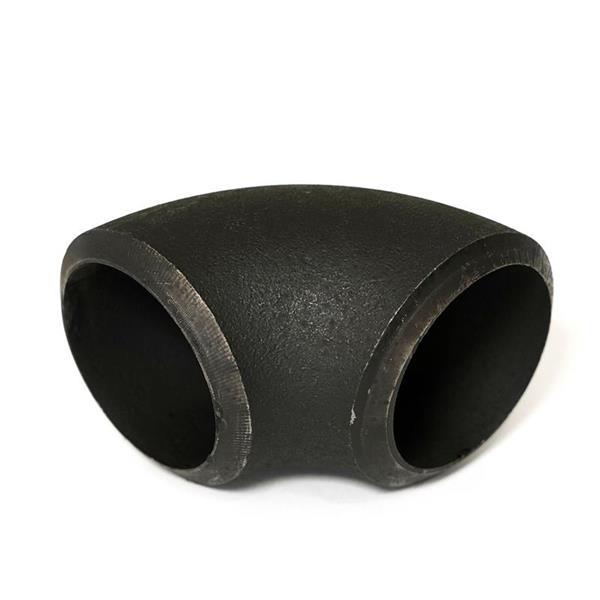
Buy Long Radius Elbow 1.5D Carbon Steel Elbow Companies, Products
Product Description
Material & Grade Specifications
Carbon Steel
Alloy Steel
Stainless Steel
Frequently Asked Questions
Both WPB and WPC are standard material specifications for wrought carbon steel fittings for moderate and high-temperature service. WPC offers higher tensile and yield strength compared to WPB, making it suitable for applications requiring greater stress tolerance.
Alloy steel grades such as WP11, WP22, and WP91 provide superior creep resistance and strength at elevated temperatures. They are commonly specified in power generation, chemical processing, and refinery piping systems operating under extreme pressure and temperature.
ASTM A403 WP 304 and 316 stainless steel grades provide excellent corrosion resistance and mechanical strength. WP 316 contains molybdenum, offering superior resistance to chlorides, acids, and marine environments compared to WP 304.
Suffixes indicate specific chemical modifications: "L" stands for low carbon (improving weldability and intergranular corrosion resistance), "H" stands for high carbon (enhancing high-temperature strength), and "LN" denotes nitrogen addition for higher mechanical strength.
Yes, materials manufactured according to ASTM/ASME A234 and A403 standards are fully compliant with ASME B16.9 and B16.28 specifications, ensuring reliable performance in high-pressure industrial piping networks.