
Featured Heavy-Duty Pipe Bends & Fittings for Doha Infrastructure
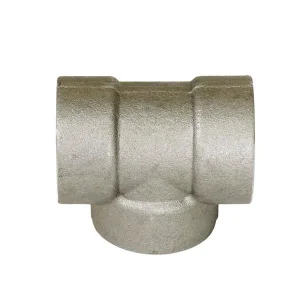
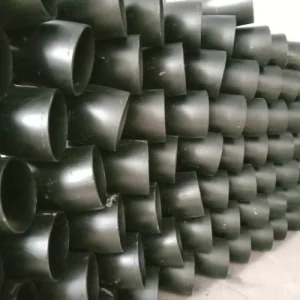
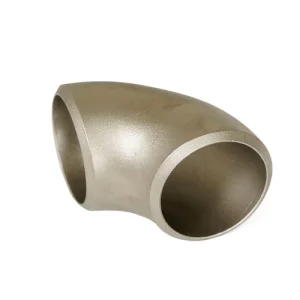
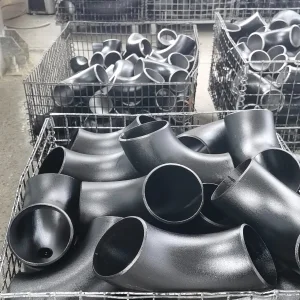
Explore our key heavy-wall forged fittings, seamless elbows, and butt-weld equal tees engineered to meet strict QatarEnergy (QE) and Kahramaa operational standards in high-pressure gas transport and marine cooling systems.
Executive Summary & Industrial Landscape of Pipe Bends in Doha
Doha, as the financial and engineering nucleus of Qatar, stands at the center of unprecedented industrial expansion. Driven by Qatar National Vision 2030, the region is undergoing massive structural investments across energy extraction, LNG processing, seawater desalination, and urban district cooling networks. Central to these fluid transfer systems are engineered pipe bends—critical directional transition components manufactured to withstand extreme thermal expansion, hydraulic surge pressures, and highly corrosive desert-marine microclimates.
Industrial procurement teams working on major projects in Mesaieed Industrial City, Ras Laffan Industrial City, and the North Field Expansion (NFE & NFS) projects require specialized steel pipe bends that adhere strictly to international standards including ASME B16.49, MSS SP-75, and API 5L. High-yield carbon steels (WPHY 52 to WPHY 70) and sour-service compliant alloy materials are crucial to ensuring continuous operational longevity without catastrophic fatigue failure.
Global Industry Shifts vs. Localized Requirements in Qatar
The global pipeline manufacturing landscape is experiencing a paradigm shift toward high-yield steel chemistry, advanced high-frequency induction bending techniques, and integrated digital twin stress analysis. Internationally, the demand for pipe bends is heavily influenced by cross-border gas interconnectors, carbon capture and storage (CCS) lines, and hydrogen-blended fuel supply infrastructures.
Global Industry Dynamics
- Transition to high-yield material grades (API 5L X70/X80 & MSS SP-75 WPHY 70) to reduce wall thickness and material tonnage.
- Widespread adoption of Medium-Frequency Induction Bending (MFIB) with real-time pyrometric temperature monitoring.
- Implementation of Finite Element Analysis (FEA) to model residual stress, ovality, and wall thinning during heat application.
- Mandatory 100% Non-Destructive Examination (NDE) including Phased Array Ultrasonic Testing (PAUT).
Doha & Qatar Specific Challenges
- Severe ambient thermal swings (+15°C winter to +52°C summer) creating heavy thermal expansion stress on exposed piping.
- Hypersaline marine atmospheric exposure requiring specialized 3-Layer Polyethylene (3LPE) or 3-Layer Polypropylene (3LPP) external coatings.
- High concentration of H2S and CO2 in raw gas feeds demanding strict NACE MR0175/ISO 15156 sour service metallurgy.
- Stringent municipal engineering approvals enforced by Kahramaa, Ashghal, and QatarEnergy engineering standards.
To successfully deliver pipe bends into the Doha market, top manufacturers must bridge the gap between global metallurgical precision and local environmental resilience. Our manufacturing facilities utilize automated induction bending technology capable of controlling wall thinning ratios under 8% while preserving mechanical toughness down to -46°C for low-temperature applications.
Technical Deep-Dive: Metallurgy, Induction Bending & Tolerances
Induction bending is a controlled heating and bending process using high-frequency electrical induction coils to heat a narrow circumferential band around a steel pipe. As the pipe is pushed forward at a constant rate, a pivot arm applies a bending moment to form the desired bend radius (3D, 5D, 8D, or custom), followed immediately by water or air quenching.
Formulas & Engineering Controls in Pipe Bending
When bending a straight pipe into a curved profile, the outer radius (extrados) undergoes tensile elongation and wall thinning, while the inner radius (intrados) experiences compressive stress and wall thickening. Managing these geometric changes is crucial for high-pressure service in Qatar.
t_extrados = t_nominal × [ (2 × R/D + 1) / (2 × R/D + 2) ]Where R is the bending radius and D is the outside pipe diameter. For a 5D bend, the wall thinning is theoretically limited to ~9%, whereas a 3D bend experiences ~14% thinning, requiring heavier starting wall thickness.
| Parameter | Induction Bending (3D / 5D) | Cold Machine Bending | Standard Welded Elbow (LR / SR) |
|---|---|---|---|
| Bend Radius Range | Custom 3D, 5D, 6D, 10D to 20D | 1.5D to 3D (Small Diameters) | Fixed 1.0D (SR) or 1.5D (LR) |
| Pressure Loss (Delta P) | Extremely Low (Smooth flow profile) | Moderate | High (Sharper directional change) |
| Inline Pigging Suitability | 100% Compatible (Smart Pigs) | Restricted | Requires Special Pig Designs |
| Girth Weld Requirement | Eliminates 2 to 4 circumferential welds | Eliminates welds | Requires 2 circumferential welds |
| Wall Thinning Control | Strictly controlled via speed & temp | High risk of micro-cracking | Standardized factory forging |
Material Selection Matrix for Doha Projects
Depending on the specific industrial domain in Doha, material specifications vary dramatically. The table below highlights recommended material grades, international equivalents, and intended Doha application fields:
| Material Classification | Standard & Grade Equivalent | Key Mechanical Properties | Target Doha Application |
|---|---|---|---|
| High-Yield Carbon Steel | MSS SP-75 WPHY 52 / WPHY 60 / WPHY 65 / WPHY 70 | Yield Strength ≥ 485 MPa, Impact Tested @ -46°C | Cross-country gas trunklines, North Field Phase Expansion |
| Sour-Service Carbon Steel | ASTM A234 WPB / WPC (NACE MR0175 Compliant) | Hardness ≤ 22 HRC, HIC & SSCC tested | Raw wet gas header lines, Ras Laffan refineries |
| Austenitic Stainless Steel | ASTM A403 WP316/316L / SS347H | High pitting resistance (PREN > 25), Creep resistant | Chemical processing plants, High-temp steam loops |
| Duplex & Super Duplex | UNS S31803 (2205) / UNS S32750 (2507) | Yield Strength ≥ 550 MPa, PREN > 42 | Seawater reverse osmosis (SWRO) desalination units |
Macro Industry Solutions & Localized Doha Scenarios
Our engineering team designs turnkey piping component packages tailored specifically for Doha’s core infrastructure pillars. Below are three key macro application scenarios demonstrating how custom pipe bends and matching fittings resolve critical engineering bottlenecks.
Scenario A: Offshore-to-Onshore Gas Transmission
Project Scope: High-pressure sour gas feeder lines connecting offshore platform tie-ins to Ras Laffan gas treatment plants.
Engineering Solution: Heavy-wall 5D induction bends manufactured from API 5L X65MS / MSS SP-75 WPHY 65. Bends feature extended straight tangents (500mm min.) to enable flawless orbital field welding, full HIC/SSCC certification, and internal epoxy flow efficiency coating.
Scenario B: Seawater Desalination & Utility Supply
Project Scope: Large-diameter intake and brine rejection lines for Kahramaa SWRO plants operating near the Gulf coastline.
Engineering Solution: Super Duplex 2507 and rubber-lined carbon steel 3D bends ranging from 24" to 48" DN. These bends resist severe chloride pitting while managing extreme hydraulic surges during emergency valve shutdowns.
Scenario C: Urban District Cooling Networks (Lusail & West Bay)
Project Scope: Underground chilled water loop distribution systems serving high-rise towers in Doha.
Engineering Solution: Pre-insulated 3D/5D carbon steel bends (ASTM A234 WPB) fitted with polyurethane foam insulation and high-density polyethylene (HDPE) outer casing, preventing ground thermal gain and soil corrosion.
Requiring Custom 3D/5D Pipe Bends for an Upcoming Doha Tender?
Our technical sales engineers provide material MTO verification, wall thinning calculations, and competitive factory-direct pricing compliant with Qatar standards.
Send Inquiry NowTechnological Roadmap & Future Outlook (2025–2035)
As Qatar progresses toward clean energy integration, carbon capture facilities, and green hydrogen transportation, the technical demands placed on pipeline bend manufacturers are escalating rapidly. Below is our strategic technology vision aligned with Doha's future industrial needs:
1. Hydrogen-Ready Pipe Bend Metallurgy
Hydrogen embrittlement presents a major threat to conventional high-strength steel. Future pipeline bends supplied to Doha will utilize low-carbon ultra-clean steel formulations with controlled microstructures (micro-alloyed with Nb-V-Ti) to resist atomic hydrogen permeation at high pressures.
2. Automated Real-Time Induction Control
Incorporating Artificial Intelligence and optical pyrometer arrays to monitor temperature bands during induction bending. AI algorithms automatically adjust push speed and cooling water flow rates in real-time to maintain tensile strength and prevent grain growth.
3. High-Pressure CO2 Transport Bends (CCS)
Supercritical CO2 pipelines require specialized fracture toughness (Charpy V-Notch > 100 J at -20°C) to prevent ductile running fractures. Future induction bends will feature specialized post-bend heat treatment (PBHT) such as full normalizing and tempering.
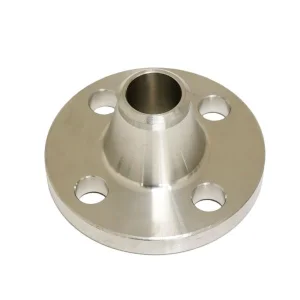
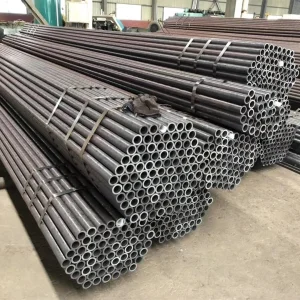
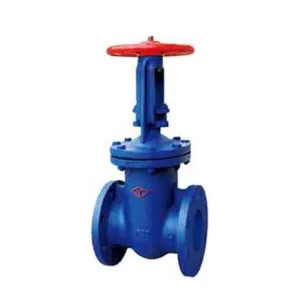
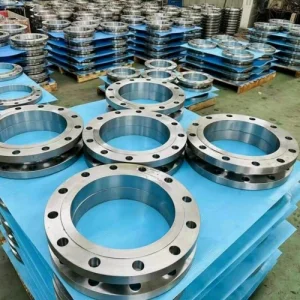
Complete Pipeline Package: Flanges, Seamless Pipes & Valves for Doha
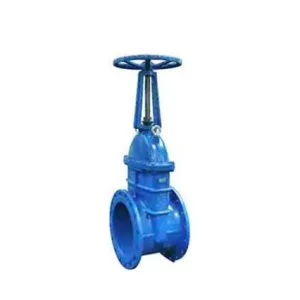
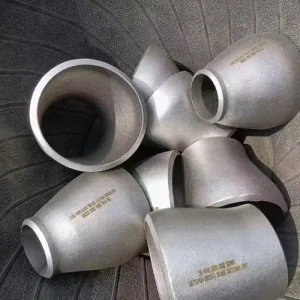
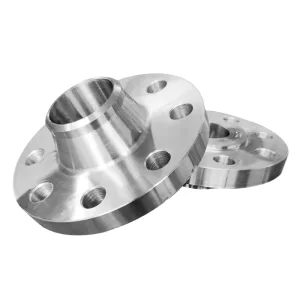
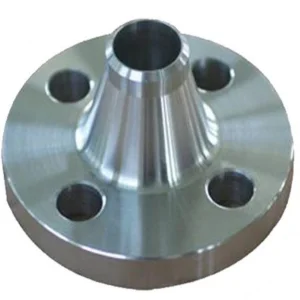
To complement our high-yield pipe bends, we provide a full suite of ASME/ANSI companion flanges, heavy-wall seamless pipes, and industrial isolation valves engineered for seamless integration into Qatar’s industrial supply chains.
E-E-A-T Compliance: Strict Quality Assurance & Testing Protocol
In compliance with Google’s E-E-A-T (Experience, Expertise, Authoritativeness, and Trustworthiness) standards, our manufacturing facilities adhere to rigorous international inspection protocols. Every pipe bend dispatched to the Doha market is supplied with a EN 10204 3.1 or 3.2 Material Test Certificate (MTC).
1. Non-Destructive Testing (NDT)
100% Ultrasonic Testing (UT) on bend body zones to verify remaining wall thickness. Phased Array UT and Radiographic Testing (RT) applied on all weld seams. Magnetic Particle Inspection (MPI) performed on extrados regions to rule out micro-fissures.
2. Destructive Metallurgical Verification
Post-bend test coupons undergo Charpy V-Notch impact testing at -46°C, Vickers Hardness testing (max 22 HRC per NACE), tensile testing, and microstructural analysis to verify grain size stability after thermal quenching.
3. Dimensional & Ovality Control
Laser scanning technology ensures out-of-roundness (ovality) remains within 2.0% and bend angle tolerances are maintained within ±0.2 degrees, satisfying strict ASME B16.49 mandates.
Frequently Asked Questions (FAQ) for Doha Buyers
Partner with a Premier Pipe Bends Manufacturer for Doha Market
Whether you require heavy-wall 5D carbon steel bends for high-pressure gas trunklines or stainless steel heat-resistant elbows for petrochemical processing, our engineering team is ready to assist with technical submittals, MTCs, and competitive mill quotes.
Send Inquiry Now