
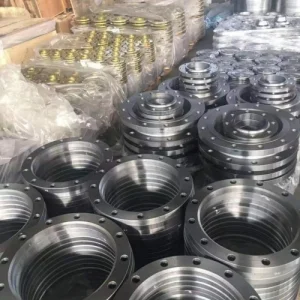
High-Quality JIS Flange Quotes & Exporter Services for Tokyo Bay Infrastructure
JIS B2220 5K/10K/16K/20K forged carbon and stainless flanges tailored for maritime, waterworks, and chemical piping networks in Tokyo Port.
View Product SpecsWhitepaper Guide on JIS/ASME 4-Way Cross Pipe Fittings: Market Pricing, Local Sourcing, Procurement Benchmarks, and Technical Engineering Solutions across Greater Tokyo.
Direct supply from audited manufacturers engineered to meet Tokyo METI, JIS B2312, and global ASME specifications.
JIS B2220 5K/10K/16K/20K forged carbon and stainless flanges tailored for maritime, waterworks, and chemical piping networks in Tokyo Port.
View Product Specs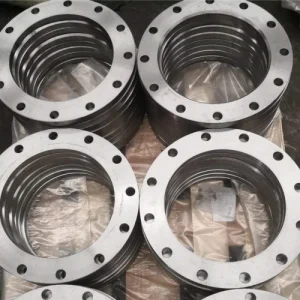
ASTM A105 forged steel flat plate flanges engineered for low-to-medium pressure utility headers across the Keihin Industrial Zone.
View Product Specs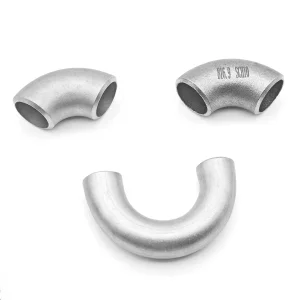
Seamless & welded carbon/stainless steel elbows and cross tees manufactured to ASME B16.9 and JIS B2311 for compact mechanical rooms.
View Product Specs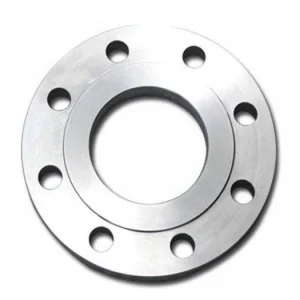
High-precision plate welding flanges designed for structural piping, heat exchangers, and municipal district heating networks in Tokyo.
View Product SpecsUnderstanding the unique architectural, environmental, and regulatory drivers governing 4-way cross fitting deployment across Greater Tokyo.
Greater Tokyo possesses one of the world's most sophisticated underground utility networks. Space limitations in sub-surface utility tunnels mandate multi-directional directional flow. 4-way cross fittings eliminate the spatial footprint of dual tees, optimizing conduit geometry in densely populated metropolitan districts like Marunouchi, Ginza, and Shinjuku.
Extending along the Tokyo Bay coastline into Kawasaki and Yokohama, the Keihin Industrial Area relies heavily on robust 4-way pipe manifolds for petroleum refining, petrochemical processing, and liquid natural gas (LNG) distribution. High-pressure carbon steel (ASTM A234 WPB) and alloy steel 4-way cross fittings serve as crucial distribution hubs.
Precision manufacturing and semiconductor cleanrooms surrounding suburban Tokyo require stainless steel (304L/316L) 4-way fittings. These ultra-clean cross fittings facilitate ultra-pure water (UPW) recirculation and high-efficiency HVAC district cooling loops managed by Tokyo Energy Plan protocols.
In Tokyo's dense industrial hierarchy, the selection of a four-way pipe fitting (also known as a pipe cross or equal 4-way cross fitting) is governed by tight spatial constraints and fluid dynamic requirements. Standard piping layouts utilizing two adjacent 90-degree branch tees require significantly more linear space and introduce double the welding joints. By contrast, an integrated equal or reducing 4-way cross pipe allows four pipes to converge at a single 90-degree intersection, cutting total installation footprint by up to 45% and reducing stress concentrations in seismically monitored installations.
Macroeconomic transformations, net-zero mandates, and seismic engineering requirements shaping the demand for high-performance 4-way cross fittings.
Following updated Metropolitan Disaster Management directives, infrastructure projects in Tokyo strictly mandate seismic-grade piping components. 4-way pipe cross fittings must demonstrate high fatigue resistance under cyclic seismic loads. Exporters supplying Tokyo must offer low-temperature impact tested materials (e.g., ASTM A333 Grade 6 or JIS G3454 STPG370) equipped with full Material Test Reports (EN 10204 3.1).
Under Japan's Strategic Energy Plan, thermal power stations in the Greater Tokyo area (such as thermal facilities in Tokyo Bay) are transitioning toward ammonia and green hydrogen co-firing. This technological shift requires ultra-leak-tight, forged stainless steel 316/316L and high-nickel alloy 4-way cross fittings capable of containing micro-molecular gas leakage under high operating pressures.
Comprehensive cost evaluation for engineering buyers and EPC contractors importing 4-way pipe fittings into Tokyo Port / Yokohama Port.
| Nominal Size (DN / Inch) | Material Standard | Schedule / Pressure Rating | Manufacturing Process | Est. Ex-Factory Price (USD) | Est. Tokyo Landed Cost (JPY) |
|---|---|---|---|---|---|
| DN15 (1/2") | ASTM A234 WPB / JIS B2311 | SCH 40 / STD | Seamless Cold Formed | $3.50 - $5.20 | ¥580 - ¥860 |
| DN25 (1") | ASTM A403 WP304/304L | SCH 10S / SCH 40S | Stainless Seamless Hydroformed | $12.80 - $18.50 | ¥2,100 - ¥3,050 |
| DN50 (2") | ASTM A403 WP316/316L | SCH 40S / SCH 80S | Precision Machined & Annealed | $28.00 - $42.00 | ¥4,600 - ¥6,900 |
| DN100 (4") | ASTM A234 WPB / STPG370 | SCH 40 / SCH 80 | Hot Pressed Seamless Carbon | $45.00 - $68.00 | ¥7,400 - ¥11,200 |
| DN150 (6") | ASTM A105 Forged Steel | Class 3000 Threaded / SW | Drop Forged & CNC Turn | $85.00 - $125.00 | ¥14,000 - ¥20,600 |
| DN200 (8") | ASTM A234 WPB / JIS B2312 | SCH 40 / SCH STD | Welded / Seamless Hydraulic Press | $140.00 - $210.00 | ¥23,000 - ¥34,600 |
| DN300 (12") | ASTM A403 WP304 / JIS B2313 | SCH 20S / SCH 40S | Fabricated Welded Plate Cross | $380.00 - $560.00 | ¥62,500 - ¥92,000 |
Architectural considerations for integrating 4-way cross pipe manifolds into complex Tokyo industrial networks.
When four fluid streams converge or diverge at a central point, standard right-angle intersections generate localized turbulence, pressure drops, and severe cavitation risk. Engineering teams in Tokyo frequently utilize 4-way cross fittings featuring internal crotch radius reinforcement or flow-splitting internal vanes.
For high-velocity steam lines or abrasive slurry transport, finite element analysis (FEA) is conducted to determine the optimal wall thickness schedule (e.g., transitioning from SCH 40 to SCH 80 at the crotch zone) to prevent erosion-corrosion failures.
In municipal water distribution and industrial cooling networks, 4-way cross fittings serve as the central manifold node for dual-pump filtration skids. By deploying a single 4-way cross instead of dual tee connections, engineers achieve balanced flow distribution to redundant filtration channels while saving over 30% in skid length—a critical factor for compact Tokyo equipment vaults.
Ensuring seamless integration with METI laws, High Pressure Gas Safety Act regulations, and Tokyo municipal codes.
Fittings exported to Japan must strictly align with Japanese Industrial Standards: JIS B2311 (steel butt-welding pipe fittings for ordinary use) and JIS B2312 (steel butt-welding pipe fittings for specific service). Dimensional tolerance, beveling angle (37.5° ± 2.5°), and ovality must conform strictly to Japanese dimensional charts.
High-pressure piping systems exceeding 1.0 MPa (for gas) operating in Greater Tokyo fall under the High Pressure Gas Safety Act (高圧ガス保安法). Suppliers must provide complete mill test certificates, chemical analysis, heat treatment documentation, and KHK non-destructive test results prior to customs release.
Exporting to Tokyo requires synchronized logistics. Professional exporters offer door-to-door (DDP) or CIF Tokyo/Yokohama terms with pre-cleared customs documentation, wood-pallet heat treatment (ISPM 15 compliance), and waterproof shrink-wrapped packaging to prevent sea-salt atmosphere oxidation.
Explore our comprehensive lineup of industrial flanges, reducers, and forged 4-way cross fittings servicing Tokyo projects.
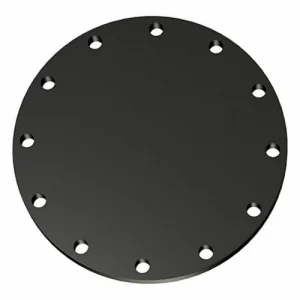
Forged carbon steel flanges EN 1092-1 / JIS compliant for water, gas, and industrial pipeline manifolds across Greater Tokyo.
View Product Specs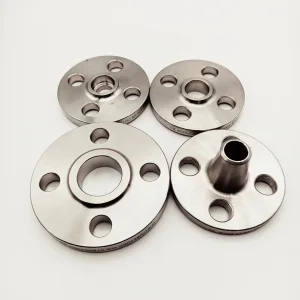
High-pressure weld neck, blind, slip-on, and socket weld cross fittings in carbon and stainless steel grades.
View Product Specs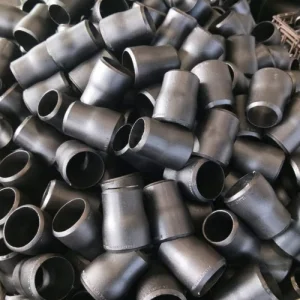
Seamless carbon steel pipe reducers designed to pair with 4-way cross header manifolds in industrial process plants.
View Product Specs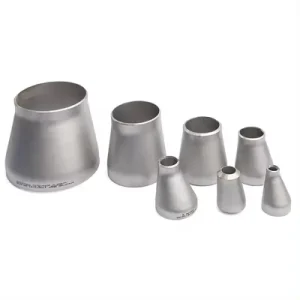
Corrosion-resistant austenitic stainless steel concentric and eccentric reducers and 4-way tees for sanitary and chemical applications.
View Product Specs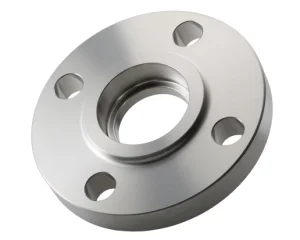
Full penetration weld slip-on flanges ideal for connecting high-pressure 4-way cross manifolds in chemical refineries.
View Product Specs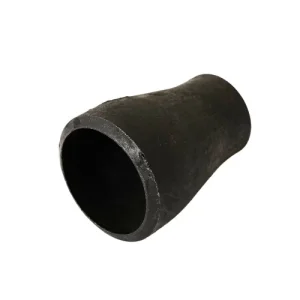
Heavy wall thickness carbon steel butt-weld fittings manufactured to withstand extreme thermal and mechanical fatigue.
View Product Specs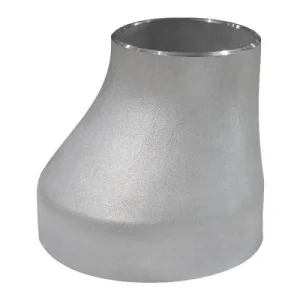
Standard export grade A234 WPB seamless reducers for fluid distribution systems across Japanese commercial developments.
View Product Specs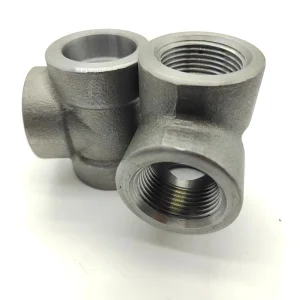
High pressure Class 3000/6000 NPT and Socket Weld forged cross fittings engineered for hydraulic and instrument lines.
View Product SpecsStrategic technological innovations transforming 4-way cross fitting manufacturing, metallurgy, and smart monitoring in Japan.
Traditional hot-press manufacturing of 4-way pipe crosses creates stress concentration points at the inner 90-degree crotches. By 2028, 3D laser powder bed fusion (LPBF) additive manufacturing using Super Duplex (UNS S32750) steel will enable topologically optimized, curved internal flow channels. This innovation reduces fluid pressure drop across cross junctions by up to 28% while improving erosion resistance in high-particulate Tokyo industrial lines.
With Greater Tokyo advancing its Smart City digital twin initiatives, high-criticality 4-way cross fittings in underground conduits are being upgraded with integrated micro-piezoelectric ultrasonic transducers. These smart sensors wirelessly transmit wall-thickness erosion data and micro-vibration stress metrics directly to municipal control centers, preventing catastrophic piping failures long before routine maintenance cycles.
Addressing essential technical, commercial, and logistics queries for engineering procurement teams.
Get in touch with our engineering export specialists for competitive pricelists, JIS/ASME technical data sheets, and custom 4-way cross fitting manufacturing solutions.
Send Inquiry Now