
Featured Australia-Grade Pipeline Components & Fittings
Factory-direct high-yield carbon steel and stainless steel line pipes, fittings, and flanges engineered for Australian mining, gas, and infrastructure standards.
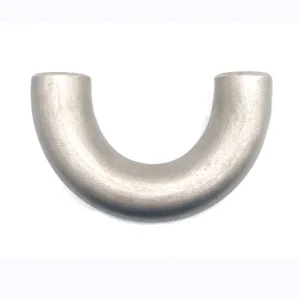
Australia Grade Stainless Steel Elbows (304/316L)
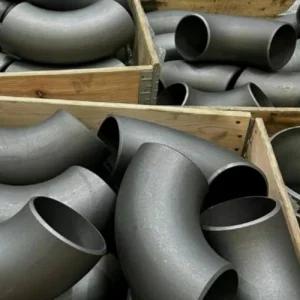
High-Quality A234WPB Seamless Elbow DN100 SCH STD 90Deg 1.5D
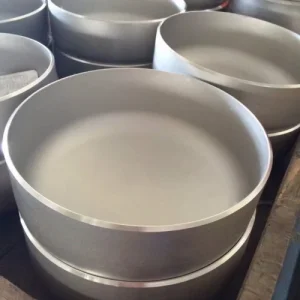
ANSI B16.9 316 / 304 / 316L Heavy-Duty Pipe End Caps
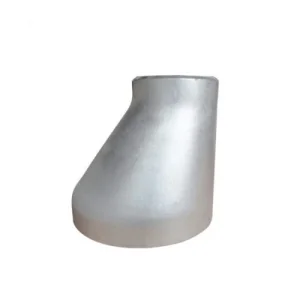
AS 4041 Seamless & ERW Butt-Weld Pipe Fittings
Australian Industrial Dynamics: The Crucial Role of Certified ERW Steel Pipes
Navigating Australia's demanding terrain, extreme climate cycles, and rigorous statutory compliance frameworks requires specialized piping solutions engineered for maximum yield strength and corrosion endurance.
Mining & Slurry Infrastructure in Western Australia & Queensland
Australia’s resource sector, anchored by the Pilbara iron ore belt in Western Australia and the Bowen Basin coal fields in Queensland, operates under some of the world's most severe abrasive and hydraulic conditions. Electric Resistance Welded (ERW) steel pipes manufactured to AS/NZS 1163 grade C350L0 and C450L0 offer exceptional dimensional consistency and high concentricity, making them ideal for long-distance iron ore slurry transportation, tailings management, and mine dewatering networks.
By leveraging high-frequency induction (HFI) welding, our ERW steel pipes maintain high structural integrity along the longitudinal weld seam, mitigating the risk of micro-cracking during pressure surges in deep-pit dewatering applications.
Urban Water Grid Expansion & Agricultural Irrigation
With Australia’s National Water Grid Strategy pushing for enhanced drought resilience, municipal water authorities across New South Wales, Victoria, and South Australia are upgrading trunk mains and irrigation pipelines. ERW pipes compliant with AS/NZS 1579 (Arc-welded steel pipes for water and gas) provide an economical, lightweight alternative to ductile iron and seamless steel pipes.
Their smooth internal surface minimizes friction loss, lowering pumping energy costs over thousands of kilometers of agricultural water conveyance schemes across the Murray-Darling Basin.
Solving Australia's Supply Chain Bottlenecks: The Discount ERW Value Proposition
Unlocking substantial capital expenditure (CAPEX) savings without compromising structural safety or regulatory compliance through direct-from-mill technical sourcing.
Up to 25% Cost Reduction vs. Seamless
For low-to-medium pressure applications (up to 5.0 MPa) such as water transport, slurry mains, and structural casing, ERW steel pipes yield up to a 25% reduction in landed cost per meter compared to seamless carbon steel options. This pricing efficiency stems from continuous automated cold-forming processes coupled with modern High-Frequency Welding (HFW) lines.
Pre-Tested Stocking & Expedited Logistics
We understand that mining shutdowns and infrastructure project timelines in Australia suffer heavily from freight delays. Our strategic stocking hubs in major regional ports (Fremantle, Brisbane, Sydney, Melbourne) ensure immediate access to standardized ERW outer diameters (OD 21.3mm to OD 610mm) and schedules (SCH 20, SCH 40, STD, XS).
Zero Defect Seam Integrity Assurance
Every single length of ERW pipe destined for the Australian market undergoes 100% full-body ultrasonic seam inspection and online eddy current testing. We back all shipments with EN 10204 3.1 Mill Test Certificates detailing heat chemistry, yield/tensile strength, elongation, and hydrostatic test pressure data.
Technical Comparison Matrix: ERW Steel Pipe vs. Alternative Piping Solutions
An engineering comparison evaluating structural performance, wall thickness tolerance, capital expenditure, and lead time for key Australian industry sectors.
| Piping Category | Manufacturing Standard | Wall Thickness Tolerance | Landed Cost (AUD/Tonne) | Primary Australian Applications |
|---|---|---|---|---|
| ERW Carbon Steel Pipe | AS/NZS 1163 / AS/NZS 1074 / API 5L | ±5% to ±8% (High Precision) | Discount Direct (Highly Competitive) | Slurry transport, Water mains, Solar piling, Structural columns |
| Seamless Carbon Steel Pipe | ASTM A106 Gr. B / API 5L PSL2 | ±12.5% (Variable) | High (+35% Premium) | High-pressure steam lines, Refining, Extreme temp processing |
| LSAW Steel Pipe (Submerged Arc) | AS 2885 / API 5L PSL2 | ±7.5% | Moderate to High | Large diameter cross-country gas transmission (>24 inches) |
| Ductile Iron Pipe | AS/NZS 2280 | N/A (Cast) | High (+40% Premium) | Heavy urban municipal sewage, Potable water mains |
Regulatory Compliance & Localized Quality Assurance
Operating under strict adherence to Australian standards, building codes, and safety guidelines enforced by local engineers and procurement officers.
Key Australian Structural & Piping Standards
-
AS/NZS 1163: Structural steel hollow sections (Grades C250L0, C350L0, C450L0) specifically specified for seismic and structural design across Australia.
-
AS/NZS 1074: Steel tubes and tubulars suitable for screwed and socketed joints and for welding in ordinary fluid service.
-
AS/NZS 1579: Submerged arc and resistance welded steel pipes for water, wastewater, and stormwater infrastructure.
-
AS 4041 & AS 2885: Pressure piping and pipelines for gas and liquid petroleum in industrial and remote installations.
Rigorous Third-Party Inspection & NDT Protocol
To satisfy statutory obligations imposed by Australian site managers and Tier-1 contractors (e.g., CPB Contractors, CIMIC Group, Monadelphous), our manufacturing process integrates comprehensive quality assurance stages:
Testing Scope Includes: Hydrostatic testing to rated burst pressures, Ultrasonic Testing (UT) of 100% weld seams, Charpy V-Notch Impact Testing at low temperatures (-20°C for L0 designation), Positive Material Identification (PMI), and Hot-Dip Galvanizing thickness checks to AS/NZS 4680.
Engineering Case Scenarios Across Key Australian Territories
Field-proven ERW steel pipe solutions deployed in critical Australian regional and metropolitan projects.
Solar Farm Piling & Foundations (NSW & Queensland)
Utility-scale solar farms across regional New South Wales (e.g., Riverina district) and Western Queensland require thousands of driven steel piles to support solar tracking arrays. Our AS/NZS 1163 C350L0 ERW structural pipes feature exact wall tolerances and high torsional strength, allowing rapid mechanical pile-driving into hard, clay-rich Australian soils without bucking or top-end splitting.
Corrosion-Resistant Mine Dewatering (WA Goldfields)
In the highly saline ground conditions of Kalgoorlie and the Goldfields-Esperance region, mine pit dewatering lines face extreme chemical degradation. We supply heavy-wall ERW steel pipes lined with High-Density Polyethylene (HDPE) or coated with 3-Layer Polyethylene (3LPE) to AS 4321, delivering an impervious barrier against aggressive groundwater and abrasion.
Commercial Fire Protection & HVAC Risers (Sydney & Melbourne CBD)
High-rise commercial construction in Sydney, Melbourne, and Brisbane demands strictly certified fire sprinkler pipe networks. Our light and medium series ERW carbon steel pipes compliant with AS/NZS 1074 are factory-galvanized or painted red, offering smooth threading, easy grooving for Victaulic couplings, and rapid installation in confined vertical utility shafts.
Technology Roadmap: Next-Generation ERW Manufacturing & Green Steel 2025–2035
Innovating ERW production processes to meet Australia’s Net Zero targets and strict environmental, social, and governance (ESG) procurement directives.
Green Steel & Low-Carbon Coil Sourcing
As major Australian mining operators (such as BHP, Rio Tinto, and Fortescue) commit to Net Zero Scope 1 and Scope 2 operational emissions, the demand for low-carbon steel tubulars is surging. Our mill is transitioning toward Electric Arc Furnace (EAF) steelmaking powered by renewable energy sources, significantly lowering the embodied carbon footprint per tonne of finished ERW pipe shipped to Australian ports.
Smart Seam Heat Treatment & Automated NDT
Utilizing real-time digital thermography and post-weld full-body induction annealing, our production lines eliminate localized microstructural embrittlement along the weld zone. This advanced seam heat treatment guarantees uniform toughness throughout the pipe circumference, matching the grain structure of the base metal and ensuring optimal performance in bend testing and cold forming.
Complete Pipe Fittings, Flanges & Tubular Product Inventory
Browse our broader range of discount industrial pipeline hardware designed for integration with ERW steel pipe networks across Australia.
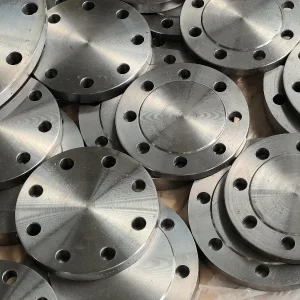
Stainless Steel Blind Flanges (ANSI B16.5 / AS 2129)
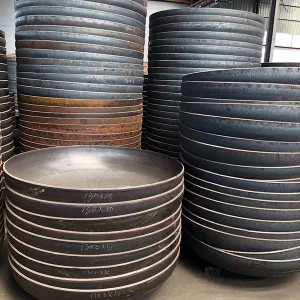
304 / 316L Sanitary Threaded End Caps & Dished Tank Heads
Wholesale 1.5D Long Radius Carbon Steel Elbows
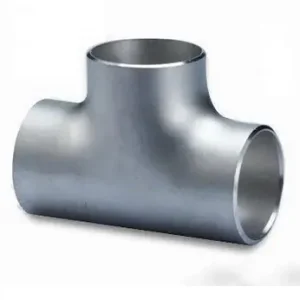
Industrial Steel Equal & Reducer Tees (AS/NZS Compliant)
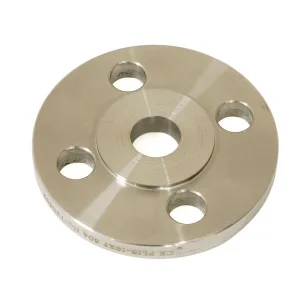
Class 150 Socket Weld Steel Flanges (20# Carbon Steel)
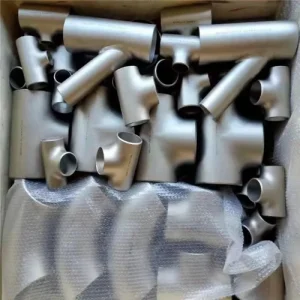
High-Quality Stainless & Carbon Steel Equal/Reducing Pipe Tees
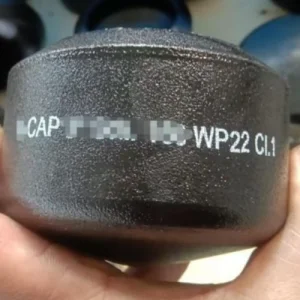
Seamless Carbon Steel End Caps 4" SCH40 (Heavy Duty)
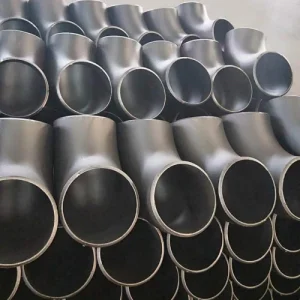
High-Quality Seamless Carbon Steel Bends & Elbows
Frequently Asked Questions: ERW Steel Pipe Sourcing in Australia
Clear technical answers addressing procurement, standard compliance, pressure ratings, and logistics across Australia.
What is the difference between AS/NZS 1163 C350L0 and C450L0 ERW pipes?
AS/NZS 1163 C350L0 specifies a minimum yield strength of 350 MPa, while C450L0 specifies a higher yield strength of 450 MPa. The "L0" designation indicates that the pipe material has undergone Charpy V-notch impact testing at 0°C (and frequently down to -20°C for custom orders), ensuring structural ductility and resistance to brittle fracture in cold weather environments or heavy structural applications.
How does ERW steel pipe pricing compare to seamless steel pipe in Australian procurement?
ERW (Electric Resistance Welded) steel pipe typically costs 20% to 30% less per tonne than seamless pipe due to higher production yields, continuous automated manufacturing, and lower energy consumption. For structural, low-to-medium pressure fluid transport, solar piling, and water mains, ERW offers equal or superior dimensional accuracy (wall thickness consistency) at a significantly discounted landed cost.
Can ERW steel pipes be hot-dip galvanized to Australian Standard AS/NZS 4680?
Yes. All our structural and fluid-handling ERW steel pipes can be hot-dip galvanized to meet or exceed AS/NZS 4680 specifications, providing a zinc coating thickness of 85 to 100 microns (610 g/m²). This ensures exceptional atmospheric corrosion resistance in Australian coastal regions, rural solar installations, and harsh mining environments.
What Mill Test Certificates (MTCs) and compliance documentation are provided with orders?
Every order is dispatched with comprehensive documentation compliant with EN 10204 3.1 or 3.2. MTCs record exact ladle heat chemistry (carbon equivalent values), tensile test results, yield strength, elongation percentage, hydrostatic test pressures, and 100% non-destructive testing (NDT) reports (Ultrasonic/Eddy Current seam inspection certificates).
What are the typical sea freight transit times to major Australian ports?
Average direct shipping transit times from our core manufacturing and loading facilities to key Australian ports are as follows: Fremantle (Perth): 12-15 days, Sydney (Port Botany): 14-18 days, Melbourne (Port Phillip): 16-20 days, and Brisbane: 15-19 days. We also manage breakbulk shipments for project cargoes requiring customized length bundles (up to 12.0m or 18.0m lengths).
Request a Instant Quote for Your Australian Project Today
Speak directly with our senior pipeline engineering team. Get factory-direct pricing, mill test certificate previews, and shipping schedules tailored to your bill of materials.
Send Inquiry Now