
High-Demand Industrial Flanges & Pipe Fittings
Direct factory supply from Cangzhou manufacturing hubs. ASME B16.9, DIN, EN, and JIS compliant components engineered for extreme temperature and pressure environments.
Stream Reducer Engineering: Fluid Dynamics & Metallurgical Integration
In modern industrial piping architecture, a Stream Reducer (commonly referenced as a concentric or eccentric pipe reducer transition) serves as a critical flow-regulating component designed to transition fluid streams between differing pipe diameters while controlling velocity, wall shear stress, and pressure head drops.
Concentric Stream Reducers
Engineered with a shared centerline, concentric reducers are deployed primarily in vertical fluid columns, gas transport lines, and symmetrical piping manifolds. They offer uniform velocity gradient compression and minimal friction loss under single-phase turbulent flow regimes.
Eccentric Stream Reducers
Featuring a flat side and offset axis, eccentric reducers are vital in horizontal liquid lines (flat-on-bottom) to prevent vapor entrapment, and in pump suction inlets (flat-on-top) to prevent cavitation induced by air pockets, protecting impellers from micro-pitting fatigue.
Metallurgical Integrity
Manufactured from seamless carbon steel (ASTM A234 WPB/WPC), low-alloy steel (WP11/WP22/WP91), and austenitic/duplex stainless steels (A403 WP304L/WP316L, S31803), ensuring zero mechanical weakness across the transition cone under thermal cycles.
Dimensional Matrix & Hydrodynamic Tolerances
Review key dimensional criteria, wall thickness designations, and international standard cross-references for wholesale stream reducer procurement.
| Standard Specs | Nominal Size Range (NPS / DN) | Wall Thickness Schedule | Primary Material Grades | Testing & Quality Matrix |
|---|---|---|---|---|
| ASME B16.9 | 1/2" to 78" (DN15 – DN1900) | SCH 10S to SCH XXS (Up to 150mm) | ASTM A234 WPB, WPC, A403 WP304L/316L | 100% UT/RT, Hydrostatic test, EN 10204 3.1 |
| DIN 2616 / EN 10253 | DN15 to DN1200 | 2.0mm to 45.0mm (Type A & B) | P235GH, P265GH, 13CrMo4-5, 1.4404 | NDT (EN 473 level II), PMI Spectrometry |
| JIS B2311 / B2312 | 15A to 600A | SGP, SCH 40, SCH 80, SCH 120 | SS400, PT410, SUS304, SUS316 | Dimensional Inspection, Mechanical Testing |
| GB/T 12459 / 13401 | DN15 to DN1500 | STD, XS, XXS, Custom Heavy Wall | Q235B, 20#, 16Mn, 12Cr1MoVG | Impact testing (-46°C to +550°C), Hardness check |
Technological Roadmap & Process Innovations
How Cangrun Pipeline Equipment leverages cold extrusion, hot press forming, and robotic automated welding to achieve continuous structural homogenity.
Precision Cold/Hot Pressing
Utilizing high-tonnage hydraulic forming presses with computerized ramp-up control. Dies ensure uniform wall thinning ratios across the transition slope, avoiding stress risers and microscopic surface cracking.
Post-Weld Heat Treatment (PWHT)
All alloy and thick-walled carbon stream reducers undergo normalizing, quenching, and tempering in gas-fired furnaces. Complete residual stress relief guarantees long-term durability under cyclic thermal shock.
AI-Assisted CFD Modeling
Custom non-standard stream transitions are designed using Computational Fluid Dynamics (CFD) simulation to analyze boundary layer separation, reducing pressure loss coefficient ($K$-factor) by up to 14%.
Stream Reducers in Critical Industrial Infrastructure
Detailed field performance evaluations across diverse regional environments and harsh industrial applications.
1. North American Shale Gas & LNG Regasification
In high-pressure cryogenic liquid natural gas (LNG) lines operating down to -196°C, stream reducers must maintain high impact toughness. Cangrun supplies low-temperature carbon steel (ASTM A420 WPL6) and austenitic stainless steel (WP316/316L) reducers tested to Charpy V-Notch standards, preventing brittle catastrophic failures during rapid decompression cycles.
2. Middle Eastern Sour Oil & Gas Processing
Offshore platforms and desert refineries encounter elevated levels of $\text{H}_2\text{S}$ and $\text{CO}_2$. Our stream reducers strictly comply with NACE MR0175 / ISO 15156 guidelines, utilizing specialized HIC (Hydrogen-Induced Cracking) and SSCC (Sulfide Stress Corrosion Cracking) resistant carbon steel billets to extend asset lifespans under severe corrosive sour environments.
3. European High-Efficiency Thermal & Nuclear Power Generation
Supercritical boiler steam systems demand chrome-moly alloy reducers (ASTM A234 WP91 / WP92) capable of continuously resisting creep deformation under 600°C temperatures and 28 MPa pressures. Rigorous ultrasonic thickness checks and grain boundary inspections guarantee continuous structural stability.
4. Ultra-Pure Biopharmaceutical & Sanitary Process Loops
In cleanrooms and food-grade fluid handling, tri-clamp stream reducers crafted from 304L/316L stainless steel feature internal mechanical polishing down to $\text{Ra} < 0.4\ \mu\text{m}$, complemented by electro-polishing to remove microscopic crevices where bacterial bio-films could form.
The Cangzhou Industrial Ecosystem & Manufacturing Depth
Why international EPC contractors choose Hebei Cangrun Pipeline Equipment Co., Ltd. and its group factories for complex, large-scale piping orders.
Integrated Industrial Cluster
Headquartered in Cangzhou, Hebei—China’s primary pipeline manufacturing hub—Cangrun, alongside subsidiaries Cangzhou Feiwo Metal Products Co., Ltd. and Cangzhou Feixiang Metal Products Co., Ltd., operates across three manufacturing plants spanning thousands of square meters.
Raw Billet & Mill Integration
Direct supply agreements with premier steel mills (such as Baosteel, TPCO, and TISCO) ensure 100% heat-traceable virgin material stock. Raw material price stabilization shields overseas clients from extreme market volatility.
Rapid Export Logistics
Proximity to Tianjin Port enables fast container loading, export customs clearance, and vessel booking. Freight management specialists actively monitor global shipping corridors to buffer clients against port congestion.
Stringent Non-Destructive Testing (NDT) & Compliance
Every wholesale stream reducer shipment is accompanied by complete material traceability and third-party inspection verification.
Comprehensive Testing Matrix
- Positive Material Identification (PMI): XRF handheld analyzer verification for exact alloy chemistry before and after hot forming.
- Radiographic Testing (RT): 100% volumetric weld inspection for welded steam reducers according to ASME Section V standards.
- Ultrasonic Testing (UT): Wall thickness mapping and internal laminar flaw detection along cone transitions.
- Hydrostatic Testing: Pressure test up to 1.5× design pressure to confirm pressure-retaining integrity.
- Liquid Penetrant (PT) & Magnetic Particle (MT): Surface crack inspection on bevel ends and formed transitions.
International Certifications Held
- ISO 9001:2015 Quality Management Systems Certification
- PED 2014/68/EU Pressure Equipment Directive Compliance for European Markets
- EN 10204 3.1 & 3.2 Inspection Certificates with full mill heat number traceability
- ASME B16.9 & B16.11 Manufacturing Standard Alignment
- Bureau Veritas / SGS / TÜV Third-party witness inspection authorization
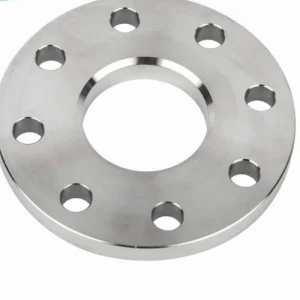
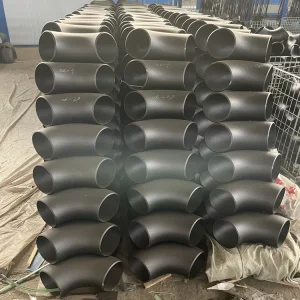
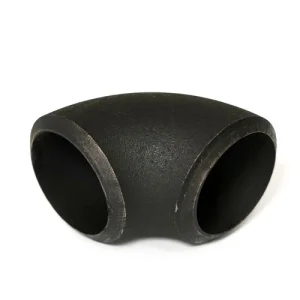
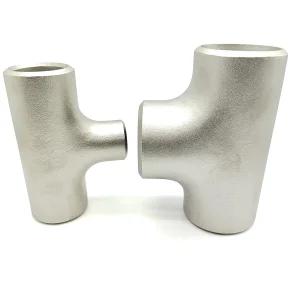
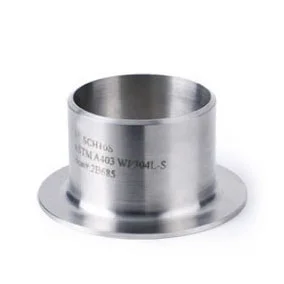
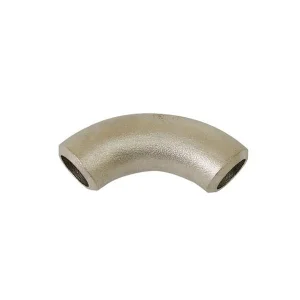
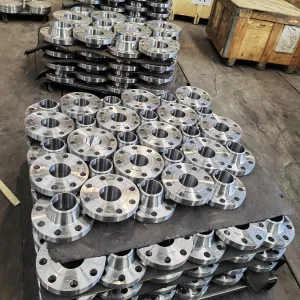
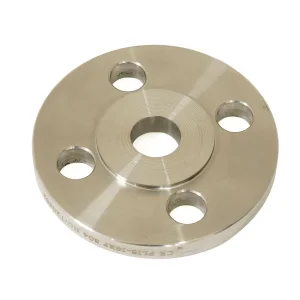
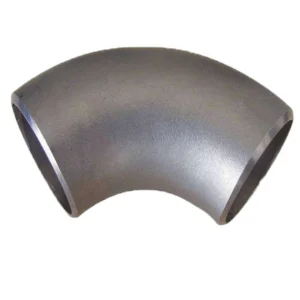
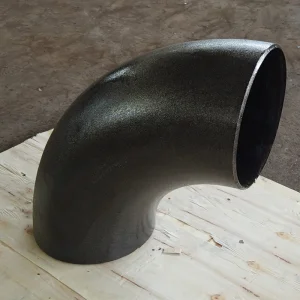
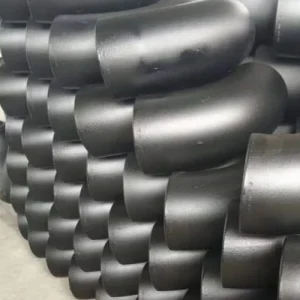
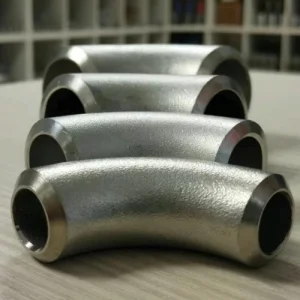
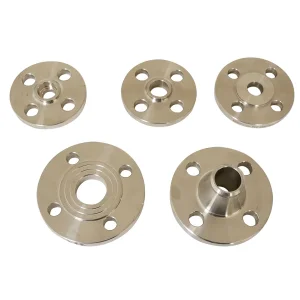
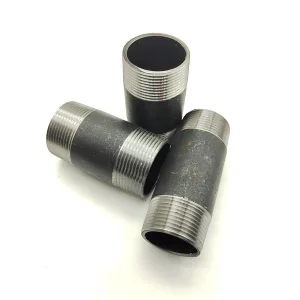
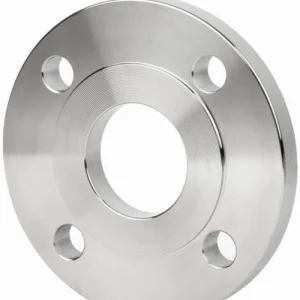
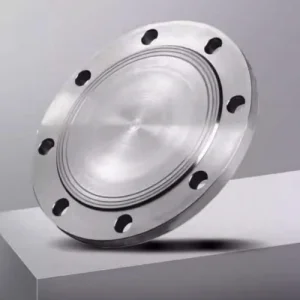
Industrial Elbows, Tees, Nipples & High-Pressure Flanges
Complement your stream reducer procurement with matched butt-weld fittings and forged components from one source.
Stream Reducer Technical & Sourcing FAQ
In-depth answers to common technical queries submitted by piping designers, quality managers, and international procurement officers.
How do I select between concentric and eccentric stream reducers for liquid vs gas services?
What parameters are required to generate an accurate wholesale stream reducer quote?
What wall thickness tolerances apply to ASME B16.9 seamless reducers?
Can custom heavy-wall or non-standard stream reducers be manufactured?
How does Cangrun ensure corrosion resistance for exported carbon steel fittings?
Request Your Custom Stream Reducer & Piping Package Quote
Connect directly with our engineering sales team in Cangzhou. Receive comprehensive technical data sheets, 2D/3D CAD drawings, and competitive mill-direct pricing within 24 hours.