Industrial Pipeline Component Selections
Direct-from-factory catalog items engineered to ASME B16.5, DIN, EN 1092-1, and GOST standards with full material traceability.
Slip-On Flange Welding Architecture & Mechanics
Understanding the load dynamics, fillet weld execution, and structural integrity parameters governing SO (Slip-On) flanges in process piping systems.
Fillet Weld Joint Geometry
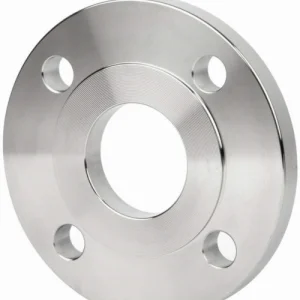
Slip-On (SO) flanges slip over the pipe exterior and are secured by two fillet welds: one executed at the outer hub intersection and a secondary internal seal weld executed at the flange face edge. This dual-fillet configuration ensures structural containment under moderate bending moments while eliminating precision pipe-end beveling requirements during field installation.
Stress Concentration Dynamics
Under fatigue and cyclic loading, Slip-On flanges exhibit a calculated strength approximately 2/3 that of standard Weld Neck (WN) flanges. Under pressure tests, fatigue life is roughly 1/3 that of WN counterparts due to the stress concentration at the internal fillet root. Optimal placement calls for low-to-medium pressure utility circuits, avoiding high fatigue thermal cycling lines.
Dimensional Alignment Precision
ASME B16.5 standards mandate that the pipe end inside a Slip-On flange be set back roughly 1/16 in. (1.6 mm) from the flange face. This gap prevents thermal expansion stress from cracking the flange face during double fillet welding while ensuring gasket seating faces remain unmarred by weld spatter.
Information Gain SEO Insight: Slip-On vs. Weld Neck Technical Trade-Off
While Weld Neck flanges require exact pipe-bevel matching and seamless pipe wall thickness alignment, Slip-On flanges dramatically reduce alignment time on field construction sites. Procurement managers gain lower component costs and reduced site labor overhead. However, engineering guidelines strictly prohibit SO flanges in Class 1500# and Class 2500# extreme pressure service, where Weld Neck or Ring-Type Joint (RTJ) hubs become mandatory under ASME B31.3 process piping codes.
Engineering Material Matrix & Pressure Ratings
Comprehensive metallurgical classification and pressure-temperature compliance table for global engineering specifications.
| Material Grade Category | Standard Specifications | Common ASTM / EN Grades | Applicable Temperature Range | Primary Industrial Applications |
|---|---|---|---|---|
| Carbon Steel | ASME B16.5, EN 1092-1 Type 12, GB/T 9119 | ASTM A105, A350 LF2, P250GH, S235JR | -29°C to +425°C | Oil & Gas transport, HVAC, Municipal Water, Firefighting lines |
| High-Yield Carbon Steel | MSS SP-44, API 6A, CSA Z245.12 | ASTM A694 F42, F52, F60, F65, F70 | -46°C to +121°C | Cross-country gas transmission, high-pressure trunklines |
| Alloy Steel | ASME B16.5, BS 4504 | ASTM A182 F1, F5, F9, F11 Class 2, F22, F91 | -29°C to +650°C | Power plant boilers, superheaters, high-temperature cracking units |
| Austenitic Stainless Steel | ASME B16.5, EN 1092-1 Type 12, JIS B2220 | ASTM A182 F304/304L, F316/316L, F321, F347 | -196°C to +600°C | Chemical process lines, LNG cryogenic lines, Food & Beverage |
| Duplex & Super Duplex | ASME B16.5, NACE MR0175 / ISO 15156 | ASTM A182 F51 (UNS S31803), F53 (S32750), F55 | -50°C to +280°C | Desalination plants, Marine off-shore rigs, Phosphoric acid lines |
| Nickel Alloys | ASME B16.5, SB-564 | Inconel 600/625, Incoloy 800/825, Hastelloy C276 | -196°C to +1000°C | Severe acid handling, nuclear power engineering, aerospace testing |
Wholesale Slip-On Flange Pricing Dynamics & B2B Cost Drivers
Understanding commercial price variations across raw material indices, forging methods, and precision machining tolerances.
Primary Price Determination Vectors
Wholesale unit pricing for Slip-On flanges depends on five principal cost factors:
- Steel Scrap & Ingot Indices: Fluctuation in Platts or London Metal Exchange (LME) raw metal indexes directly dictates forging stock acquisition costs.
- Forging Method: Closed-die forging costs more up front than plate cutting, but yields superior grain structure, higher pressure safety factors, and zero internal porosity.
- Machining Overhead: High-precision CNC facing (such as Serrated Concentric or Spiral Finish per ASME B16.5) adds micro-machining time per unit.
- Surface Coating & Protection: Anti-rust yellow varnish, black phosphate coating, hot-dip galvanizing, or PTFE lining incrementally modify unit prices.
- Container Volume Economies: Bulk procurement (20ft / 40ft container loads) unlocks massive volume discounts compared to LCL freight shipments.
Representative Wholesale Benchmark Price Matrix
Indicative B2B pricing bands for forged Carbon Steel ASTM A105 Slip-On Flanges (Raised Face RF, Class 150# / 300#):
| NPS Size | DN Equivalent | Class 150# Est. Price | Class 300# Est. Price |
|---|---|---|---|
| 2 Inch | DN50 | $5.80 - $8.20 | $8.50 - $12.40 |
| 4 Inch | DN100 | $12.50 - $17.00 | $18.20 - $24.50 |
| 8 Inch | DN200 | $32.00 - $44.00 | $48.00 - $62.00 |
| 12 Inch | DN300 | $68.00 - $89.00 | $95.00 - $130.00 |
| 24 Inch | DN600 | $240.00 - $310.00 | $380.00 - $490.00 |
China Supply Chain Dominance & Manufacturing Ecosystem
Why Cangzhou, Hebei pipeline manufacturing clusters deliver unmatchable price-performance ratios and rapid order execution for global buyers.
Vertical Supply Chain Integration
Located in the heart of China's pipeline manufacturing capital (Cangzhou), our group factories possess fully integrated processing chains. From local steel mill billet supply to heavy forging presses, heat treatment furnaces, CNC machining shops, and automated packaging lines—intermediate transport costs and third-party delays are virtually eliminated.
Automated CNC Precision
Our plants operate multi-axis CNC lathe centers equipped with real-time digital laser measurement tools. This guarantees tight dimensional tolerance control on inner bores (to match nominal pipe outer diameters perfectly), bolt hole pitch circles (PCD), and raised face heights per ASME B16.5, eliminating fit-up binding during site assembly.
Rapid Turnaround & Logistics Access
Direct proximity to Tianjin Sea Port (Xingang)—one of North China's largest container shipping hubs—allows streamlined sea freight booking. Fast customs clearing channels and inventory buffers of semi-finished forged blanks enable emergency turnaround times under 14 calendar days for standard ANSI/DIN orders.
Global Industry Deployment & Application Scenarios
Where engineering firms specify Slip-On Flanges for optimal structural safety and economic value.
Petrochemical & Hydrocarbon Processing
Extensively deployed across downstream refineries, storage tank farms, and utility distribution networks carrying fuel oil, lube lines, and cooling water circuits. In low-pressure hydrocarbon vapor recovery systems, Slip-On flanges enable rapid modular spool assembly, cutting field fit-up time significantly compared to butt-welded piping joints.
Water Treatment & Desalination Facilities
Reverse Osmosis (RO) plants and municipal wastewater treatment networks utilize Stainless Steel (SS304/316L) and Duplex (F51) Slip-On flanges for low-pressure brine discharge, aeration piping, and chemical dosing manifolds. The smooth slip-on connection streamlines pipe alignment during field expansion in cramped utility basements.
District Heating & Steam Condensate Loops
In municipal heating infrastructure, low-pressure thermal steam condensate returns and hot water distribution headers rely on ASTM A105 carbon steel SO flanges. Their high thermal endurance and reliable double-fillet sealing provide maintenance-free operation over multi-decade operational cycles.
Marine & Offshore Deck Piping
Shipbuilding yards specify galvanized carbon steel Slip-On flanges for shipboard ballast water treatment systems, bilge lines, and deck fire-main networks. Compliance with marine classification society norms (ABS, DNV, BV, LR) ensures safety against ocean wave vibration and salt spray corrosion.
Global Compliance Framework & Quality Control
Strict adherence to international pressure vessel directives, non-destructive testing protocols, and complete material certification.
Regulatory Compliance Certifications
Our manufacturing processes operate under certified ISO 9001:2015 Quality Management Systems. Products fully comply with the European Pressure Equipment Directive (PED 2014/68/EU), AD 2000-Merkblatt W0, and Canadian Registration Number (CRN) standards, enabling seamless import and site auditing across European and North American markets.
Rigorous NDT & Metallurgy Testing
Every production batch undergoes comprehensive quality verification before export release: Positive Material Identification (PMI via handheld XRF spectrography), Ultrasonic Testing (UT) for internal forging laminations, Magnetic Particle Testing (MT) on seating faces, Hardness testing (HBW/HRC), and Hydrostatic proof pressure testing.
EN 10204 3.1 & 3.2 Traceability
All delivered flange orders come with original Mill Test Certificates (MTC) per EN 10204 3.1 standard, detailing exact melt heat numbers, chemical composition analysis, heat treatment history, tensile strength, yield strength, and Charpy V-notch impact test values. Third-party inspections (SGS, BV, TUV, Intertek) are available upon request.
Future Industry Trends in Flange Manufacturing
Technological shifts shaping the next decade of industrial piping component fabrication and smart infrastructure.
Smart Piping & RFID Tracking Integration
Industrial digital twins require absolute component-level tracking. Modern flange manufacturing is incorporating embedded high-temperature RFID tags or laser-etched 2D DataMatrix codes directly onto the flange rim. Field technicians scan components via handheld terminals to bring up MTC records, maintenance histories, and torque specs instantly.
Decarbonized Green Steel Forging
Driven by global Net-Zero initiatives and European CBAM carbon tax regulations, leading Chinese flange foundries are shifting toward green steel feedstock produced via Hydrogen Direct Reduced Iron (H-DRI) and Electric Arc Furnaces (EAF), reducing the embodied carbon footprint of exported piping products by up to 60%.
Robotic Fillet Welding Automation
Modular piping skid fabricators are adopting multi-axis robotic arc welding systems for Slip-On flange attachment. Automated torch positioning ensures uniform fillet throat depth, zero undercut defects, and minimal Heat Affected Zone (HAZ) grain growth, maximizing joint fatigue endurance.
Frequently Asked Engineering Questions
Direct answers to technical procurement queries based on ASME, EN, and ISO engineering guidelines.
Additional Heavy Industrial Piping Solutions
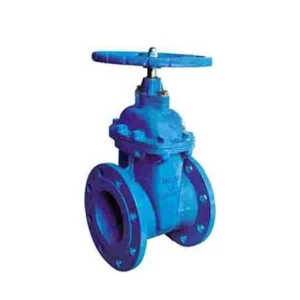
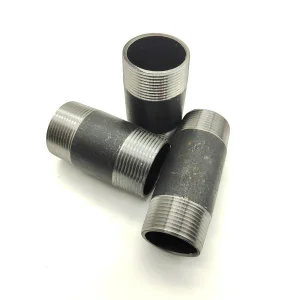
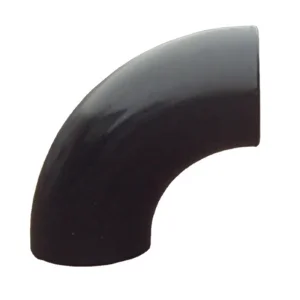
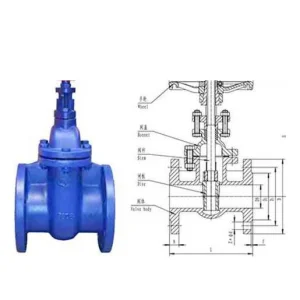
Explore complementary forged flanges, butt-weld pipe fittings, and industrial control valves for integrated procurement packages.