High-Precision Pipe Fittings & Components
Factory-direct industrial fittings engineered to ASME, DIN, GOST, and JIS specifications for severe service environments.
The Science of Zinc-Iron Metallurgy & Structural Longevity
A comprehensive analysis of Hot-Dip Galvanizing (HDG) dynamics, coating phase transformations, and barrier corrosion mechanisms in high-stress fluid transportation networks.
Intermetallic Phase Layer Dynamics
When carbon steel tubulars enter a molten zinc bath at temperatures between 440°C and 460°C (824°F–860°F), a complex thermodynamic reaction occurs. The metallurgical bond is not a mere surface coating; it is a sequence of distinct zinc-iron intermetallic alloy layers formed by mutual diffusion:
- Gamma Phase ($\Gamma$): $75\% \text{ Zn}, 25\% \text{ Fe}$, an extremely thin, hard inner boundary layer ($750 \text{ HV}$) providing supreme shear resistance.
- Delta Phase ($\delta$): $90\% \text{ Zn}, 10\% \text{ Fe}$, a ductile layer absorbing mechanical shocks and thermal stress expansion.
- Zeta Phase ($\zeta$): $94\% \text{ Zn}, 6\% \text{ Fe}$, columnar crystal structure preventing crack propagation along the tubular wall.
- Eta Phase ($\eta$): $100\% \text{ Zn}$, outer ductile layer delivering initial sacrificial galvanic protection against ambient moisture.
Cathodic & Sacrificial Corrosion Safeguards
Unlike organic coatings (such as standard liquid paints or powder coatings), hot-dip galvanized steel pipe exhibits self-repairing cathodic protection. If the zinc shield is damaged down to the bare steel core due to field cutting, threading, or abrasive impact:
- Electrochemical Potential Gradient: Zinc acts as an anode ($E^\circ = -0.763 \text{V}$) relative to the iron cathode ($E^\circ = -0.440 \text{V}$), corroding preferentially.
- Zinc Patina Formation: As zinc reacts with atmospheric oxygen and carbon dioxide, it forms a dense, insoluble film of Zinc Carbonate ($\text{ZnCO}_3$), stabilizing the corrosion rate to <1.5 µm/year in C2/C3 environments.
- Edge & Thread Sealing: Cathodic protection extends across exposed steel gaps of up to 2.0 mm, guaranteeing no under-film corrosion creep.
China Factory 4.0: Supply Chain Resilience & Cangzhou Cluster
How Hebei Cangrun Pipeline Equipment Co., Ltd. and its production hubs leverage automation, environmental governance, and raw material integration to dominate global supply chains.
Cangzhou Industrial Synergy
Situated in the heart of China’s pipeline engineering capital, Cangzhou, our facility operates in seamless coordination with sister plants: Cangzhou Feiwo Metal Products Co., Ltd. and Cangzhou Feixiang Metal Products Co., Ltd. (located in the Boerzhuang Industrial Zone).
This geographic concentration minimizes internal logisitical friction. Steel billets, seam-welded tubes, seamless hollows, and hot-dip zinc baths reside within a 15 km operational radius, enabling unprecedented production agility.
Automated HDG Production Lines
Our Industry 4.0 galvanizing facilities replace traditional manual dipping with PLC-controlled fully enclosed automatic galvanizing units. Precision dipping velocity, residence timing, and high-pressure steam blowing guarantee uniform wall coverage.
Real-time ultrasonic sensors measure internal and external zinc layer consistency across the entire pipe length, eliminating localized thin spots, bare patches, and excess slag buildup inside small-bore pipes.
Zero-Discharge Environmental Governance
Modern international buyers require stringent ESG compliance. Our factories feature integrated closed-loop waste acid treatment systems, zero-discharge regeneration technology, and advanced dust-bag zinc oxide fume scrubbers.
By complying with EU RoHS directives and ISO 14001 environmental management standards, we ensure uninterrupted factory operations year-round, protecting contract delivery schedules against regulatory shutdowns.
Macro Industry Solutions & International Specification Alignment
Matching steel grades, dimensional schedules, jointing methodologies, and surface protection to multi-sector operational requirements.
| Application Sector | Primary Standards | Steel Grade / Material | Typical Size & Schedule | Optimal Surface Coating |
|---|---|---|---|---|
| Fire Protection Systems | ASTM A53 / ASTM A795 / BS 1387 | Gr. A, Gr. B / Heavy Class | DN25 – DN300 (1" – 12") SCH 10 / SCH 40 | Hot-Dip Galvanized + Grooved Ends (UL/FM) |
| Municipal Water Infrastructure | EN 10240 / ISO 65 / GB/T 3091 | S235JR / S275JR / Q235B | DN15 – DN600 (1/2" – 24") Standard Wall | Potable Water Non-Toxic HDG (Lead-Free) |
| HVAC & Chilled Water Loop | ASTM A53 / DIN 2444 / JIS G3452 | Gr. B / ST37-2 / SGP | DN15 – DN400 (1/2" – 16") SCH 40 / STD | Standard HDG + Anti-White Rust Passivation |
| Solar PV Ground Racking | EN 10219 / ASTM A500 | S355J2H / Q355B / Q420B | Square/Rectangular & Round Structural Tubes | Ultra-Heavy HDG (100 µm – 120 µm / 600–850 g/m²) |
| Petrochemical Offsites & Utilities | API 5L / ASTM A106 / ASTM A53 | Gr. B / X42 / X52 Seamless | DN15 – DN600 SCH 40 / SCH 80 / SCH XS | High-Pressure HDG / Dual Duplex System |
Galvanizing Variants: HDG vs. Pre-Galvanized vs. Electro-Galvanized
Understanding surface selection is crucial to preventing premature corrosion failures in project engineering:
- Hot-Dip Galvanized (Post-Fabrication Batch HDG): Complete immersion of bare steel tube into molten zinc after cutting and welding. Creates internal and external coatings exceeding 85 µm. Ideal for severe outdoor, marine, and high-humidity environments.
- Pre-Galvanized (Mill Galvanized Steel Pipe): Formed from continuously galvanized steel strip welded into pipes. Zinc coverage ranges from 15 to 30 µm (100–200 g/m²). Suitable for indoor conduit, light furniture, and structural framing. Weld seams require zinc spray repair.
- Electro-Galvanized (Cold Galvanized): Electro-deposited zinc coating ($5–15 \text{ µm}$). Delivers a bright cosmetic finish but lacks sacrificial depth; restricted to decorative or temporary indoor applications.
Custom Mechanical End Processing & Value-Added Services
As a single-source enterprise, Hebei Cangrun delivers fully processed piping assemblies directly to global project sites:
- Precision Threading: NPT (ANSI/ASME B1.20.1), BSPT (ISO 7-1), or DIN 2999 threads with plastic protective caps.
- Roll-Grooved Pipe Ends: Standard cut or roll grooving compatible with Victaulic and metallic clamp couplings.
- Beveled Ends for Field Welding: $30^\circ - 35^\circ$ bevel angles per ASME B16.25 for quick pipeline fit-up.
- Secondary Protective Treatment: Chromate passivation, phosphating, oiling, or clear varnish over galvanizing to prevent white rust during transit.
Future Outlook: Next-Generation Corrosion Resistance Technologies
Strategic technology developments transforming galvanized steel pipe manufacturing for smart cities, hydrogen transport, and extreme environments.
Zinc-Aluminum-Magnesium (ZM) Alloy Coatings
Transitioning from traditional pure zinc baths to Zn-Al-Mg (e.g., $3\% \text{ Al}, 3\% \text{ Mg}$) alloy baths. ZM coatings form a dense Simonkolleite protective film that yields 3 to 5 times superior corrosion resistance at equivalent thickness, alongside self-repairing cut-edge characteristics.
AI-Assisted NDT & Thickness Mapping
Deployment of inline electromagnetic acoustic transducers (EMAT) integrated with machine vision algorithms. This platform scans $100\%$ of pipe surfaces at high speeds, detecting microscopic micro-cracks, pinholes, or coating variations prior to factory release.
Hydrogen Heating & Zero-Carbon Hot-Dip Dipping
Replacing natural-gas-fired kettle furnaces with green hydrogen and induction heating elements. This eco-friendly manufacturing model lowers carbon intensity per metric ton of steel by over $40\%$, directly aligning with EU CBAM (Carbon Border Adjustment Mechanism) compliance standards.
Localization Support, Rigorous QA & Risk Mitigation
Establishing operational confidence through accredited third-party verification, international documentation, and customized regional logistics.
Multi-Stage Quality Control Protocol
Every production batch undergoes strict quality gates monitored by certified NDT Level II inspectors:
- Raw Material Verification: Spectral analysis of steel coil and $99.995\%$ pure primary zinc ingots.
- Hydrostatic Testing: $100\%$ inline pressure holding tests up to 50 bar (725 PSI) to verify seam integrity.
- Coating Mass & Adhesion Tests: Magnetic thickness gauge inspection, gravimetric strip-test (ASTM A90), and knife adhesion tests to confirm zero coating peeling.
- Salt Spray Chamber Testing: Accelerated ASTM B117 neutral salt spray testing reaching 1,000+ hours without red rust development.
Global Logistics & Regional Regulatory Compliance
We provide comprehensive document packages and support tailored to international port demands:
- Full Traceability & MTCs: EN 10204 3.1 / 3.2 Mill Test Certificates provided with full heat number traceability.
- Third-Party Inspection Coordination: Seamless pre-shipment inspection with SGS, TÜV Rheinland, Bureau Veritas (BV), or Intertek.
- Seaworthy Export Packaging: Hexagonal bundle bundling, waterproof plastic wrapping, thread end caps, and timber cradles preventing ocean-transit moisture oxidation.
- Customs & Duty Optimization: Form E, Form F, FTA Certificate of Origin issuing for ASEAN, Middle East, and Latin American tariff savings.
Frequently Asked Questions (FAQ) for Engineering Buyers
Direct technical answers to common questions raised by EPC contractors, structural engineers, and global wholesale distributors.
What is the standard minimum order quantity (MOQ) for wholesale galvanized steel pipe orders?
Our baseline factory MOQ is typically 10 to 20 metric tons per diameter size for standard schedules (e.g., ASTM A53 SCH 40 or BS 1387 Medium). For stocked raw tube sizes or mixed container loads containing pipe fittings, flanges, and valves, we accommodate lower consolidated volumes. Contact our export engineering team for custom project quotes.
How do you convert zinc coating thickness from micrometers (µm) to grams per square meter (g/m²)?
The conversion is based on the physical density of pure zinc ($\approx 7.14 \text{ g/cm}^3$). As a rule of thumb: $1 \text{ µm} \text{ zinc thickness} \approx 7.14 \text{ g/m}^2$ (for total surface coverage inside and out, values are multiplied by two). For instance, a standard $85 \text{ µm}$ coating thickness per ASTM A123 equals approximately $610 \text{ g/m}^2$ total surface mass.
How can white rust (wet storage stain) be prevented during long ocean freight transit?
White rust forms when freshly galvanized pipes are exposed to humid, stagnant air devoid of carbon dioxide. Hebei Cangrun mitigates white rust by applying automated chromate/titanium-free passivation dips immediately after quenching, coating pipes with light rust-inhibiting oils, utilizing waterproof woven bundles, and placing desiccants inside containerized ocean shipments.
Can galvanized steel pipes be welded directly on the job site?
Direct welding of galvanized steel releases hazardous zinc oxide fumes ("galvanizing fever") and leaves bare, ungalvanized heat-affected zones (HAZ). Proper field procedure requires grinding away 1–2 inches of zinc coating around the joint end before welding, followed by applying a high-zinc-rich cold galvanizing compound (minimum 92% metallic zinc in dry film) over the finished weld seam.
Heavy-Duty Flanges & Specialized Fittings
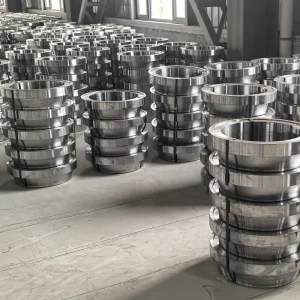
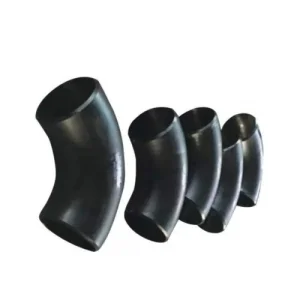
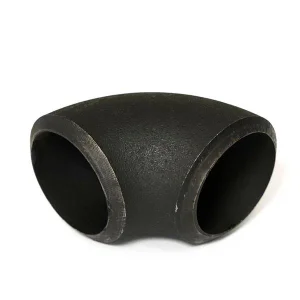
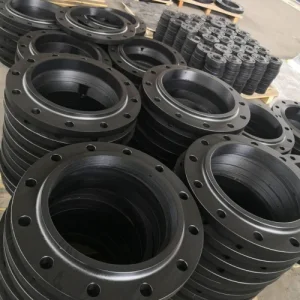
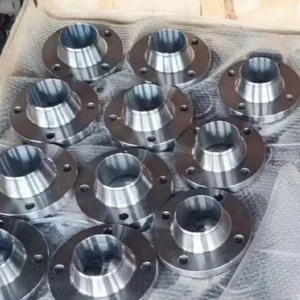
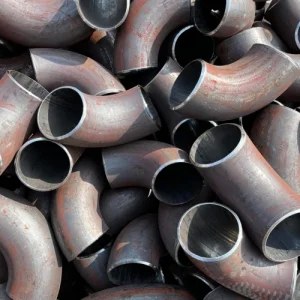
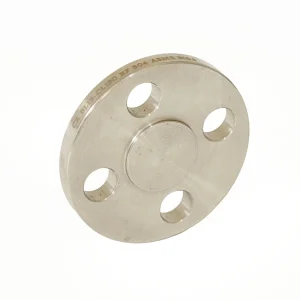
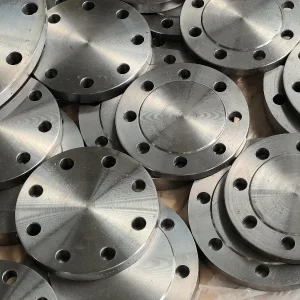
Complete your piping system integration with precision-engineered forged flanges, high-pressure elbows, and customized branch outlets.