Top-Tier Stainless Steel & Piping Solutions
Direct factory inventory manufactured strictly to ASTM, ASME, JIS, and EN international standards.
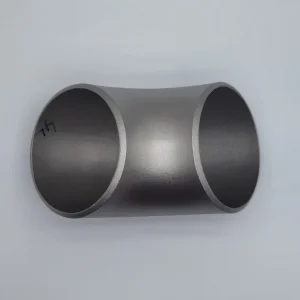
ANSI 304 Pipe Elbow Metallurgy, ASME B16.9 Standard Specifications, & Kinematics
An engineering analysis of material microstructures, dimensional tolerances, and mechanical performance under extreme fluid dynamics.
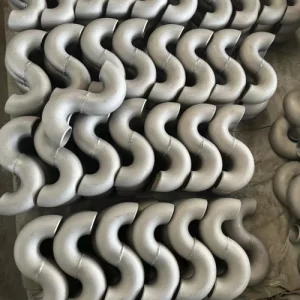
In modern high-pressure piping infrastructure, the ANSI 304 Stainless Steel Pipe Elbow serves as the pivotal directional component engineered to alter fluid flow vectors while preserving pressure containment structural integrity. Derived from the classic 18/8 chromium-nickel austenitic stainless steel family (ASTM A240 / ASTM A403 Grade WP304), ANSI 304 offers an exceptional equilibrium between mechanical ductility, chemical corrosion resistance, and high-energy impact toughness across cryogenic to elevated temperature ranges.
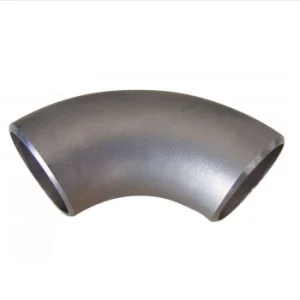
A premier wholesale ANSI 304 elbow factory manufactures these components in compliance with ASME B16.9 (Factory-Made Wrought Butt-Welding Fittings) and MSS SP-43 requirements. The structural integrity of a 45-degree, 90-degree, or 180-degree long radius (LR - $1.5D$) or short radius (SR - $1.0D$) elbow depends on the precise control of grain boundary carbide precipitation during hot Mandrel forming and subsequent solution annealing heat treatment.
Austenitic Matrix Integrity
ANSI 304 contains 18% Chromium and 8% Nickel minimum. This chemical equilibrium stabilizes the face-centered cubic (FCC) austenite structure, ensuring superior toughness down to -196°C without brittle phase transformation.
Cold Mandrel Radial Push
Utilizing high-tonnage hydraulic mandrel push machines, seamless pipe feedstock is expanded and bent over a curved horn mandrel. This ensures zero thinning on the outer arc (extrados) and zero wrinkling on the inner arc (intrados).
Full Solution Annealing
Post-forming, elbows undergo solution heat treatment at 1040°C–1150°C followed by rapid water quenching. This redissolves chromium carbides back into the solid solution, eliminating intergranular corrosion risks.
| Property Parameter | ASTM A403 / ASME B16.9 Standard Requirement | Factory Benchmark (Cangrun Advanced Control) |
|---|---|---|
| Chemical Composition | Cr: 18.0 - 20.0%, Ni: 8.0 - 10.5%, C: ≤0.08%, Mn: ≤2.0% | Cr: 18.35%, Ni: 8.12%, C: ≤0.035% (Dual Certified 304/304L) |
| Tensile Strength (MPa) | ≥ 515 MPa (75,000 psi) | 585 - 620 MPa |
| Yield Strength 0.2% (MPa) | ≥ 205 MPa (30,000 psi) | 275 - 310 MPa |
| Wall Thickness Tolerance | +12.5% / -12.5% at weld bevel ends | Nominal WT strictly controlled with zero negative tolerance at extrados |
| Nondestructive Testing | 100% Hydrostatic or Ultrasonic testing per ASTM A960 | 100% UT Wall Measurement + 100% Radiographic Testing (RT) on welded seams |
Global Procurement Shift & Demand Drivers for Stainless Steel Pipe Fittings
Strategic sourcing patterns across North America, Europe, the Middle East, and Southeast Asia.
Energy Transition & LNG Regasification
The global expansion of Liquefied Natural Gas (LNG) receiving terminals and hydrogen-blend transport networks requires high-integrity stainless steel fittings capable of enduring cryogenic shock down to -162°C without undergoing brittle cleavage failure.
Desalination & Water Security Infrastructure
Hyper-scale seawater reverse osmosis (SWRO) projects in the Middle East and North Africa demand wholesale supply of dual-certified ANSI 304/304L and 316L elbows to mitigate chloride pitting corrosion in high-flow brine discharge lines.
EPC Total Cost of Ownership Optimization
Global Engineering, Procurement, and Construction (EPC) conglomerates are transitioning from fragmented localized sourcing to direct partnership with specialized Chinese original equipment manufacturers (OEMs) to secure 30-40% procurement cost advantages without compromising technical compliance.
China Smart Manufacturing: Supply Chain Resilience & Efficiency Advantages
How Cangzhou pipeline manufacturing hubs leverage digital twins, automated cold pushing, and total quality execution.
The global industrial landscape demands unprecedented responsiveness, dimensional precision, and supply stability. The Cangzhou pipeline manufacturing cluster in Hebei, China—where Cangrun Pipeline Equipment Co., Ltd. and its core subsidiaries are headquartered—has undergone a comprehensive digital transformation into Industry 4.0 Smart Manufacturing Hubs.
By replacing legacy manual forge bending with multi-axis automated cold/hot mandrel hydraulic pushing systems, our state-of-the-art production lines maintain micron-level consistency across high-volume production runs. Real-time Manufacturing Execution Systems (MES) track raw pipe raw material heat numbers from steel mill casting down to the final bevel end protection and pallet loading.
Automated Production Continuity
Continuous automated induction heating and push-forming technology reduces unit production cycles by 65%, guaranteeing steady wholesale order fulfillment regardless of seasonal market demand spikes.
Rigorous NDT Quality Control
Every ANSI 304 elbow undergoes 100% laser dimensional scanning, ultrasonic wall thickness verification, and Portable XRF Positive Material Identification (PMI) to guarantee chemical compliance prior to mill certificate issuance.
End-to-End Export Logistics
Integrated port warehousing at Tianjin Port and Qingdao Port combined with custom wooden crate packing, VCI rust-inhibitor wrapping, and automated container loading ensures 0% transit damage globally.
Localized Application Scenarios & Heavy Industry Field Performance
Where ANSI 304 stainless steel elbows are installed to protect operational continuity.
Petrochemical Refineries & Distillation Towers
In catalytic cracking and crude oil fractionating units, 90-degree ANSI 304 long radius elbows withstand aggressive hydrocarbon slurry flow and severe turbulence at operating pressures reaching Class 600 and Class 1500 schedules.
Pharmaceutical & Sanitary Processing
For ultra-pure water (PW) and Water for Injection (WFI) distribution loops, inner surface electro-polishing down to Ra < 0.4 µm eliminates bacterial entrapment points and ensures total clean-in-place (CIP) efficiency.
Cryogenic Food Freezing & Chemical Storage
Utilized extensively in liquid nitrogen refrigeration lines where structural thermal expansion and contraction cycles require material flexibility without strain hardening or stress corrosion cracking.
Power Generation Boiler Feedwater Lines
Installed in high-pressure economizer lines and steam bypass systems, providing long-term structural fatigue resistance under rapid thermodynamic pressure fluctuations.
Frequently Asked Questions by Industrial Buyers & EPC Engineers
Expert technical insights regarding material selection, factory standards, and global shipping logistics.
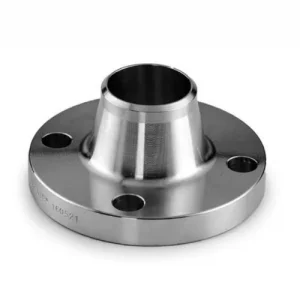
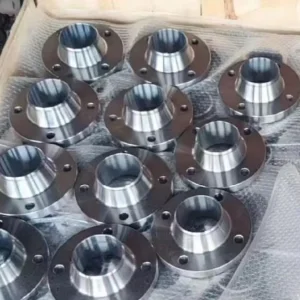
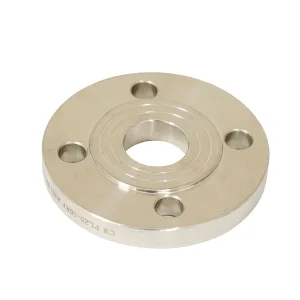
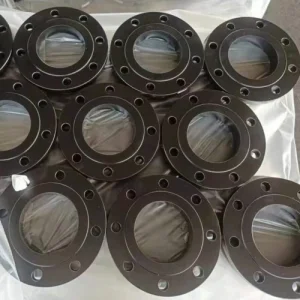
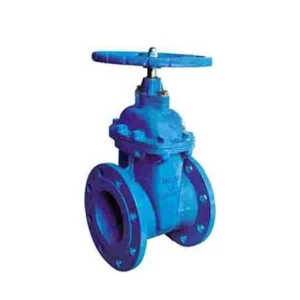
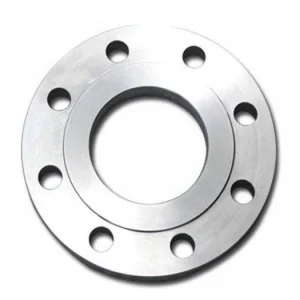
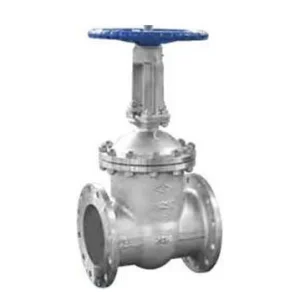
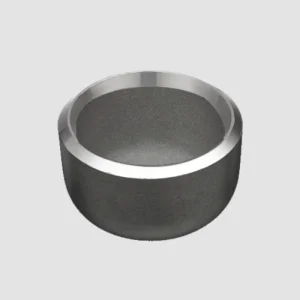
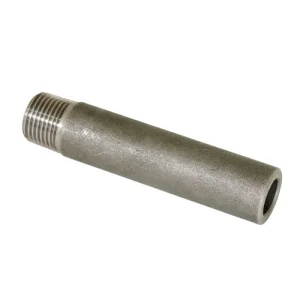
Industrial Valves, Flanges & Pipe Fittings
Engineered to integrate seamlessly with ANSI 304 elbow pipeline configurations.