
Featured Industrial Flanges & Piping Components
Precision-machined connection solutions engineered for chemical processing, marine systems, and heavy industrial fluid conveyance.
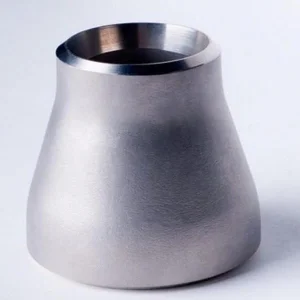
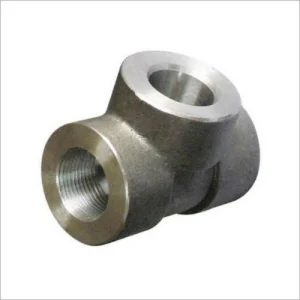
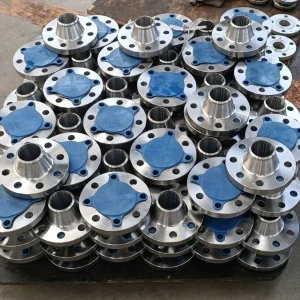
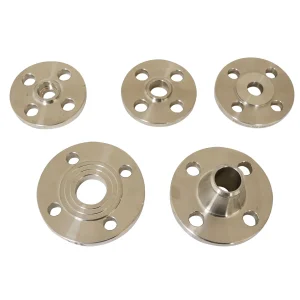
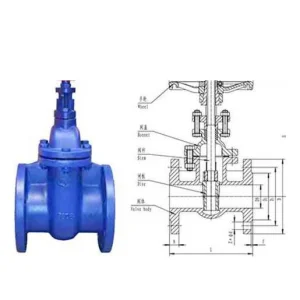
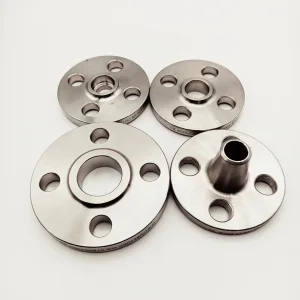
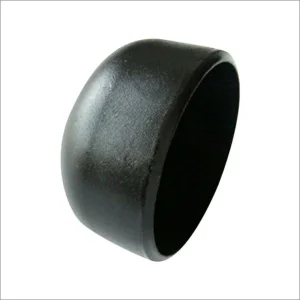
State of Aluminum Flange Engineering & Global Supply Chain Alignment
An authoritative operational guide for procurement officers, plant engineers, and EPC contractors evaluating high-strength aluminum alloy flange connections.
In modern fluid handling and pressure vessel engineering, selecting the optimal flange metallurgy dictates operational safety, system longevity, and total structural weight. As global industries accelerate toward energy efficiency, weight reduction, and extreme thermal resilience, wholesale aluminum flange manufacturers and suppliers play an increasingly critical role. Aluminum flanges—specifically forged from high-performance alloys such as 6061-T6, 5083-H116, and 7075-T6—offer a strength-to-weight ratio unmatched by traditional carbon steel, paired with exceptional corrosion resistance and mechanical ductility at cryogenic temperatures.
HEBEI CANGRUN PIPELINE EQUIPMENT CO., LTD., operating alongside its dedicated industrial manufacturing entities Cangzhou Feiwo Metal Products Co., Ltd. and Cangzhou Feixiang Metal Products Co., Ltd., stands at the forefront of this industrial transition. Backed by state-of-the-art forged fitting lines in the Cangzhou manufacturing hub, our group integrates advanced heat-treatment tempering, precision CNC profile machining, and rigorous non-destructive testing (NDT) to deliver ASME B16.5, DIN EN 1092-1, and JIS B2220 compliant aluminum flanges worldwide.
Direct Economic & Structural Benefits
- Substantial Freight Optimization: Reduced mass yields lower international container shipping freight surcharges.
- Cryogenic Toughness: Zero ductile-to-brittle transition temperature down to $-269^\circ\text{C}$ (liquid helium service).
- Non-Magnetic Operations: Essential for medical imaging, specialized electronics, and naval applications.
- Enhanced Machinability: Rapid turn-around times for custom facing grooves (RTJ, Tongue & Groove, Male-Female).
Global Procurement Drivers & Industry-Specific Solutions
Addressing complex operational environments with target alloy selections and custom-engineered flange profiles.
Aerospace & Defense
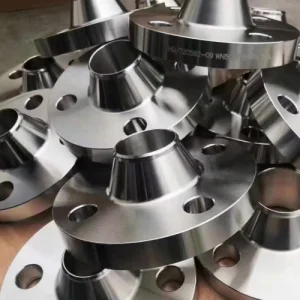
Aerospace fueling systems and environmental control loops require ultra-lightweight components capable of withstanding dynamic vibration and extreme pressure cycles. Forged 6061-T6 and 7075-T6 aluminum weld neck flanges provide structural rigidity while reducing overall airframe and launch vehicle launch payload weights.
Cryogenic LNG & Gas Processing
Unlike carbon steel, which undergoes embrittlement at low temperatures, aluminum alloys (specifically 5083-H116 and 6061-T6) increase yield strength and fracture toughness at sub-zero ranges down to $-196^\circ\text{C}$. They are the preferred selection for liquid natural gas (LNG) regasification terminals, cold boxes, and liquid oxygen storage systems.
Marine & Offshore Engineering
Marine environments demand high resistance to chloride pitting and crevice corrosion. 5000-series marine grade aluminum flanges (5083, 5086) form a self-healing passive aluminum oxide ($Al_2O_3$) layer, eliminating saltwater degradation in cooling lines, ballast systems, and desalination facilities.
Technical Alloy Selection Matrix for Global Procurement
| Aluminum Alloy Grade | Tensile Strength (MPa) | Yield Strength (MPa) | Corrosion Resistance | Primary Industrial Application |
|---|---|---|---|---|
| 6061-T6 (UNS A96061) | $\ge 310$ | $\ge 276$ | Excellent (Atmospheric & Fresh Water) | General Pressure Vessels, Structural Piping, Chemical Transfer |
| 5083-H116 (UNS A95083) | $275 - 350$ | $\ge 125$ | Superior (Marine Saltwater & Chemical) | LNG Cold Boxes, Marine Piping Systems, Offshore Platforms |
| 7075-T6 (UNS A97075) | $\ge 540$ | $\ge 470$ | Moderate (Requires Anodizing/Coating) | High-Pressure Hydraulics, Aerospace Components, Defense Systems |
| 1060 / 6063-T5 | $110 - 180$ | $\ge 75$ | High Chemical Purity | Semiconductor Ultra-Pure Gas Lines, Electrical Busbars |
Metallurgical Precision Forging & Galvanic Corrosion Engineering
Understanding technical challenges in flange joint design, thermal expansion matching, and bimetallic isolation.
Forging vs. Machined Plate Production
At Cangrun Pipeline Equipment, our aluminum flanges are manufactured primarily through closed-die hydraulic forging and ring rolling processes rather than simple bar stock cutting. Precision forging alters the continuous grain flow of the aluminum alloy, aligning it along the circumferential stress vector of the flange body. This eliminates micro-porosity, significantly increases fatigue resistance, and guarantees pressure containment up to Class 1500 and PN400 ratings under ASME B16.5 standards.
Following forging, CNC lathes machine critical sealing facings—such as Raised Face (RF), Flat Face (FF), Ring Type Joint (RTJ), or custom O-ring grooves—achieving tight serration tolerances (AARH $3.2 - 6.3 \mu\text{m}$) for zero-leakage gasket seating.
Raw aluminum billets are tested for internal voiding, inclusions, and hydrogen porosity prior to thermal forging.
Forged under strict thermal windows ($400^\circ\text{C} - 480^\circ\text{C}$) to prevent grain coarsening and maintain high structural density.
Solution heat treating followed by rapid water quenching and precipitation aging to achieve peak T6 tensile properties.
Automated multi-axis CNC turning of flange bore, bolt circle diameter (BCD), pitch diameter, and serrations.
Mitigating Galvanic Corrosion in Bimetallic Connections
When joining aluminum flanges to steel piping or stainless steel valves, the difference in electrochemical potential ($E^\circ_{\text{Al}} \approx -1.66\text{V}$ vs. $E^\circ_{\text{Fe}} \approx -0.44\text{V}$) creates a risk of galvanic corrosion in the presence of an electrolyte.
Engineered Isolation Solutions Provided by Cangrun:
- Dielectric Insulating Flange Kits: Complete supply of G-10 / GRE (Glass Reinforced Epoxy) insulating gaskets, full-length Mylar bolt sleeves, and phenolic washers to physically break electrical continuity.
- Anodizing & Surface Passivation: Hardcoat anodizing (MIL-A-8625 Type III) creating a dielectric aluminum oxide dielectric layer up to $50 \mu\text{m}$ thick across the flange face and bolt holes.
- Explosion-Bonded Transition Joints: Bimetallic aluminum-to-steel transition inserts manufactured by high-energy explosive welding for permanent leak-tight field welding.
Localization Support, Regulatory Compliance & Export Quality
Seamless international logistics, local standard alignment, and full traceability from factory floor to job site.
EN 10204 3.1 & 3.2 Traceability
Every aluminum flange order is shipped with certified EN 10204 3.1 Material Test Reports (MTRs) detailing chemical melt analysis (XRF), tensile yield strength, elongation, and hardness testing. Third-party inspection (TUV, SGS, BV, DNV) certificates (EN 10204 3.2) are available upon contract requirement.
Specialized Export Packaging
Due to aluminum's susceptibility to surface marring and scratching, all flange faces are protected with heavy-duty polyethylene end-caps, wrapped in Vapor Corrosion Inhibitor (VCI) film, and packed inside ISPM-15 compliant heat-treated fumigated wooden crates or sturdy plywood boxes.
Multi-Standard Cross Alignment
Our engineering desk assists procurement teams in cross-referencing regional flange specifications. Whether your drawing requires ANSI/ASME B16.5 (USA), DIN EN 1092-1 (Europe), BS 4504 (UK), or JIS B2220 (Japan), we guarantee exact bolt circle diameters, hub dimensions, and pressure class equivalence.
Technology Roadmap & Future Outlook for Lightweight Flange Systems
Pioneering next-generation metallurgical advancements, automated quality control, and sustainable manufacturing.
Additive Manufacturing & Hybrid Flange Structures
As industrial additive manufacturing matures, Cangrun Pipeline Equipment is actively researching Direct Metal Laser Sintering (DMLS) for custom aluminum flange components. Powder-bed additive techniques allow internal cooling channels and complex lattice structures inside large-diameter blind and weld neck flanges, decreasing component mass by an additional 30% without sacrificing mechanical pressure rating integrity.
AI Vision Automated Quality Auditing
Integrating artificial intelligence machine vision directly into our CNC machining centers enables real-time 3D laser profiling of flange sealing surfaces. Micro-scratches, tool wear defects, or dimension variations exceeding $\pm 0.05\text{mm}$ are detected instantly, assuring zero-defect delivery for critical semiconductor and hydrogen pipeline projects.
Frequently Asked Engineering & Procurement Questions
Detailed answers to technical parameters, specification compliance, and order customization.
What pressure ratings can wholesale aluminum flanges achieve compared to steel?
While forged carbon steel (A105) flanges handle extremely high pressure profiles up to Class 2500, forged high-strength 6061-T6 and 7075-T6 aluminum flanges are fully certified for ASME B16.5 Class 150 and Class 300 ratings across standard temperature ranges ($-29^\circ\text{C}$ to $65^\circ\text{C}$). For low-pressure pneumatic, fluid transfer, or marine utility lines, aluminum flanges operate safely up to PN40 / Class 300 pressure thresholds.
How do I prevent galvanic corrosion when connecting an aluminum flange to a stainless steel pipe?
To eliminate galvanic current transfer between dissimilar metals, you must install a full dielectric flange isolation kit. This kit includes a non-conductive gasket (such as G-10 or PTFE), insulating sleeves for every flange bolt, and dual dielectric washers. Alternatively, specified anodized surface coatings (MIL-A-8625 Type III) provide electric isolation directly on the flange face.
Which aluminum alloy grade is best for cryogenic applications?
Aluminum 5083-H116 and 5083-O temper are recognized as premier cryogenic alloys under ASME B31.3. Unlike ferrous metals, 5083 aluminum does not exhibit a ductile-to-brittle impact transition. Its tensile strength and ultimate strain capabilities increase as temperatures decrease toward absolute zero, making it ideal for LNG, liquid nitrogen, and liquid hydrogen piping.
What is the maximum flange size range available for bulk OEM manufacturing?
Cangrun Pipeline Equipment manufactures seamless forged aluminum flanges up to DN600 (24 inches) under standard ASME B16.5 dies, and large-diameter forged or plate-machined custom aluminum flanges up to DN4000 (160 inches) conforming to ASME B16.47 Series A/B or DIN EN 1092-1 custom dimensions.
Can aluminum weld neck flanges be welded directly to carbon steel pipe?
No, aluminum cannot be fusion welded directly to steel using standard TIG or MIG arc welding due to the formation of brittle intermetallic compounds ($Fe_xAl_y$). To join them, you must either utilize a bolted flanged connection with isolation gaskets or employ a bimetallic explosion-bonded transition joint (Aluminum/Steel transition ring) welded at the respective material interfaces.
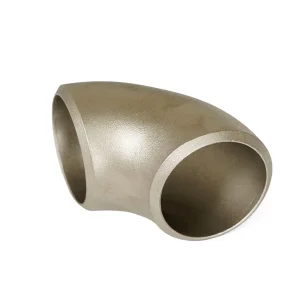
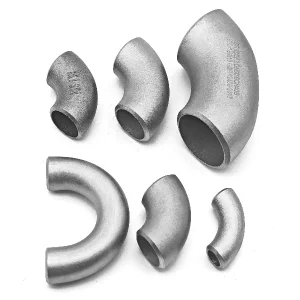
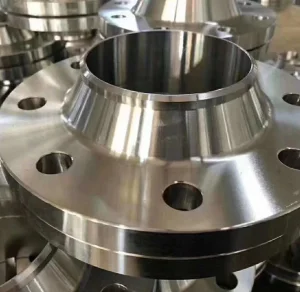
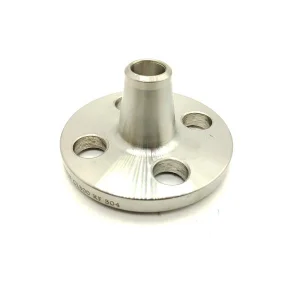
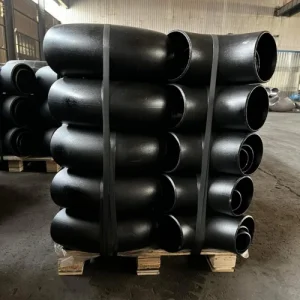
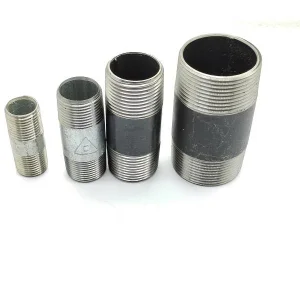
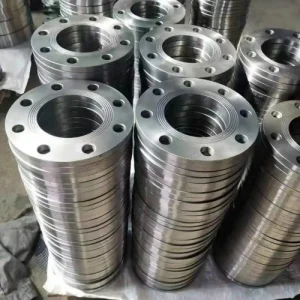
Complementary Valves, Stainless & Alloy Fittings
Complete project package supply from our Cangzhou manufacturing cluster.
Request Technical CAD Drawings & Wholesale Pricing
Connect directly with our senior pipeline metallurgical engineers to review custom flange schedules, tolerance standards, or request formal MTR documentation for ongoing project tenders.
Manufacturing Entities & Operating Units
HEBEI CANGRUN PIPELINE EQUIPMENT CO., LTD.
Main export center and heavy flange forging facility.
CANGZHOU FEIWO METAL PRODUCTS CO., LTD.
Specialized CNC machining & precision fitting manufacturing.
CANGZHOU FEIXIANG METAL PRODUCTS CO., LTD.
High-pressure valve production & bimetallic assembly plant.