High-Performance Butt-Weld & Threaded Steel Pipe Fittings
Engineered to withstand extreme pressure, cyclic thermal expansion, and corrosive media under ASME, DIN, JIS, and EN standards.
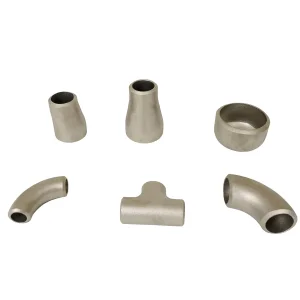
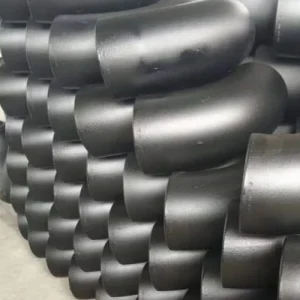
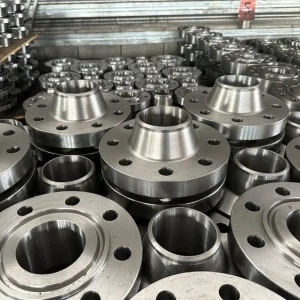
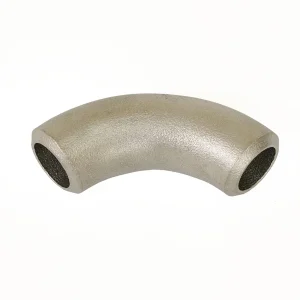
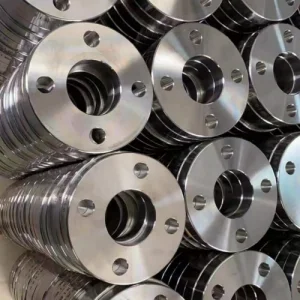
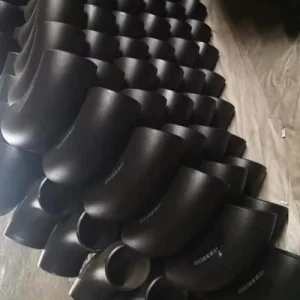
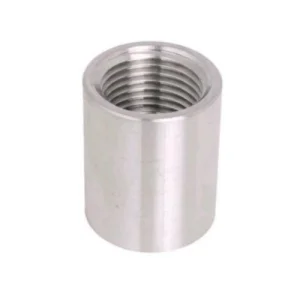
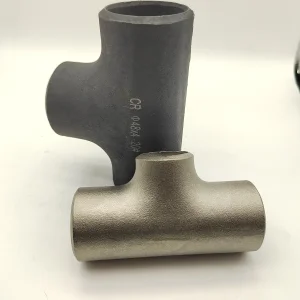
Engineering Fundamentals: Steel Pipe Fittings & Industrial Integrity
In modern industrial process engineering, steel pipe fittings are far more than structural connection points; they are engineered dynamic components designed to maintain fluid continuity, withstand severe pressure surges (hydraulic water hammer), direct complex multi-directional flow vectors, and isolate mechanical fatigue. Choosing a reliable High-Quality Steel Pipe Fittings Supplier directly determines the lifecycle Cost of Ownership (TCO) and operational safety of critical infrastructure installations across the globe.
Industrial piping components must balance material composition, grain structure alignment, wall thickness tolerances, and non-destructive testing (NDT) verifications. A slight structural variation in a butt-weld elbow or a misaligned flange facing under high-pressure steam service (exceeding 10 MPa at 540°C) can lead to catastrophic stress-corrosion cracking (SCC), uncontained pressure release, or unplanned plant shutdowns costing millions of dollars per day.
Metallurgical Superiority
Utilizing high-purity forged carbon steel (ASTM A234 WPB/WPC), low-alloy steel (ASTM A234 WP11/WP22/WP91 for high-temperature creep resistance), and austenitic/duplex stainless steels (ASTM A403 WP304/304L, WP316/316L, S31803) with controlled carbon and sulfur ratios.
Dimensional Precision
Strict manufacturing compliance with ASME B16.9 (factory-made wrought butt-welding fittings), ASME B16.11 (forged fittings), ASME B16.5 (pipe flanges), and DIN/JIS international geometry matrices ensuring seamless field-welding alignment.
Rigorous Quality Verification
Comprehensive Quality Assurance protocols including Positive Material Identification (PMI), Hydrostatic Pressure Testing, Radiographic Testing (RT), Ultrasonic Testing (UT), Magnetic Particle Inspection (MPI), and Microstructure Grain Analysis.
The Cangzhou Advantage: China's Industrial Pipeline Powerhouse
When evaluating global sourcing hubs for industrial steel pipe fittings, seamless pipes, and forged flanges, the Cangzhou Pipeline Equipment Manufacturing Cluster in Hebei Province, China stands out as the world's dense industrial nexus. Housing over 70% of China's total manufacturing capacity for high-pressure pipeline components, this specialized industrial ecosystem offers unprecedented strategic advantages for international EPC (Engineering, Procurement, and Construction) contractors, plant operators, and stocking distributors.
Complete Industrial Integration
From local raw billet steel mills (Baosteel, Shougang, TPCO) to specialized hot-extrusion forging facilities, heat-treatment plants, precision CNC machining shops, and certified testing laboratories, the entire production value chain is concentrated within a 50-kilometer radius.
Economic Scalability & Cost Efficiency
Shared industrial infrastructure, localized raw material logistics, and optimized energy utilization generate significant operational cost reductions. These efficiencies are directly passed on to buyers, offering market-leading price-to-performance ratios without compromising quality standards.
Unmatched Export Logistics
Direct proximity to Tianjin Port (Xingang) and Qingdao Port—two of the world’s largest deep-water container and bulk shipping hubs—allows for rapid container loading, expedited customs clearance, flexible FOB/CIF terms, and shortened lead times for overseas project sites.
Macro Industry Standards & Comprehensive Specifications
Cross-referencing global engineering standards for seamless specification in critical EPC project tender documents.
| Standard Body | Specification | Product Category | Material Grades Covered | Key Pressure Class / Wall Thickness |
|---|---|---|---|---|
| ASME / ANSI | ASME B16.9 / B16.28 | Butt-Weld Fittings (Elbows, Tees, Reducers, Caps) | ASTM A234 WPB, WPC, WP11, WP22, WP91; ASTM A403 WP304/L, WP316/L | SCH 10S to SCH 160, STD, XS, XXS (1/2" to 80") |
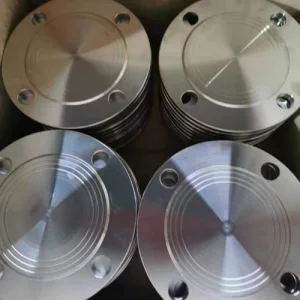
| ASME / ANSI | ASME B16.5 / B16.47 | Steel Pipe Flanges (WN, SO, Blind, Threaded, Lap Joint) | ASTM A105, A350 LF2, ASTM A182 F304/L, F316/L, F11, F22 | Class 150, 300, 600, 900, 1500, 2500 LBS (DN15 - DN3000) |
| ASME / ANSI | ASME B16.11 | Forged Threaded (NPT/BSP) & Socket-Weld Fittings | ASTM A105, A182 F304L/F316L, A350 LF2 | Class 2000, 3000, 6000, 9000 LBS |
| EN / DIN | EN 10253 / DIN 2605, 2615, 2616 | European Standard Butt-Welding Pipe Fittings | P235GH, P265GH, 13CrMo4-5, 1.4301, 1.4404 (304/316) | PN 6 to PN 400; Wall thickness 2.0mm to 60mm |
| JIS | JIS B2311 / JIS B2312 | Japanese Industrial Standard Steel Butt-Weld Fittings | SGP, STPT370, STPT410, SUS304, SUS316 | Sch 10S to Sch 80S, 10A to 1500A |
| GB / T | GB/T 12459 / GB/T 13401 | Seamless & Welded Steel Butt-Welding Fittings | 20#, 16Mn (Q345B/Q355B), 12Cr1MoVG, 06Cr19Ni10 | PN 2.5 to PN 420 (Sch 5S to Sch 160) |
Hydrostatic Pressure Rating & Wall Thickness Integrity Calculation
Engineers specifying steel pipe fittings must calculate maximum allowable working pressure (MAWP) utilizing Barlow's Formula to ensure bursting pressures far exceed system operating surges:
P = (2 * S * t) / D
Where P = Internal Hydrostatic Pressure (PSI or MPa), S = Allowable Material Stress (PSI/MPa based on ASME Section II Part D), t = Nominal Wall Thickness minus corrosion allowance (inches or mm), and D = Outside Diameter of the fitting (inches or mm). High-quality fittings strictly maintain zero negative tolerance in weld ends to preserve calculated design stress safety factors.
Localized Engineering Application Scenarios
Custom-engineered fittings and flange assemblies tailored to specialized operational environments worldwide.
Offshore Deepwater Oil & Gas
Environment: Subsea manifolds, FPSO topsides, riser systems exposed to high hydrostatic pressures, saltwater splash zones, and sour gas (H2S).
Solution: Duplex & Super Duplex Stainless Steel (S31803 / S32750) 90° long-radius elbows and heavy-wall Weld Neck flanges with NACE MR0175 / ISO 15156 compliance to eliminate sulfide stress cracking.
Refining & Hydrocarbon Cracking
Environment: Delayed coking units, catalytic hydrocrackers running at temperatures up to 650°C under dynamic pressure oscillations.
Solution: ASTM A234 WP91 / WP11 Chrome-Moly alloy steel concentric reducers and equal tees undergone Normalized & Tempered (N+T) heat treatment for elevated creep-rupture strength.
Supercritical Power Generation
Environment: High-pressure steam mainlines, boiler feed water piping networks operating under ultra-critical steam parameters.
Solution: Heavy-wall seamless carbon steel (ASTM A234 WPC / ST45.8) forged bends and Class 2500 Ring Type Joint (RTJ) flanges engineered to eliminate thermal shock failure modes.
Sanitary Food, Beverage & Pharma
Environment: Clean-In-Place (CIP) sterile fluids, ultrapure water lines, and bio-pharmaceutical reaction vessels requiring zero fluid stagnation.
Solution: Hygienic Food Grade Stainless Steel 304/316L Tri-Clamp Ferrule fittings and polished sanitary tees with internal mechanical polishing up to Ra < 0.4 µm.
Municipal Heating & Cryogenic Gas
Environment: Regional urban district heating steam networks and liquefied natural gas (LNG) cryogenic transport lines (-196°C).
Solution: Pre-insulated carbon steel fittings and low-temperature carbon steel (ASTM A420 WPL6) elbows tested via Charpy V-Notch impact testing at -46°C.
Desalination & Marine Engineering
Environment: Seawater reverse osmosis (SWRO) high-pressure pumps and commercial shipbuilding ballast water handling systems.
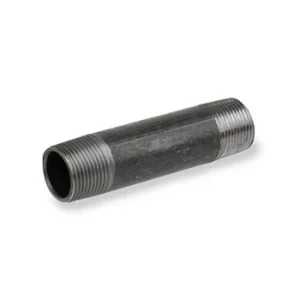
Solution: Copper-Nickel (CuNi 90/10) fittings and hot-dip galvanized carbon steel pipe nipples resistant to biofouling and chloride pitting.
Global Enterprise Procurement Strategy & Risk Mitigation
For international B2B procurement managers, sourcing industrial steel pipe fittings demands an evaluation framework beyond initial purchase price. Structural defects, incorrect chemical composition, or missing material test reports (MTRs) can stall major capital expenditure (CAPEX) engineering projects. Implementing a robust Total Cost of Ownership (TCO) methodology ensures financial optimization and operational compliance.
1. Verification of EN 10204 3.1 / 3.2 Material Test Reports (MTR)
Never accept industrial pipeline components without fully traceable 3.1 certification issued directly by the manufacturer's quality control department, or 3.2 certification co-signed by an independent third-party inspector (e.g., Lloyd's Register, TÜV Rheinland, Bureau Veritas, SGS). MTRs must confirm melt heat number, chemical ladle analysis, mechanical yield/tensile strength, elongation, heat treatment charts, and non-destructive examination (NDE) test results.
2. Dimensional Tolerances & End Preparation Accuracy
Ensure butt-weld bevel angles conform strictly to ASME B16.25 (standard 37.5° ± 2.5° bevel angle with a 1.6mm root face). Improper bevel edges lead to excessive burn-through or lack-of-penetration flaws during automatic orbital field welding, escalating field labor costs.
3. Anti-Corrosion Surface Treatments & Packaging Protocols
International ocean freight exposes steel components to high humidity and atmospheric salt spray. High-quality suppliers apply black rust-preventative varnish, transparent anti-rust oils, hot-dip galvanizing (ASTM A153), or 3LPE/FBE epoxy coatings. Ends must be capped with heavy-duty plastic protectors, and packaged inside fumigated solid wooden crates or steel-framed pallet boxes.
Future Trends in Industrial Pipeline Engineering
Navigating energy transition, decarbonization, and digital manufacturing integration.
Hydrogen-Ready Piping Metallurgy
As the global energy sector transitions toward green hydrogen (H2), research focuses on specialized micro-alloy steel grades resistant to hydrogen embrittlement under high operating pressures (exceeding 70 MPa).
AI-Driven Smart Quality Assurance
Leading Chinese factories are deploying automated Vision-AI inspection systems and automated ultrasonic testing (AUT) to scan internal weld seams and dimensions in real time, achieving zero-defect production runs.
Green Steel & Low-Carbon Manufacturing
Transitioning from traditional blast furnaces to Electric Arc Furnaces (EAF) powered by renewable energy, reducing the embodied carbon footprint of steel fittings for sustainability-focused global buyers.
Expert Procurement & Technical Q&A
Addressing the core technical queries of pipeline design engineers and global buyers.
What is the functional difference between a Concentric Reducer and an Eccentric Reducer?
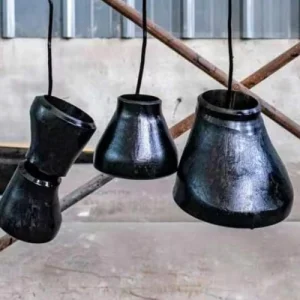
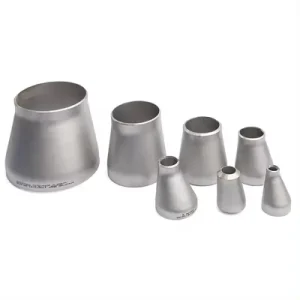
A Concentric Reducer joins two pipes along a common center axis. It is typically used in vertical piping runs where fluid symmetry is desired without causing turbulent flow. An Eccentric Reducer has an off-center flat edge on one side. It is used in horizontal liquid piping lines—specifically at the suction inlet of pumps—with the flat side aligned at the top (flat-on-top) to prevent air bubbles from accumulating and causing pump cavitation.
How do standard radius (1.0D) and long radius (1.5D) pipe elbows compare?
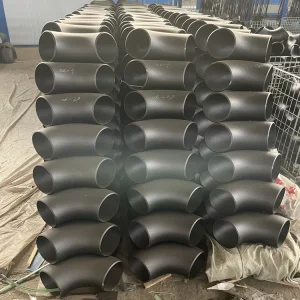
A Long Radius (LR) Elbow has a center-to-face distance equal to 1.5 times the nominal pipe size (NPS). LR elbows offer lower frictional resistance, reduced pressure drop, and lower erosion velocity, making them standard for process piping systems. A Short Radius (SR) Elbow has a center-to-face distance equal to 1.0 times NPS. SR elbows are selected for tight spatial constraints, such as compact equipment skids or marine engine rooms, but incur higher pressure drops.
When should I select Weld Neck (WN) flanges versus Slip-On (SO) flanges?
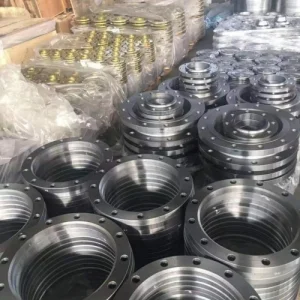
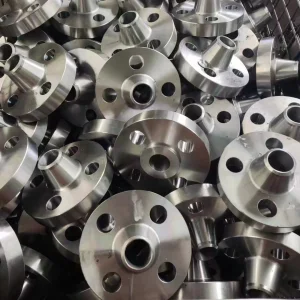
Weld Neck Flanges feature a tapered hub welded directly to the pipe end, providing optimal stress distribution under high-pressure, high-temperature, or sub-zero cyclic loading conditions. Slip-On Flanges slip over the pipe body and require fillet welding on both internal and external sides. SO flanges lower installation costs and ease fit-up, but provide roughly one-third the fatigue strength of WN flanges under severe thermal shock.
What third-party inspection (TPI) options are available for China export orders?
Full Third-Party Inspection (TPI) services can be specified prior to shipment. Recognized independent agencies—such as SGS, TÜV, Bureau Veritas, DNV GL, or Intertek—conduct raw material PMI verification, dimensional checking, wall thickness measuring, hydrostatic witness testing, visual coating inspections, and container loading supervision.
What material grades are recommended for low-temperature service?
For operating temperatures ranging from -29°C to -46°C, ASTM A420 Grade WPL6 carbon steel butt-weld fittings paired with ASTM A350 LF2 forged flanges are standard. For cryogenic applications down to -196°C (such as LNG service), austenitic stainless steel grades ASTM A403 WP304/304L or WP316/316L are required to maintain ductile fracture toughness.
How do you ensure zero surface corrosion during ocean transit?
All finished carbon and alloy steel fittings undergo surface shot-blasting before receiving an anti-corrosive coating, such as black paint, rust-inhibiting varnish, or oil coating. Stainless steel items undergo acid pickling and passivation. Items are wrapped in moisture-barrier plastic wrap and packed inside sealed wooden crates or steel-reinforced pallets.
Industrial Valves, Reducers, Nipples & Flanges
Comprehensive flow control and pipeline joining components ready for global dispatch.