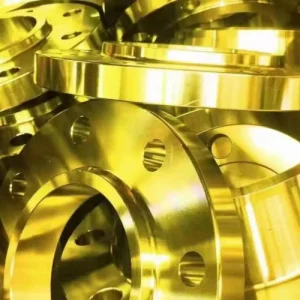
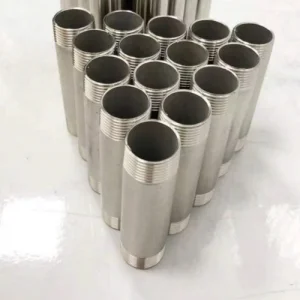
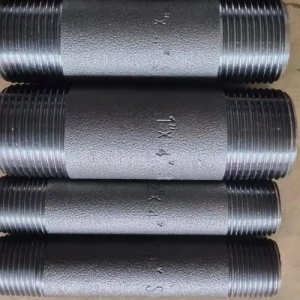
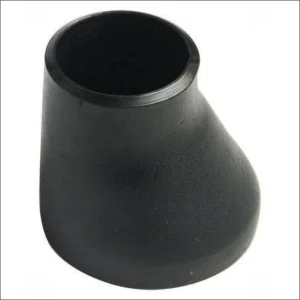
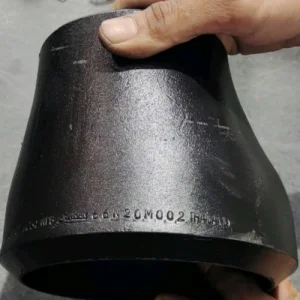
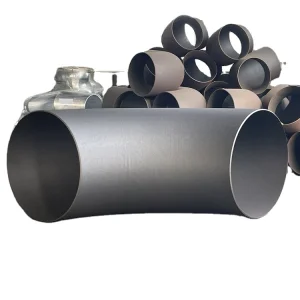
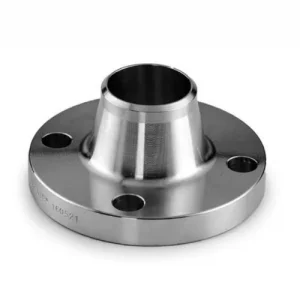
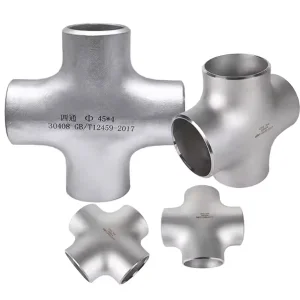
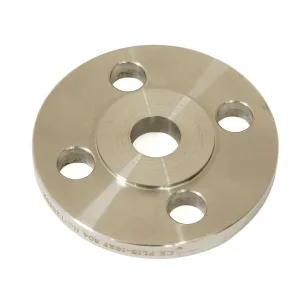
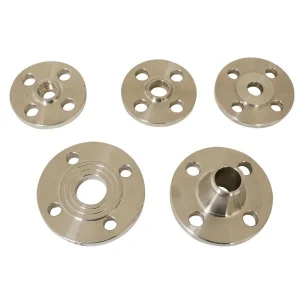
Explore our top-tier precision-engineered carbon steel pipe fittings and flanges compliant with global ASTM, ASME, and DIN standards.
1. Technical Abstract & Metallurgical Foundations of Q235 Carbon Steel
Q235 structural carbon steel stands as the industrial backbone for general fluid transportation, structural connections, and low-to-medium pressure piping systems worldwide. Understanding its precise metallurgical composition, mechanical boundaries, and international equivalents is essential for engineering design and global procurement.
Chemical Architecture & Yield Strength Dynamics
Q235 is a Chinese standard (GB/T 700) plain carbon structural steel categorized by its minimum yield point of 235 MPa for nominal thicknesses up to 16mm. The grade is subdivided into four quality tiers—Q235A, Q235B, Q235C, and Q235D—differentiated primarily by their deoxidation methods, sulfur/phosphorus purity levels, and Charpy V-notch impact test requirements.
The low carbon content (typically 0.14% to 0.22%) ensures exceptional weldability without requiring complex pre-heating or post-weld heat treatment (PWHT) regimes. Manganese serves as a solid-solution strengthener, optimizing the ferrite-pearlite microstructural balance.
Information Gain Insight: Unlike high-carbon or alloy steel flanges that risk cold cracking under ambient site welding, Q235 flanges offer a carbon equivalent (CEV) typically below 0.38%, rendering them virtually immune to hydrogen-induced cracking during field installation.
Microstructural Characteristics
- Grain Size: Fine-grained ferrite + pearlite matrix (ASTM grain size 7-8 post-normalizing).
- Tensile Strength Range: 370 – 500 MPa.
- Elongation at Fracture: ≥ 26% (50mm gauge length).
- Impact Resistance: Q235B tested at +20°C (≥ 27 J); Q235D tested at -20°C.
International Material Cross-Reference Matrix
Procurement managers and piping engineers frequently require cross-standard mapping to evaluate design equivalence across international projects.
| Standard Region | Grade Equivalent | Yield Strength (MPa) | Tensile Strength (MPa) | Weldability Index | Primary Application Scope |
|---|---|---|---|---|---|
| China (GB/T 700) | Q235B / Q235A | ≥ 235 | 370 - 500 | Excellent (CEV < 0.38) | Standard Pressure Piping, Water Works, Structural |
| USA (ASTM / ASME) | ASTM A283 Grade C / A36 | ≥ 205 / ≥ 250 | 380 - 515 / 400 - 550 | Excellent | Low-Pressure Vessels, Plate Flanges, Utility Lines |
| Europe (EN 10025-2) | S235JR (1.0038) | ≥ 235 | 360 - 510 | Excellent | Civil Water Networks, General Engineering Flanges |
| Japan (JIS G3101) | SS400 | ≥ 245 | 400 - 510 | Good | Structural Flanges, Low-Pressure Machinery Joints |
| International (ISO) | E235B (ISO 630-2) | ≥ 235 | 360 - 510 | Excellent | Cross-Border EPC Modular Infrastructure |
2. Global Commercial & Industrial Market Dynamics
The international demand for Q235 carbon steel flanges is deeply tied to global municipal urbanization, regional industrial expansion, and large-scale infrastructure revitalization projects.
Supply Chain Elasticity
Q235 flange manufacturing benefits from robust global raw steel availability. China’s integrated manufacturing hubs—particularly in Hebei Province—maintain streamlined supply chains from raw iron ore reduction to precision forging and CNC machining, mitigating global lead time bottlenecks.
Total Cost of Ownership (TCO)
When high-alloy steel (such as 316L or Duplex) is unnecessary for mild working environments, Q235 provides an unbeatable cost-to-performance ratio. Capital expenditure (CAPEX) savings on municipal piping systems can reach up to 60% when substituting overpriced forged alloys with certified Q235B plate or forged flanges.
Regional Trade Vectors
Export flows highlight massive adoption across Southeast Asia (Belt & Road infrastructure), the Middle East (seawater desalination low-pressure secondary loops), Latin America (agricultural irrigation expansion), and Eastern Europe (district heating networks refurbishment).
3. Manufacturing Engineering: Forging vs. Plate Processing & Quality Control
Not all Q235 flanges are manufactured equally. Understanding the distinction between hot-forged flanges and plate-cut flanges is vital to selecting components that align with specific hydrostatic pressure demands and regulatory compliance.
Forged Q235 Flanges (Hot Ring Rolling)
Hot forging involves heating Q235 steel billets to approximately 1,150°C - 1,200°C before applying hydraulic pressing and precision ring rolling. This plastic deformation realigns the internal crystal grain flow along the circumferential contour of the flange ring.
- Microstructure: Elimination of internal porosity, blowholes, and micro-voids.
- Pressure Integrity: Superior fatigue resistance and high bursting pressure thresholds (PN16 to PN40 / Class 150 to Class 300).
- Standard Compliance: Recommended for ASME B16.5 Weld Neck and Slip-On critical joints.
Plate Cut Q235 Flanges (Flame / Plasma Cut)
Plate cut flanges are CNC oxygen-fuel or plasma sliced directly from hot-rolled Q235 steel plates (GB/T 3274). Following blanking, inner bore machining, bolt hole drilling, and gasket facing are performed on high-precision CNC lathes.
- Microstructure: Anisotropic properties along the rolled plate direction; lower radial tensile strength compared to forged rings.
- Pressure Integrity: Ideal for low-pressure, static load systems (PN2.5 to PN10 / Class 75).
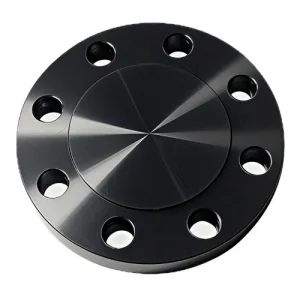
- Economy: Exceptionally high yield efficiency, dramatically reducing unit prices for large diameter blind and plate slip-on flanges (DN500 - DN2000).
Comprehensive Non-Destructive Testing (NDT) Protocol
To ensure zero field failure, advanced Q235 flange manufacturers apply rigorous quality assurance protocols across every production batch:
4. Field-Proven Regional & Industry Application Scenarios
Q235 flanges serve specialized engineering requirements across diverse geographical regions and industrial sectors.
A. Municipal Water Supply & Wastewater Treatment
Primary Regions: Middle East, Southeast Asia, Sub-Saharan Africa.
In large-diameter potable water transmission grids and municipal sewage treatment plants, Q235 plate flanges (EN 1092-1 Type 01 / DIN 2576) are the preferred standard. Operating under design pressures between 6 bar and 16 bar, these flanges are typically protected via Hot-Dip Galvanizing (HDG) per ISO 1461, yielding a zinc coating thickness exceeding 85 µm to withstand soil corrosion and atmospheric humidity.
B. HVAC & Industrial Fire Protection Lines
Primary Regions: North America, Europe, East Asia.
Commercial building HVAC chilled water loops and automatic fire sprinkler mainlines utilize ASME B16.5 Class 150 Q235B Slip-On and Threaded flanges. Their exceptional resistance to mechanical vibration, paired with black anti-rust paint or epoxy powder coating, ensures a maintenance-free service life exceeding 30 years.
C. Agricultural Irrigation & Slurry Pumping
Primary Regions: South America (Brazil, Argentina), Australia.
High-volume agricultural water distribution requires cost-effective, easily field-weldable piping joints. Q235 lap joint flanges combined with stub ends allow rapid orientation alignment during installation across uneven rural terrains, significantly reducing labor costs.
D. Structural Steel Modules & Tower Construction
Primary Regions: Global Export Projects.
Beyond fluid transport, specialized Q235 thick-plate flanges are utilized as heavy structural flange connections for wind turbine tower bases, tubular steel poles, and offshore modular platform legs where high bending moment capacity is mandatory.
5. Strategic Macro Solutions & EPC Procurement Framework
For Procurement Directors, Project Engineers, and Commercial Contracting Officers managing multi-million dollar Piping Material Take-Offs (MTO), specifying Q235 flanges requires rigorous risk mitigation strategies.
Corrosion Mitigation Matrix
Bare carbon steel oxidizes rapidly in atmospheric moisture. We offer engineered surface coatings including:
- Yellow Varnish / Anti-Rust Oil (Storage protection)
- Hot-Dip Galvanizing (Marine/External exposure)
- Fusion Bonded Epoxy (FBE) (Buried soil service)
- Zinc-Rich Primer (Industrial plant environments)
Standard Interface Matching
Eliminate site fit-up delays by specifying precise facing standards:
- Flat Face (FF): Recommended for mating with cast iron valves
- Raised Face (RF): Standard for steel-to-steel pressure joints
- Ring Type Joint (RTJ): High-integrity metallic seal slots
Complete MTO Consolidation
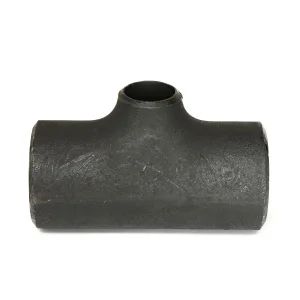
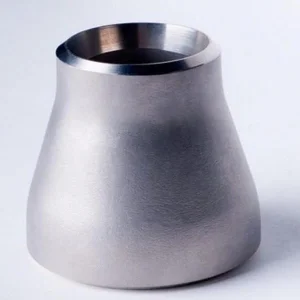
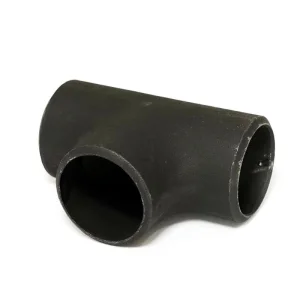
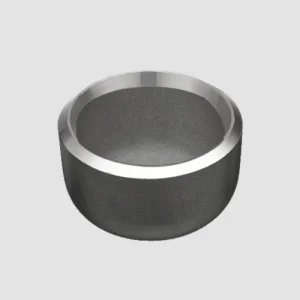
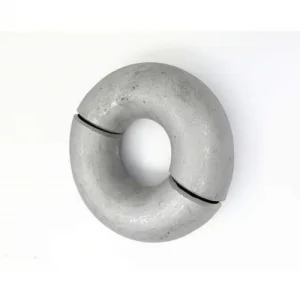
Reduce procurement overhead by bundling matching Q235/A105 flanges with seamless pipe, butt-weld elbows, tees, reducers, and industrial valves within a single certified shipment container.
6. Technology Roadmap & Industry Vision (2025–2035)
The flange manufacturing sector is undergoing rapid technological evolution driven by industrial automation, green metallurgy, and digital traceability.
Green Steel Metallurgy & Low Carbon Production
Transitioning from traditional Blast Furnace-Basic Oxygen Furnace (BF-BOF) steelmaking to Electric Arc Furnace (EAF) processing powered by renewable energy reduces the embodied carbon footprint of Q235 steel flanges by up to 45%, fulfilling stringent Scope 3 emissions targets for green infrastructure projects.
Smart QR/RFID Traceability & Digital Quality Passports
Future manufacturing lines directly engrave laser QR codes onto the rim of every Q235 flange. Scanning provides instant access to digitized Mill Test Certificates (EN 10204 3.1), heat number origin tracking, UT inspection videos, and dimensional inspection reports via cloud databases.
7. Technical FAQ: Q235 Flange Engineering & Procurement
Detailed answers to the most common metallurgical, regulatory, and mechanical questions asked by piping designers and procurement specialists.
- Q235A: No impact testing required; highest allowed P/S content. Suitable for basic structural frames.
- Q235B: Impact tested at +20°C (≥27 Joules); low P/S (≤0.045%). The universal choice for general piping flanges.
- Q235C: Impact tested at 0°C; lower impurity threshold (P/S ≤0.040%). Used in cooler climates.
- Q235D: Impact tested at -20°C; fully killed steel with ultra-low impurity levels (P/S ≤0.035%). Required for sub-zero liquid transport lines.
- Chinese National Standard: GB/T 9119 (Plate Flanges), GB/T 9115 (Weld Neck Flanges).
- European Standard: EN 1092-1 (Type 01 Plate, Type 11 Weld Neck, Type 02 Loose Flanges).
- American Standard: ASME B16.5 / ASME B16.47 (Class 150 dimensional profiles).
- German Standard: DIN 2576 (PN10 Plate), DIN 2543 (PN16 Flat Flanges).
- Japanese Standard: JIS B2220 (5K, 10K, 16K Slip-On Flanges).
Complete your piping system requirements with our certified carbon steel, stainless steel, and alloy pipe fittings and custom flanges.