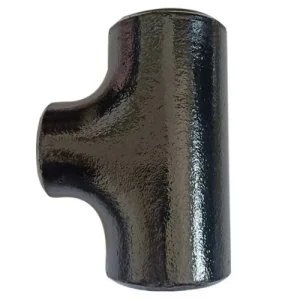
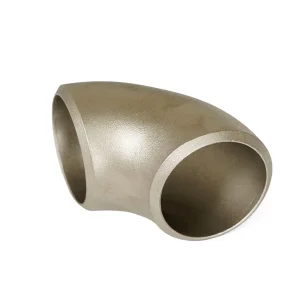
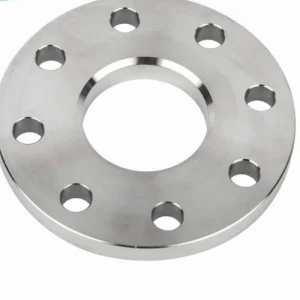
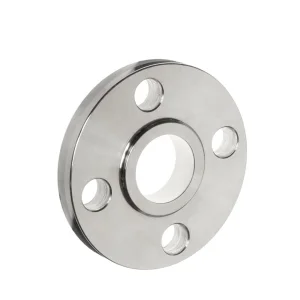
Featured Industrial Pipe Fittings & Flanges Showcase (Part I)
Explore our primary selection of direct-factory pipe fittings, elbows, tees, steel pipes, and flanges engineered for extreme pressure, thermal stress, and corrosive environments across global infrastructure projects.
Global Commercial & Industrial Landscape of Pipe Fitting Engineering
The global pipeline infrastructure sector is currently undergoing a massive structural transformation. Driven by the expansion of Liquefied Natural Gas (LNG) export facilities, ultra-supercritical thermal power generation, green hydrogen transport networks, and complex petrochemical refining clusters, demand for high-integrity piping components has reached an all-time high. A pipe fitting is far more than a simple structural connector; it is a critical mechanical pressure-containing boundary designed to alter fluid velocity, redirect flow paths, adapt pipe diameters, and resist immense operational stresses over decades of continuous operation.
In modern mega-projects—ranging from Middle Eastern offshore oil drilling rigs to North American shale processing facilities and European district heating grids—engineering teams mandate absolute compliance with international dimensional and metallurgical standards. A single material failure or dimensional deviation in a high-pressure butt-weld elbow or forged weld-neck flange can result in catastrophic downtime, multi-million-dollar operational losses, or critical environmental hazards. Consequently, global procurement directors look beyond surface-level pricing, evaluating manufacturers on metallurgical purity, non-destructive testing (NDT) rigor, and complete traceability back to the raw ingot.
Energy Transition & LNG Surge
Cryogenic applications require specialised low-temperature carbon steel (e.g., ASTM A333 Grade 6, A420 WPL6) and austenitic stainless steels (304L/316L) tested down to -196°C to maintain impact toughness without brittle fracture during LNG regasification.
High-Pressure & Supercritical Power
Next-generation power plants operating at steam temperatures exceeding 600°C rely heavily on chrome-moly alloy steel fittings, such as ASTM A234 WP91 and WP11, designed to resist creep failure and thermal fatigue over long-term exposure.
Chemical & Subsea Offshore
Extremely corrosive fluid processing demands high-nickel alloys (Inconel 625, Hastelloy C276) and Super Duplex Stainless Steels (UNS S32750/2507) offering high PREN values to prevent pitting, crevice corrosion, and stress corrosion cracking.
China Manufacturing Efficiency & The Cangzhou Pipe Fitting Industrial Cluster
When global engineering procurement contractors (EPCs) evaluate international sourcing options, China's pipe fitting manufacturing landscape stands out for its unmatched vertical integration, scale, and technological evolution. At the heart of this industrial dominance lies Cangzhou, Hebei Province—globally recognized as the epicenter of industrial pipeline equipment manufacturing.
The concentration of raw material steel mills, specialized forging plants, automated CNC machining hubs, and accredited testing laboratories within Cangzhou creates an ecosystem of unprecedented efficiency. Enterprise groups like Hebei Cangrun Pipeline Equipment Co., Ltd. together with subsidiaries such as Cangzhou Feiwo Metal Products Co., Ltd. and Cangzhou Feixiang Metal Products Co., Ltd. capitalize on this cluster effect to optimize every phase of manufacturing.
How Industrial Clusters Drive Technical & Price Advantages:
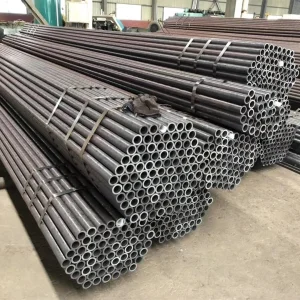
- Seamless Supply Chain Integration: Raw seamless steel pipes and heavy plate materials are sourced directly from premier steel conglomerates (such as Baosteel, TPCO, and Shougang) situated within short logistics radii, eliminating long-distance transport costs and raw material lead times.
- Advanced Hot Forming & Mandrel Technology: High-frequency induction heating mandrel machines allow continuous, seamless elbow forming up to DN1200 with precise outer diameter (OD) and uniform wall thickness retention, drastically reducing labor hours per unit.
- In-House Metallurgical Heat Treatment: Large-scale computer-controlled normalizing, quenching, and tempering furnaces ensure that forged flanges and butt-weld fittings achieve optimal grain refinement and mechanical properties (tensile strength, yield strength, impact energy) without outsourcing delay.
- Comprehensive Quality Controls (QA/QC): Integrated laboratories equipped with Spectrometers for Positive Material Identification (PMI), Ultrasonic Testing (UT), Magnetic Particle Inspection (MT), Radiographic Testing (RT), and Hydrostatic test rigs deliver full compliance with EN 10204 3.1 / 3.2 Material Test Reports (MTRs).
Comprehensive Pipe Fittings Pricelist Dynamics & Engineering Matrix
Understanding how industrial pipe fitting prices are determined requires analyzing key cost drivers: raw material alloy composition, manufacturing method (seamless vs. welded), wall thickness schedule (STD, XS, SCH80, SCH160, XXS), pressure class (Class 150 to 2500 / PN2.5 to PN400), non-destructive testing requirements, and surface protection coatings.
Below is an authoritative engineering specification and structural pricing framework detailing dimensional limits, material grades, and operational pressure thresholds across major industrial piping component classifications:
| Component Type | Manufacturing Standards | Size Range | Material Grades | Pressure / Schedule | Commercial Price Index |
|---|---|---|---|---|---|
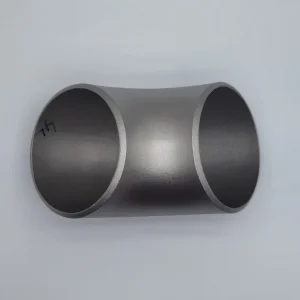
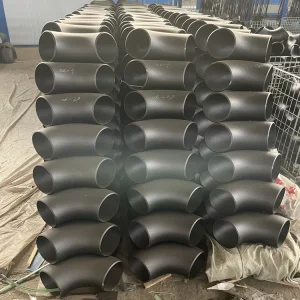
| Butt-Weld Elbows (45°, 90°, 180°) | ASME B16.9, JIS B2311, GB/T 12459, EN 10253 | Seamless 1/2" - 24" Welded 4" - 78" |
ASTM A234 WPB, WPC, ST37; A403 WP304/316; WP11, WP22, WP91 | SCH 5S to SCH 160, STD, XS, XXS (WT up to 150mm) | Baseline Economy to High Tech |
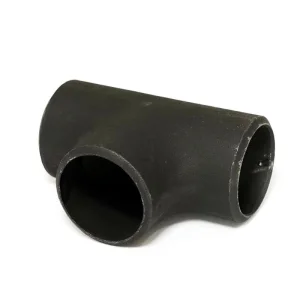
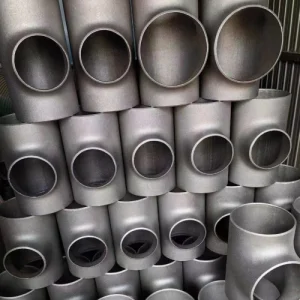
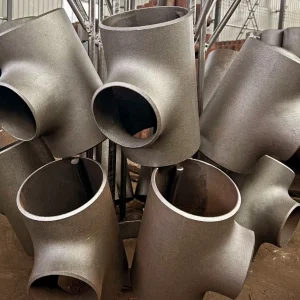
| Equal & Reducing Tees | ASME B16.9, DIN 2615, SH/T 3408, HG/T 21635 | Seamless 1/2" - 24" Welded 4" - 78" |
Carbon Steel A234 WPB, Stainless 304L/316L, Alloy ST52, 15CrMo | Class 150 to Class 2500, SCH40 to SCH XXS | Mid-Range Commercial |
| Concentric & Eccentric Reducers | ASME B16.9, JIS B2312, GB/T 13401 | 1/2" - 78" (DN15 - DN1900) | ASTM A234 WPB, A403 WP304, WP316, A420 WPL6 | SCH10, SCH40, SCH80, SCH160 | Mid-Range Commercial |
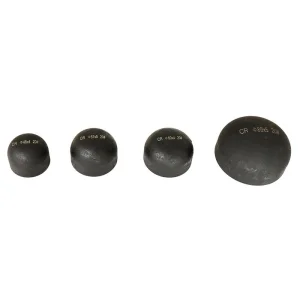
| Pipe Caps & Stub Ends | ASME B16.9, MSS SP-75, GB/T 12459 | 1/2" - 78" (DN15 - DN1900) | ASTM A234 WPB, Stainless Steel 304/316/317L | Up to 150mm Wall Thickness | Economy to Specialized |
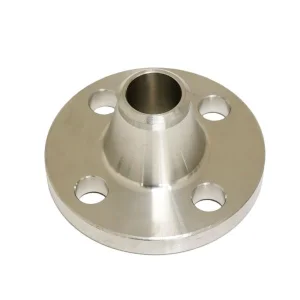
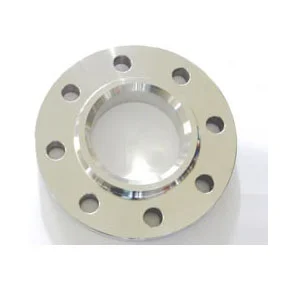
| Weld Neck (WN) Flanges | ASME B16.5, ASME B16.47, EN 1092-1, JIS B2220 | 3/8" - 160" (DN10 - DN4000) | ASTM A105, A182 F304/304L/316/316L, F11, F22 | Class 150 - 2500 / PN2.5 - PN400 (FF, RF, RTJ facings) | High Integrity Premium |
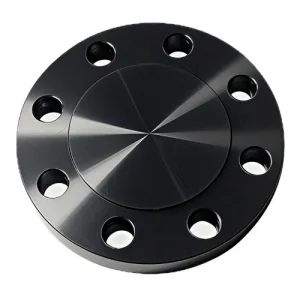
| Slip-On (SO) & Blind Flanges | ASME B16.5, BS 4504, DIN 2527 | 3/8" - 100" (DN10 - DN2500) | ASTM A105, A182 Stainless, Carbon Steel ST37.2 | Class 150 - 1500 / PN6 - PN100 | Economy to Mid-Range |
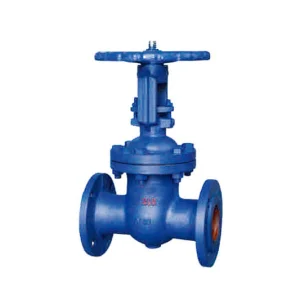
| Industrial Valves (Gate, Ball, Butterfly) | API 600, API 6D, DIN 3352, BS 5163 | DN15 - DN1200 | Ductile Iron (QT450), WCB, CF8 (SS304), CF8M (SS316) | PN10, PN16, PN25, Class 150-600 | Premium Equipment |
Pricelist Note: Commercial pricing varies based on raw material market rates (LME nickel & iron ore futures), quantity scaling, surface treatments (black varnish, 3PE coating, hot-dip galvanizing, electro-polishing), and third-party inspection (TUV, SGS, BV, DNV) requirements.
Localized Application Scenarios & Sector-Specific Deployments
Modern pipeline engineering requires custom component configurations tailored to specific operational hazards. Below are four key field scenarios where Cangrun pipeline products deliver verified reliability:
Offshore Oil & Gas Upstream Processing
Exposed to marine salt spray, high hydrostatic pressure, and sour gas (H2S), offshore platforms require NACE MR0175/ISO 15156 compliant ASTM A860 WPHY60 high-yield fittings and UNS S31803 (2205 Duplex) flanges to guarantee immunity against sulfide stress cracking.
High-Purity Pharmaceutical & Food Grade Processing
Sanitary applications demand seamless stainless steel 304L/316L Tri-Clamp fittings with inner surface roughness polishes down to Ra < 0.4 µm, ensuring complete CIP/SIP cleaning and eliminating bacterial entrapment zones in sterile fluid lines.
Municipal HVAC & Urban Water Networks
Potable water networks and district cooling systems require economic resilience. Resilient seated soft seal gate valves (Z45X) and ductile iron flanged connections provide bubble-tight shutoff up to PN25 with zero maintenance requirements.
Enterprise Procurement Protocol & Quality Assurance Audit Framework
For global EPC procurement teams, verifying vendor reliability is paramount. Under Google's E-E-A-T guidelines and international engineering standards, procurement audits must scrutinize manufacturing processes, quality management systems, and verification documentation.
1. Chemical & Metallurgical Audit
Direct optical emission spectrometry verifies C, Mn, Si, P, S, Cr, Ni, Mo percentages. Carbon Equivalent (CE) calculation guarantees weldability without pre-heating risks.
2. Non-Destructive Testing (NDT)
100% Ultrasonic Testing (UT) on seamless pipe fittings and forged raw stock detects sub-surface laminations. Radiographic Testing (RT) evaluates full penetration welds on large-diameter fittings.
3. Dimensional & Hydrostatic Verification
Laser scanning ensures wall thickness, bevel angles (37.5° ± 2.5°), and end squareness strictly align with ASME B16.9 tolerances. Hydrostatic testing validates pressure wall integrity.
Industry Technical Q&A: Key Procurement & Engineering Questions
What is the primary difference between ASME B16.9 butt-weld fittings and ASME B16.11 forged fittings?
ASME B16.9 covers factory-made wrought butt-welding fittings in sizes from 1/2" to 48" and above, designed for high-pressure, smooth flow piping systems where joints are circumferentially welded. ASME B16.11 applies specifically to forged socket-weld and threaded fittings generally sized 1/2" to 4" for smaller diameter auxiliary pressure lines, operating under Class 2000, 3000, 6000, and 9000 pressure ratings.
How does Cangrun ensure seamless wall thickness tolerances during the elbow hot-forming mandrel process?
Our factory utilizes precision-engineered horn-shaped mandrels combined with high-frequency induction heating. As the raw seamless pipe expands and bends over the mandrel, computerized speed control ensures balanced material distribution. This prevents outer-radius thinning (thinning tolerance within 12.5% of nominal WT) and inner-radius wrinkling, matching strict ASME B16.9 quality standards.
Why is EN 10204 3.1 Certification critical when ordering pipe fittings and flanges?
An EN 10204 3.1 Material Test Report (MTR) is an official quality document issued by the manufacturer's independent quality control department. It details the precise heat number, chemical ladle analysis, mechanical test results (yield, tensile, elongation, Charpy V-notch impact energy), heat treatment records, and non-destructive test results, providing full traceability from raw steel to finished component.
What surface protection options are recommended for ocean freight transport?
To prevent atmospheric corrosion during sea transit, carbon steel fittings receive black rust-resistant painting, transparent varnish, or 3PE (Three-Layer Polyethylene) coating. Forged flanges are protected with anti-rust oil or light grease and fitted with plastic end caps. Stainless steel components undergo passivating/pickling and are packaged in seaworthy wooden cases lined with moisture-proof film.
Can Cangrun customize pipe fittings and flanges to non-standard dimensions or client drawings?
Yes. Beyond standard ASME, EN, DIN, and JIS specifications, our Cangzhou manufacturing facilities possess heavy-duty CNC turning lathes, forging presses up to 5000 tons, and custom tooling to manufacture heavy-wall non-standard reducers, large-diameter weld neck flanges up to DN4000, specialized branch outlets, and custom manifold block fittings per customer engineering drawings.
Featured Industrial Pipe Fittings & Flanges Showcase (Part II)
Complete your pipeline package with our high-pressure forged flanges, stainless steel ball valves, industrial gate valves, and specialized butt-weld caps manufactured for seamless system integration.