
Featured Industrial Pipe Fittings & Flanges (Part I)
Explore precision-engineered components manufactured strictly to ASME, DIN, BS, EN, and GOST specifications for high-pressure, high-temperature fluid handling environments.
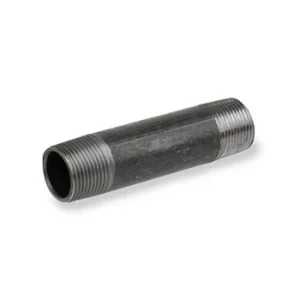
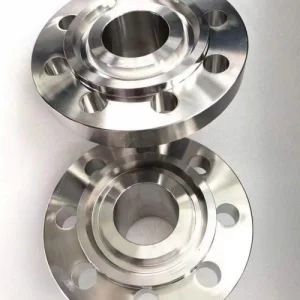
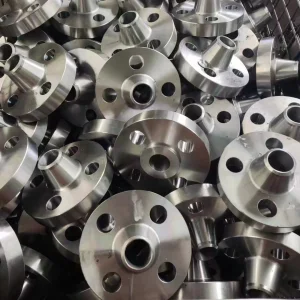
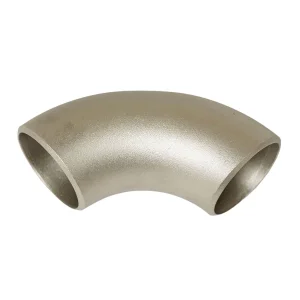
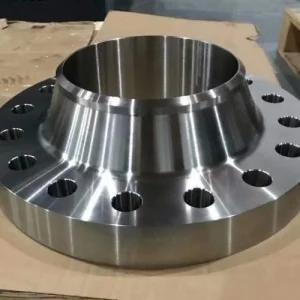
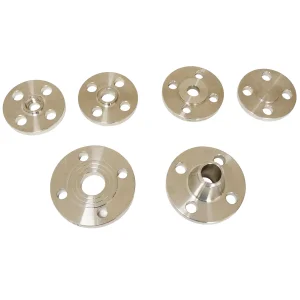
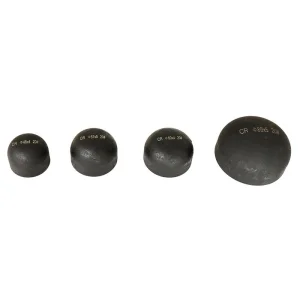
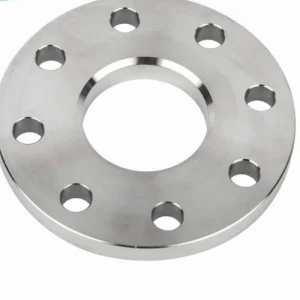
1. Global Industrial Landscape & Macroeconomic Driving Forces
An authoritative analysis of modern piping infrastructure dynamics across energy transitions, heavy petrochemical processing, and critical industrial expansion worldwide.
In the contemporary industrial ecosystem, high-performance metal pipe fittings and flanges serve as the indispensable circulatory backbone of global infrastructure. From multi-stage Liquefied Natural Gas (LNG) liquefaction facilities and deepwater offshore production platforms to supercritical thermal energy plants and zero-emission hydrogen transport networks, fluid integrity under extreme pressures and cryogenic or elevated temperatures dictates plant safety, thermal efficiency, and operational uptime.
The international metal fittings market is experiencing a structural paradigm shift driven by three primary industrial imperatives: decarbonization and clean energy transitions, supply chain resilience through certified quality traceability, and rigorous compliance with unified global engineering standards. Advanced industrial facilities no longer view pipe nipples, butt-weld elbows, weld neck flanges, or forged tees as mere commodities, but rather as high-precision, safety-critical pressure boundary components.
The rapid adoption of hydrogen blending in natural gas grids and the expansion of carbon capture, utilization, and storage (CCUS) projects require enhanced material science solutions. Higher resistance to hydrogen embrittlement, sulfide stress corrosion cracking (SSCC), and severe thermal fatigue is now mandatory. Consequently, top-tier metal pipe fittings factories must integrate advanced metallurgical controls, precise heat treatment cycles, and fully automated CNC machining processes to guarantee dimensional stability and structural sound integrity.
2. Advanced Metallurgy, Manufacturing Technical Routes & Quality Assurance
From raw billet selection to final non-destructive testing: dissecting the state-of-the-art engineering workflows executed inside premier pipe fittings manufacturing plants.
Manufacturing industrial-grade pipe fittings requires sophisticated thermal forming and mechanical processing techniques tailored to specific alloy chemistries. Whether processing ASTM A234 WPB carbon steel, ASTM A403 WP304/316L austenitic stainless steel, or high-nickel duplex alloys like UNS S31803 / S32750, the structural reliability of every fitting relies on uncompromising process control.
Mandrel Hot Pushing Process
Utilized primarily for manufacturing seamless carbon and alloy steel elbows (ASME B16.9). Seamless pipe feedstock is pushed over a bullhead mandrel under induction heating, allowing uniform wall thickness distribution, grain refinement, and precise curvature control.
Precision Forging & Flange Machining
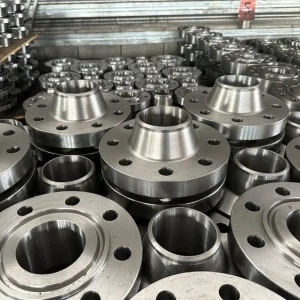
For high-pressure flanges (WNRF, RTJ) under ASME B16.5 and DIN 2638/2628. Raw billets undergo closed-die closed-loop forging followed by heat treatment (Normalizing / Solution Annealing) and high-speed CNC facing to ensure exact gasket surface finish (125–250 AARH).
Comprehensive NDT Verification
100% quality assurance through Ultrasonic Testing (UT) for internal void detection, Radiographic Testing (RT) on welded seams, Magnetic Particle Inspection (MPI), Dye Penetrant Testing (PT), and handheld PMI spectro-analysis for material grade verification.
Detailed Material Standard Specifications
| Material Category | Common Standard Grades | Tensile Strength (MPa) | Yield Strength (MPa) | Primary Industrial Applications |
|---|---|---|---|---|
| Carbon Steel | ASTM A234 WPB / WPC, ASTM A105, S235JR | 415 - 585 | ≥ 240 | Oil & Gas transport, municipal steam grids, general building service |
| High-Yield Carbon Steel | ASTM A860 WPHY 52 / 60 / 65 / 70 | 535 - 760 | ≥ 360 - 485 | High-pressure cross-country gas pipelines, arctic transmission lines |
| Low Temp Carbon Steel | ASTM A420 WPL6, ASTM A350 LF2 | 485 - 655 | ≥ 240 | Cryogenic processing, LPG terminals, cold-climate installations (-46°C) |
| Alloy Steel | ASTM A234 WP11, WP22, WP91, 15CrMo | 585 - 760 | ≥ 415 | Supercritical boilers, power generation steam lines, refinery hydrocrackers |
| Austenitic Stainless Steel | ASTM A403 WP304/304L, WP316/316L, WP321, 904L | 485 - 620 | ≥ 205 | Chemical processing, offshore platforms, food & beverage, corrosive fluids |
| Duplex & Super Duplex | UNS S31803 (2205), UNS S32750 (2507) | 750 - 1000 | ≥ 550 | Desalination plants, marine subsea manifolds, aggressive chloride service |
3. Multi-Standard Alignment Matrix: ASME, DIN, BS, EN & GOST
Navigating cross-border engineering harmonization: How modern manufacturing services bridge international dimensioning and pressure classification gaps.
Global engineering procurement frequently requires seamless integration between American standards (ASME/ANSI), European standards (DIN/EN/BS), and Eurasian standards (GOST). A high-quality metal pipe fittings factory must demonstrate technical expertise across all major international codes to prevent field installation misalignments, flange face mismatching, or pressure containment failures.
- ASME/ANSI B16.9 & B16.5: The prevailing American standard governing factory-made wrought butt-welding fittings (DN15 to DN1200) and pipe flanges (Class 150 to Class 2500). Focuses on standardized end-prep bevels (37.5°), wall thickness schedules (SCH 10 to XXS), and pressure-temperature ratings.
- DIN 2638 / 2628 & EN 1092-1: European flange standards specifying Nominal Pressure (PN) classes ranging from PN6 to PN400. Includes Weld Neck (Type 11), Slip-on (Type 12), and Blind (Type 05) configurations with precise raised face (Form B1/B2) surface roughness requirements.
- BS 4504 & BS 10: British legacy standards widely implemented throughout Commonwealth energy sectors, ensuring interchangeability with metric PN-rated piping systems.
- GOST 12820-80 / 12821-80: Russian national standards defining flat welded flanges (12820-80) and butt-welded neck flanges (12821-80) designed for extreme low-temperature northern regions and severe mechanical vibration profiles.
Our integrated production lines utilize multi-axis CNC lathes pre-programmed with exact tolerance tables for every standard code, ensuring strict compliance with face-to-face dimensions, bolt hole circle diameters (PCD), and bevel end geometries.
4. Localization Support, Global Compliance & Supply Chain Security
Mitigating international procurement risk through localized engineering assistance, complete certification documentation, and resilient export logistics.
Navigating international supply chains for industrial piping projects involves managing complex regulatory hurdles, customs requirements, and regional safety mandates. Partnering with a fully certified manufacturing factory ensures seamless project execution from engineering submittals to final field hydrotesting.
Full EN 10204 3.1 / 3.2 Traceability
Every shipment is accompanied by Mill Test Certificates (MTC) detailing original melt heat numbers, chemical ladle analysis, mechanical tension test results, impact values, and heat treatment charts certified by independent inspection agencies (TÜV, SGS, Lloyd's Register).
Localized Engineering Support
Dedicated technical teams provide CAD drawing reviews, 3D BIM model integration, custom sizing design (non-standard diameters up to DN4000), and rapid consignment stocking for regional maintenance shut-downs across Europe, North America, the Middle East, and Asia-Pacific.
Regulatory Compliance Certifications
Full compliance with Pressure Equipment Directive (PED 2014/68/EU), CE Marking, ASME Stamp accreditation, ISO 9001:2015 Quality Management Systems, ISO 14001 Environmental System, and NACE MR0175/ISO 15156 sour service compliance.
5. Real-World Application Scenarios & Engineering Case Paradigms
Examining how precision pipe nipples, high-pressure weld neck flanges, heavy-wall tees, and butt-weld elbows perform under demanding operational stresses.
Ultra-Deepwater Offshore Oil & Gas
Operating Environment: Extreme external hydrostatic pressure, highly corrosive seawater, sour gas ($H_2S$) exposure.
Engineering Solution: Heavy-wall ASTM A860 WPHY 65 butt-weld elbows coupled with Class 1500 RTJ Flanges in Super Duplex UNS S32750. Features 100% volumetric UT testing and NACE MR0175 certification to eliminate sulfide stress cracking risk.
Supercritical Thermal Power Steam Lines
Operating Environment: Continuous temperatures exceeding 600°C under 25 MPa steam pressure.
Engineering Solution: ASTM A234 WP91 / WP92 alloy steel seamless equal tees and concentric reducers. Undergoes controlled normalizing and tempering heat treatments to ensure high creep-rupture strength over 200,000 service hours.
Cryogenic LNG Liquefaction Terminals
Operating Environment: Sub-zero liquid natural gas processing at -162°C.
Engineering Solution: Low-carbon stainless steel ASTM A403 WP316L fittings and BS4504 / EN 1092-1 weld neck flanges. Impact tested down to -196°C (Charpy V-Notch ≥ 27J) to prevent brittle fracture risks during rapid thermal shock cycles.
6. Technical Roadmap & Future Outlook (2025–2035)
The next decade of pipeline component manufacturing: Smart digital manufacturing, additive fabrication, and zero-carbon metallurgical engineering.
As heavy industry moves toward digitalization and decarbonization, the pipe fittings manufacturing sector is evolving. The transition from legacy fabrication methods to AI-guided, smart-factory automation is setting new benchmarks for quality precision and supply chain transparency.
AI Vision & Digital Twin QC
Integration of automated 3D laser-scanning visual inspection at CNC machining stations, recording sub-millimeter dimensional tolerances directly onto immutable blockchain digital passports.
Hydrogen-Ready Metallurgy
Commercialization of specialized micro-alloyed low-carbon steels designed specifically to prevent hydrogen embrittlement in high-pressure 100% pure $H_2$ interstate trunklines.
Additive Heavy Fabrication
Hybrid wire-arc additive manufacturing (WAAM) for complex custom fittings, reducing raw material lead times for large-diameter (DN2000+) specialized manifolds from months to days.
Featured Industrial Pipe Fittings & Flanges (Part II)
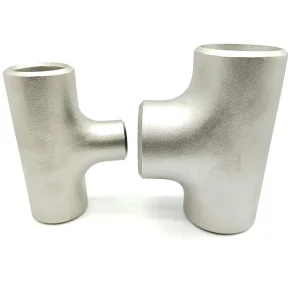
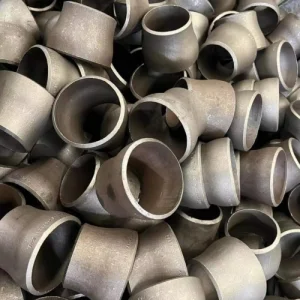
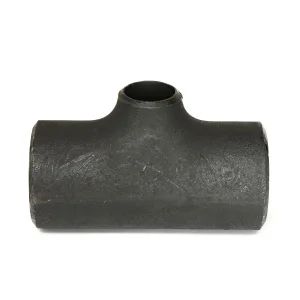
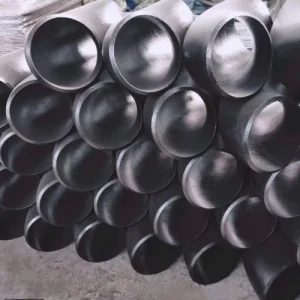
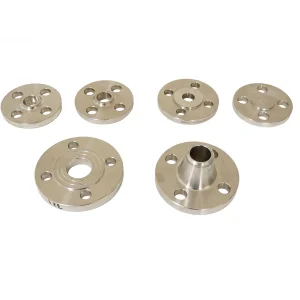
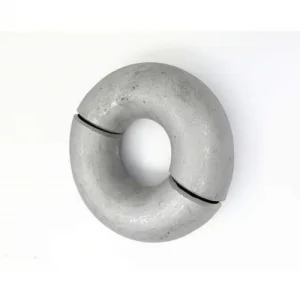
Discover our complete range of seamless stainless tees, carbon caps, concentric reducers, and heavy forged flange products engineered for demanding operating environments.
7. Comprehensive Procurement & Engineering FAQ (Q&A)
Technical guidance from senior metallurgical engineers to assist procurement managers and EPC project directors in evaluating pipe component specifications.