
Featured Industrial Pipeline & Fitting Components
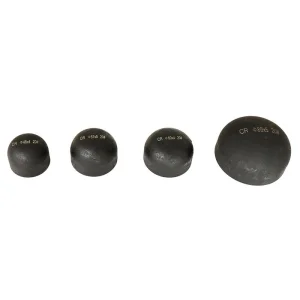
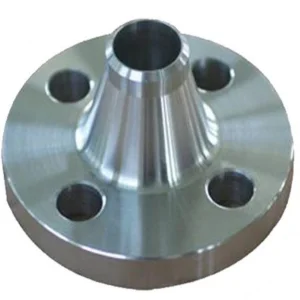
Direct factory offerings manufactured under rigorous ISO 9001 and ASME/ANSI quality protocols for global EPC projects.
Global B2B Sourcing Landscape for Flexible Waste Pipe Systems
The modern architectural and industrial drainage ecosystem is experiencing a dynamic structural pivot toward high-durability, adaptable fluid conveyance systems. Global procurement directors, civil engineering consultants, and commercial plumbing contractors are increasingly substituting traditional rigid soil and waste piping with engineered flexible waste pipe systems. This shift is driven by the imperative to reduce installation labor cycles, accommodate building settlement, mitigate vibrational fatigue from mechanical equipment, and resist aggressive thermal and chemical discharges.
Industrial procurement data reveals that international demand for flexible waste pipe solutions is fueled by three macro-trends: rapid urban high-rise densification requiring acoustic dampening in greywater vertical stacks, expansion of specialized chemical and pharmaceutical processing facilities demanding non-corrosive effluent lines, and the modernization of modular off-site building construction (prefabricated bathroom pods). Sourcing managers must navigate complex choices between material formulations—such as modified Polypropylene (PP-H/PP-R), Polyvinyl Chloride (PVC-U), synthetic elastomeric polymers (EPDM/NBR), and corrugated stainless steel flexible composites—to guarantee a 50+ year operational design life without catastrophic joint failure or chemical degradation.
Technical Roadmap: Polymer Physics & Co-Extrusion Engineering
Tier-1 flexible waste pipe factories utilize advanced multi-layer co-extrusion technology to combine contrasting physical properties into a unified conduit. The exterior structural layer typically features high-density corrugated geometry engineered for high ring stiffness (SN4 to SN16 according to ISO 9969), ensuring ground strain and axial flexure resistance. Concurrently, the interior liner is engineered as an ultra-smooth, low-friction bore (roughness coefficient $k \le 0.007 \text{ mm}$) to eliminate bio-film buildup, chemical scaling, and solid waste entrapment.
Polypropylene Homopolymer (PP-H)
Engineered for extreme thermal resistance (continuous exposure up to 95°C, intermittent spikes at 100°C). PP-H flexible conduits provide exceptional resistance to aggressive hot greywater containing commercial detergents, fats, and industrial solvents without softening or environmental stress cracking.
Co-Extruded Elastomeric Flex-Conduits
Incorporating synthetic EPDM/NBR rubber spirals bonded with impact-resistant rigid PVC ribs. This hybrid matrix delivers unmatched bend radii without kinking or lumen constriction, perfect for confined under-sink connections, sanitary fixtures, and commercial laundry apparatus.
Stainless Steel Braided Composites
Utilizing SUS304/316 outer wire braiding over corrugated PTFE or EPDM cores. Designed specifically for heavy-duty industrial waste applications, boiler blowdown streams, and high-pressure chemical washdown systems where vacuum collapse resistance is non-negotiable.
Engineering Material Matrix & Standard Performance Benchmarks
| Polymer / Composite Type | Continuous Temp. Range | Chemical Resistance (pH) | Flexural Fatigue Life | Standard Compliance | Primary Industrial Application |
|---|---|---|---|---|---|
| PP-H High-Flex Corrugated | -10°C to +95°C | pH 1 to pH 13 | > 500,000 Cycles | EN 1451-1, ISO 7671 | Commercial kitchens, commercial laundries, laboratories |
| Flex PVC with Rigid Spiral | -5°C to +65°C | pH 2 to pH 11 | > 250,000 Cycles | ASTM D2729, BS EN 1329 | HVAC condensate, sanitary traps, domestic waste lines |
| EPDM Wire-Reinforced Elastomer | -30°C to +120°C | pH 3 to pH 10 | > 1,000,000 Cycles | DIN 19560, ASME A112.18.2 | High-vibration pump discharges, heavy machinery effluent |
| SUS316 Braided PTFE Core | -50°C to +200°C | pH 0 to pH 14 | > 2,000,000 Cycles | ISO 10380, ASME B31.3 | Aggressive industrial acids, pharma process waste, steam blowdown |
System Solutions: Solving Complex Fluid Dynamics & Piping Challenges
Modern engineering projects present multidimensional constraints—ranging from micro-space limitations inside residential wall cavities to macro-scale soil displacement in civil infrastructure. High-quality flexible waste pipe exporters deliver customized solutions tailored to specific engineering hurdles:
1. HVAC Condensate & High-Height Greywater Attenuation
In high-rise residential towers, vertical greywater drop pipes experience high kinetic energy and structural vibration. Rigid PVC pipes frequently suffer from micro-fractures over time at solvent-welded joints due to building swaying and water hammer effect. Installing heavy-duty flexible expansion-compensating waste joints absorbs shear stresses, insulates structural sound ($<20\text{ dB}$ acoustic rating compliance), and prevents water damage.
2. Seismic Protection & Soil Settlement Expansion
Subterranean connections between building foundations and municipal main sewers are vulnerable to seismic ground movement and soil consolidation. Rigid pipes shear under transverse loading. Corrugated HDPE/PP flexible waste conduits with telescopic elastomeric push-fit socket connectors allow up to $\pm 15^\circ$ angular deflection and axial extension, ensuring uninterrupted flow during seismic disturbance.
3. Commercial Dishwasher & Acid-Effluent Waste Lines
Commercial kitchens and medical laboratories discharge corrosive, high-temperature waste streams laden with greases, alkalis, and acids. Specially formulated chemical-grade flexible PP-H hoses equipped with brass/stainless steel threaded adapters withstand rapid thermal cycling between 15°C cold rinse and 95°C hot wash phases without thermal shock failure or wall stress relaxation.
4. Prefabricated Off-Site Modular Bathroom Pods
With the global rise of industrialized off-site construction, modular bathroom pods require flexible plug-and-play waste piping connections that accommodate offset tolerances during site assembly. Multi-size extendable flexible waste connectors reduce installation times by up to 65% compared to manual rigid fitting cutting and solvent gluing.
Factory Auditing Standards & Quality Inspection Framework
As a premier supplier and exporter originating from world-class manufacturing zones (such as Cangzhou, Hebei, China), maintaining rigid Quality Assurance (QA) and Quality Control (QC) protocols is paramount for international trade compliance. Procurement officers must verify that manufacturing partners execute four tiers of batch testing before container loading:
Virgin Resin Verification
Melt Flow Index (MFI) testing and Fourier Transform Infrared Spectroscopy (FTIR) raw material analysis ensure zero re-grind contamination in high-pressure virgin resin batches.
Hydrostatic & Vacuum
100% inline pressure testing at $1.5\times$ maximum rated working pressure, combined with negative pressure vacuum collapse testing (vacuum down to -0.09 MPa).
Thermal Cycle Testing
Continuous hot/cold shock testing: 5,000 thermal cycles alternating between 93°C water and 15°C cold water under nominal mechanical tension per EN 1055 standards.
Dimensional Tolerances
Laser caliper wall thickness scanning along the entire profile to ensure wall uniformity, preventing localized wall thinning at outer corrugated peak bends.
Navigating International Standards: Regional Certification Matrix
Successful international trade of flexible waste pipes demands rigorous alignment with regional regulatory frameworks and plumbing codes. Leading exporters maintain comprehensive certification portfolios to facilitate smooth customs clearance and localized engineering approvals:
North America (UPC / cUPC / ASTM)
Compliance with ASME A112.18.2 / CSA B125.2 for tubular waste fittings and ASTM F405/F667 for heavy-duty flexible drainage tubing. Requires NSF 14 approval for plastic piping system components and IAPMO UPC listing.
European Union (CE / EN Standards)
Strict adherence to EN 1451-1 (Polypropylene waste discharge inside buildings) and EN 1329-1. CE marking under the Construction Products Regulation (CPR) along with reaction-to-fire classifications (B-s1, d0 according to EN 13501-1).
UK & Commonwealth (WRAS / WaterMark)
Compliance with BS EN 12056 gravity drainage systems inside buildings. Certification via WRAS (UK) for non-metallic components and WaterMark Level 1 certification (AS/NZS 1260) for Australia and New Zealand import markets.
Frequently Asked Questions: Technical Sourcing & Engineering Specs
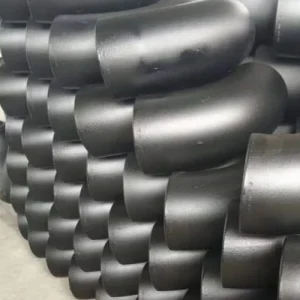
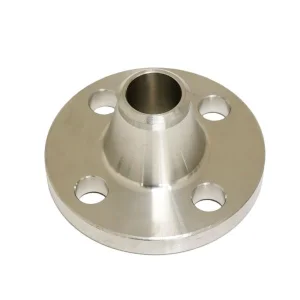
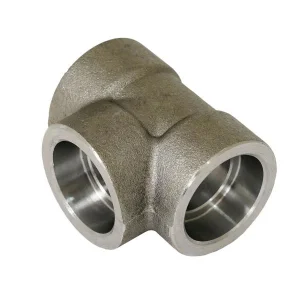
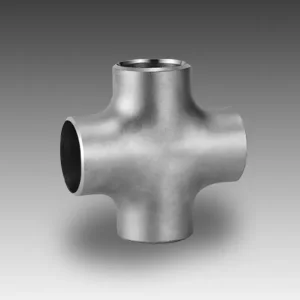
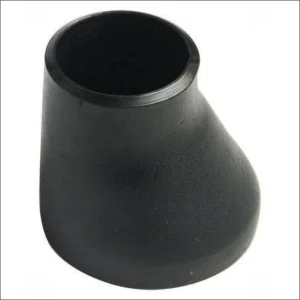
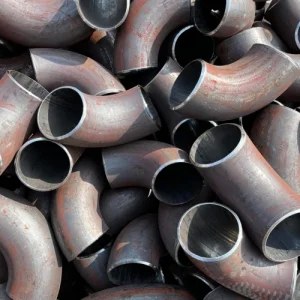
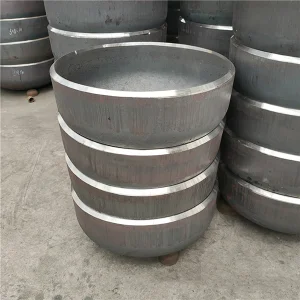
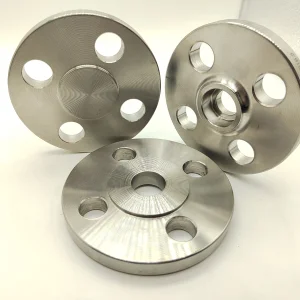
Industrial Elbows, Valves & Specialty Pipeline Assemblies
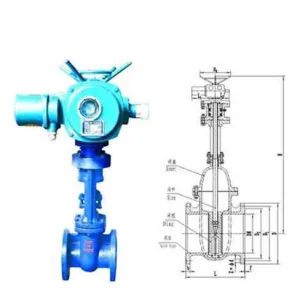
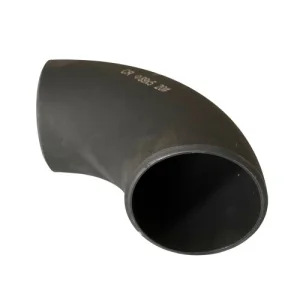
Explore our factory's extended supply matrix including carbon steel elbows, socket weld fittings, and industrial gate valves.
Next-Generation Innovation: Smart Piping & Sustainable Polymers
The global fluid conveyance industry is on the cusp of a technological renaissance. Leading flexible waste pipe factories are heavily investing in R&D to address decarbonization, circular economy mandates, and smart building monitoring:
Bio-Based & Recycled Polymeric Resins
Development of bio-attributed Polypropylene and ISCC PLUS-certified post-consumer recycled (PCR) polymer blends. These green formulations deliver identical tensile strength and chemical resistance while reducing carbon footprints by up to 45%.
Embedded IoT Leak & Flow Sensors
Integration of micro-printed conductive sensor strips along the flex-pipe inner lining. Connected to building management systems (BMS), these smart conduits offer real-time detection of micro-leaks, flow rate anomalies, and grease build-up before overflow events occur.
Advanced Flame-Retardant Fillers
Formulation of halogen-free flame retardant (HFFR) flexible conduits meeting strict UL94-V0 and EN 45545-2 railway/tunnel safety specs, ensuring zero toxic halogen gas evolution in the event of building fires.