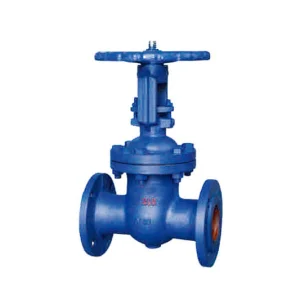
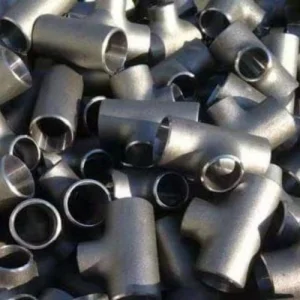
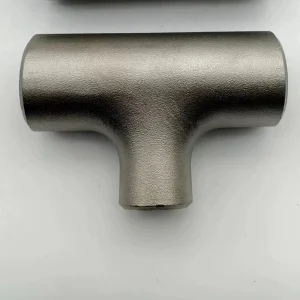
Featured High-Precision Pipeline Components
Engineered to international specifications (ASME, DIN, EN, GOST, JIS) with full heat-traceability and certified non-destructive evaluation.
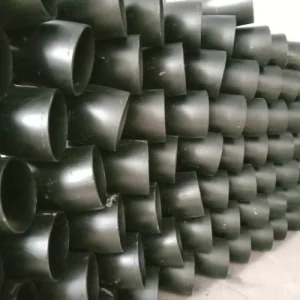
Best 1/2 Inch To 24 Inch Carbon Steel Elbow Seamless CS Pipe Fitting Factory, Exporters
View Product Details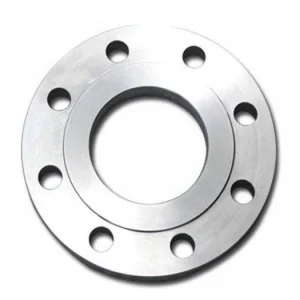
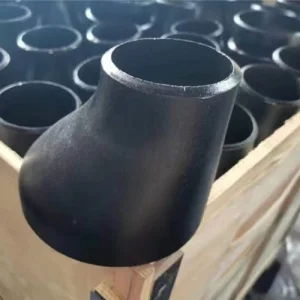
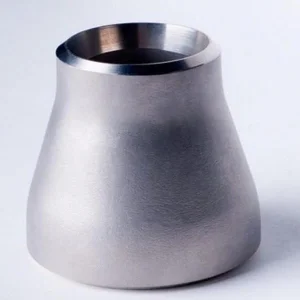
Buy Carbon Steel Elbow Black Mild Steel St20 Pipe Fittings Reducer Eccentric Concentric Reducer Factory, Exporters
View Product Details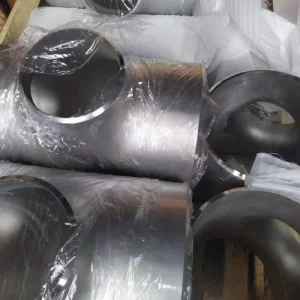
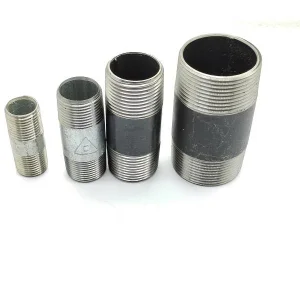
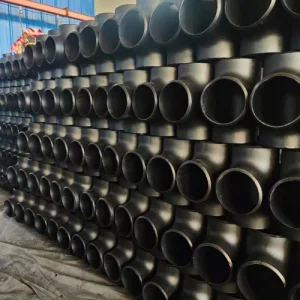
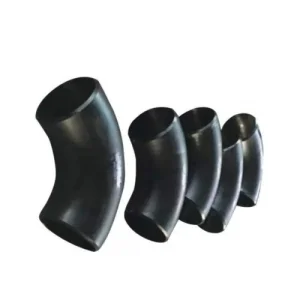
The Paradigm Shift in High-Quality Flange Manufacturing & Services
In modern industrial process engineering, the integrity of bolted flange joints remains a primary factor governing plant safety, environmental compliance, and operational uptime. Flanges are far more than structural connection points; they are dynamically stressed mechanical interfaces designed to withstand severe thermal cycling, extreme hydrostatic pressures, corrosive chemical media, and external piping loads. As EPC (Engineering, Procurement, and Construction) contractors navigate increasingly harsh operating environments—from deepwater subsea oilfields to ultra-high-temperature hydrogen synthesis facilities—the demand for advanced metallurgical reliability and precision engineering in flange production has surged.
Technical Insight: A failure in a flange joint rarely stems from single-parameter pressure exceedance. Instead, over 78% of catastrophic joint leaks are attributed to micro-yield fatigue, non-uniform bolt tension relaxation, flange face warping due to sub-standard forging stress relief, or stress corrosion cracking (SCC) along grain boundaries.
This comprehensive technical whitepaper analyzes the macro-industrial shift toward high-integrity flange manufacturing. It serves as an authoritative procurement guide for global EPC firms, detailing material selection matrices, non-destructive testing (NDT) mandates, advanced forging thermodynamics, and international compliance frameworks necessary to mitigate total cost of ownership (TCO) across complex asset lifecycles.
Global Industry Trends Shaping Flange Engineering
How energy transition, smart monitoring, and advanced metallurgy are driving next-generation flange design.
Thermomechanical Forging (TMCP)
Transitioning from traditional open-die forging to automated Closed-Die Thermomechanical Controlled Processing (TMCP). This refines grain structure to ASTM No. 7 or finer, significantly increasing yield strength and impact toughness at sub-zero temperatures down to -196°C.
Smart Flanges & IIoT Integration
Deployment of intelligent flanges embedded with fiber-optic strain gauges and piezo-resistive sensors. These components provide real-time telemetry on bolt tension, gasket stress distribution, and temperature gradients during plant startup and shutdown cycles.
Cladding & CRA Overlay Technologies
To reduce material expenditure in corrosive service (e.g., wet H2S, high chloride), manufacturers are overlaying low-alloy carbon steel flanges (A105/A350 LF2) with 3mm to 5mm of Inconel 625 or Hastelloy C276 using automated electroslag welding (ESW).
Comprehensive Material & Standard Standardization Benchmark
Navigating global procurement requires a seamless alignment between American (ASME/ASTM), European (EN/DIN), and Asian (JIS/GB) standard frameworks. Below is an engineering benchmark table comparing common material grades, pressure classes, and mechanical envelope requirements for heavy-duty flange applications.
| Material Grade / Specification | Equivalent Standards | Tensile / Yield Strength (MPa) | Design Temperature Envelope | Primary Application Domain |
|---|---|---|---|---|
| Carbon Steel: ASTM A105 | EN 1092-1 C22.8 / P250GH / C21 | ≥ 485 / ≥ 250 | -29°C to 425°C | General ambient to elevated pressure refining, power plants, utility steam lines. |
| Low-Temp Carbon: ASTM A350 LF2 | EN 10222-3 13MnNi6-3 / S355NL | 485–655 / ≥ 250 | -46°C to 345°C | Cryogenic gas storage, arctic pipelines, LPG transport, cold-climate processing. |
| High-Temp Alloy: ASTM A182 F91 | EN 10222-2 10CrMo9-10 / X10CrMoVNb9-1 | ≥ 585 / ≥ 415 | -29°C to 650°C | Supercritical steam boilers, power station main steam piping, hydrocracking units. |
| Austenitic Stainless: A182 F316L | EN 1092-1 X2CrNiMo17-12-2 (1.4404) | ≥ 485 / ≥ 170 | -196°C to 450°C | Chemical processing, pharmaceutical purity lines, marine corrosive environment. |
| Duplex Stainless: A182 F51 / S31803 | EN 10222-5 X2CrNiMoN22-5-3 (1.4462) | ≥ 620 / ≥ 450 | -50°C to 280°C | Offshore oil & gas topsides, desalination plants, high-chloride brine systems. |
| Nickel Alloy: Inconel 625 (UNS N06625) | DIN 2.4856 / EN NiCr22Mo9Nb | ≥ 830 / ≥ 415 | -196°C to 1000°C | Severe acid gas extraction (sour gas), nuclear reactors, aerospace exhaust lines. |
Precision Flange Facing & Sealing Micro-Geometries
Achieving leak-tight joint sealability depends directly on selecting the proper flange facing finish. Flange factory processes must adhere to strict surface roughness ($R_a$) parameters depending on the gasket material used:
- Raised Face (RF) & Flat Face (FF): Machined with a serrated concentric or spiral groove finish per ASME B16.5 ($R_a = 3.2\mu m$ to $6.3\mu m$ / 125 to 250 micro-inches). This micro-profile grips soft gaskets (graphite, PTFE) under bolt tension to prevent radial cold flow.
- Ring Type Joint (RTJ): Precision metallic ring grooves machined to high tolerances ($R_a \le 1.6\mu m$). Designed for high-pressure service (Class 600 to 2500+), metallic octagonal or oval gaskets wedge into the groove to create a metal-to-metal high-integrity seal.
- Tongue & Groove (T&G) / Male & Female (M&F): Matched interlocking joint configurations that prevent gasket blowouts in hazardous, volatile chemical lines.
Macro Industry Solutions & Field Engineering
Tailored flange manufacturing protocols engineered to address sector-specific mechanical and environmental challenges.
1. Deepwater Offshore & Subsea Infrastructure
Subsea pipelines operating at depths exceeding 2,000 meters face extreme external hydrostatic compression combined with high internal fluid pressure. Specialized Compact Flanges (per NCAP / ISO 27509) and Swivel Ring Flanges are specified. Manufacturing protocols demand 100% volumetric Ultrasonic Testing (UT), vacuum degassed forged steel, and Charpy V-notch impact toughness verification down to -50°C to guarantee structural resistance against wave-induced cyclic bending moments.
2. Supercritical Power & Hydrogen Economy
Hydrogen gas possess high molecular permeability, making standard flanged connections susceptible to micro-fugitive emissions. High-quality flange factories utilize ultra-smooth face finishes ($R_a < 0.8\mu m$) coupled with Spirally Wound Gaskets with Inner Rings or metal-to-metal sealing profiles. For ultra-high temperature steam service (600°C+), heat treatment operations mandate precise Normalizing and Tempering (N+T) to prevent creep deformation over a 30-year design life.
3. Severe Service Petrochemical & Sour Gas Processing
Handling fluids enriched with Hydrogen Sulfide ($H_2S$) requires strict adherence to NACE MR0175 / ISO 15156 standards. Flange factories must strictly control chemistry—limiting Sulfur ($S \le 0.005\%$) and Phosphorus ($P \le 0.010\%$)—and perform hardness testing (HRC $\le 22$) to eliminate susceptibility to Sulfide Stress Cracking (SSC) and Hydrogen-Induced Cracking (HIC).
4. Global EPC Procurement Optimization Strategies
Large-scale industrial projects demand seamless integration between flange factories and procurement management platforms. High-performing suppliers deliver value through full digital trace-ability: EN 10204 3.1 / 3.2 Material Test Reports (MTRs), 3D laser-scanned dimensional verification, customized export packaging, and vendor-managed inventory (VMI) frameworks that mitigate supply chain bottlenecks.
Localization Support, Quality Assurance & Regulatory Compliance
Deploying piping components into global markets requires complete compliance with strict international codes, local safety mandates, and third-party inspection standards. Flange manufacturing quality assurance encompasses a multi-layered verification protocol from raw billet sourcing to final shipment.
Non-Destructive Testing (NDT)
100% Volumetric Ultrasonic Testing (UT) per ASTM A388 prevents internal voids or forge bursts. Surface defects are identified via Magnetic Particle Inspection (MPI) or Liquid Penetrant Inspection (LPI).
Positive Material ID (PMI)
X-ray Fluorescence (XRF) handheld analyzers verify chemical composition on every single forged flange prior to dispatch, eliminating potential material mix-ups in high-alloy and stainless projects.
Regulatory Certifications
Full compliance with Pressure Equipment Directive (PED 2014/68/EU), AD 2000-Merkblatt W0, CRN (Canadian Registration Numbers), and API 6A / 17D subsea standards.
Traceability & Mill Test Certificates (EN 10204 3.1 / 3.2)
Every industrial flange must carry permanent hard-stamped heat-trace markings (Heat Number, Size, Class, Material Grade, Standard). Digital integration guarantees that MTRs provide exact chemical ladle analysis, mechanical tensile/yield testing, Charpy V-notch energy values, hardness levels, and heat treatment log charts audited by independent third-party inspection agencies (e.g., DNV, Lloyd's Register, TÜV, Bureau Veritas).
Technical Roadmap & Future Outlook (2025–2035)
Strategic manufacturing initiatives advancing the frontier of industrial pipeline integrity.
Automated Robotic Forging & AI Inspection
Implementation of 6-axis robotic forging manipulators paired with high-speed AI optical vision systems to detect sub-millimeter surface micro-cracks in real-time during hot forging.
Decarbonized Green Steel Forging
Transitioning heat-treatment and billet-heating furnaces from fossil natural gas to electric induction and green hydrogen-powered combustion burners, cutting Scope 1 carbon footprint by up to 65%.
Hybrid Additive Forging Manufacturing
Combining traditional ring-rolling forging processes with Directed Energy Deposition (DED) 3D metal printing to build complex internal cooling channels and custom-contoured sealing facings.
Frequently Asked Questions (Engineering Q&A)
Technical solutions to common flange selection, installation, and procurement challenges.
What are the key structural differences between Weld Neck (WN) and Slip-On (SO) flanges?
How does NACE MR0175 compliance affect material selection and heat treatment for steel flanges?
What is the difference between ASME B16.5 and ASME B16.47 flange standards?
Why is Charpy V-Notch (CVN) impact testing critical for low-temperature flange applications?
What flange facing profile should be specified for high-temperature and high-pressure subsea lines?
How do high-quality flange factories guarantee dimensional tolerance compliance on giant ring forgings?
What documentation should be required in a complete Vendor Documentation Requirements List (VDRL)?
What steps are involved in flange face protection during international export freight shipment?
Industrial Steel Fittings, Valves & Custom Flanges
Browse our integrated manufacturing inventory for heavy-duty process systems.
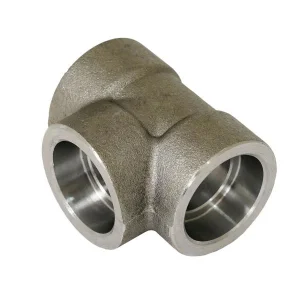
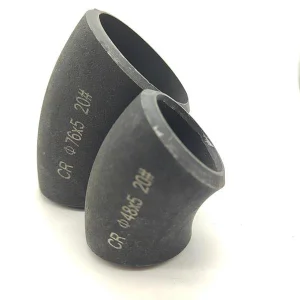
Famous Pipe Elbow Carbon Steel Elbow 45 and 90 Degree Elbow Manufacturers, Products
View Product Details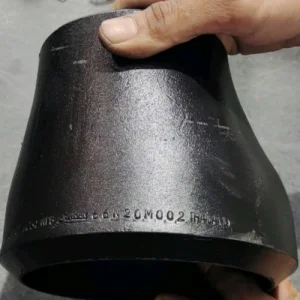
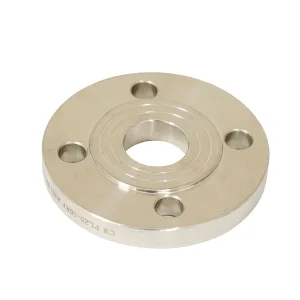
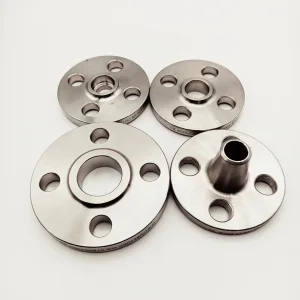
China ANSI B16.5/DIN/En1092/GOST/BS Forged/Forging Fitting Carbon/Stainless Steel Pn10/16 Weld neck /Blind/Slip on/Flat Plate/Socket Pipe Flange Manufacturer, Products
View Product Details