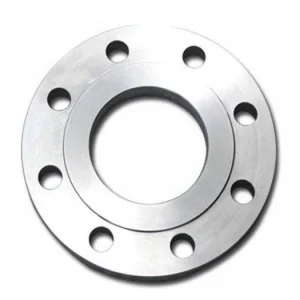
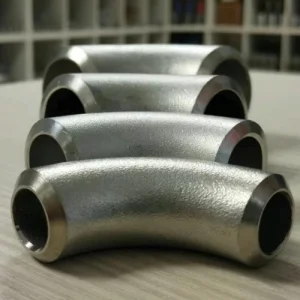
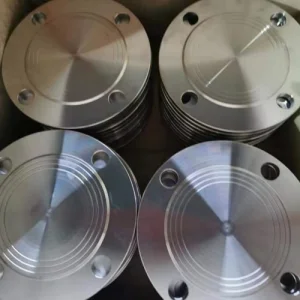
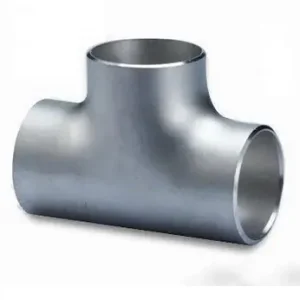
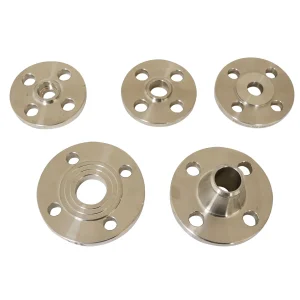
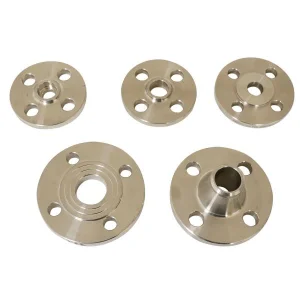
Featured Industrial Piping, Fittings & Pre-Insulated Hardware
Explore our factory-direct, high-precision carbon steel, stainless steel, and alloy pipeline components engineered to pair seamlessly with high-temperature fiberglass insulation systems.
Global Energy Economics & Decarbonization Pressures in Heavy Piping Networks
In the modern industrial landscape, thermal efficiency is no longer merely an operational expense metric; it is a core cornerstone of enterprise decarbonization, regulatory compliance, and environmental stewardship. Operating commercial and industrial piping infrastructure without high-performance thermal insulation incurs staggering financial and energetic losses.
Industrial piping systems spanning petrochemical refineries, thermal power generating plants, pharmaceutical chemical synthesis facilities, and district heating/cooling networks carry fluids under extreme thermal gradients—ranging from sub-zero cryogenic fluids at -180°C (-292°F) to superheated steam exceeding 540°C (1000°F). According to global energy audit metrics, uninsulated or poorly insulated high-temperature process lines lose upwards of 85% of their initial thermal energy through parasitic radiative and convective heat transfer to the ambient surroundings.
As international frameworks such as the EU Energy Efficiency Directive, ISO 50001 Energy Management Systems, and US DOE Industrial Decarbonization Mandates tighten, EPC contractors and plant operators require high-density, low-conductivity fiberglass pipe insulation systems that provide verifiable payback periods—frequently under 8 to 12 months of operation.
Fiberglass Pipe Insulation: Material Science, Thermal Kinetics & Standard Compliance
Fiberglass (rigid molded mineral wool / glass fiber) pipe insulation is engineered by bonding inorganic glass fibers together using a thermosetting resin binder, pre-formed into heavy-density, split-hinged cylindrical sections. This section breaks down the foundational physics, material chemistry, and standardized testing regimens that govern premium insulation manufacturing.
Thermal Conductivity ($\lambda$) Mechanics
Fiberglass insulation works by trapping millions of microscopic, stagnant air pockets within its high-density glass fiber matrix. Because static air possesses a remarkably low thermal conductivity ($\lambda \approx 0.026 \text{ W/m}\cdot\text{K}$), heat transfer via conduction is minimized. Radiant heat transfer is scattered by the ultra-fine fiber orientation, preventing energy migration across the pipe wall.
ASTM C547 Compliance Rigor
Our fiberglass pipe insulation products meet or exceed ASTM C547 (Standard Specification for Mineral Fiber Pipe Insulation) for Types I, II, III, and IV. This ensures rigid dimensional stability, minimal linear shrinkage (<2% at maximum rated temperature), zero toxic outgassing, and strict density controls ranging from $32 \text{ kg/m}^3$ to $96 \text{ kg/m}^3$.
Vapor Retarder Jacketing (ASJ & SSL)
To prevent moisture ingress and condensation—the primary catalyst for thermal performance decay—our insulation is factory-laminated with All-Service Jacketing (ASJ) featuring a Self-Sealing Lap (SSL). Composed of aluminum foil, glass scrim, and white kraft paper, ASJ satisfies ASTM C1136 Type I-IV vapor barrier criteria (perm rating <0.02 perms).
Technical Parameter Matrix: Fiberglass Pipe Insulation Specifications
The following technical data illustrates the material characteristics of our standardized heavy-density pre-formed fiberglass pipe insulation line:
| Performance Property | Standard Test Method | Specified Value / Criteria | Engineering Significance |
|---|---|---|---|
| Operating Temp Limit | ASTM C411 / C447 | -18°C to 540°C (0°F to 1000°F) | Suitable for hot water, steam, and industrial chemical process lines. |
| Thermal Conductivity ($\lambda$) | ASTM C335 / C177 | 0.032 W/m·K at 25°C (0.22 Btu·in/hr·ft²·°F) | Delivers maximum energy retention with minimal wall thickness. |
| Surface Burning Characteristics | ASTM E84 / UL 723 | Flame Spread Index ≤ 25, Smoke Developed ≤ 50 | Meets strict Class A commercial building & industrial fire codes. |
| Water Vapor Permeance | ASTM E96 (Desiccant Method) | ≤ 0.02 Perms (with Factory ASJ Facing) | Prevents moisture migration, condensation, and mold formation. |
| Corrosivity to Metals | ASTM C795 / C692 / C871 | Passes (Less than 5 ppm leachable chlorides) | Guarantees zero stress corrosion cracking (SCC) on stainless steel pipes. |
| Compressive Strength | ASTM C165 | ≥ 500 lbs/ft² (24 kPa) at 10% deformation | Resists mechanical indentation during routine plant maintenance walks. |
Coordinating Pipe Fittings, Flanges & Pre-Formed Thermal Jackets
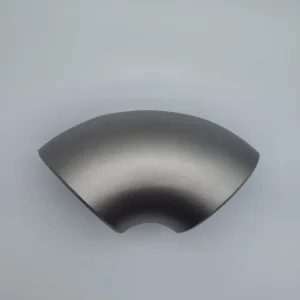
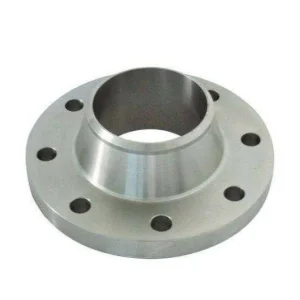
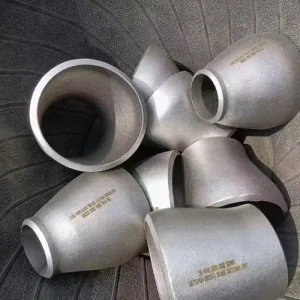
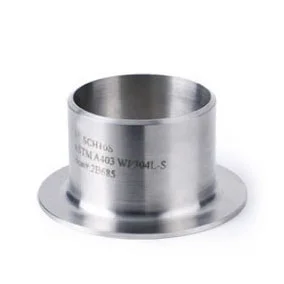
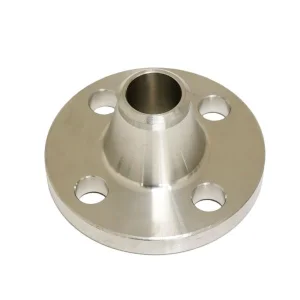
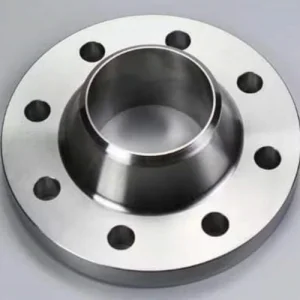
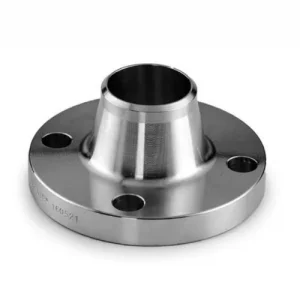
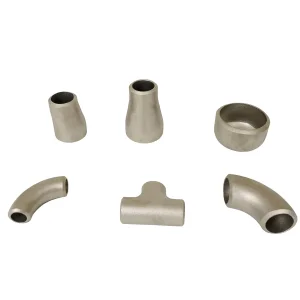
A common vulnerability in heavy industrial process plants is the mismatch between raw piping components (elbows, tees, reducers, weld neck flanges) and field-applied insulation systems. Unshielded pipe joints or poorly fitted insulation elbows create severe thermal bridges and accelerate Corrosion Under Insulation (CUI).
As an integrated pipeline equipment manufacturer and insulation supplier, Cangrun Pipeline Equipment bridges this gap. Our pre-formed fiberglass elbow halves, mitered fitting covers, and flange jackets are manufactured precisely to match ASME B16.9 fitting dimensions and ASME B16.5 flange profiles.
Mitigating Corrosion Under Insulation (CUI)
CUI is a catastrophic failure mode responsible for billions of dollars in annual chemical refinery maintenance. It occurs when entrapped water, halides, and condensation corrode carbon steel or stainless steel beneath wet insulation.
- Hydrophobic Fibers: Our fiberglass insulation is treated with silicone/paraffinic hydrophobic agents to minimize water absorption.
- Chemically Neutral Matrix: Extremely low leachable chloride, fluoride, and silicate levels safeguard ASTM A312 stainless steel lines from pitting.
- Vapor Sealed Laps: Double-pressure sensitive SSL adhesive lap tapes form an impermeable continuous barrier.
Localized Application Scenarios Across Global Industrial Sectors
Engineered to excel in demanding ambient conditions, our fiberglass pipe insulation systems and matching piping components are deployed worldwide across critical industrial domains.
Petrochemical Refineries & Steam Cracking
High-pressure steam distribution mains, hydrocarbon transfer lines, and process reboilers require stable thermal maintenance up to 500°C. Heavy-density molded fiberglass pipe insulation prevents thermal flaring, reduces steam condensation, and maintains process fluid viscosity across multi-kilometer pipe racks.
Thermal & Combined-Cycle Power Generation
Superheated steam piping connecting boilers, turbines, and heat recovery steam generators (HRSG) operates under severe vibration and thermal cycling. Our ASTM C547 Type IV pre-formed fiberglass insulation resists thermal shock and mechanical degradation under intense turbine hall conditions.
Commercial HVAC & District Cooling/Heating
In commercial building mechanical rooms and municipal district cooling networks, dual-temperature lines require strict anti-sweat condensation protection. Factory-applied ASJ jacketing ensures that chilled water lines (4°C to 10°C) remain bone-dry even in 95% relative humidity environments.
Pharmaceutical & Fine Chemical Processing
Cleanroom processing facilities demand non-dusting, non-outgassing insulation systems. Our high-purity fiberglass insulation enveloped in smooth PVC or stainless steel jacketing enables rigorous washdowns, zero fiber shedding, and strict adherence to FDA/GMP sanitary standards.
Marine & Offshore Piping Infrastructure
Offshore production platforms and commercial marine vessels face aggressive salt spray corrosion and fire hazard regulations. Certified to IMO FTP Code standards, our non-combustible fiberglass insulation with heavy aluminum cladding delivers maximum thermal efficiency and structural integrity.
Full Traceability, Global Certifications & Engineering Support
At Cangrun Pipeline Equipment Co., Ltd., quality control is embedded at every stage—from raw mineral batch selection to final jacket lamination and packaging.
Every shipment is backed by EN 10204 3.1 Inspection Certificates, detailed Material Test Reports (MTRs), and rigorous third-party lab testing (SGS, TUV, BV) ensuring complete compliance with client MTO (Material Take-Off) specifications.
Localization & Project Logistics Services
- Custom Dimensional Molding: Prefabricated insulation shells tailored to non-standard outer diameters (OD), heavy-wall SCH160/XXS pipe runs, and jacketed piping assemblies.
- Export Containerization: Moisture-sealed vacuum-shrunk palletizing, heavy-duty wooden crate packing, and sea-freight freight optimization to prevent crushing during international transit.
- Field Engineering Support: Direct consultation with EPC project managers, heat-loss calculation assistance per ISO 12241 standard, and field installation training.
Technology Roadmap: Next-Generation Smart & Sustainable Insulation (2025–2035)
As industrial thermal management evolves toward Industry 4.0 integration and zero-carbon targets, our R&D division is pioneering advanced insulation technologies.
Bio-Based Resins & Zero Formaldehyde Binders
Transitioning from traditional phenol-formaldehyde binders to 100% plant-based bio-resins, reducing embodied carbon by 35% while eliminating volatile organic compound (VOC) off-gassing during high-temperature commissioning.
Smart CUI Sensing & DTS Integration
Embedding continuous Distributed Temperature Sensing (DTS) fiber optic lines and humidity sensors beneath the jacket layer, providing real-time telemetry to central SCADA systems for proactive moisture detection.
Aerogel-Fiberglass Hybrid Composite Matrices
Combining silica aerogel infill with flexible high-density glass fibers to achieve ultra-low thermal conductivities ($\lambda \le 0.018 \text{ W/m}\cdot\text{K}$), reducing required insulation wall thickness by up to 50% in space-restricted pipe racks.
Frequently Asked Engineering & Procurement Questions
Expert answers to critical technical questions regarding fiberglass pipe insulation selection, installation, and performance metrics.
High-Performance Pipe Fittings, Flanges & Accessories
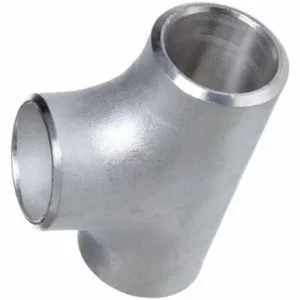
Explore our complete catalog of industrial flanges, specialized weld tees, forged blind flanges, and pipe elbows designed for high-stress industrial piping networks.