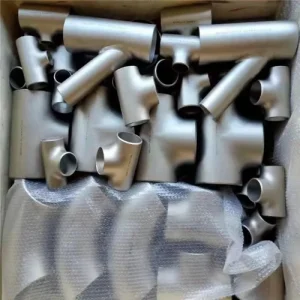
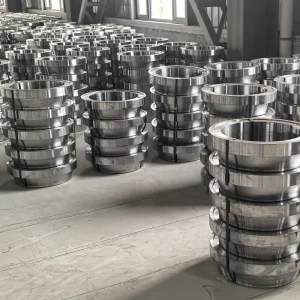
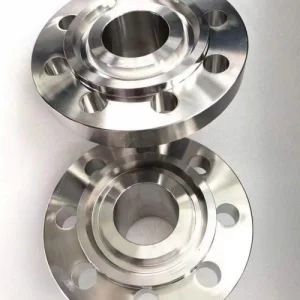
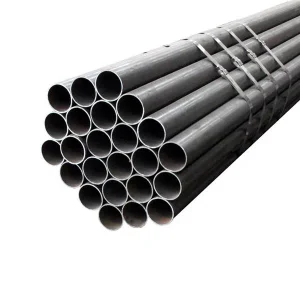
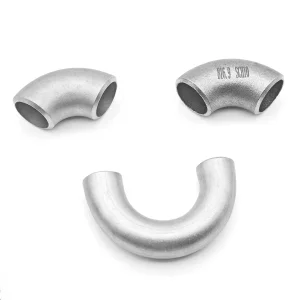
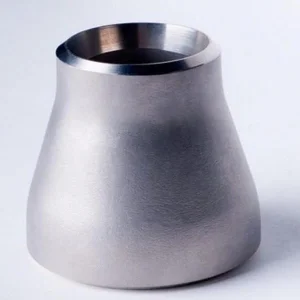
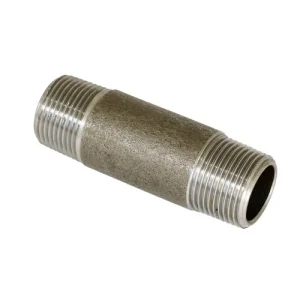
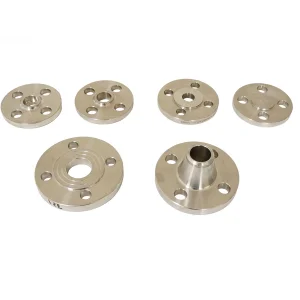
Featured Piping & Fitting Portfolio
Explore initial technical specifications and standardized supply configurations for industrial and commercial fluid systems.
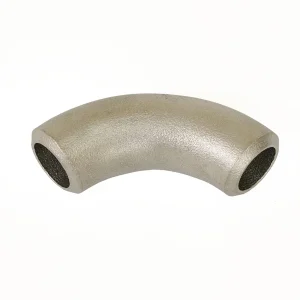
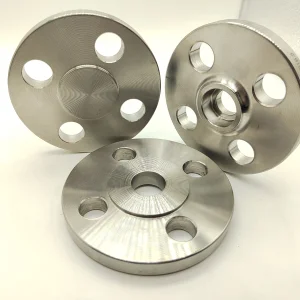
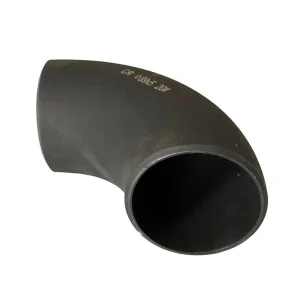
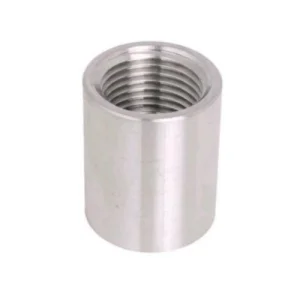
Global Commercial & Industrial Status of Brass Hose Fittings
Macroeconomic dynamics, supply chain integration, and market valuation framework across international fluid conveyance markets.
Global Macro Market Dynamics
The global fluid conveyance infrastructure relies heavily on brass hose fittings due to the material's structural integrity, natural corrosion resistance, high machinability, and superior anti-galling properties compared to ferrous alternatives. Modern industrial logistics, municipal water expansion projects, agricultural automation, and automotive manufacturing drive steady demand for high-integrity brass couplings, barbs, quick-disconnects, and threaded adapters.
Market dynamics are increasingly shaped by raw material copper indices (LME), strict lead-content regulations (such as NSF/ANSI 61 and NSF 372 in North America, and RoHS III directives in the EU), and a shift toward unified industrial supply chains where single-source manufacturers furnish fully matched piping, fitting, and valve assemblies.
Industrial Cluster & Supply Chain Synergy
Manufacturing clusters—most notably centered in Hebei Province, China (such as the Cangzhou pipeline hub)—have redefined regional export efficiency. By integrating forging workshops, CNC finishing labs, automatic hot-extrusion lines, and metallurgical testing units into single ecosystems, suppliers achieve unprecedented economies of scale.
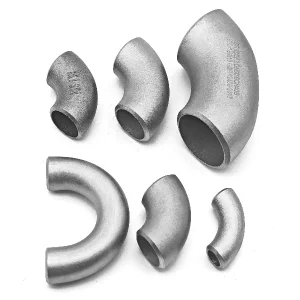
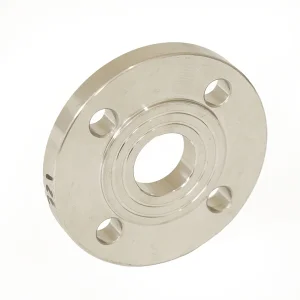
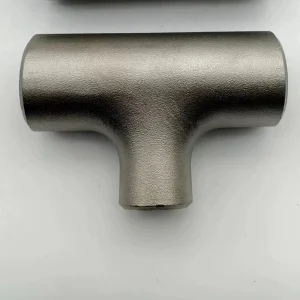
This industrial density enables tier-1 engineering procurement contractors (EPCs) to source comprehensive material packages, spanning standard industrial brass barbs to specialized high-pressure stainless steel flanges and butt-weld components, minimizing transactional friction and cross-vendor tolerance mismatches.
Engineering Specifications & B2B Commercial Pricelist Matrix
Comprehensive technical metrics, alloy selection criteria, and procurement costing benchmarks for industrial buyers.
Selecting the appropriate brass hose fitting requires a rigorous evaluation of chemical composition, pressure tolerance, thread standard compatibility, and manufacturing methods. Standard commercial brass alloys such as C36000 (Free-Cutting Brass) deliver exceptional machining efficiency, whereas Dezincification-Resistant (DZR) brass alloys like CW602N (CZ132) or C35300 are mandatory in environments subject to soft, acidic, or high-chlorine water conditions to prevent selective leaching and structural failure.
| Fitting Category | Material Standard | Thread Configuration | Working Pressure (PSI) | Temp. Range (°C) | Estimated B2B Price Range (USD/Unit) |
|---|---|---|---|---|---|
| Standard Hose Barb to Male NPT | C36000 / CW617N | 1/4" to 1" NPT / BSPT | 150 – 300 PSI | -40°C to +120°C | $0.45 – $2.20 |
| Heavy-Duty Push-Lock Coupling | DZR Brass (CW602N) | 1/8" to 3/4" Barb | 250 – 400 PSI | -20°C to +90°C | $1.15 – $4.50 |
| Industrial Quick Disconnect (Air/Water) | Low-Lead Brass (C37700) | Universal Quick-Connect | 300 – 500 PSI | -40°C to +150°C | $3.80 – $12.50 |
| Forged Brass Swivel Joint Fittings | Forged CW617N | BSP / NPT Swivel Nut | 600 PSI Max | -30°C to +130°C | $2.40 – $8.90 |
| High-Pressure Hydraulic Hose Nipple | Deoxidized Brass / Custom Alloy | JIC 37° / DIN 2353 | 1000 – 2500 PSI | -50°C to +180°C | $5.20 – $18.00 |
Metallurgical Composition
Industrial brass hose fittings are primarily copper-zinc solid solutions. Lead (1.5% - 3.5%) is added to alloys like C36000 to act as a internal microscopic lubricant and chip breaker during high-speed CNC turning operations. In potable water applications, lead content is strictly capped below 0.25% (weighted average) to comply with international health standards.
Thread Calibration Standards
Proper fluid containment depends on correct thread mating. NPT (National Pipe Taper) relies on thread deformation for sealing, requiring PTFE tape or anaerobic sealant. BSPP (British Standard Pipe Parallel) and BSPT (Tapered) utilize O-ring face seals or bonded washers to achieve zero-leakage performance under variable thermal cycling.
Hydrostatic & Mechanical Testing
High-tier manufacturers subject production samples to burst pressure tests up to 4 times the nominal rating, pressure-pulsation cycling, salt spray corrosion testing (ASTM B117 exceeding 96 hours), and pull-off retention testing to guarantee hose-to-barb mechanical connection stability under extreme vibration.
Localized Application Scenarios & Industrial Deployment
Analyzing cross-sector operational parameters across North American, European, and Asia-Pacific markets.
North American Commercial HVAC & Plumbing
In municipal and residential infrastructure across the US and Canada, brass hose fittings are specified under ASTM B584 and ASME B16.15 guidelines. Local plumbing codes mandate low-lead brass fittings certified to NSF/ANSI 61 for potable water hookups, swamp coolers, and commercial boiler feed lines. The prevalence of NPT threading requires high-precision thread cutting to handle thermal expansions without micro-fracturing surrounding manifolds.
European Industrial Automation & Fluid Power
European markets (Germany, Italy, France) prioritize metric and BSP thread standards governed by DIN 2999 and ISO 228-1. Heavy machinery, automated assembly lines, and pneumatic control units utilize nickel-plated brass hose couplings for enhanced chemical abrasion resistance and aesthetic integration. DZR brass is strictly enforced in regional water networks to resist aggressive soft-water corrosion.
Asia-Pacific Agriculture & Maritime Logistics
In rapidly expanding industrial sectors across Southeast Asia, China, and Australia, brass hose fittings are central to high-pressure agricultural irrigation, chemical sprayers, and marine engine cooling loops. Marine applications utilize naval brass alloys (such as C46400, containing approximately 1% tin) to prevent dezincification and stress corrosion cracking caused by saltwater exposure.
Technical Roadmap & Manufacturing Outlook (2025–2035)
Pioneering advancements in lead-free metallurgy, smart fitting integration, and precision cold-forging methodologies.
1. Next-Generation Lead-Free Alloys
Regulatory pressures across global jurisdictions are driving complete elimination of lead from copper-based alloys. Alternative elements such as Bismuth (Bi), Silicon (Si), and Tellurium (Te) are being refined to replicate the chip-breaking and self-lubricating characteristics of leaded brass without altering tensile strength or mechanical ductility. Silicon-formulated brass alloys (e.g., C69300 Eco Brass) deliver equal or superior yield strength compared to standard structural steels, opening new possibilities for high-pressure hydraulic hose applications.
2. Precision Forging & Zero-Waste CNC Production
Traditional sand casting is being phased out in favor of multi-station hot die forging combined with high-speed, multi-axis automated CNC transfer lines. Hot forging eliminates internal porosity, gas inclusions, and micro-shrinkage voids, ensuring structural homogeneity. Modern green-manufacturing initiatives integrate real-time brass chip recasting loops, reducing raw material energy consumption by up to 40% per ton of finished fitting output.
3. Surface Treatment Innovation: Nano-Coatings
To extend operational life in aggressive chemical environments, standard electro-nickel plating is giving way to advanced Physical Vapor Deposition (PVD) coatings and electroless nickel-phosphorus (ENP) treatments. These micro-thin barrier layers provide exceptional hardness, reduced friction coefficients during hose insertion, and superior resistance to sulfide and chloride-induced pitting.
4. IoT-Enabled "Smart" Hose Assemblies
The integration of Industry 4.0 paradigms into fluid management has birthed intelligent fitting interfaces. Embedded micro-RFID tags, pressure micro-sensors, and leak-detection piezoresistive rings integrated directly within specialized brass couplings allow automated monitoring of line pressure drops, fluid temperature spikes, and mechanical joint disengagement in critical industrial processing plants.
Enterprise Macro Solutions & Procurement Quality Assurance
A systematic framework for global buyers to mitigate procurement risk and ensure complete system reliability.
Material Test Report (MTR) Traceability
Industrial procurement requires complete metallurgical transparency. Every production heat must be certified under EN 10204 3.1 standards, verified by optical emission spectrometry (OES) to confirm alloy chemical balance, tensile yield strength, elongation percentage, and hardness metrics prior to shipment.
Cross-Standard Dimensional Mating
EPC contractors frequently face integration bottlenecks when joining global components. Providing consolidated packages that feature transitional adapters (e.g., BSPT male to NPT female, or Metric thread to Hose Barb) ensures seamless mechanical connectivity across multi-sourced machinery without risking cross-threading.
Supply Chain Continuity & Buffering
Fluctuations in global freight schedules necessitate strategic buffer stocking. Top manufacturing hubs offer integrated warehousing, customs-ready ocean/air packaging, and consolidated vessel booking to guard against port congestion and localized logistics bottlenecks.
Frequently Asked Questions (Technical Procurement FAQ)
Direct responses to critical engineering, manufacturing, and sourcing inquiries.
Extended Industrial Piping & Fitting Inventory
Complete your engineering procurement package with high-performance steel fittings, flanges, and nipples.