
Featured Industrial Pipe Fittings & Flanges Catalog
Direct factory quotes and immediate export dispatch for seamless/welded piping components, heavy-wall steel elbows, forged flanges, and high-pressure valves.
Technical Whitepaper: Black Iron Pipe Metallurgy, Manufacturing & Engineering Standards
An authoritative engineering breakdown of dark iron oxide scale carbon steel piping systems, seamless vs. ERW manufacturing mechanics, and global structural compliance criteria.
Black Iron Pipe (commonly referred to as black steel pipe or ungalvanized carbon steel pipe) derives its characteristic dark finish from a natural iron oxide coating formed on its outer surface during high-temperature manufacturing. Unlike galvanized steel, which undergoes hot-dip zinc coating to prevent atmospheric rusting, black iron pipe is primarily selected for applications where zinc reaction with fluid media presents a chemical risk or where high-pressure fluid containment, gas transport, and structural integrity take priority over ambient atmospheric corrosion protection.
Understanding the metallurgical properties of black iron pipe requires evaluating the foundational carbon steel chemistry. Manufactured predominantly under ASTM A53 Grade B, ASTM A106 Grade B, and API 5L Grade B / X42 to X70 specifications, these pipes feature a controlled carbon content (typically ≤ 0.30%), combined with manganese (up to 1.20%), phosphorus (≤ 0.05%), and sulfur (≤ 0.045%). This balance achieves optimum tensile strength (minimum 415 MPa / 60,000 psi) and yield strength (minimum 240 MPa / 35,000 psi) while maintaining excellent field weldability and cold ductility for pipe bending and mechanical joint assembly.
Seamless vs. Electric Resistance Welded (ERW) Manufacturing Mechanics
When procuring black iron pipes for mega-infrastructure projects, EPC contractors must carefully determine whether the mechanical process calls for Seamless (SMLS) or High-Frequency Electric Resistance Welded (HFW/ERW) piping:
Seamless (SMLS) Production
Manufactured by piercing solid cylindrical steel billets at temperatures exceeding 1,200°C using rotary piercers and mandrel mills. Seamless black iron pipe features no longitudinal weld seam, eliminating potential weak points under extreme internal pressure, cyclic mechanical fatigue, or torsional strain. Ideal for high-pressure steam distribution, boiler feed systems, and critical oil refinery lines (ASME B31.3).
High-Frequency ERW Production
Formed continuously from hot-rolled carbon steel strip coils (skelp) passed through automated roller dies. High-frequency electrical induction currents melt adjacent strip edges without filler metal, creating a solid forged seam. Modern automated seam heat treatment (normalizing) ensures a homogeneous microstructure across the weld zone, offering high dimensional accuracy, uniform wall thickness, and cost efficiency for large-diameter fire protection lines and HVAC networks.
LSAW / SSAW Heavy Wall
For extra-large nominal pipe sizes (NPS 26" to 80" / DN650 to DN2000), Submerged Arc Welding (Longitudinal LSAW or Spiral SSAW) utilizes double-sided automated submerged arc welding under heavy flux covers. These pipes undergo 100% full-length radiographic (X-ray) and ultrasonic non-destructive testing (NDT) to comply with municipal structural piling and oil transmission line standards.
Comprehensive Black Iron Pipe Dimensional & Pressure Matrix
Below is the engineered standard comparison table for black steel pipe specifications according to ASME B36.10M, ASTM A53, and EN 10255:
| Nominal Size (NPS / DN) | Outer Diameter (OD - mm) | Wall Thickness Schedule (WT) | Nominal Wall Thickness (mm) | Hydrostatic Test Pressure (PSI) | Primary Standard Compliance |
|---|---|---|---|---|---|
| 1/2" (DN15) | 21.3 mm | SCH 40 / STD / SCH 80 | 2.77 mm / 3.73 mm | 2,500 PSI | ASTM A53 / ASME B36.10M / EN 10255 Heavy |
| 1" (DN25) | 33.4 mm | SCH 40 / STD / SCH 80 | 3.38 mm / 4.55 mm | 2,500 PSI | ASTM A53 / ASME B36.10M / BS 1387 Medium |
| 2" (DN50) | 60.3 mm | SCH 40 / STD / SCH 80 / SCH 160 | 3.91 mm / 5.54 mm / 8.74 mm | 2,500 PSI | ASTM A53 Grade B / API 5L PSL1 |
| 4" (DN100) | 114.3 mm | SCH 40 / STD / SCH 80 / XXS | 6.02 mm / 8.56 mm / 13.49 mm | 2,210 PSI | ASTM A106 Gr. B / DIN 2448 / GB/T 8163 |
| 8" (DN200) | 219.1 mm | SCH 20 / SCH 40 / STD / SCH 80 | 6.35 mm / 8.18 mm / 12.70 mm | 2,020 PSI | API 5L Gr. B to X65 / ASME B36.10M |
| 12" (DN300) | 323.8 mm | SCH 30 / STD / SCH 80 / SCH 120 | 9.52 mm / 10.31 mm / 17.48 mm | 1,800 PSI | ASTM A53 ERW / SMLS / CSA Z245.1 |
| 16" to 48" (DN400-1200) | 406.4 mm - 1219.2 mm | STD, XS, SCH 10 to SCH 160 | 9.52 mm up to 40.00 mm | Per Customer Mill Data Sheet | API 5L PSL2 / ASTM A672 / EN 10217 |
Global Enterprise Procurement Demand: RFQ Optimization & TCO Reduction
How international procurement managers, EPC engineering teams, and stockists optimize bulk piping orders to maximize landed cost efficiency and eliminate project delays.
For international procurement directors overseeing oil & gas plant construction, municipal water infrastructure, or commercial HVAC projects, evaluating black iron pipe quotes extends far beyond checking the base metric ton price. Achieving true Total Cost of Ownership (TCO) efficiency requires factoring in end preparation, anti-corrosion mill coatings, freight volume optimization, and stringent Quality Assurance documentation (Mill Test Reports according to EN 10204 3.1 / 3.2).
End Preparation & Custom Machining
Save field labor hours by ordering custom factory-machined pipe ends: Plain Ends (PE) for automated orbital welding, Beveled Ends (BE) per ASME B16.25 for manual field butt-welding, Threaded & Coupled (T&C) with NPT or BSPT threads per ANSI/ASME B1.20.1, or Roll Grooved Ends for quick-connect Victaulic mechanical couplings.
Protective Surface Finishes
Prevent flash rust during ocean transit and long-term site storage with customized surface treatments: Lightly Oiled / Varnished coating, Black Oxide mill finish, Black Bituminous Dip for underground lines, or High-Performance 3LPE (Three-Layer Polyethylene) / Fusion Bonded Epoxy (FBE) for harsh marine and soil conditions.
Container & Bulk Shipping Nesting
Our logisticians optimize container space utilization using Pipe Nesting strategies—inserting smaller nominal diameter pipes (e.g., 2" and 4") inside large 8" or 12" heavy wall pipes inside 20ft/40ft HQ containers or breakbulk vessels, cutting ocean freight costs per metric ton by up to 35%.
Pro Procurement Tip: Key Items to Include in Your RFQ
To receive an instant binding quotation within 2 hours from our export department, ensure your RFQ includes: (1) Pipe Standard & Grade (e.g., ASTM A53 Gr. B SMLS), (2) Nominal Size and Wall Thickness / Schedule (e.g., 6" SCH 40), (3) Quantity in Meters or Metric Tons, (4) End Finish & Surface Coating, and (5) Required Third-Party Inspection (TUV, SGS, BV) or specific hydrotest duration requirements.
The Cangzhou Industrial Ecosystem: China's Steel Piping Powerhouse
Why sourcing direct from HEBEI CANGRUN PIPELINE EQUIPMENT CO., LTD. and our group manufacturing subsidiaries delivers unparalleled scale, price resilience, and metallurgical accuracy.
Situated in Hebei Province, Cangzhou City is globally recognized as the epicenter of industrial pipe, fitting, flange, and valve manufacturing. HEBEI CANGRUN PIPELINE EQUIPMENT CO., LTD., together with our specialized group manufacturing plants—CANGZHOU FEIWO METAL PRODUCTS CO., LTD. and CANGZHOU FEIXIANG METAL PRODUCTS CO., LTD. (located in the Boerzhuang Industrial Zone)—operates an integrated production footprint spanning raw steel billet sourcing, pipe hot-rolling, butt-weld fitting forging, flange precision machining, and industrial valve assembly.
This localized supply chain synergy offers international buyers distinct competitive advantages over fragmented suppliers:
Direct Steel Mill Billets
We source high-grade raw carbon steel billets directly from top-tier state steel mills (Shagang, Baosteel, Shougang), guaranteeing pristine chemical compositions, zero micro-cracking, and tight wall thickness tolerances (±10% per ASTM standard limits).
End-to-End Matching Package
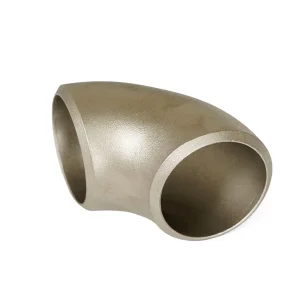
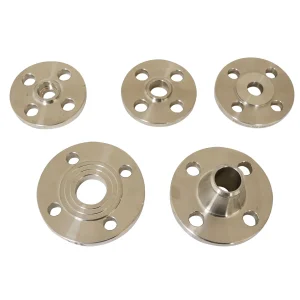
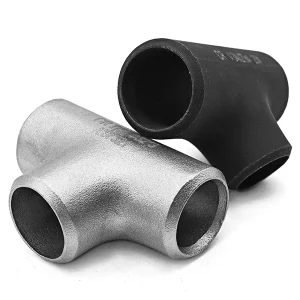
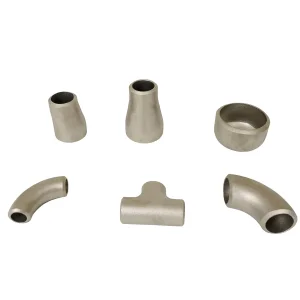
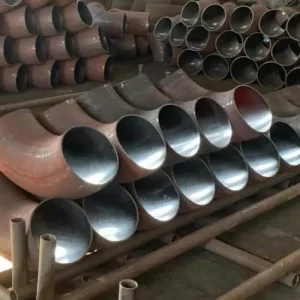
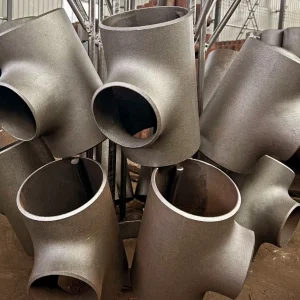
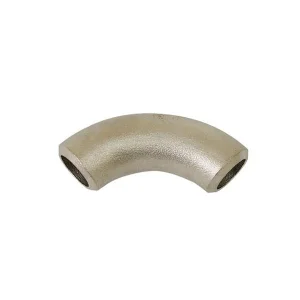
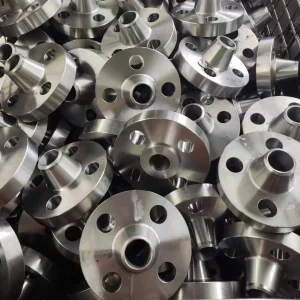
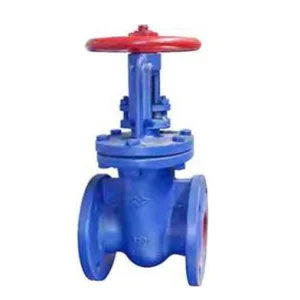
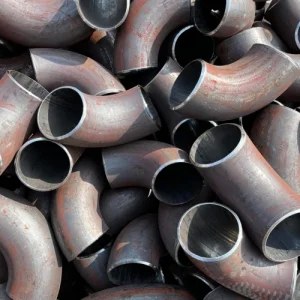
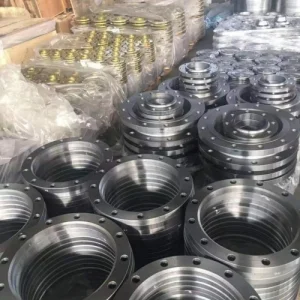
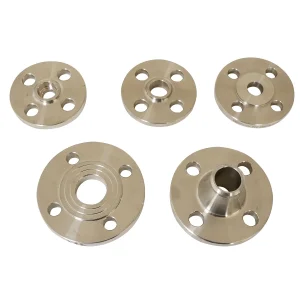
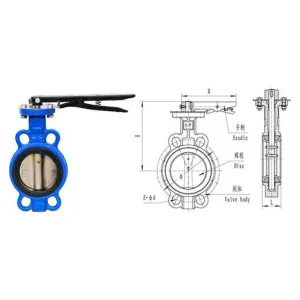
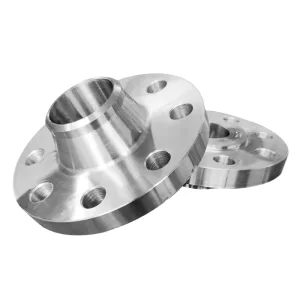
Avoid supplier mismatch errors. We deliver complete piping packages—black iron pipes, matching butt-weld long radius elbows, equal/reducing tees, concentric reducers, weld neck flanges, and gate/ball valves—all certified to matching metallurgical grades and pressure classes.
Advanced NDT & Quality Control
Every batch undergoes stringent in-house testing: Hydrostatic pressure testing up to 2,500 PSI, Ultrasonic Flaw Detection (UT), Eddy Current Testing (ET), Spectrographic Chemical Analysis, Charpy V-Notch Impact Testing, and Microstructure Grain Size evaluation.
Tianjin Port Logistics Synergy
Located just 120 km from Tianjin Port (Xingang), our export dispatch team executes swift container loading, customs declaration, and break-bulk chartering, shielding clients from port demurrage and shipping bottlenecks.
Industry Trends & Technological Transformation in Piping Manufacturing
How AI-driven defect detection, BIM digital twin integration, and green steel production methods are shaping the next generation of black iron pipe manufacturing.
The global steel pipe industry is undergoing a digital and environmental evolution. As construction projects embrace Building Information Modeling (BIM) and strict ESG (Environmental, Social, and Governance) targets, black iron pipe suppliers must adapt through advanced technology and low-carbon manufacturing processes.
AI Vision & Automated QC
Our production facilities integrate AI-powered vision inspection algorithms along the ERW weld line. High-resolution infrared cameras detect micro-porosity, weld bead misalignments, or wall variation in real-time, automatically triggering self-correcting inductors and discarding non-conforming pipe lengths prior to hydrostatic testing.
BIM Prefabrication Spools
Modern mega-projects specify off-site modular construction. Cangrun supplies pre-cut, pre-beveled, and pre-grooved black iron pipe spools tagged with QR codes directly linked to BIM model coordinates. This reduces field installation labor by up to 40% and virtually eliminates site re-cutting scrap.
EAF Green Steel Transition
To support corporate Scope 3 emissions reduction, Cangrun offers black iron pipes produced via Electric Arc Furnace (EAF) recycled scrap steel routes alongside traditional Blast Furnace (BOF) options, reducing embedded carbon footprints by up to 60% with full EPD (Environmental Product Declaration) verification.
Localized Application Scenarios & Regional Regulatory Compliance
From high-rise automatic fire sprinkler networks in North America to district heating steam lines in Northern Europe, black iron pipe serves critical infrastructure demands worldwide.
Different industrial sectors enforce rigorous chemical, mechanical, and safety standards for black steel pipe installations:
1. Automatic Fire Sprinkler Systems (UL / FM / NFPA)
Black iron pipe is the universal industry standard for wet and dry pipe fire suppression networks governed by NFPA 13, UL 852, and FM Approvals. Schedule 10 and Schedule 40 black steel pipes withstand high internal hydraulic pressures, offer non-combustible fire resistance, and pair with grooved mechanical fittings for rapid installation across commercial complexes.
2. Natural Gas, LP Gas & Fuel Line Piping
Because black steel does not react chemically with natural gas, propane, or fuel oils (unlike galvanized pipe where zinc flakes can clog gas orifices and regulator valves), standards such as NFPA 54 (National Fuel Gas Code) and ASME B31.2 mandate black iron pipe with threaded NPT or welded joints for commercial heating fuel distribution.
3. Closed-Loop HVAC & District Steam Networks
In high-pressure steam distribution and chilled water HVAC networks, ASTM A106 Grade B seamless black iron pipes withstand thermal expansion, water hammer shocks, and operating temperatures up to 425°C (800°F) without structural creep or wall thinning.
4. Structural Piling & Mechanical Tubing
Heavy-wall black iron pipe manufactured to ASTM A500 Grade B/C or EN 10210 serves as high-capacity load-bearing foundation piling, micro-piles, crane booms, highway sign trusses, and heavy industrial equipment frames.
Global Certification & Regional Standard Alignment
Our manufacturing and testing protocols align seamlessly with regional regulatory frameworks across major destination markets:
- North America (US & Canada): ASTM A53, ASTM A106, ASME B36.10M, API 5L, UL/FM Certified, CSA Z245.1.
- European Union & UK: EN 10255 (BS 1387), EN 10216-1, EN 10217-1, CE Pressure Equipment Directive (PED 2014/68/EU), UKCA Marked.
- Middle East & GCC Region: Saudi Aramco 01-SAMSS-016 pre-qualified, ADNOC compliant, SASO approved, NACE MR0175/ISO 15156 H2S sour service certification.
- Asia-Pacific & Australia: JIS B3454, JIS G3452, AS/NZS 1163, AS 1074, GB/T 3091, GB/T 8163.
Complete Industrial Piping Package Products
Select matching elbows, flanges, and valves to consolidate your complete project order into a single factory shipment.
Black Iron Pipe Procurement FAQ & Technical Support
Direct engineering answers to technical queries, mill test certifications, minimum order quantities, and custom packaging logistics.