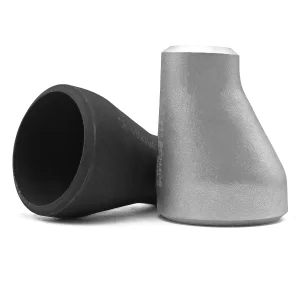
Primary Industrial Piping & Valve Catalog
High-performance pressure fittings, industrial valves, and engineered flange assemblies certified to international standards.
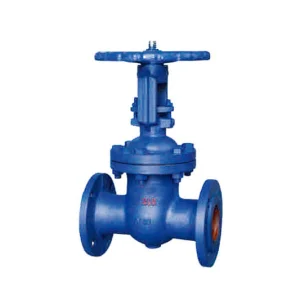
Industrial Wedge Gate Valve Z41H-10/16Q
View Product Details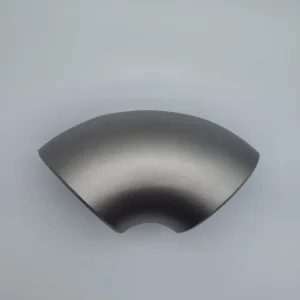
High Quality Carbon Steel Pipe Fitting Elbow
View Product Details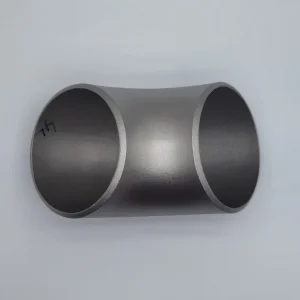
Oil Gas & Power Generation Heavy Duty Pipe Elbow
View Product Details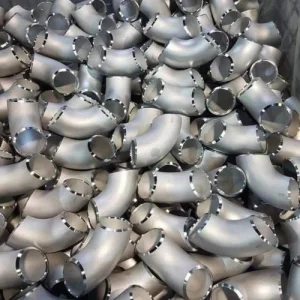
Precision Engineered Steel Elbow Series
View Product Details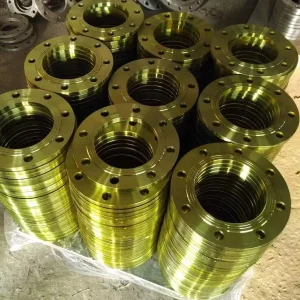
High-Pressure Plate Weld Flange Assembly
View Product Details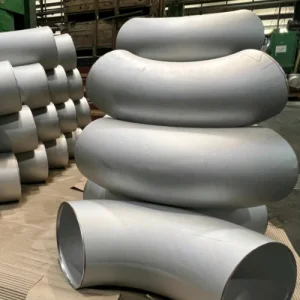
Stainless Steel SCH80 1.5D 90° Seamless Elbow
View Product Details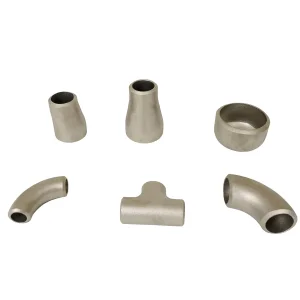
Industrial Butt Weld Steel Pipe Fitting Line
View Product Details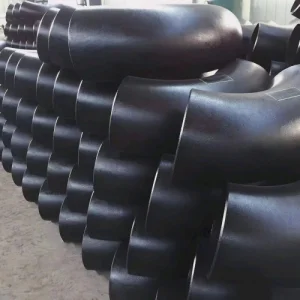
SS304L 1" SCH40 Short Radius Butt-Weld Elbow
View Product DetailsMacro Industry Solutions & Polymer Ecosystem
Understanding the transition from legacy metallic piping to Polypropylene Random Copolymer (PPR / PPR-CT) in modern civil and industrial fluid distribution.
In modern industrial fluid transport and municipal infrastructure, selecting appropriate piping materials determines operating lifecycle expenses, energy efficiency, and total cost of ownership (TCO). While traditional metallic systems—such as carbon steel, ductile iron, and copper—have dominated historical infrastructure, Polypropylene Random Copolymer (PPR Type 3) and advanced PPR-CT (Polypropylene Random Crystallinity Temperature Modified) have redefined reliability metrics across water supply, chemical transport, and HVAC networks globally.
Fluid Dynamics & Friction Loss Optimization
A primary structural advantage of engineered PPR pipe fittings is their ultra-smooth internal bore wall. With an absolute roughness coefficient ($k$) of just $0.007 \text{ mm}$, compared to $0.045 \text{ mm}$ for new steel pipes and over $0.15 \text{ mm}$ for corroded cast iron, PPR fittings significantly reduce head loss ($h_f$) caused by hydraulic friction. The Darcy-Weisbach friction equation illustrates this operational advantage:
$$h_f = f \cdot \left(\frac{L}{D}\right) \cdot \left(\frac{v^2}{2g}\right)$$
Because the friction factor ($f$) stays minimal throughout the 50-year service life due to zero scaling, bio-fouling, or calcification, pumping stations operate with reduced kilowatt-hour (kWh) demand. This low flow resistance translates directly into reduced operational power consumption for high-rise residential complexes, chemical processing facilities, and district heating plants.
| Performance Parameter | PPR (Type 3 / PPR-100) | PPR-CT (Beta-PPR) | Carbon Steel / Ductile Iron | Copper (C12200) |
|---|---|---|---|---|
| Thermal Conductivity | 0.24 W/(m·K) | 0.24 W/(m·K) | 45 - 52 W/(m·K) | 386 W/(m·K) |
| Corrosion Resistance | Immune (pH 1 - 14) | Immune (pH 1 - 14) | Requires Cathodic Protection | Susceptible to Pitting / Acidic Water |
| Joint Reliability | Homogeneous Socket/Butt Fusion | Homogeneous Fusion | Flanged / Threaded / Welded | Soldered / Brazed / Press-fit |
| Linear Expansion ($\alpha$) | $0.15 \text{ mm/(m·K)}$ | $0.035 \text{ mm/(m·K)}$ (Fiber composite) | $0.012 \text{ mm/(m·K)}$ | $0.017 \text{ mm/(m·K)}$ |
| Acoustic Damping | High (Absorbs Water Hammer) | High (Absorbs Water Hammer) | Low (Transmits Fluid Noise) | Low (Transmits Velocity Noise) |
Global Commercial & Industrial Market Landscape
Analyzing regional demand drivers, international manufacturing compliance, and export logistics for high-volume piping sourcing.
European Union & UK Standards
Strict enforcement of EN ISO 15874 and DIN 8077/8078 dictates strict dimensional tolerances and long-term hydrostatic strength (PTHS). Products destined for Europe require DVGW, SKZ, and WRAS hygiene approvals for drinking water contact.
Middle East & GCC Region
Rapid mega-city development and high ambient temperatures place intense thermal stress on outdoor and sub-grade piping networks. Sourcing high-grade PPR fittings modified with UV stabilizers and high thermal resistance (PN20 / PN25) is mandatory for long-term project viability.
North & South America
Increasing adoption of ASTM F2389 standard PPR systems alongside traditional copper/PEX. NSF/ANSI 14 and NSF/ANSI 61 certifications remain essential for North American municipal building code compliance.
Engineering Specifications: Polymer Chemistry & Brass Inserts
The structural dynamics of standard polypropylene random copolymer resins, SDR pressure classifications, and thread insert metallurgy.
1. Raw Material Molecular Architecture
High-performance PPR fittings originate from raw polymer granules produced via low-pressure gas-phase polymerization. Ethylene molecules ($2\% - 5\%$ mass ratio) are randomly integrated into the polypropylene polymer backbone chain. This random arrangement disrupts the crystalline structure, delivering superior impact toughness at low temperatures ($0^\circ\text{C}$ to $-10^\circ\text{C}$) while maintaining structural rigidity at continuous operating temperatures up to $70^\circ\text{C}$ (and short-term peaks of $95^\circ\text{C}$).
2. Metallurgical Engineering of Threaded Inserts
Transition fittings—which connect PPR socket ends to metallic valves, pumps, or steel piping—utilize high-density metal inserts molded directly into the fitting body during injection processing. Premier exporters utilize CW617N (CuZn40Pb2) brass or DZR (Dezincification Resistant) brass alloys compliant with EN 12165.
- Anti-Rotation Anchoring: Precision machined multi-spline knurling prevents the brass core from slipping inside the PPR body under high installation torque ($>120 \text{ N}\cdot\text{m}$).
- Axial Pull-Out Resistance: Deep circumferential grooving resists internal hydrostatic push force and thermal expansion stresses.
- EPDM O-Ring Sealing: Double internal elastomer seals safeguard against micro-leakage at the polymer-to-metal interface under severe temperature cycling.
3. Standard Dimension Ratio (SDR) & Pressure Ratings
Selecting the correct Standard Dimension Ratio (SDR) is critical to prevent wall collapse or burst failures under pressure surges:
$$\text{SDR} = \frac{D_n}{e_n}$$
Where $D_n$ is the nominal outside diameter and $e_n$ is the nominal wall thickness. Common pressure classes include:
- SDR 11 (PN10): Suitable for cold water distribution ($20^\circ\text{C}$ at 1.0 MPa) and low-temperature radiant floor heating.
- SDR 7.4 (PN16): Applied in higher pressure cold water networks and moderate temperature hot water lines ($60^\circ\text{C}$ at 1.6 MPa).
- SDR 6 (PN20 / PN25): Engineered for high-temperature sanitary water supply, boiler riser columns, and industrial chemical fluid lines.
Localized Application Scenarios & Real-World Implementations
Deploying PPR pipe fittings, gate valves, and flanged interfaces across severe industrial and municipal environments.
1. High-Rise Potable Water Networks
In municipal high-rise buildings, pressure fluctuations and dynamic water hammer cause structural stress on joints. PPR fusion-welded elbow, tee, and socket fittings create a monolithic piping matrix that eliminates joint separation risks, providing 100% leak-proof drinking water lines compliant with NSF 61.
2. Aggressive Chemical Transport
Chemical processing plants handling acidic and alkaline solutions require non-reactive fluid pathways. PPR fittings withstand corrosive agents, including sodium hydroxide, dilute sulfuric acid, and chloride solutions up to 60°C without pitting or stress-corrosion cracking.
3. HVAC Chilled & Condenser Water Lines
Commercial HVAC networks utilize large-diameter PPR and composite aluminum-PPR pipes. Their low thermal conductivity ($\lambda = 0.24 \text{ W/(m·K)}$) minimizes thermal losses and prevents surface condensation, dramatically reducing outer insulation jacket requirements.
4. Industrial Compressed Air Plants
Under compressed air pressures (up to 10-15 bar), metal pipes often suffer from internal rust flake shedding that damages downstream pneumatic tools. PPR fittings provide smooth, non-corroding pathways that preserve air purity and safeguard sensitive automation equipment.
5. Geothermal Heat Pump Distribution
Sub-surface ground-source heat exchanger loops demand materials capable of enduring continuous thermal cycling and ground settlement forces. PPR socket fusion joints deliver continuous material homogeneity across underground manifold connections.
Quality Control, Inspection Protocols & Compliance
Strict multi-stage laboratory testing protocols ensuring zero-defect manufacturing and full batch traceability.
Leading global exporters maintain strict quality assurance programs compliant with ISO 9001 and ISO 14001. Quality verification spans from raw material inspection to final container loading:
Melt Flow Rate (MFR) Testing
Tested under ISO 1133 ($230^\circ\text{C} / 2.16\text{ kg}$). Ensures the raw polymer melt index remains within strict boundaries ($0.2 - 0.5\text{ g}/10\text{ min}$) to guarantee melt stability during high-speed injection molding.
Hydrostatic Pressure Test
Conducted according to ISO 1167. Fitting specimens undergo continuous hydrostatic stress at $95^\circ\text{C}$ under $3.5\text{ MPa}$ hoop stress for 1,000 hours to confirm structural endurance against creep ruptures.
Charpy Impact Resistance
Evaluated under ISO 179 at $0^\circ\text{C}$ to verify low-temperature notch impact toughness, preventing brittle fracture failures during cold-weather transit and site handling.
Technical Roadmap: Next-Generation Piping Innovations
Emerging material science innovations transforming the performance ceiling of thermoplastic fluid conveyance.
1. Nano-Antimicrobial PPR Inner Layers
Co-extruded inner wall layers integrated with silver-ion ($\text{Ag}^+$) inorganic antimicrobial additives. Inhibits biofilm accumulation and bacterial growth (such as *Legionella pneumophila*) by 99.9% in domestic hot water systems.
2. Fiber-Reinforced Composite Co-Extrusion
Three-layer PPR-FB-PPR pipes featuring a glass-fiber reinforced middle layer reduce linear thermal expansion by over 75% compared to standard PPR, eliminating the need for complex expansion loops in long riser columns.
3. Smart Fittings with Integrated RFID Asset Tracking
Embedding passive RFID tags into molded fitting bodies allows automated digital mapping of underground building installations during building information modeling (BIM) asset scans.
Comprehensive Engineering Q&A (FAQ)
Detailed answers to complex technical questions encountered by procurement managers, MEP consulting engineers, and plant operators.
Complementary Flange, Valve & Fitting Exporters Portfolio
Explore our full line of industrial metal fittings, high-pressure flanges, and flow isolation valves manufactured for global project exports.
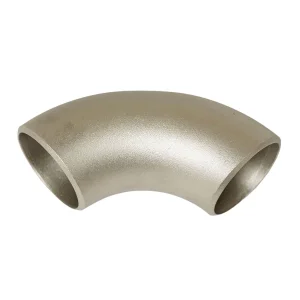
ASME 304 Stainless & Carbon Steel Welded Fittings
View Product Details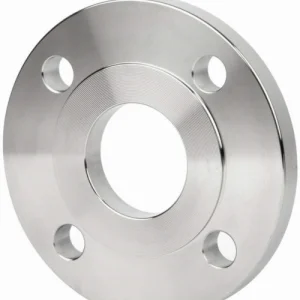
DN100 Stainless Steel SS321 300# Industrial Flange
View Product Details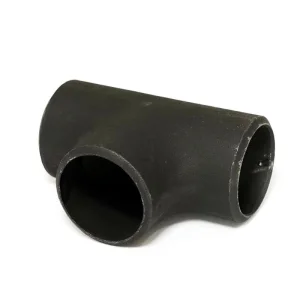
Seamless Stainless & Carbon Steel Equal Tees
View Product Details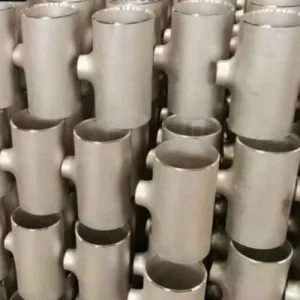
Butt Weld Equal & Unequal Reducing Steel Tees
View Product Details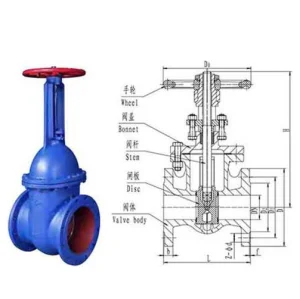
Parallel Double Gate Valve Z44T/W-10/16Q Series
View Product Details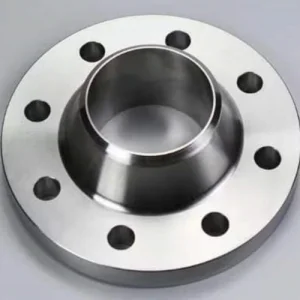
DN100 600LBS ASME B16.5 WNRF Weld Neck Flange
View Product Details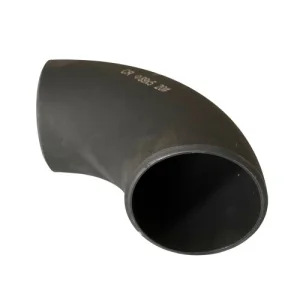
ASTM A234WPB SCH40 4" Heavy Carbon Steel Elbow
View Product Details