
Featured Electric & Industrial Gate Valves
Direct factory supply of heavy-duty gate valves, precision fittings, and custom forged piping components certified to international pressure standards.
1. Global Commercial & Industrial Landscape of Electric Gate Valves
Evaluating market growth vectors, manufacturing hubs, and the transition toward digital flow control across energy and municipal networks.
The global industrial valve market is undergoing a structural transition. Electric gate valves—often designated as motorized gate valves or electric actuated wedge gate valves—sit at the nexus of process automation, fluid control reliability, and infrastructure modernization. Driven by decarbonization projects, mega-scale desalination plants, long-distance water transmission pipelines, and offshore oil/gas processing complexes, the international market for electric actuation valves is projected to exceed $11.5 Billion USD by 2030, registering a CAGR of 6.4%.
Historically, manual isolation valves dominated pipeline systems. However, modern operational environments require real-time telemetry, remote control via Supervisory Control and Data Acquisition (SCADA) networks, and precise torque-based seating. A leading **Famous Electric Gate Valve Manufacturer** must integrate multi-disciplinary engineering: high-integrity metallurgies capable of enduring thermal shock, precision-machined wedges, and sophisticated multi-turn electric actuators built to withstand corrosive marine environments or hazardous explosive atmospheres (ATEX/IECEx certified).
The Cangzhou Pipeline Manufacturing Cluster Advantage
The concentration of valve manufacturing and pipeline engineering expertise in Cangzhou, Hebei Province, China, represents a dominant node in global industrial supply chains. Manufacturers operating within this ecosystem leverage integrated foundry facilities, automated CNC machining lines, electrostatic epoxy coating chambers, and advanced hydrostatic test bays. By co-locating raw material forging, precision valve trim casting, and electric actuator assembly, leading factories achieve unprecedented cost efficiencies while maintaining strict compliance with international standards including ASME B16.34, API 600, API 6D, EN 1171, and ISO 5208.
SEO & Sourcing Insight: When engineering specifications request a "Famous Electric Gate Valve Manufacturer," procurement officers prioritize verifiable E-E-A-T credentials: documented non-destructive examination (NDE) procedures, Positive Material Identification (PMI) trace reports, and third-party witness testing (TUV, SGS, BV) for hydrostatic body and seat leakage.
2. Valve Engineering Architecture & Actuator Mechanics
Deconstructing the mechanical elements, stem geometry, sealing mechanisms, and intelligent electric actuator drive trains.
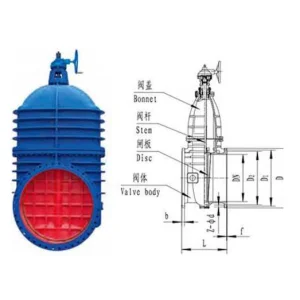
An electric gate valve is a sophisticated electromechanical system comprising two primary assemblies: the pressure-containing valve envelope (body, bonnet, gate disc, seats, and stem) and the motorized actuator drive mechanism. Understanding the mechanical interaction between stem torque, seat friction, and motor power delivery is vital for industrial design integrity.
Rising Stem vs. Non-Rising Stem (NRS)
Outside Screw and Yoke (OS&Y) rising stem configurations keep stem threads out of the process fluid, making them ideal for corrosive or high-temperature media. NRS designs (such as Z45X soft-seal gate valves) feature internal stem threading, enabling extremely compact vertical profiles suited for subterranean water mains.
Flexible Wedge vs. Resilient Seated
Flexible solid wedges utilize a central groove cut around the disc perimeter to allow thermal elasticity without binding in high-temperature steam systems. Resilient seated wedges bond EPDM or NBR rubber onto a ductile iron core, delivering absolute zero-leakage (ISO 5208 Rate A) at ambient water pressures.
Intelligent Electric Actuator Drives
Modern non-intrusive electric actuators feature optical absolute encoders, high-torque squirrel-cage induction motors, planetary gear reduction, local LCD display panels, and digital fieldbus control modules (Profibus DP, Foundation Fieldbus, Modbus RTU, HART).
Material Selection Matrix & Pressure Ratings
Material engineering determines a valve's longevity. Standard body castings are matched with specific seat overlays (Stellite No. 6, 13Cr Stainless, Hastelloy) to resist cavitation erosion and chemical oxidation.
| Material Designation | Standard Equivalents | Temp. Range (°C) | Nominal Pressure (PN/Class) | Primary Industrial Media |
|---|---|---|---|---|
| Ductile Iron (QT450-10 / GGG40) | ASTM A536 65-45-12 | -10°C to 80°C | PN10 / PN16 / PN25 | Potable Water, Sewage, HVAC Chilled Water |
| Cast Carbon Steel (WCB / WCC) | ASTM A216 WCB | -29°C to 425°C | Class 150 to 2500 (PN16-PN400) | High-Pressure Steam, Crude Oil, Natural Gas |
| Stainless Steel (CF8 / CF8M) | ASTM A351 CF8M / SUS316 | -196°C to 600°C | Class 150 to 1500 | Nitric Acid, Corrosive Chemicals, LNG |
| Alloy Steel (WC6 / WC9 / C12A) | ASTM A217 WC9 / F91 | -29°C to 650°C | Class 600 to 2500 | Supercritical Thermal Power Plant Steam |
3. Industry Trends & Next-Gen Smart Innovations
How digital twins, fugitive emission abatement, and predictive health monitoring are shaping the future of industrial valve production.
The valve manufacturing sector is transitioning from pure mechanical hardware fabrication to integrated cyber-physical flow systems. Industry 4.0 mandates that famous electric gate valve factories embed intelligence directly into the actuation unit to eliminate unplanned downtime.
1. Partial Stroke Testing (PST) & SIL-3 Safety Integrity
In critical Emergency Shutdown (ESD) lines, gate valves may remain fully open for months or years. Without movement, mechanical binding can occur. Modern intelligent electric actuators execute automated **Partial Stroke Testing (PST)**. The actuator drives the gate disc down to 90-95% of full travel and immediately returns to 100% open, measuring torque resistance without interrupting process flow. This diagnostic capability allows electric gate valves to achieve **SIL-2 and SIL-3 (Safety Integrity Level)** certification under IEC 61508.
2. Fugitive Emission Abatement (API 622 & ISO 15848-1)
Environmental regulations regarding fugitive hydrocarbon emissions have tightened globally. Gate valve stem packings are a primary source of volatile organic compound (VOC) leakage. Advanced manufacturers now utilize live-loaded graphite packing systems combined with anti-extrusion Belleville spring washers. Achieving compliance with **API 622 (3rd Edition)** ensures stem seal leakage remains below 100 ppmv over 1,500 mechanical cycles and thermal fluctuations.
3. Non-Intrusive Magnetic Actuator Configuration
Traditional actuator enclosures required removing outer covers to adjust limit switches, exposing internal electronics to ambient humidity and explosive gases. Contemporary electric actuators employ hall-effect magnetic switches and Bluetooth/infrared remote controls, allowing field technicians to set torque thresholds, open/close limits, and bus communication parameters through sealed explosion-proof enclosures.
4. Localized Application Engineering Scenarios
Real-world deployment matrices illustrating material selection, protection classes, and actuation profiles across distinct operating environments.
Municipal Water Infrastructure
Model Focus: Z45X Soft Seal Gate Valve Series
Actuation: IP68 Submersible Multi-Turn Electric Actuator
Operational Environment: Direct burial in subterranean vaults subject to seasonal flooding. Requires non-rising stems, fusion-bonded epoxy coating (250 microns min.), and WRAS/NSF-61 certified EPDM wedges.
Refining & Petrochemical Distillation
Model Focus: API 600 Heavy-Duty Wedge Gate Valve
Actuation: Explosion-Proof Ex d IIC T4 Actuator
Operational Environment: High-temperature hydrogen and hydrocarbon fluid isolation. Requires WCB/CF8M bodies, Stellite No. 6 hardfaced seating, fire-safe design to API 607, and emergency handwheel manual overrides.
Thermal & Combined-Cycle Power Generation
Model Focus: High-Pressure Pressure Seal Bonnet Gate Valve
Actuation: High-Speed Heavy-Duty Electric Drive
Operational Environment: Supercritical steam boiler isolation (540°C+, Class 1500/2500). Pressure seal design uses internal line pressure to compress the body-bonnet gasket, tightening the seal as pressure increases.
5. Technology Roadmap & Future Outlook (2025–2035)
Strategic development vectors driving the next generation of smart valves, advanced materials, and zero-carbon industrial systems.
Universal Integration of IoT & Cloud Telemetry
Mandatory adoption of embedded wireless fieldbus protocols (WirelessHART, ISA100.11a) inside valve actuators. Real-time dynamic torque profiling uploaded directly to cloud maintenance platforms for anomaly detection.
Additive Manufacturing of High-Entropy Hardfacing
Transition from manual cobalt-base (Stellite) welding to robotic Laser Powder Bed Fusion (LPBF) additive overlays. Hardfacing microstructures achieve enhanced thermal fatigue resistance and zero surface porosity.
Autonomous Self-Diagnostic Flow Control Systems
Deployment of generative AI diagnostic modules inside actuator microprocessors. Actuators autonomously adjust motor speed during stroke travel to smooth out water hammer shocks and compensate for mechanical wear in real time.
6. Macro-Industry Procurement Framework & TCO Analysis
A structured technical methodology for EPC contractors, plant owners, and procurement engineers evaluating manufacturer capabilities.
Selecting an electric gate valve manufacturer involves balancing capital expenditure (CAPEX) against long-term operational expenditure (OPEX). Poor casting quality or mismatched actuator torque curves lead to seat scoring, gear stripping, and costly plant shutdowns.
Total Cost of Ownership (TCO) Evaluation Formula
Leading engineering procurement firms evaluate valve acquisition through a comprehensive TCO metric:
TCO = CCAPEX + CINSTALL + CMAINTENANCE + CDOWNTIME_RISK - VRESIDUAL
Where CDOWNTIME_RISK is directly minimized by procuring SIL-certified electric actuators and zero-leakage API 598 tested valve bodies from proven manufacturers.
Factory Qualification Checklist for B2B Sourcing
- Quality System Audits: Verify ISO 9001:2015, ISO 14001, and OHSAS 18001 certifications.
- Pressure Equipment Compliance: Check CE-PED (Directive 2014/68/EU) compliance for European market export.
- Actuator Interface Standards: Ensure valve top flanges conform precisely to ISO 5210 (multi-turn valve drive attachments) for seamless mounting of major actuator brands (Rotork, AUMA, Limitorque, or native factory intelligent drives).
- NDE & Material Traceability: Insist on EN 10204 3.1 Mill Test Certificates (MTC), 100% PMI testing, Radiographic Testing (RT) on critical casting junctions, and Magnetic Particle Testing (MT) on hardfaced seats.
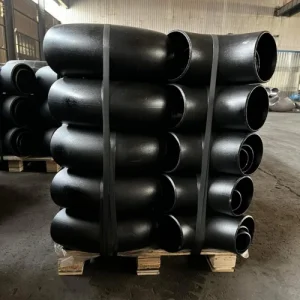
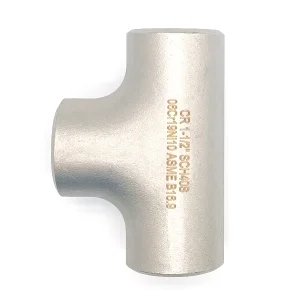
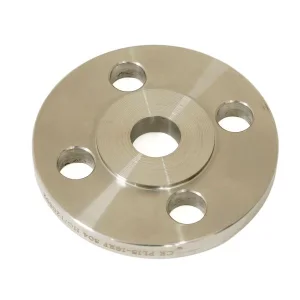
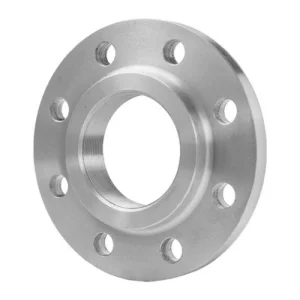
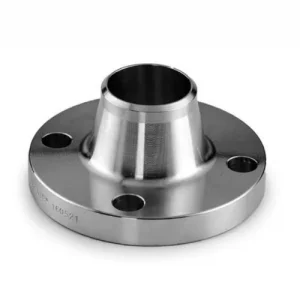
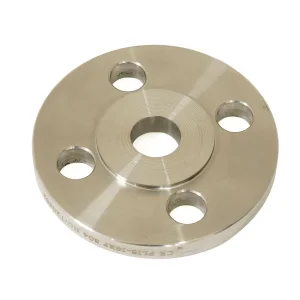
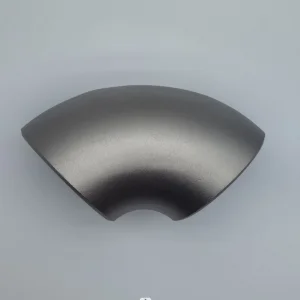
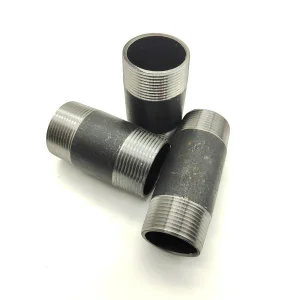
Complete Pipeline System Components & Accessories
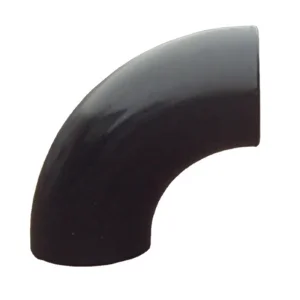
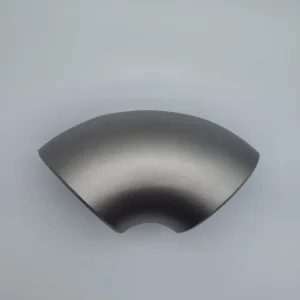
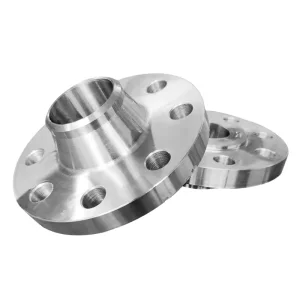
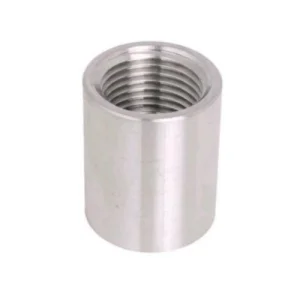
Complementary industrial flanges, elbows, tees, and forged fittings for end-to-end piping package procurement.
7. Technical Q&A: Engineering & Procurement FAQ
Expert responses to critical questions encountered by plant operators, valve engineers, and procurement specialists.
How do I accurately size an electric motor actuator for a gate valve operating under high differential pressure?
Actuator sizing requires calculating the total stem thrust ($F_{total}$) and required operating torque ($T_{req}$). Thrust components include:
- Stem Hydrostatic Thrust: $F_{stem} = P \times \frac{\pi}{4} \cdot d_{stem}^2$
- Wedge Seating Force: $F_{seat} = P \times A_{port} \times \mu_{seat}$ (where $\mu_{seat}$ ranges from 0.25 to 0.35 for metal seats).
- Packing Friction Force: Evaluated based on stem diameter and gland packing torque.
Once total thrust is calculated, stem pitch and thread efficiency dictate the required multi-turn torque. Always apply a 1.3 to 1.5 safety factor over calculated max torque to account for voltage drops, packing hardening, and thermal expansion binding.
What is the difference between API 600 and EN 1171 gate valve standards?
API 600 is the standard governing bolted bonnet steel gate valves for petroleum and natural gas industries, enforcing heavy wall thicknesses, minimum stem diameters, and strict Stellite hardfacing rules. EN 1171 specifies cast iron gate valves primarily utilized in European water supply, district heating, and general utility applications, classifying valves into soft-sealed resilient wedges or metal-seated variants with pressure ratings designated by PN (PN6 to PN25).
Why choose an electric gate valve over a pneumatic actuated gate valve?
Electric gate valves offer distinct operational advantages for isolation service:
- No Compressed Air Infrastructure Required: Ideal for cross-country pipelines, remote municipal pump stations, and tank farms where instrument air headers are unavailable.
- Self-Locking Drive Train: Worm gear power drives naturally prevent process line pressure from driving the gate open or closed during power loss.
- Precise Torque & Position Monitoring: Digital electric actuators continuously measure motor current draw, providing accurate real-time seating torque data without needing external pressure transducers.
How does thermal binding occur in electric gate valves, and how can it be prevented?
Thermal binding happens when a solid or flexible wedge gate valve is closed while the fluid system is at elevated temperature (e.g., 350°C steam). As the system cools down, the valve body shrinks faster than the wedge disc, pinching the gate tightly between the seats. When the electric motor attempts to open the valve, it exceeds the actuator torque limit and trips.
Prevention Strategies: (1) Specify flexible wedge designs or parallel slide gate valves; (2) Program electric actuators with a torque-bypass pulse algorithm during unseating; (3) Install internal body cavity equalizing bypass lines to mitigate trapped pressure spikes.
What testing documentation should accompany famous electric gate valves prior to dispatch?
Standard QA/QC documentation packages must include:
- Shell Hydrostatic Test Report: Executed at 1.5 times nominal pressure (API 598 / ISO 5208).
- High & Low Pressure Seat Leakage Test: Verified at 1.1 times design rating (Zero leakage for Resilient Seated Rate A; allowable bubble rates for Class IV/V/VI metal seats).
- Actuator Calibration Certificate: Confirming limit switch settings, torque switch cutoff points, insulation resistance, and fieldbus communication loop tests.
- Material Traceability: Mill Test Certificates conforming to EN 10204 3.1 for body, bonnet, stem, and seat overlays.