1. Executive Engineering Overview: Socket Weld Flange Dynamics
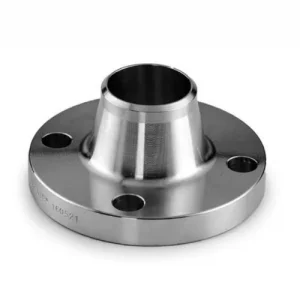
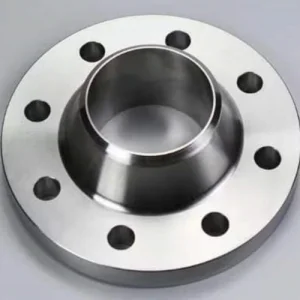
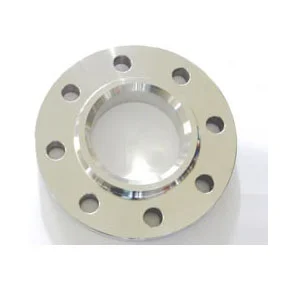
In high-pressure, small-nominal-pipe-size (NPS) fluid conveyance systems, the Socket Weld (SW) Flange represents a foundational joining solution. Engineered primarily for high-stress applications in sizes ranging from NPS 1/2 to NPS 4 (DN15 through DN100), the Socket Weld Flange incorporates a recessed socket area that receives the plain-end pipe. This structural design enables a single fillet weld applied on the outer side of the flange hub, simplifying non-destructive examination (NDE) and field installation compared to double-welded slip-on configurations or full-penetration butt welds.
Sourcing high-integrity flange components at competitive commercial rates—often categorized commercially as discount socket weld flanges—requires a comprehensive evaluation of forge quality, grain alignment, material chemistry, and tolerance precision. Lowering unit procurement costs must never compromise structural integrity, especially when managing volatile hydrocarbons, superheated steam, or aggressive chemical media.
2. Technical Specifications, Metallurgical Grades & Standards Compliance
Socket Weld Flanges are produced in accordance with strict international standards, most notably ASME B16.5 (Pipe Flanges and Flanged Fittings) and BS 3293, alongside European equivalent standards under EN 1092-1 (Type 12 / Type 13 socket variations). Understanding the precise dimensional characteristics and metallurgical compositions ensures seamless field integration and regulatory compliance.
Carbon Steel Forgings
Manufactured from ASTM A105, A350 LF2 (Low-Temperature Carbon Steel), and A694 (High-Yield Grades F42 to F70). Fully normalized heat treatment ensures fine grain structure and optimal impact toughness down to -46°C.
Stainless & Alloy Steel
ASTM A182 F304/304L, F316/316L dual-certified, F11, F22, F91 alloy steels, and Duplex/Super Duplex alloys (UNS S31803 / S32750). Superior pitting resistance equivalent number (PREN ≥ 40 for Super Duplex) for chloride-rich marine environments.
Precision Machine Tolerances
CNC-lathe finished raised face (RF) serrations: 125–250 AARH (Average Arithmetical Roughness Height) spirally or concentrically serrated to ensure optimal gasket seating and micro-seal encapsulation.
| Nominal Size (NPS) | Socket Diameter (B) | Socket Depth (D) | Hub Dia at Base (X) | Class 150 Thickness (C) | Class 300 Thickness (C) | Class 600 Thickness (C) |
|---|---|---|---|---|---|---|
| NPS 1/2" (DN15) | 22.2 mm | 9.5 mm | 30.2 mm | 11.2 mm | 14.2 mm | 14.2 mm |
| NPS 3/4" (DN20) | 27.7 mm | 11.2 mm | 38.1 mm | 12.7 mm | 15.7 mm | 15.7 mm |
| NPS 1" (DN25) | 34.5 mm | 12.7 mm | 49.3 mm | 14.2 mm | 17.5 mm | 17.5 mm |
| NPS 1-1/2" (DN40) | 49.5 mm | 15.7 mm | 65.0 mm | 17.5 mm | 20.6 mm | 22.4 mm |
| NPS 2" (DN50) | 61.7 mm | 17.5 mm | 77.7 mm | 19.1 mm | 22.4 mm | 25.4 mm |
| NPS 3" (DN80) | 90.2 mm | 20.6 mm | 108.0 mm | 23.9 mm | 28.4 mm | 31.8 mm |
3. Localized Application Scenarios & Engineering Case Studies
Socket Weld Flanges excel in applications demanding smooth flow profiles, compact footprints, and exceptional leak integrity under high static or cyclic pressures. Below are four key global and localized deployment environments:
A. Modular Chemical Skid Fabrication (North America)
In North American chemical processing facilities, compact modular skids require high density piping. Socket Weld Flanges in NPS 1/2 to NPS 2 carbon steel (ASTM A105) and stainless steel (A182 F316L) allow piping technicians to execute rapid fillet welds in tight spaces where full-penetration butt-weld access is geometrically constrained.
B. Offshore FPSO Hydraulic Lines (North Sea & Gulf of Mexico)
Floating Production Storage and Offloading (FPSO) topside hydraulic control loops operate under severe vibration and continuous mechanical impulse. Class 600 and Class 1500 Duplex 2205 socket weld flanges eliminate the internal crevice turbulence that traditional slip-on flanges introduce, safeguarding against erosion-corrosion.
C. High-Pressure Steam Distribution (Central & Eastern Europe)
Urban district heating and industrial utility headers rely on high-temperature alloy steel (ASTM A182 F11/F22) Socket Weld Flanges. Operating at temperatures exceeding 400°C and pressures above 40 bar, these components undergo post-weld heat treatment (PWHT) to stress-relieve the fillet joint zone.
D. Subsea Gathering Manifolds (Middle East & Asia-Pacific)
Subsea oil and gas collection networks demand strict compliance with NACE MR0175/ISO 15156 for sour gas service (H2S containment). High-yield forged Socket Weld Flanges backed by 100% positive material identification (PMI) and magnetic particle testing ensure zero zero-defect reliability in subsea environments.
4. China Manufacturing Ecosystem & Supply Chain Resilience
Achieving a sustainable discount socket weld flange price point while satisfying stringent western EPC (Engineering, Procurement, and Construction) specifications requires intense industrial integration. Centered in Cangzhou, Hebei—China's premier pipeline equipment manufacturing cluster—the local supply chain delivers unparalleled structural advantages:
Direct Forging Scale
Integrated closed-die hydraulic forging presses (ranging from 1,000 to 8,000 tons) convert refined steel billets into near-net shape forgings, maximizing material yield and optimizing grain orientation.
Automated CNC Machining
Multi-axis CNC machining centers execute high-speed boring, facing, and bolt-hole drilling in a single setup, guaranteeing absolute concentricity between the socket bore and raised face.
Rapid Port Logistics
Proximity to Tianjin Port enables direct ocean freight dispatch with minimal inland transshipment delays, mitigating supply chain disruption and lowering landed shipping overhead.
5. Technology Roadmap: Next-Generation Flange Engineering
As heavy industry transitions toward zero-emission hydrogen infrastructure, carbon capture and storage (CCS), and ultra-clean chemical synthesis, flange manufacturing technology is undergoing rapid evolution:
A. Smart Flanges & IoT Integrity Monitoring
Integration of embedded piezoelectric sensors and micro-acoustic strain gauges within high-pressure socket weld flanges. These smart components transmit continuous real-time bolt load and micro-leakage data directly to plant SCADA systems, preventing fugitive emissions.
B. Additive-Manufactured Custom Alloy Hubs
Hybrid manufacturing combining forged stock with Directed Energy Deposition (DED) 3D printing. This hybrid technique allows localized cladding of corrosion-resistant alloys (e.g., Inconel 625 or Hastelloy C276) specifically inside the socket recess, reducing rare-alloy consumption while multiplying service life.
C. Green Metallurgy & Zero-Carbon Forging
Transitioning industrial forging furnaces from natural gas to green hydrogen firing, coupled with electric arc furnace (EAF) steelmaking utilizing 100% recycled scrap steel, cutting embodied carbon footprint per flange by up to 60%.
D. Advanced Surface Passivation & Coatings
Nanocomposite fluoropolymer coating and electropolishing techniques applied to socket interfaces to lower friction coefficients during fluid transfer, drastically reducing bio-fouling and chemical scaling in ultra-pure water and pharmaceutical lines.
6. Frequently Asked Questions (Technical & Procurement Q&A)
Addressing crucial engineering queries regarding socket weld flange selection, installation best practices, and commercial sourcing guidelines.