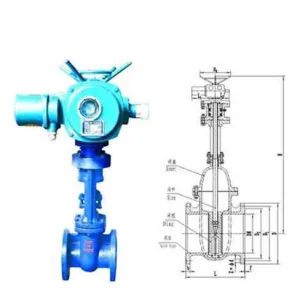
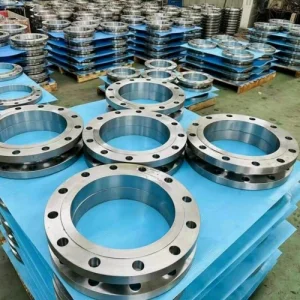
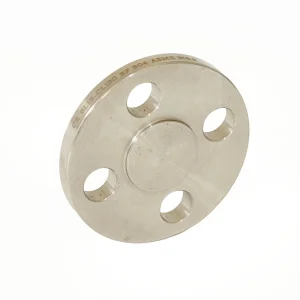
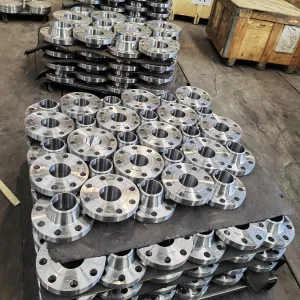
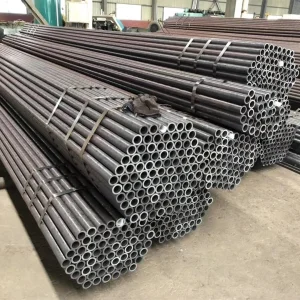
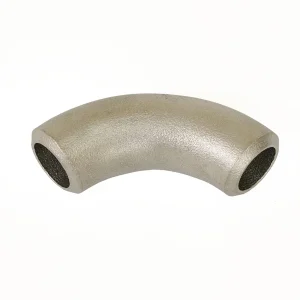
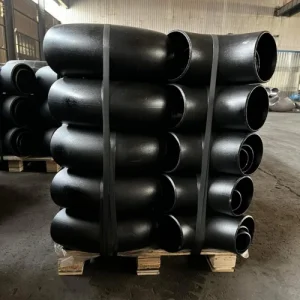
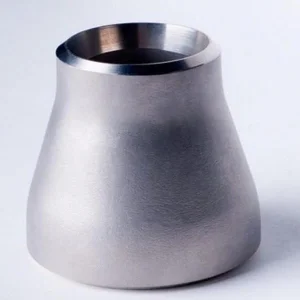
Featured Industrial Hydraulic & Piping Components
Direct-from-factory fluid conveyance, forged fittings, and precision engineered flange solutions.
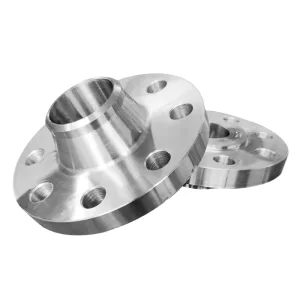
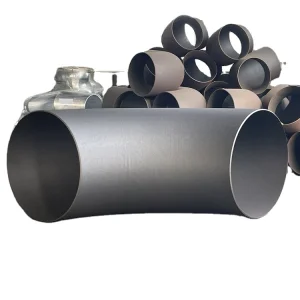
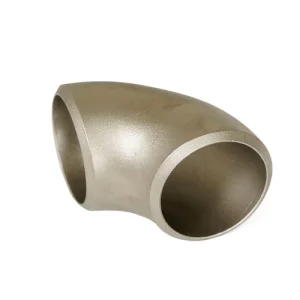
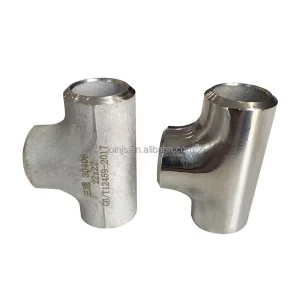
1. Global Industrial & Commercial Status of Hydraulic Hose Fittings
Understanding the macro-economic forces, mechanical standards, and engineering demands shaping modern fluid power transmission ecosystems.
Market Capitalization & Demand Drivers
The global hydraulic hose and fittings market is expanding rapidly, driven by urbanization, automated agriculture, mining expansions, and industrial IoT integration. Valued at over $10.5 Billion USD globally, fluid power connectors form the operational backbone of critical infrastructure. As machinery operates under higher pressures (exceeding 420 bar / 6000 PSI), the demand for high-integrity crimp fittings, thread adapters, and quick-disconnect couplings has transitioned from standard hardware procurement to high-precision mechanical engineering.
International Mechanical Standards
Modern fluid systems require strict adherence to international standardizations to ensure leak-free operations under dynamic pressure spikes. Exporters must comply with ISO 12151, SAE J517, DIN EN 853, and BS EN 856. Fittings are designed around precise sealing geometries, including JIC 37° flare, ORFS (O-Ring Face Seal), BSPP 60° cone, and Komatsu flange configurations. Engineering compatibility dictates that wall thickness, metallurgy, and crimp tolerances meet rigid burst-pressure safety factors (typically 4:1 ratios).
Critical Failure Mechanics & Reliability
In hydraulic power transmission, a single fitting failure leads to catastrophic pressure drop, environmental contamination, and costly operational downtime. Environmental degradation—such as salt-spray oxidation in marine setups or impulse fatigue in heavy excavators—requires high-grade structural carbon steels (such as 20# steel / 12L14) or austenitic stainless steels (SS304, SS316L). Ensuring zero fluid bypass during continuous 1,000,000-cycle impulse testing remains the baseline metric for top-tier exporters.
2. The Metallurgy & Efficiency Advantages of Chinese Exporters
Why global OEMs and distributors source discount hydraulic hose fittings from specialized industrial clusters like Cangzhou, Hebei.
Integrated Industrial Agglomeration
China’s dominance in the fluid connector sector relies on concentrated industrial clusters. Regions such as Cangzhou in Hebei Province feature fully integrated ecosystems containing raw bar-stock steel mills, cold forging plants, CNC precision machining centers, and automated electroplating lines within a 30-kilometer radius. This geographic concentration drastically reduces upstream freight costs, eliminates raw material buffering delays, and delivers unmatched cost efficiency without compromising material integrity.
Advanced Automated CNC & Cold-Forging
Modern Chinese manufacturers have transitioned from manual lathe operations to multi-axis Swiss-type automated CNC turning centers and cold-heading technology. Cold forging preserves steel grain flow lines along the fitting geometry, boosting burst strength by up to 25% compared to pure machined components. Coupled with real-time laser gauging, internal threads and sealing seats achieve micrometer-level repeatable accuracy (±0.01 mm), eliminating leakage risks.
Surface Treatment & Corrosion Resistance
Environmental compliance and longevity are achieved through advanced electroplating techniques. Chinese exporters utilize automated Zinc-Nickel (Zn-Ni) alloy plating processes. This electrochemically superior coating withstands over 1,000 hours of neutral salt spray testing (per ASTM B117) prior to red rust formation—far surpassing standard trivalent chromate zinc plating. This gives global buyers marine-grade protection at a fraction of stainless steel costs.
| Evaluation Parameter | Standard Market Supplier | Advanced Chinese Manufacturer (e.g., Cangzhou Cluster) | Engineering Benefit |
|---|---|---|---|
| Manufacturing Process | Standard Bar-stock Machining | Cold Forging + Multi-Axis CNC Finishing | Optimized grain structure, 25% higher tensile strength |
| Plating Technology | Basic Yellow / Blue Zinc (96-120 hrs SST) | Eco-Friendly Zinc-Nickel Alloy (1000+ hrs SST) | Extensive marine and harsh chemical corrosion resistance |
| Crimp Collar Tolerances | ±0.05 mm | ±0.01 mm (Automated Laser Monitored) | Prevents hose blow-off and micro-fluid seepage |
| Scale Efficiency & Cost | High Labor & Fragmented Logistics | Fully Automated Supply Chain & Integrated Raw Materials | 30% - 45% Cost Reduction ("Discount" Premium Grade) |
3. Technical Field Applications & Deployment Scenarios
How precision engineered hose fittings adapt to demanding operating conditions across global industries.
Heavy Construction & Mining Equipment
Excavators, wheel loaders, and mining haulers subject fluid lines to intense pressure spikes and mechanical vibrations. Heavy-duty Interlock Series fittings (designed with internal and external locking bites) lock onto wire-braided (SAE 100R1/R2) and multi-spiral steel hoses (SAE 100R12/R13/R15), eliminating fitting blow-off under 420-bar operating pressure.
Offshore Oil, Gas & Subsea Networks
Subsea hydraulic control modules and marine cranes require total immunity against saltwater pitting. Export-grade AISI 316L and Duplex 2205 stainless steel fittings feature high molybdenum content, delivering high PREN values (Pitting Resistance Equivalent Number > 34). These components operate reliably in extreme saline subsea environments.
Agricultural Machinery & Forestry
Combines, tractors, and harvesters demand rapid field maintenance and leak-free performance amidst ambient dust, mud, and fluctuating thermal cycles (-40°C to +120°C). Quick-disconnect couplings and standardized ISO 7241-A/B push-pull adapters allow tool-free implement changes while preserving system fluid purity.
Factory Automation & Injection Molding
Precision plastic injection molding machines demand continuous, high-frequency clamping cycles. ORFS (O-Ring Face Seal) thread designs provide zero-clearance drop-in assembly with elastomeric sealing rings, preventing hydraulic micro-leaks caused by constant high-frequency machine vibration.
4. Global Procurement Needs & Quality Control Frameworks
Essential compliance criteria, testing protocols, and logistics strategies for international B2B fluid component buyers.
Material Traceability & Certification
Industrial procurement managers require complete batch transparency. Leading Chinese exporters provide full EN 10204 3.1 Mill Test Certificates (MTC) with every shipment. MTCs record chemical heat analysis (Carbon, Manganese, Phosphorus, Sulfur content) alongside mechanical yield, tensile strength, and elongation testing. Material validation eliminates rogue alloy substitutions in critical fluid power paths.
Strict Quality Control & Testing Protocol
Reliable exporters execute multi-stage quality assurance:
- ✓ Spectrometric Material Verification: Incoming raw bar stock checking.
- ✓ Optical Profile Inspection: Thread angle and pitch depth checking.
- ✓ 3D CMM Measurement: Sealing cone radius verification.
- ✓ Hydrostatic Burst Testing: Proofing safety margin over working pressure limits.
Logistics, Tariff & Supply Chain Resilience
Navigating global supply chain volatility requires strategic export planning. Leading Chinese suppliers provide flexible shipping terms (FOB, CIF, DDP), heavy-duty rust-inhibiting VCI plastic packaging, customized wooden crate crating, and optimized container stuffing. Working with experienced exporters reduces customs hold times and minimizes landed costs.
5. Emerging Technology Trends in Hydraulic Fluid Power
How smart manufacturing, eco-friendly fluids, and advanced alloys are redefining fluid power connectors.
Smart IoT-Integrated Crimp Systems
Next-generation hydraulic systems incorporate RFID-tagged and sensor-embedded hose assemblies. Smart crimping machines read the fitting’s embedded data code to automatically calibrate crimp die diameter, force, and insertion depth. This automated feedback loop eliminates human crimping errors during field installations.
Bio-Degradable Fluid Compatibility
Environmental mandates are driving adoption of synthetic ester and bio-based hydraulic oils (HEES/HETG). Exporters are engineering specialized elastomeric O-rings (FKM/Viton, HNBR) and thread sealants tailored to resist chemical breakdown and thermal oxidation from eco-friendly hydraulic fluids.
Zero-Emission Metallurgical Processing
Top Chinese factories are investing in closed-loop electroplating and low-carbon electric arc furnaces. By adopting hexavalent-chromium-free passivation processes and recycling metal turnings, leading exporters deliver environmentally responsible components aligned with global ESG corporate requirements.
6. Technical FAQ & Procurement Insights
Direct answers to technical questions concerning hose fitting specifications, interchangeability, and sourcing.
Additional Industrial Valves, Flanges & Piping Solutions
Explore our extended catalog of high-pressure industrial valves, seamless steel pipes, and specialized forged fittings.