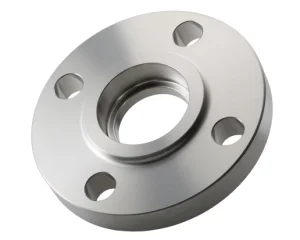
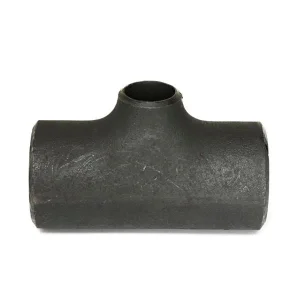
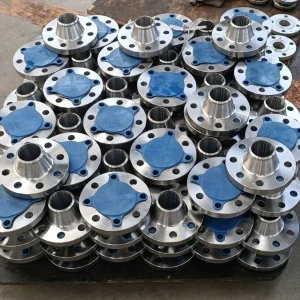
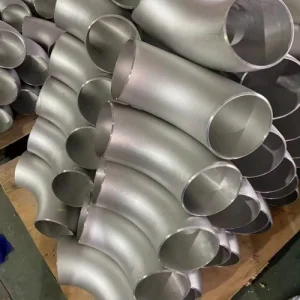
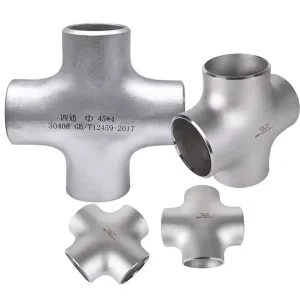
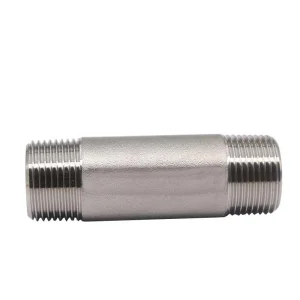
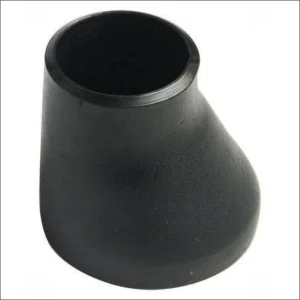
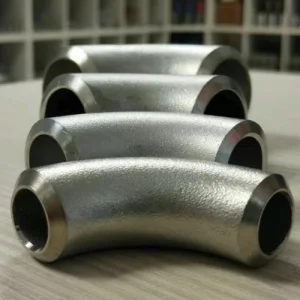
Featured Industrial Hose & Flange Connectors
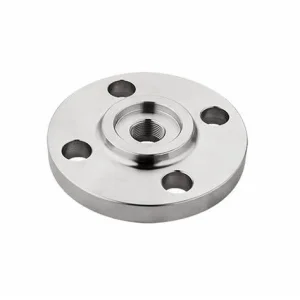
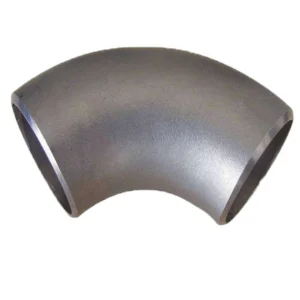
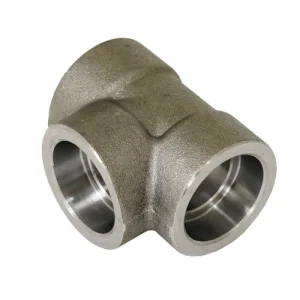
Direct factory supply of high-pressure, corrosion-resistant metallic connectors and forged components manufactured to ASTM/ASME, JIS, DIN, and EN standards.
Global Commercial & Industrial Landscape of Flexible Hose Connectors
In modern process industries, power generation facilities, HVAC infrastructure, and heavy mechanical manufacturing, flexible hose connectors—specifically corrugated metal flexible hoses wrapped in high-tensile stainless steel wire braiding—play a critical role in fluid and gas transportation systems. These engineered piping components absorb structural thermal expansion, attenuate high-frequency pump vibration, compensate for building settlement or seismic ground motion, and realign misaligned pipe work under extreme operational pressures and temperatures.
The global market for metallic flexible hose connectors has witnessed rapid expansion driven by stringent industrial safety standards, modernization of municipal energy grids, and the expansion of liquefied natural gas (LNG), green hydrogen, and advanced chemical refineries. As operating environments demand higher temperature thresholds (ranging from cryogenic -200°C up to superheated steam at +600°C) and pressure parameters exceeding Class 2500 / PN400, EPC contractors and enterprise procurement teams are shifting away from standard rigid pipe loops toward custom-engineered, braided metallic flexible connectors.
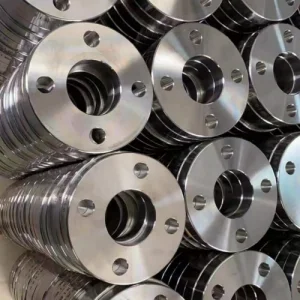
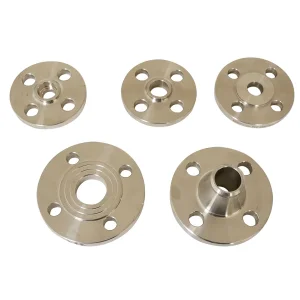
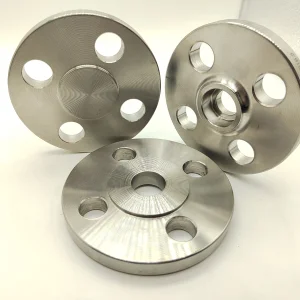
Technical Insight: A flexible hose connector consists of three core structural layers: an inner hydroformed or mechanically corrugated thin-walled metallic core hose (SS304, SS316L, or SS321), one or two outer layers of high-density stainless steel wire braid, and precision-welded end fittings (such as ASME B16.5 flanges, socket weld ends, or NPT/BSP threads). The pressure capability of the assembly is governed primarily by the braid strength, while the inner core provides complete pressure-tight containment.
Deconstructing "Discount" Sourcing: The Cangzhou Industrial Cluster Advantage
How direct manufacturing integration in Cangzhou, China delivers enterprise-grade quality at competitive direct-factory pricing without compromising E-E-A-T or compliance standards.
Raw Material Scale & Steel Mills Proximity
Located in the heart of Hebei Province, Cangzhou pipeline manufacturers benefit from direct access to premier raw steel production facilities. Direct coil supply for SS304, SS316L, and carbon steel flange forgings eliminates intermediary broker markups, reducing raw material procurement costs by 12% to 18%.
Automated Hydroforming & Braid Weaving
State-of-the-art continuous hydroforming machinery forms smooth, deep annular corrugations with uniform wall thickness. High-speed multi-carrier automatic braiding machines maintain consistent wire tension, ensuring elevated pressure retention and superior fatigue resistance.
Vertical Group Consolidation
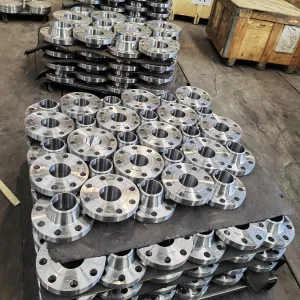
By housing pipe fitting manufacturing, flange forging, seamless steel pipe processing, and industrial valve assembly under the single umbrella of Hebei Cangrun Pipeline Equipment Co., Ltd. and its specialized subsidiaries, complete piping packages are produced in-house with zero external subcontractor overhead.
Engineering Data Sheet: Flexible Metallic Hose Materials & Standards
Selecting the appropriate flexible hose connector requires matching fluid chemical compatibility, maximum working pressure (MWP), system temperature, and mechanical movement requirements. Below is the engineering matrix for Cangrun industrial flexible connectors:
| Component | Material Standard | Nominal Size (DN / NPS) | Working Pressure (PN / Class) | Primary Industrial Applications |
|---|---|---|---|---|
| Inner Corrugated Core | ASTM A240 SS304, SS316L, SS321, Monel 400 | DN15 to DN600 (1/2" - 24") | Vacuum up to 100 bar (1450 PSI) | Corrosive chemicals, steam lines, cryogenic liquids, high-temp exhaust. |
| Outer Wire Braid | AISI 304 / 316 Stainless Steel Wire (Single/Double Braid) | Matching Hose OD | Elevates core pressure rating by 300%-500% | Prevents axial elongation under internal hydraulic pressure. |
| End Fittings (Flanged) | ASTM A105, A182 F304/F316L (ANSI B16.5, EN1092-1, JIS B2220) | DN15 to DN4000 (1/2" - 160") | Class 150 - Class 2500 / PN2.5 - PN400 | High-pressure pump connections, thermal expansion joints, refinery headers. |
| End Fittings (Threaded/Weld) | ASTM A105, SS304/316 Socket Weld (SW), NPT/BSP Threaded Nipples | DN15 to DN100 (1/2" - 4") | 3000LB / 6000LB / SCH40 to XXS | Compact mechanical rooms, hydraulic lines, boiler feedwater loops. |
Localized Application Scenarios & Sector Deployment
From ultra-clean pharmaceutical lines to heavy marine propulsion systems, flexible hose connectors protect rigid piping networks against failure modes.
Power Plant Steam & Feedwater Loops
Absorbs intense thermal cycles in high-pressure steam boilers and turbine inlet connections, preventing stress cracking at rigid pipe welds during startup and shutdown sequences.
Petrochemical Refinery Pump Stations
Installed at pump suction and discharge ports to isolate continuous mechanical vibration, protecting sensitive pump seals and impellers from pipeline stress.
District Heating & Commercial HVAC Systems
Eliminates noise transmission through chilled water loops and heating headers in high-rise buildings, while absorbing building settlement and seismic forces.
Corrosive Acid & Solvent Handling
Utilizes SS316L and Hastelloy C-276 corrugated liners to safely transport aggressive chemical media, resisting pitting corrosion and stress corrosion cracking (SCC).
Shipbuilding Marine Engine Piping
Approved for marine engine fuel lines, exhaust manifolds, and ballast systems where structural hull movement and constant marine engine vibration are present.
Sanitary & High-Purity Fluids
Smooth-bore metallic and PTFE-lined flexible hoses designed for CIP (Clean-in-Place) and SIP (Sterilize-in-Place) applications in biopharmaceutical and food plants.
Global Enterprise Procurement Needs & Quality Verification
For global engineering, procurement, and construction (EPC) companies, evaluating a flexible hose connector company requires more than requesting a price catalog. Procurement directors must audit manufacturing compliance, material traceability, and non-destructive testing (NDT) protocols to guarantee zero-leakage operations over a 20+ year plant lifecycle.
Key Technical Compliance Checkpoints for RFQ Evaluation:
- Material Test Reports (MTR): Complete traceability conforming to EN 10204 3.1 or 3.2 standards, confirming chemical composition and mechanical tensile testing for both hose wire and end flanges.
- Hydrostatic & Pneumatic Leak Testing: 100% factory pressure testing at 1.5 times the rated working pressure under water, combined with mass spectrometer helium leak detection for critical gas lines.
- EJMA Guidelines Compliance: Expansion Joint Manufacturers Association (EJMA) calculation verification for cycle life expectation (typically minimum 10,000 full thermal cycles).
- Welding Qualification: Automatic TIG/GTAW longitudinal welding of corrugated cores, performed by qualified welders certified under ASME Section IX or EN ISO 15614-1.
Manufacturing Authority: Hebei Cangrun Pipeline Equipment Co., Ltd.
Based in Cangzhou City, Hebei Province, HEBEI CANGRUN PIPELINE EQUIPMENT CO., LTD. (established in 2010) operates alongside two dedicated manufacturing subsidiaries: CANGZHOU FEIWO METAL PRODUCTS CO., LTD. and CANGZHOU FEIXIANG METAL PRODUCTS CO., LTD. spanning the Boerzhuang Industrial Zone. Certified under ISO 9001, Cangrun manufactures seamless fittings, forged flanges, ERW/seamless steel pipes, and flexible pipeline components ranging from DN15 to DN4000 with pressure ratings from Class 150 to Class 2500.
Future Trends in Flexible Hose & Piping Infrastructure
Innovations shaping next-generation industrial fluid transfer and smart piping networks.
Smart IoT Strain Sensing
Integration of fiber-optic Bragg grating sensors directly within the metallic braid to monitor micro-strain, thermal spikes, and fatigue accumulation in real time, enabling predictive maintenance prior to catastrophic line failure.
Hydrogen-Ready Flexible Connectors
Development of ultra-low permeability austenitic stainless steel (such as SS316LN and Inconel 625) corrugated liners engineered specifically to resist hydrogen embrittlement under high-pressure gaseous hydrogen storage and distribution.
Super-Alloy Braiding Geometry
Advanced multi-axis braiding configurations using Hastelloy, Titanium, and Nickel alloys engineered for extreme chemical wash-down environments, marine splash zones, and high-frequency acoustic fatigue suppression.
Frequently Asked Questions (Technical & Procurement FAQ)
Clear answers to crucial technical, quality, and commercial questions for engineering buyers.
What is the difference between an unbraided and a braided flexible hose connector?
How do Cangrun factories maintain discount pricing while fulfilling ASME / ISO standards?
Which material grade should I choose for high-temperature steam lines?
Can Cangrun supply custom flange connections (ANSI, DIN, JIS, BS)?
What quality certification and testing documentation is provided with shipments?
How do I calculate the proper live length of a flexible connector to prevent premature failure?
Complementary Piping Components & Fittings Catalog
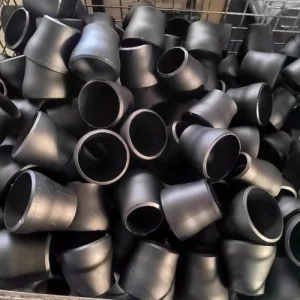
Explore our full line of butt-weld tees, reducers, forged fittings, and precision flanges for complete pipeline system installation.