
Featured Industrial Products Showcase — Part 1
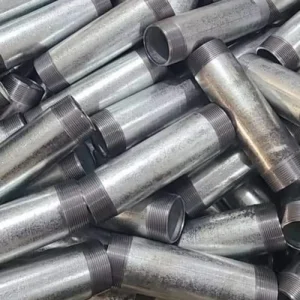
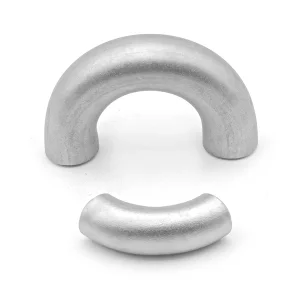
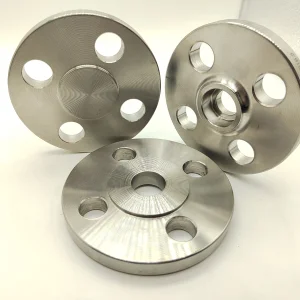
Explore factory-direct butt-weld pipe fittings, heavy-wall forged components, ANSI/DIN standard flanges, and high-pressure industrial valves certified for global EPC projects.
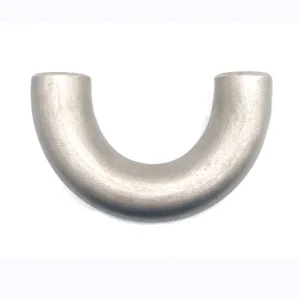
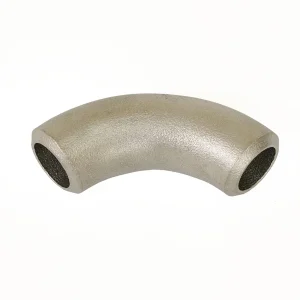
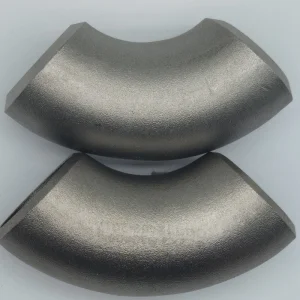
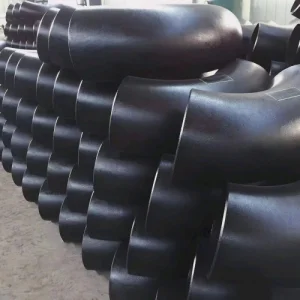
1. Executive Summary & Macro Commercial Landscape
In modern industrial process engineering, the reliance on high-integrity corrosion-resistant piping networks has reached unprecedented levels. Modern energy infrastructure, chemical refining, liquefied natural gas (LNG) transport, marine offshore modules, and bio-pharmaceutical manufacturing demand piping systems capable of enduring aggressive fluid dynamics, extreme thermal cycles, and severe environmental stresses. As global engineering, procurement, and construction (EPC) conglomerates seek optimized supply chains without compromising material safety or regulatory compliance, China’s stainless steel fitting manufacturing sector—anchored by specialized industrial hubs in Cangzhou, Hebei—has evolved into a premier international supplier of certified pipeline hardware.
Historically viewed as a volume-driven manufacturing base, China’s top-tier pipeline equipment manufacturers have undergone a profound technological transformation over the past two decades. Today, advanced forging techniques, automated hot-mandrel elbow forming, high-precision CNC beveling, continuous solution annealing furnaces, and fully integrated non-destructive testing (NDT) laboratories define the production floor. Manufacturers such as Hebei Cangrun Pipeline Equipment Co., Ltd. and its specialized subsidiaries—Cangzhou Feiwo Metal Products Co., Ltd. and Cangzhou Feixiang Metal Products Co., Ltd.—embody this technical maturation. Operating with strict ISO 9001 quality control frameworks, these enterprise groups bridge the gap between global technical compliance (ASME, ASTM, EN, DIN, JIS) and competitive total cost of ownership (TCO).
Global enterprise procurement demands more than component ordering; it requires robust risk management. Modern supply chain volatility, fluctuating freight rates, carbon emissions compliance (CBAM), and strict metallurgical traceability (EN 10204 3.1/3.2 MTRs) mandate that industrial buyers partner directly with origin manufacturers. China’s stainless steel pipe fitting ecosystem provides unparalleled material availability—ranging from baseline austenitic grades like TP304/304L and TP316/316L to specialized high-temperature 310S/321H, urea-grade 316Lmod, duplex UNS S31803 / S32205, and super duplex UNS S32750 / S32760 materials.
2. Enterprise Procurement Requirements & Dimensional Standard Matrix
When evaluating suppliers for critical stainless steel butt-weld fittings, forged fittings, flanges, and valves, enterprise buyers must cross-reference dimensional standards, material specifications, and testing protocols. Below is a detailed engineering reference matrix summarizing key product lines manufactured under rigorous ISO 9001 and pressure vessel compliance frameworks.
| Component Group | Manufacturing Standards | Material Grade Spectrum | Dimensional Range & Schedules | Primary Quality Control Testing |
|---|---|---|---|---|
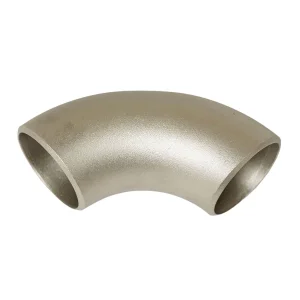
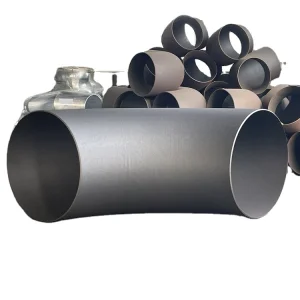
| Butt-Weld Fittings (Elbows, Tees, Reducers, Caps) |
ASME B16.9, MSS SP-43, EN 10253-4, DIN 2605/2615/2616, JIS B2311/B2312 | ASTM A403 WP304/304L/304H, WP316/316L/316Ti, WP321/321H, WP347/347H, Duplex 2205, Super Duplex 2507 | Seamless: 1/2" to 24" (DN15–DN600) Welded: 4" to 78" (DN150–DN1900) SCH 5S to SCH XXS (Up to 150mm WT) |
X-Ray Radiography (RT), Liquid Penetrant (PT), PMI Chemical Verification, Solution Anneal Temp Logging |
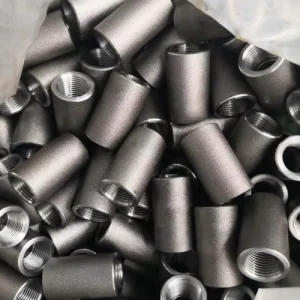
| Forged High-Pressure Fittings (Threaded & Socket Weld) |
ASME B16.11, BS 3799, MSS SP-79/83/95/97 | ASTM A182 F304/304L, F316/316L, F321, F51, F53, F55, Alloy 625/825, Hastelloy C276 | 1/8" to 4" (DN6–DN100) Pressure Rating: 2000#,#3000,#6000, 9000# |
Hydrostatic Proof Testing, Magnetic Particle / PT, Thread Gauge Calibration (NPT/PT), Hardness Testing |
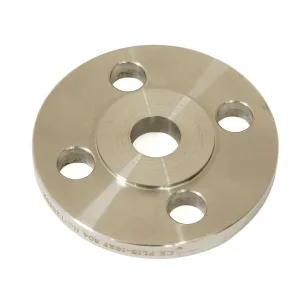
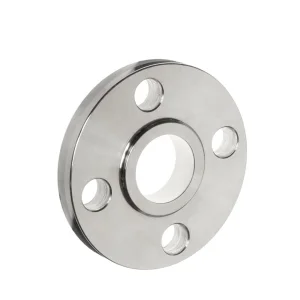
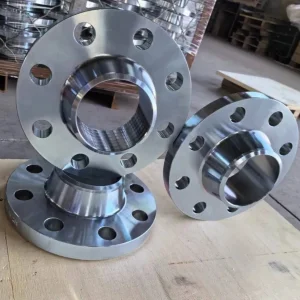
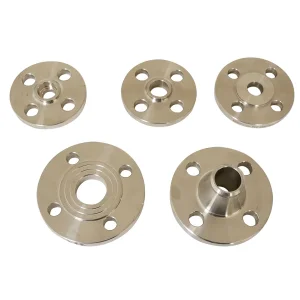
| Industrial Steel Flanges (Weld Neck, Slip-On, Blind, Plate) |
ASME B16.5, ASME B16.47 (Series A/B), EN 1092-1 Type 01/11/05, DIN 2527/2633/2635, BS 4504 | ASTM A182 F304/304L, F316/316L, A105 Carbon Steel, ST37.2, LF2, Low Alloy F11/F22/F91 | 3/8" to 160" (DN10–DN4000) Class 150 to Class 2500 PN 2.5 to PN 400 |
Ultrasonic Thickness & Flaw Detection (UT), Dimensional CMM Inspection, Surface Roughness (Ra) Gauge |
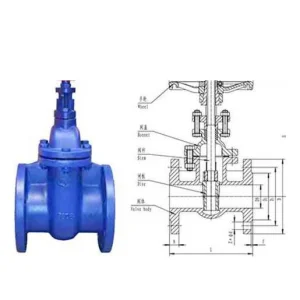
| Process Flow Valves (Gate, Ball, Butterfly Valves) |
API 600, API 6D, API 598, ASME B16.34, EN 12516, GB/T 12234 | CF8 (304), CF8M (316), WCB, Ductile Iron QT450-10, A+Z45T/W-10/16Q, Q41F Stainless | DN15 to DN1200 (1/2" to 48") PN10 to PN100 / Class 150 to Class 600 |
Shell Hydrostatic Test, High-Pressure Gas Seat Leakage Test, Fire-Safe API 607 Validation, Torque Testing |
Procurement protocols must also address surface finish specifications. For industrial chemical applications, acid-pickled and passivated inner/outer surfaces (in accordance with ASTM A967) are standard to remove free iron contamination and restore the chromium oxide passive layer. For high-purity pharmaceutical, semiconductor, or food-grade installations, mechanical polishing down to Ra < 0.4 µm or electropolishing (EP) is integrated directly into post-forming finishing procedures.
3. Macro Industrial Solutions & Sector-Specific Engineering Applications
Stainless steel piping components must be engineered to withstand specific thermal, mechanical, and chemical mechanisms peculiar to individual operating environments. Below are the tailormade material selection and manufacturing pathways deployed across major global industries:
Petrochemical & Hydrocarbon Refining
Refinery process units (such as hydrocrackers, fluid catalytic crackers, and amine treating systems) operate under high hydrogen partial pressures and elevated temperatures. To mitigate High-Temperature Hydrogen Attack (HTHA) and polythionic acid stress corrosion cracking (PASCC), enterprise solutions utilize stabilized stainless steel grades such as ASTM A403 WP321H and WP347H, or low-carbon WP316L compliant with NACE MR0175/ISO 15156 for sour (H2S-rich) service.
LNG Cryogenic Transportation & Storage
Liquefied Natural Gas facilities process methane at -162°C (-259°F). At these cryogenic thresholds, carbon steel experiences complete duct-to-brittle transition. Seamless low-carbon austenitic stainless steel fittings (WP304L / WP316L) subjected to Charpy V-Notch impact testing at -196°C ensure superior toughness, zero brittle fractures, and structural stability across regasification terminals and carrier piping systems.
Desalination & Marine Offshore Engineering
Seawater Reverse Osmosis (SWRO) plants and offshore oil production platforms face extreme chloride pitting and crevice corrosion. Conventional 316L fails rapidly under high-pressure brine streams. Industrial solutions mandate 2205 Duplex (UNS S32205) and 2507 Super Duplex (UNS S32750) stainless steel fittings, offering a Pitting Resistance Equivalent Number (PREN) ≥ 42 to withstand aggressive marine environments while delivering double the yield strength of standard austenitics.
4. Advanced Metallurgical Manufacturing & Quality Assurance Roadmap
Achieving superior performance in stainless steel pipeline fittings requires absolute mastery over plastic deformation, thermal treatment, and grain boundary control. Below is an insider look into the technical manufacturing methodology implemented across modern Chinese pipeline facilities:
A. Hot Mandrel Pushing & Cold Forming
For seamless elbows, the hot mandrel expansion process pushes a cut tube piece over a horn-shaped mandrel under controlled induction heating. This guarantees uniform wall thickness distribution, perfect ovality control, and smooth internal radius transitions, eliminating thinning issues often caused by simple cold bending.
B. Full Solution Heat Treatment (Annealing)
During forming, stainless steel undergoes work hardening and chromium carbide precipitation along grain boundaries (sensitization), which severely weakens corrosion resistance. All raw fittings undergo full solution annealing at 1040°C to 1120°C followed by rapid water quenching. This dissolves carbides back into the austenitic matrix, eliminating intergranular corrosion susceptibility.
C. CNC Beveling & Wall Thickness Accuracy
Field welding defects (such as lack of penetration or burn-through) stem from improper pipe fitting end preparation. Advanced multi-axis CNC machines cut weld bevels (ASME B16.25 compound bevels or standard 37.5° angle) with tolerances maintained within ±0.5mm, enabling flawless fit-up on automated orbital field welding rigs.
5. Technology Roadmap & Future Outlook (2025–2035)
The global industrial landscape is accelerating toward decarbonization, digital supply chains, and ultra-high purity requirements. The pipeline equipment sector in China is actively adapting to these macro-trends through three main technological initiatives:
1. Green Stainless Steel & Hydrogen-Billet Feedstocks
To satisfy European Union Carbon Border Adjustment Mechanism (CBAM) requirements, leading Chinese pipe mills are integrating Electric Arc Furnace (EAF) steelmaking powered by renewable energy, along with direct reduced iron (DRI) processes using green hydrogen. This lowers the embodied carbon footprint of stainless steel pipe fittings by up to 60%.
2. Digital Twin Traceability & QR Matrix Encoding
Traditional paper MTRs are being upgraded to digital blockchain-verified records. Every individual fitting will feature laser-etched 2D DataMatrix codes. Field engineers can scan the fitting to instantly access melt heat numbers, original mill test certificates, ultrasonic NDT scans, and dimensional inspection logs in real time.
3. Additive Manufacturing for Complex Geometries
Selective Laser Melting (SLM) and Direct Energy Deposition (DED) 3D printing technologies are transitioning from prototype design to specialized manufacturing of non-standard branch outlets, custom manifolds, and internal flow-optimized valve components in Super Duplex and Nickel Superalloys.
6. Localization Support, Compliance Assurance & Export Logistics
Navigating international trade dynamics, cross-border engineering standards conversion, and freight logistics requires robust institutional support. Experienced Chinese manufacturers offer direct end-to-end support to mitigate procurement risk:
Dual Standard Certification
Products can be dual-certified to bridge American and European standards (e.g., ASTM A403 WP316L / EN 10253-4 W.Nr 1.4404), streamlining cross-border engineering approvals for global EPC projects.
Third-Party Inspection Integration
Mandatory hold-points for client-appointed Third-Party Inspection (TPI) agencies—such as SGS, Bureau Veritas (BV), TÜV Rheinland, DNV, and Lloyd’s Register—are seamlessly incorporated into the manufacturing Quality Control Plan (QCP/ITP).
Export Packaging & Logistics Management
Products receive heavy-duty ISPM-15 compliant seaworthy wooden box packing, plastic end-cap protection, VCI anti-rust film wrapping, and container loading consolidation. This prevents freight damage during long-distance ocean transport.
Featured Industrial Products Showcase — Part 2
Explore high-pressure forged couplings, ANSI/ASME blind and orifice flanges, specialized wedge gate valves, and heavy-duty carbon/stainless steel butt-weld components.
7. Frequently Asked Questions (Technical & Procurement Q&A)
Detailed engineering responses addressing common procurement, technical qualification, material selection, and international compliance queries.