
Featured Industrial Piping Components — Batch A
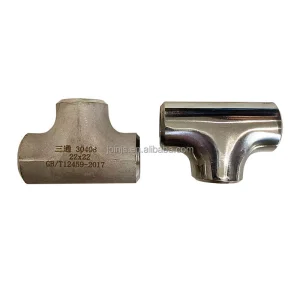
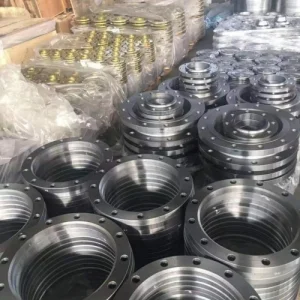
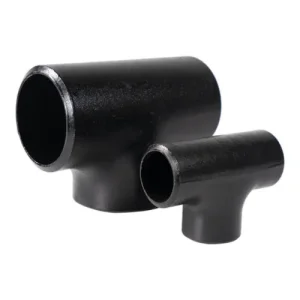
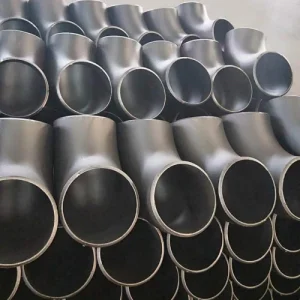
High-precision ASME B16.5 / B16.9 forged flanges, elbows, and specialty pipe fittings manufactured under ISO 9001 and PED 2014/68/EU guidelines.
Global Industrial Status & Macroeconomic Dynamic of 150# Flanges
Analyzing supply chains, regional trade flows, metallurgical benchmarks, and economic drivers in the class 150 pressure rating ecosystem.
In global industrial process piping, the Class 150 (150#) flange rating standardized under ASME B16.5 serves as the baseline pressure boundary component for low-to-medium pressure installations worldwide. Rated for maximum cold working pressures up to 285 psi (19.6 bar) at ambient temperatures for carbon steel materials, Class 150 flanges constitute approximately 55% to 60% of total worldwide industrial flange volumetric consumption. From petrochemical refining complexes in the US Gulf Coast to municipal desalination networks across the Middle East, the 150# flange represents an indispensable structural component in mechanical engineering.
China's position as a premier global manufacturing epicenter for Class 150 steel flanges—specifically centered within industrial clusters such as Cangzhou, Hebei—is backed by end-to-end integration across raw billet forging, precision multi-axis CNC machining, and advanced surface coating lines. Chinese manufacturing entities leverage localized supply chains for ASTM A105 forged carbon steel, ASTM A182 F304/F316 stainless steel, and ASTM A350 LF2 low-temperature carbon steel, enabling massive scale while strictly adhering to international standards such as ASME B16.5, ASME B16.47, EN 1092-1, JIS B2220, and GOST 33259.
Current Global Commercial Landscape & Market Drivers
The global market for Class 150 flanges is undergoing a structural shift driven by three primary industrial imperatives: global energy transition infrastructure, regional water scarcity mitigation, and modern modular skid construction. Engineering, Procurement, and Construction (EPC) contractors are increasingly shifting toward centralized sourcing models in China to balance strict capital expenditure constraints with uncompromising quality assurance specifications.
ASME B16.5 Class 150 Engineering Specifications & Metallurgy
In-depth technical breakdown of pressure-temperature ratings, dimensional tolerances, material chemical compositions, and flange facings.
Understanding the engineering envelope of Class 150 flanges requires precise evaluation of material selection against operating media, thermal cycles, and environmental exposure. Below is the standardized working pressure rating chart for ASME B16.5 Class 150 flanges across common industrial material groups.
| Temperature (°C / °F) | Group 1.1: Carbon Steel (ASTM A105) | Group 2.2: Stainless 316 (ASTM A182 F316) | Group 1.9: Low-Temp (ASTM A350 LF2) | Group 3.8: Duplex (ASTM A182 F51/2205) |
|---|---|---|---|---|
| -29 to 38°C (-20 to 100°F) | 285 psi (19.6 bar) | 275 psi (19.0 bar) | 285 psi (19.6 bar) | 290 psi (20.0 bar) |
| 93°C (200°F) | 260 psi (17.9 bar) | 240 psi (16.5 bar) | 260 psi (17.9 bar) | 260 psi (17.9 bar) |
| 149°C (300°F) | 230 psi (15.8 bar) | 215 psi (14.8 bar) | 230 psi (15.8 bar) | 230 psi (15.8 bar) |
| 204°C (400°F) | 200 psi (13.8 bar) | 195 psi (13.4 bar) | 200 psi (13.8 bar) | 200 psi (13.8 bar) |
| 260°C (500°F) | 170 psi (11.7 bar) | 170 psi (11.7 bar) | 170 psi (11.7 bar) | 170 psi (11.7 bar) |
| 316°C (600°F) | 140 psi (9.6 bar) | 140 psi (9.6 bar) | 140 psi (9.6 bar) | 140 psi (9.6 bar) |
| 371°C (700°F) | 110 psi (7.6 bar) | 110 psi (7.6 bar) | 110 psi (7.6 bar) | Not Recommended |
Flange Structural Configurations & Facing Finish Engineering
Chinese high-end export manufacturers produce Class 150 flanges across several primary physical configurations to match specific mechanical stresses and piping joint geometries:
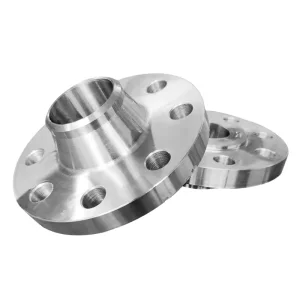
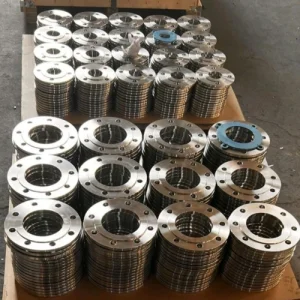
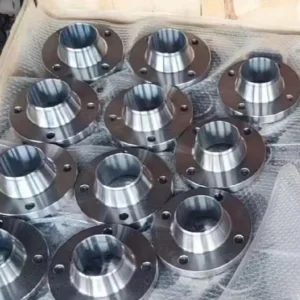
- Weld Neck Flanges (WN): Designed with a tapered hub to transmit stresses to the pipe wall, mitigating high stress concentrations at the flange base. Essential for cyclic loading and thermal expansion.
- Slip-On Flanges (SO): Positioned over the pipe end and secured via inner and outer fillet welds. Preferred for cost efficiency and ease of alignment in Class 150 low-pressure service.
- Blind Flanges (BL): Used to isolate or seal piping system ends, pressure vessel nozzles, and valve maintenance blocks. Must withstand full hoop and bending stresses.
- Socket Weld (SW) & Threaded (TH): Optimized for small-bore piping systems (typically ≤ 2 inches) where butt-welding is unfeasible or flame-free assembly is mandatory.
- Facing Options & Serrations: Standard Class 150 flanges feature a Raised Face (RF) of 1.6 mm (1/16 in) with a spiral or concentric serrated finish ranging from 125 to 250 AARH (Ra 3.2 to 6.3 µm) to achieve optimal gasket seating friction. Flat Face (FF) and Ring Type Joint (RTJ) facings are engineered for cast-iron mating and extreme seal reliability respectively.
Manufacturing Process, Forging Technology & Quality Control
Inside the modern Chinese flange factory: From closed-die closed-loop forging to automatic CNC machining and rigorous NDT protocols.
Achieving mechanical integrity and grain structure uniformity in Class 150 flanges requires strict avoidance of casting methods for primary pressure retaining components. Top-tier factories in China utilize 100% forged billet feedstock subjected to controlled thermal forging cycles.
1. Billets & Heating
High-grade raw steel round bars are subjected to ultrasonic testing before induction heating in computer-controlled electric furnaces to reach optimal forge temperatures (1150°C - 1250°C).
2. Ring Rolling & Forging
Forging hydraulic presses and radial-axial ring rolling mills shape the heated steel, creating continuous circumferential grain flow that yields maximum impact toughness and fatigue strength.
3. Heat Treatment
Dependant on material grade, flanges undergo Normalizing (A105), Solution Annealing (Austenitic Stainless SS304/316), or Quenching and Tempering (Low Alloy LF2) to relieve internal mechanical stress.
4. Precision Machining
Multi-axis CNC turning centers perform high-precision machining of bolt circle diameters, flange thickness, bore dimensions, and serrated face profiles within sub-millimeter tolerances.
Comprehensive Inspection Protocols (E-E-A-T Reliability Assurance)
To comply with international quality guidelines and provide non-negotiable proof of performance, every batch of 150# flanges manufactured by established Chinese suppliers is subjected to rigorous quality control regimens, certified according to EN 10204 3.1 / 3.2 standard inspect certificates:
- Positive Material Identification (PMI): Handheld XRF spectrum analyzers verify chemical alloy elements (Cr, Ni, Mo, Mn) prior to machining and packaging.
- Dimensional Verification: Coordinate Measuring Machines (CMM) and laser optics verify PCD, bolt hole alignment, hub thickness, and flange facing serration pitch.
- Non-Destructive Testing (NDT): Ultrasonic Testing (UT) identifies internal voids or inclusions; Magnetic Particle Inspection (MPI) and Dye Penetrant Inspection (DPI) detect surface discontinuities.
- Mechanical Testing: Tensile strength, yield strength, elongation, Charpy V-Notch impact testing (down to -46°C for LF2), and Brinell hardness testing.
Localized Industrial Application Scenarios & Global Field Deployments
Examining real-world engineering implementations of Class 150 flanges across major critical infrastructure sectors.
Oil & Gas Processing
Used extensively in upstream crude gathering manifolds, separator skids, and low-pressure gas compression plants. ASTM A105 and A350 LF2 Class 150 flanges provide dependable sealing under vibration and modest thermal variation.
Chemical & Petrochemical
Utilizing ASTM A182 F316L and Duplex F51 150# flanges in acid transfer lines, polymer reactors, and caustic scrubbing systems. Superior pitting corrosion resistance (PREN ≥ 34) ensures zero-leakage fluid transfer.
Municipal & Water Desalination
Large diameter ASME B16.47 Series A/B Class 150 flanges (up to 60 inches) integrated into reverse osmosis (RO) high-volume header lines, cooling water intake circuits, and sewage treatment works.
Power & HVAC Infrastructure
Installed in steam condensate lines, low-pressure boiler feed networks, and district heating plants where thermal cycles demand ductile carbon steel flanges capable of absorbing expansion stress.
Technology Roadmap & Macro-Industry Solutions (2025–2035)
Future-proofing pipeline networks with smart manufacturing, hydrogen-ready metallurgy, and decarbonized forging processes.
As global energy sectors transition toward cleaner fuels, hydrogen blending, and carbon capture and storage (CCS), piping component manufacturers in China are evolving their technological capabilities to meet next-generation requirements.
1. Hydrogen-Ready Metallurgical Refinement
Gaseous hydrogen transportation demands ultra-clean steel matrices to prevent Hydrogen-Induced Cracking (HIC) and Stress Corrosion Cracking (SCC). Modern Chinese factories utilize Vacuum Degassing (VD) and Electroslag Remelting (ESR) technologies to limit sulfur levels (S ≤ 0.005%) and phosphorus (P ≤ 0.010%), ensuring Class 150 carbon steel flanges comply with NACE MR0175 / ISO 15156 standards.
2. AI-Driven Smart Forging & Digital Twin Quality Control
Leading manufacturing plants have deployed AI vision inspection system automation to evaluate flange surface finish, thread profile, and dimensional geometry directly on the CNC lathe line. Digital twin modeling simulates thermal cooling rates to optimize grain refinement, virtually eliminating hidden structural micro-porosity.
3. Sustainable Green Steel & Low-Carbon Production
In response to global Carbon Border Adjustment Mechanisms (CBAM), top Chinese forging clusters are integrating electric arc furnaces (EAF) powered by green solar and wind power, reducing the carbon footprint per ton of forged flanges by up to 40% compared to traditional blast furnace routes.
Featured Industrial Piping Components — Batch B
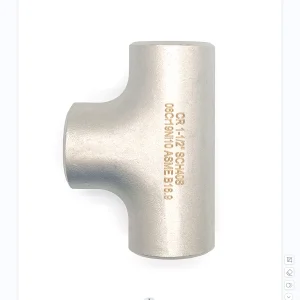
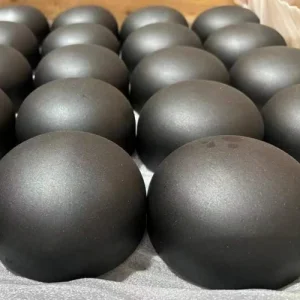
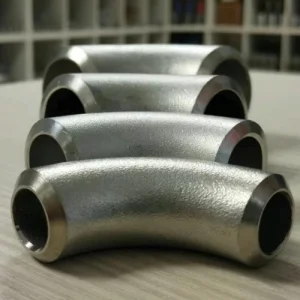
Complete your piping material take-off with matching butt-weld elbows, tees, caps, compensators, and ASME flanges.
Technical Engineering FAQ: Class 150 Flanges
Answers to critical questions regarding design pressure, gasket compatibility, bolt torque, standards conversion, and quality inspection.
- Non-Metallic Compressed Fiber / PTFE: Ideal for general utility water, air, and low-pressure chemical service (-20°C to 150°C).
- Spiral Wound Gaskets (ASME B16.20): 316L stainless steel windings with flexible graphite or PTFE filler and outer centering rings for hydrocarbons and process steam.
- Neoprene / EPDM Elastomeric Gaskets: Preferred for Flat Face (FF) water service lines to prevent over-torquing cast-iron mating flanges.
- Black Rust-Preventive Paint / Varnish: Standard low-cost rust protection.
- Yellow Anti-Rust Compound / Light Transparent Oil: Preferred when weld ends must remain residue-free.
- Hot-Dip Galvanizing (ASTM A123): Heavy zinc coating for extreme outdoor or marine environments.
- 3LPE / Fusion Bonded Epoxy (FBE): For direct burial or underground pipeline integration.