
Featured Weld Neck Flanges & Piping Components
Select from our core production lines manufactured under rigorous ISO 9001:2015 and PED 2014/68/EU quality controls.
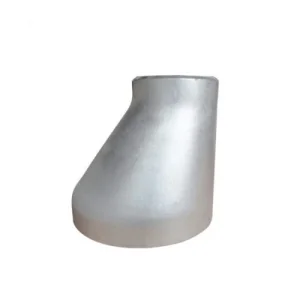
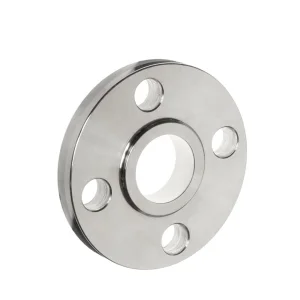
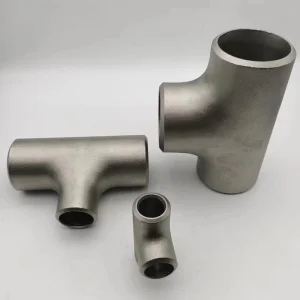
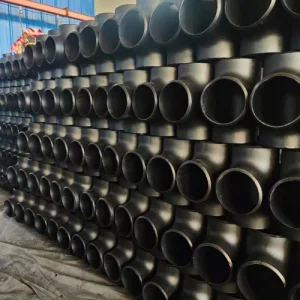
1. Metallurgical Mechanics & Structural Superiority of WN Flanges
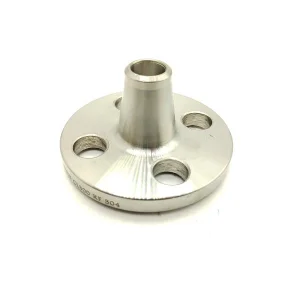
In high-pressure, severe thermal cycling, and hazardous fluid transport systems, the Weld Neck (WN) flange stands as the definitive benchmark for structural integrity. Unlike flat plate or slip-on flanges that rely on fillet welds, a Weld Neck flange is engineered with a long, tapered hub that transfers mechanical stress directly from the flange ring to the attached pipe wall. This gradual transition zone minimizes stress concentration at the base of the flange, mitigating structural fatigue under intense bending moments, line expansion, and hydraulic shock loads.
Optimal Stress Distribution
The tapered hub gently dissipates hoop and axial stresses, preventing localized deformation under pressure ratings up to ASME Class 2500 / PN400.
Full Penetration Butt Weld
Designed for full-penetration V-bevel welding. Enables 100% Non-Destructive Testing (NDT) via Radiographic (RT) or Ultrasonic (UT) inspection methods.
Erosion & Turbulence Reduction
The bore of the WN flange is custom-machined to match the internal diameter (ID) of the mating pipe, ensuring smooth fluid dynamics without turbulence.
Technical Insight: When selecting a WN flange factory, engineering teams must evaluate the hub taper angle and radius transitions. Substandard hot forging processes often cause micro-folds or internal inclusions at the neck-to-flange junction, leading to catastrophic failure under low-cycle fatigue testing.
Dimensional Standards & Pressure Ratings Overview
Global industrial projects demand precise compliance across international standard frameworks. Our manufacturing operations strictly conform to the following primary codes:
- ASME B16.5: Pipe Flanges and Flanged Fittings (NPS 1/2 through NPS 24) covering Pressure Classes 150, 300, 400, 600, 900, 1500, and 2500.
- ASME B16.47 Series A & B: Large Diameter Steel Flanges (NPS 26 through NPS 60) for heavy pipeline transport and refinery pressure vessels.
- EN 1092-1 (Type 11): European standard for forged weld neck flanges ranging from PN 2.5 to PN 400.
- DIN Standards (DIN 2631 to DIN 2638): Legacy European specifications widely utilized across power plants and chemical complexes worldwide.
- MSS SP-44 & API 6A: High-pressure pipeline applications and wellhead equipment up to 10,000+ PSI working pressure.
2. Metallurgical Selection & Precision Forging Technology
The operational lifespan of a high-pressure piping installation depends directly on raw material purity and exact thermal treatment. As a premier WN flange exporter and factory, our metallurgical control starts at the steel billet phase.
Material Grade Spectrum
Carbon & Low-Temperature Steel
ASTM A105 / A105N: Standard ambient to high-temperature carbon steel for general industrial piping.
ASTM A350 LF2 Class 1/2: Low-temperature carbon steel optimized for notch toughness down to -46°C (-50°F).
Austenitic & Duplex Stainless
ASTM A182 F304/304L & F316/316L: Superior corrosion resistance for chemical processing and marine environments.
Duplex F51 (S31803) / Super Duplex F53 (S32750): High yield strength combined with extreme resistance to chloride pitting and stress corrosion cracking.
Alloy Steel for Elevated Temp
ASTM A182 F11, F22, F91, F911: Chromium-Molybdenum alloy steels engineered to resist creep deformation in high-temperature steam lines up to 650°C.
Nickel Alloys & Exotic Grades
Inconel 625, Hastelloy C276, Monel 400: Specialized non-ferrous alloys for extreme acidic, offshore, and nuclear power applications.
Forging Workflow & Grain Structure Control
Forging is not merely shaping steel; it is the process of aligning grain flow along the directional stress paths of the component. Our manufacturing facility utilizes automated 6,000-ton hydraulic forging presses and precision ring-rolling mills. The workflow includes:
- Billet Heating: Induction heating to exact forging temperatures (1150°C - 1250°C) with computerized optical pyrometers to prevent overheating or decarb metal scale.
- Pre-Forming & Upsetting: Axial compression to break down cast dendrite structures and homogenize internal density.
- Seamless Ring Rolling: Forming the flange neck and flange ring simultaneously under controlled mechanical reduction to yield continuous grain flow.
- Normalized / Solution Heat Treatment: Post-forge heat treatment in computer-controlled furnaces followed by water quenching or air cooling to restore optimal mechanical properties and relieve internal residual stress.
3. Strategic Advantages of Sourcing WN Flanges from China
How Cangzhou's industrial ecosystem delivers high-volume production, material traceability, and competitive pricing for global engineering procurement.
Raw Material Synergy
Direct partnerships with top-tier steel mills (such as Baosteel, TISCO, and Shougang) guarantee immediate raw material allocation, certified chemistry, and raw material cost optimization.
Advanced Machining Fleet
Equipped with high-precision multi-axis CNC vertical lathes, automated flange-facing machines, and high-speed drilling rigs ensuring flange face serration tolerances within ±0.05mm.
Global Export Logistics
Located near major ocean ports (Tianjin/Qingdao), our logistical network coordinates ocean freight, container load planning, and customs compliance to guarantee on-time job site delivery.
4. Comprehensive Quality Assurance & Compliance Standards
For global EPC contractors and procurement officers, verifying product authenticity and compliance is non-negotiable. Our quality management framework operates under a zero-defect policy backed by rigorous Non-Destructive Testing (NDT) and complete documentation.
Material Test Certificates (EN 10204 3.1 / 3.2)
Every shipment is accompanied by Mill Test Certificates detailing chemical heat analysis, mechanical tensile test, yield point, elongation, Charpy V-Notch impact values, and hardness testing results.
Positive Material Identification (PMI)
100% PMI testing utilizing handheld XRF analyzers on alloy and stainless steel WN flanges to verify elemental concentration (Cr, Ni, Mo, Nb, Ti) before packing.
Ultrasonic (UT) & Radiographic (RT) NDT
Volumetric inspection according to ASTM A388 / ASME Section V to detect subsurface voids, inclusions, or forging micro-cracks inside heavy-wall flange necks.
Flange Surface Finish Control
Precise machining of sealing faces: Stock Finish (Ra 3.2 - 12.5 µm), Smooth Finish (Ra 3.2 - 6.3 µm), or Concentric/Spiral Serrated per ASME B16.5 standards.
Local Support & International Compliance Accreditations
We hold global regulatory certifications enabling seamless installation in regulated regional markets:
- PED 2014/68/EU (Pressure Equipment Directive): Full authorization for supplying pressure retaining components into European Union member states.
- CRN (Canadian Registration Number): Approved registration across Canadian provinces for high-pressure industrial facilities.
- ASME Section VIII Div 1 & 2 Compliance: Precision manufacturing matching boiler and pressure vessel code directives.
- Third-Party Inspection (TPI): Full collaboration with independent inspection agencies including SGS, TÜV, Lloyd's Register, BV, and DNV.
5. Industrial Applications & Next-Generation Industry Trends
Weld Neck flanges are deployed across critical infrastructure worldwide where system failure is not an option. Engineering continuous operational uptime requires matching flange mechanics to specific operational stressors.
LNG Cryogenic Terminals
Operating down to -196°C requires ASTM A182 F316L or 9% Nickel steel WN flanges to preserve low-temperature impact toughness without brittle fracture.
Offshore & Deep-Sea Oil
High-pressure, sour-service (H2S) subsea lines utilize Inconel 625 clad WN flanges conforming to NACE MR0175 / ISO 15156 standards.
Nuclear & Thermal Power
Heavy-wall ASTM A182 F91 / F92 WN flanges engineered for main steam lines handling supercritical pressures exceeding 25 MPa at 600°C.
Emerging Market Trends in Flange Manufacturing
The industrial flange sector is undergoing rapid technological development driven by digital automation, environmental compliance, and enhanced monitoring:
- Green Steel Forging: Shift toward low-carbon footprint steel billets produced via electric arc furnaces (EAF) utilizing recycled scrap steel and hydrogen reduction.
- Smart Flange Systems: Integration of embedded optical fiber sensors and strain gauges within high-integrity flanged joints to continuously monitor bolt torque, gasket stress, and thermal expansion in real time.
- Hybrid Additive Forging: Combining high-speed ring rolling with selective laser additive deposition for corrosion-resistant alloy cladding on carbon steel substrates, drastically lowering material cost.
6. Frequently Asked Questions (FAQ)
Expert answers to common engineering, procurement, and manufacturing inquiries regarding Weld Neck Flanges.
Additional High-Quality Piping & Flange Catalog
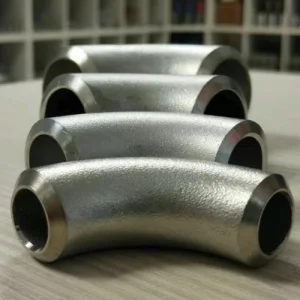
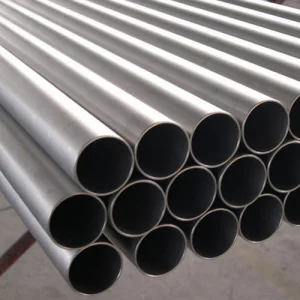
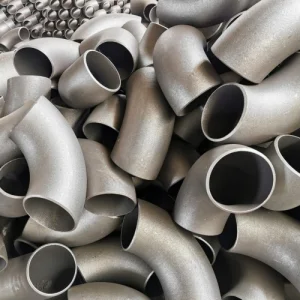
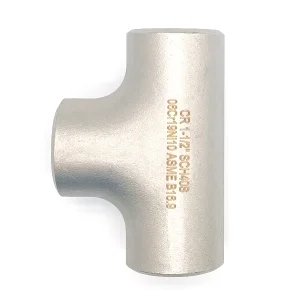
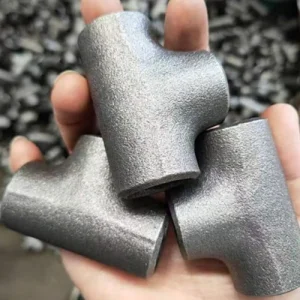
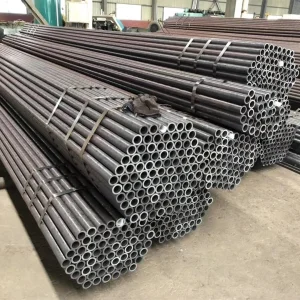
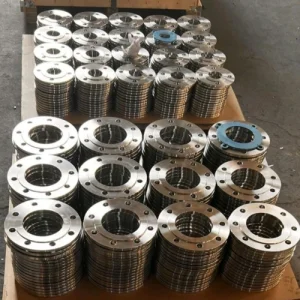
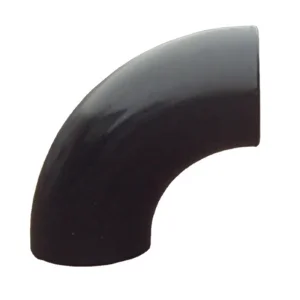
Explore our extended manufacturing line including seamless steel pipes, high-frequency welded tubes, long radius bends, and industrial valves.
Ready to Source Certified WN Flanges Direct from Factory?
Send your Material Take-Off (MTO), size schedules, and project specs directly to our engineering export team for rapid quotation and dimensional drawing verification.
Request Direct Quotation & Technical Datasheet