
Featured Stainless Steel Piping & Valve Components
Precision-engineered ASTM A182/A403 stainless steel components and valve integration solutions direct from our Cangzhou manufacturing hub.
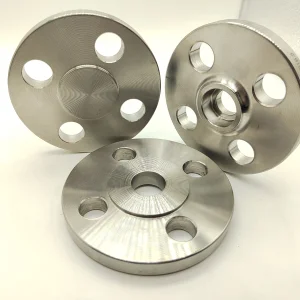
Wholesale High Quality ANSI Stainless Steel Socket Weld Flange From Mark Company, Product
Request Quote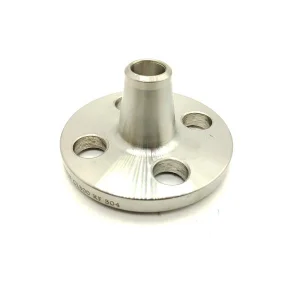
Wholesale ASTM A182 ANSI B16.5 304L 316L Stainless Steel Flange Manufacturers, Suppliers
Request Quote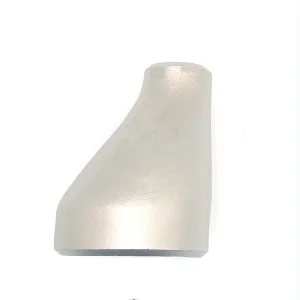
Buy ASME B16.9 Carbon Black Stainless Steel ASME A403 Wp 304 ASME A403 Wp 316 Concentric Seamless Connector Eccentric Butt Weld Welding Pipe Fitting Reducer Factory, Products
Request Quote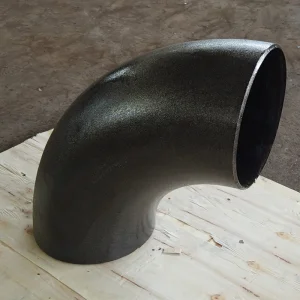
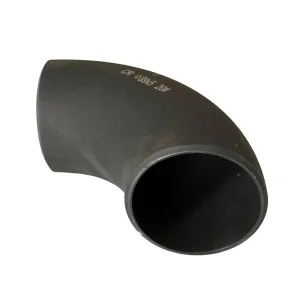
Best Customized Drawings ASME B16.9 304 316 2d 3d 5d 30 35 45 Degree Weld Bend Stainless Steel Carbon Steel 90 Degree 18 Inch Elbow Company, Service
Request Quote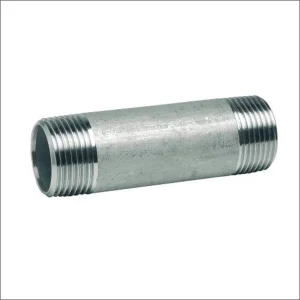
Global Stainless Steel Valve Industry Landscape & Procurement Dynamics
The global industrial valve market is experiencing a profound paradigm shift driven by stringent fugitive emission mandates, aggressive expansion in Liquefied Natural Gas (LNG) infrastructure, green hydrogen production networks, and high-purity chemical processing plants. Stainless steel (SS) valves—primarily forged and cast from austenitic, duplex, super duplex, and nickel-alloy matrices—serve as critical pressure-retaining components across these aggressive operating environments.
Procurement managers and engineering, procurement, and construction (EPC) contractors evaluating candidates when seeking to buy SS valves from factory and exporter networks must navigate a complex landscape of global standards (ASME B16.34, API 600, API 602, API 608, ISO 15848-1) and regional regulatory frameworks. Stainless steel valves offer superior pitting resistance equivalent numbers (PREN), high yield strength under cryogenic temperatures (-196°C), and structural stability up to elevated thermal thresholds (650°C+).
Information Gain Key Insight: Casting vs. Forging Performance
While investment-cast SS valves (ASTM A351 CF8/CF8M) provide exceptional economic scalability and geometric versatility for low-to-medium pressure utility lines (Class 150–300), forged SS valves (ASTM A182 F304L/F316L/F51) are mandatory for critical high-pressure, cyclic thermal applications (Class 600–2500). Forgings eliminate internal micro-porosity, guaranteeing superior grain structure and grain boundary corrosion resistance under high-stress conditions.
LNG & Cryogenic Infrastructure
Extended bonnet gate, globe, and ball valves in 316L and 304L stainless steel, designed to maintain stem packing integrity at cryogenic temperatures down to -196°C (-320°F).
Offshore & Subsea Extraction
Duplex (UNS S31803 / F51) and Super Duplex (UNS S32750 / F53) ball and check valves with PREN > 40 to resist severe chloride pitting and stress corrosion cracking in marine habitats.
Bio-Pharma & High Purity
Electropolished 316L diaphragm and angle valves with surface roughness Ra < 0.38 µm, fulfilling stringent ASME BPE cleanliness requirements for sterile fluid pathways.
China's Manufacturing Efficiency & Supply Chain Mastery
Leveraging Cangzhou’s integrated pipeline manufacturing hub, our export-driven production model achieves unparalleled cost efficiency, fast turnaround, and uncompromising adherence to global QA/QC protocols.
Vertical Integration from Ingot to Finished Valve Assembly
China’s pipeline equipment ecosystem—specifically within the Hebei/Cangzhou industrial corridor—combines raw material steel mills, precision investment foundries, heavy forging presses, advanced CNC machining centers, and automated testing labs within a 50-kilometer radius.
This geographic concentration drastically reduces supply chain friction, lead times, and transport overhead. By keeping pattern making, lost-wax shell creation, spectral analysis, solution annealing, precision machining, and pressure testing under unified quality control, direct factory exporters can offer high-specification SS valves at a 25% to 40% cost advantage over Western manufacturers without compromising metallurgical integrity.
- Spectrometric Raw Material Audits: Every heat batch undergoes Optical Emission Spectroscopy (OES) to verify carbon, nickel, chromium, and molybdenum levels.
- Automated Multi-Axis CNC Machining: Ensures micro-inch tolerances on valve body seats, stem threads, and flange sealing faces.
- In-House Nondestructive Testing (NDT): Radiographic Testing (RT), Ultrasonic Testing (UT), Liquid Penetrant Testing (PT), and Magnetic Particle Testing (MT).
Factory Exporter Quality Checklists
Complete mill test reports with heat numbers stamped on every valve body and bonnet.
API 607 / API 6FA qualified secondary metal-to-metal seating upon soft seat burn-out.
100% factory inspection per API 598 or ISO 5208 standards prior to export crating.
Metallurgical Grades & Material Selection Criteria
Choosing the correct stainless steel alloy is paramount to preventing premature valve degradation, intergranular corrosion, and catastrophic stem/seat failure. Review our technical material matrix below.
| Material Grade | UNS / W.Nr. | PREN Rating | Optimal Operating Temperature | Primary Industrial Application |
|---|---|---|---|---|
| SS 304 / 304L (CF8 / CF3) | UNS S30400 / 1.4301 | 18 - 20 | -196°C to +538°C | General chemical handling, food & beverage, municipal water, low-pressure steam utility lines. |
| SS 316 / 316L (CF8M / CF3M) | UNS S31600 / 1.4401 | 23 - 25 | -196°C to +650°C | Petrochemical refining, marine environment, pharmaceutical processing, moderately acidic media. |
| Duplex 2205 (F51 / CD3MN) | UNS S31803 / 1.4462 | 32 - 35 | -50°C to +300°C | Offshore oil & gas gathering, sea-water reverse osmosis (SWRO), pulp & paper bleaching tanks. |
| Super Duplex 2507 (F53 / CE3MN) | UNS S32750 / 1.4410 | 42 - 45 | -50°C to +250°C | Severe marine environments, aggressive halide solutions, phosphoric acid systems, subsea manifolds. |
| Super Austenitic 904L / Alloy 20 | UNS N08904 / N08020 | 36 - 38 | -40°C to +400°C | Sulfuric acid manufacturing, acetic acid distillation, flue-gas desulfurization (FGD) scrubbers. |
| Hastelloy C276 (CW12MW) | UNS N10276 / 2.4819 | 65 - 70 | -196°C to +800°C | Ultra-corrosive chemical synthesis, wet chlorine gas handling, high-temperature aggressive acids. |
Pitting Resistance Equivalent Number (PREN) Formula
Calculated as: PREN = %Cr + 3.3(%Mo + 0.5%W) + 16(%N)
When sourcing SS valves for high-chloride offshore environments or SWRO desalination plants, engineering guidelines mandate a minimum PREN rating of 40 to completely prevent localized breakdown of the passive chromium-oxide (Cr₂O₃) film.
Next-Generation Trends in Industrial SS Valve Design
Modern process automation demands more than passive flow shut-off. Advanced valve architectures integrate IoT diagnostics, zero-emission packing glands, and additive manufacturing techniques.
Smart Actuation & Edge IoT
Integration of smart digital positioners with HART, PROFIBUS, or WirelessHART protocols. Real-time partial stroke testing (PST) monitors stem torque signature and predicts actuator packing wear.
Fugitive Emissions ISO 15848-1
Strict environmental ESG standards require stem packing systems tested with Helium gas to leakage rates below 10⁻6 mg/m/s (Class AH qualification), utilizing live-loaded Belleville washer sets.
Additive Trim Components
3D-printed selective laser melting (SLM) alloy valve trims with internal anti-cavitation tortuous pathways, reducing fluid velocity noise and erosion in severe control valve throttling service.
Global Procurement Risk Mitigation for EPC Contractors
Cross-border industrial procurement involves managing supply chain vulnerabilities, raw material price fluctuations, and strict compliance documentation. Working directly with an experienced factory and exporter minimizes these risks through unified technical alignment.
1. Design Standard Verification
Ensure the supplier complies with exact face-to-face dimensions (ASME B16.10, EN 558) and wall thickness constraints (ASME B16.34) prior to drawing approval.
2. Valve Seat Sealing Selection
Match seat inserts (PTFE, RPTFE, PEEK, Devlon, or Stellite hardfacing) with process temperatures, line pressures, and particulate content to prevent seat extrusion.
3. Inspection & Witness Testing (FAT/SAT)
Mandate third-party witness inspection (SGS, TUV, BV, Lloyd's Register) for high-pressure hydro-shell, high-pressure closure, and low-pressure gas seat tests.
Request Factory Direct Specification
Need customized valve drawings, BOM material breakdowns, or formal export price lists for your pipeline expansion project? Contact our engineering export desk directly.
High-Performance Industrial Fittings & Pipe Solutions
Complete piping package options: matching high-strength seamless steel pipe, alloy tees, heavy-wall elbows, and custom flanges.
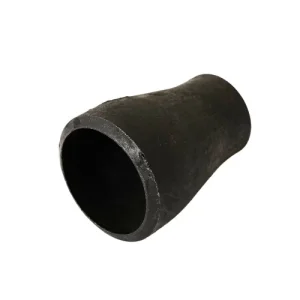
High-Quality Butt Weld Carbon Steel Pipe Fitting Concentric Reducer Pricelist, Company
Request Quote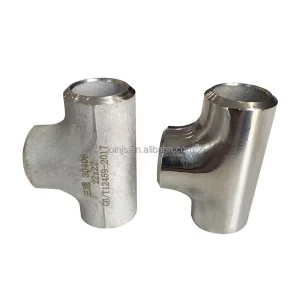
Best A335 P1 P2 P11 P12 P22 P23 P91 P5 P9 SA335 Alloy Steel Fitting Tee Reducer Elbows Bend Manufacturers, Factory
Request Quote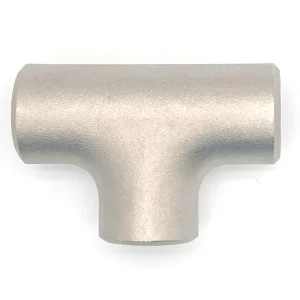
Famous Pipe Tee and Pipe Fittings Industrial Fittings 3 Way Welding Equal Tee Supplier, Factory
Request Quote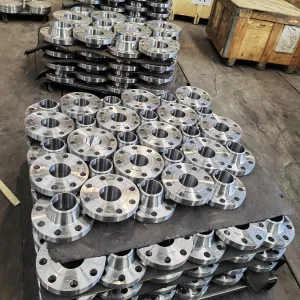
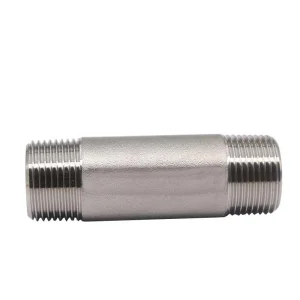
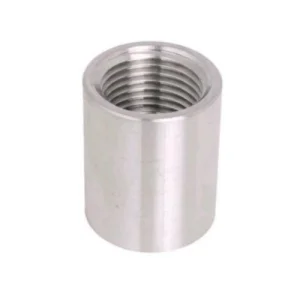
China 150lbs Stainless Steel NPT/Bsp/DIN Male Female Threaded Pipe Fittings Company, Service
Request Quote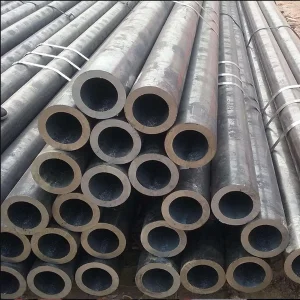
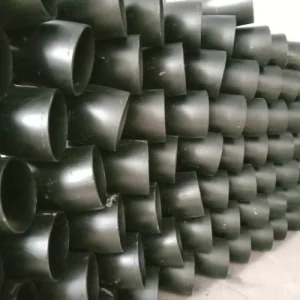
Best 1/2 Inch To 24 Inch Carbon Steel Elbow Seamless CS Pipe Fitting Factory, Exporters
Request QuoteFrequently Asked Questions (Q&A)
Engineering answers to critical queries regarding stainless steel valve manufacturing, material selection, standard compliance, and export procedures.