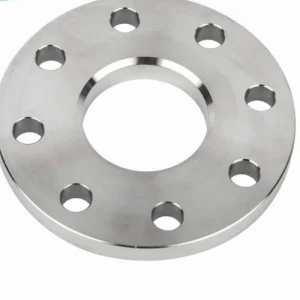
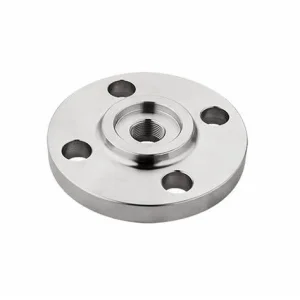
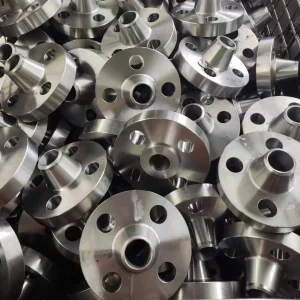
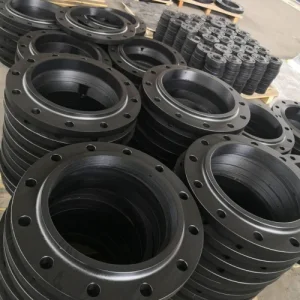
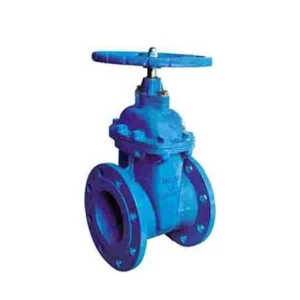
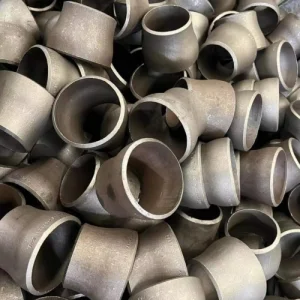
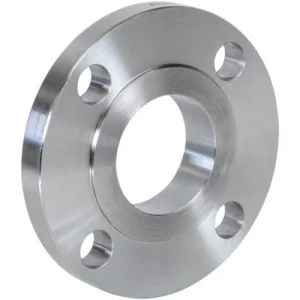
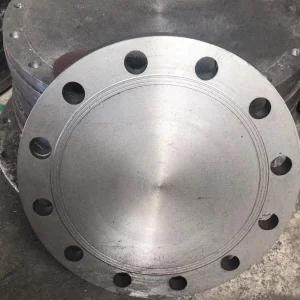
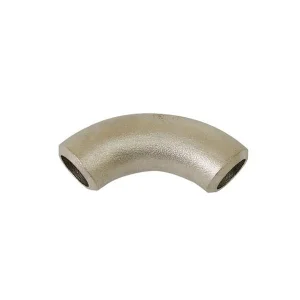
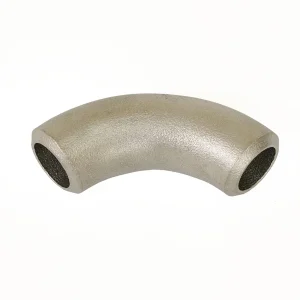
Featured Piping Components & Pre-Insulated Fitting Assemblies
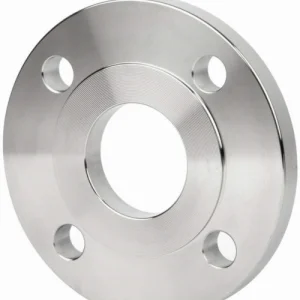
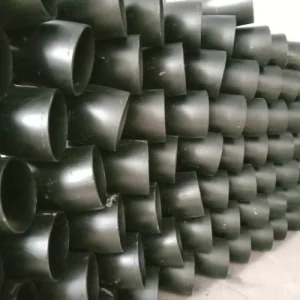
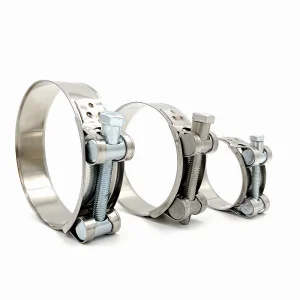
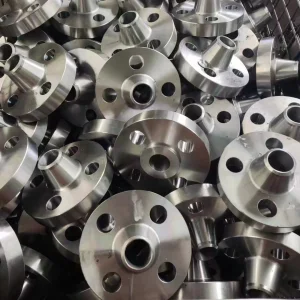
Direct supply of high-grade carbon steel, stainless steel, and forged fittings optimized for integration into pre-insulated outdoor pipe jackets and industrial thermal networks.
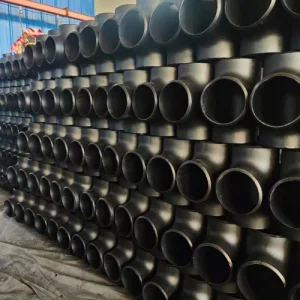
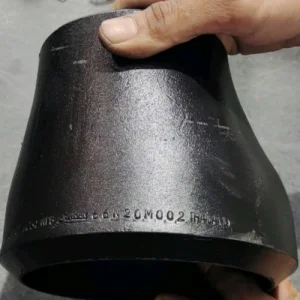
Global Commercial & Industrial Status of Outdoor Pipe Insulation
In modern industrial infrastructure, energy transport systems, chemical processing facilities, and municipal utility lines rely heavily on optimized thermal management. The choice to buy outdoor pipe insulation supplier solutions directly impacts operational expenditures (OPEX), carbon reduction mandates, structural longevity, and system reliability under severe ambient fluctuations.
Across Europe, North America, the Middle East, and Asia-Pacific, outdoor piping infrastructure faces aggressive degradation drivers—ranging from freezing sub-zero environments and ambient humidity to extreme solar ultraviolet (UV) radiation and atmospheric salinity. Industrial plants lose gigajoules of thermal energy annually when outdoor conduits suffer from sub-standard or compromised thermal insulation barrier cladding.
Thermal Energy Optimization
Properly calculated outdoor insulation jacketing reduces radiant and convective heat loss by up to 92%, yielding direct fuel and electrical energy payback within months of commissioning.
CUI Mitigation
Corrosion Under Insulation (CUI) accounts for over 40% of piping leaks in petrochemical facilities. Dual-barrier hydrophobic systems eliminate moisture entrapment at the pipe wall interface.
ESG & Carbon Compliance
Global regulatory bodies (such as the EU Energy Efficiency Directive and US DOE mandates) strictly enforce maximum heat gain/loss limits for cross-country pipelines and exterior HVAC loops.
Technical Framework & Material Engineering Evolution
Specifying outdoor pipe insulation systems requires evaluating physical density, closed-cell content, water vapor permeability, mechanical compressive strength, and thermal conductivity ($k$-value). Modern industrial installations utilize multi-layered composite designs where structural core insulation is protected by heavy-duty outer cladding.
Key Material Categories in Outdoor Piping Systems
- Polyurethane Foam (PUR) & Polyisocyanurate (PIR): Rigid closed-cell foams featuring thermal conductivities as low as $0.022 \text{ W/m}\cdot\text{K}$. Widely specified for pre-insulated direct-buried and above-ground district heating/cooling pipes.
- Flexible Elastomeric Foam (NBR/PVC & EPDM): Closed-cell synthetic rubber ideal for outdoor refrigeration lines and low-temperature HVAC. EPDM variants provide superior UV resistance and high-temperature stability up to $150^\circ\text{C}$.
- Cellular Glass (Foamed Glass): 100% rigid glass structure with zero water absorption and zero vapor permeability. Critical for cryogenic LNG transport lines and extreme-humidity petrochemical outdoor racks.
- Hydrophobic Silica Aerogel Blankets: Ultra-thin insulation jackets operating from cryogenic up to $650^\circ\text{C}$. Highly valuable in tight piping racks where space is limited and CUI prevention is paramount.
- High-Density Mineral Wool / Rock Wool with Aluminum Cladding: Non-combustible (Class A1) solution for high-temperature steam pipelines. Requires mandatory weather-tight metallic or elastomeric outer jacketing.
| Insulation Core Type | Thermal Conductivity ($k$-Value) | Service Temp. Range | Water Vapor Permeability | Primary Outdoor Applications |
|---|---|---|---|---|
| Rigid PUR / PIR Foam | 0.022 – 0.026 W/m·K | -180°C to +140°C | Very Low (Closed Cell) | District Heating, Oil & Gas Distribution |
| Cellular Glass | 0.038 – 0.048 W/m·K | -260°C to +430°C | Zero (Impermeable) | Cryogenic LNG, Offshore Racks, Chemical Plants |
| Hydrophobic Aerogel | 0.014 – 0.020 W/m·K | -200°C to +650°C | High Breathability / Hydrophobic | Space-constrained Steam Lines, CUI Mitigation |
| UV-Stabilized EPDM | 0.034 – 0.038 W/m·K | -50°C to +150°C | Low ($\mu \ge 10,000$) | Outdoor Solar Thermal, HVAC Refrigeration |
| Hydrophobic Rock Wool | 0.033 – 0.040 W/m·K | 0°C to +750°C | High (Requires Jacketing) | High-Temperature Industrial Steam Conduits |
Macro Industry Solutions & Corrosion Under Insulation (CUI) Management
Corrosion Under Insulation (CUI) is an insidious mechanism driven by moisture entry into the insulation space, where trapped water interacts with carbon or stainless steel piping. In outdoor environments, rain, dew condensation, and chemical atmospheric pollutants penetrate compromised jacketing seams.
Dual-Barrier Pre-Insulated Piping
Integration of carrier pipe (ASTM A105/A106, SS304/316), seamless PUR core, and outer high-density polyethylene (HDPE) or corrugated aluminum jacket, sealed via heat-shrink sleeves.
Vapor Retarder & Seam Seals
Application of multi-ply laminate vapor barrier tapes (e.g., acrylic/aluminum/polyester composites) with zero-perm ratings to prevent atmospheric moisture intrusion during freeze-thaw cycles.
Non-Contact Spacer Systems
Utilizing high-temperature composite spacers that hold insulation away from the steel surface, establishing an air gap for drainage and moisture evacuation.
Industry Benchmarks & Global Export Metrics
Quantifiable performance figures driving the global adoption of pre-insulated outdoor piping and engineered insulation cladding across major industrial sectors.
Localized Application Scenarios & Extreme Climate Engineering
Engineering thermal protection for outdoor piping demands localized adaptation to regional climatic threats. Engineering procurement teams must select jacket materials and core insulation tailored to local environmental stress factors.
Arctic & Sub-Zero Installations
Climatic Challenges: Permafrost stability, brittle material fracture, intense thermal expansion contraction cycles.
Engineering Response: Thick PIR/PUR rigid shells with low-temperature flexible outer polyolefin casings designed for extreme mechanical resilience down to -50°C.
Middle East Desert & High-UV Racks
Climatic Challenges: Ambient heat exceeding 55°C, direct sunlight skin temperatures above 85°C, solar degradation.
Engineering Response: UV-stabilized stainless steel (316L) or high-grade corrugated aluminum jacketing with heat-reflective coatings over PIR core.
Coastal Petrochemical Facilities
Climatic Challenges: High humidity, marine salt-spray airborne chlorides, cyclic tropical downpours.
Engineering Response: Non-absorbing cellular glass combined with continuous heat-welded HDPE or fully sealed stainless steel jacketing to prevent chloride-induced stress corrosion cracking.
Technology Roadmap & Future Outlook (2025–2035)
The outdoor pipe insulation industry is undergoing rapid technical transformation, transitioning from passive thermal resistance to active smart insulation monitoring and eco-friendly material chemistry.
Phase Change Materials (PCM)
Integration of micro-encapsulated organic PCMs into insulation cores to absorb peak ambient thermal spikes, maintaining ultra-stable interior liquid transport temperatures without active trace heating.
Smart IoT Sensing Jackets
Embedded continuous fiber-optic and moisture-sensing wires integrated within the insulation casing to pinpoint micro-leaks or jacket ruptures to within 1 meter accuracy across miles of outdoor pipe.
Bio-Based PUR & Circular Foams
Transition from petroleum-based polyols to bio-based recycling feedstocks blown with zero-GWP (Global Warming Potential) hydrofluoroolefins (HFOs), reducing embodied carbon footprint by over 45%.
Industrial Flanges, Valves & Pipe Accessories Supply
Complete your outdoor piping asset procurement with our certified high-pressure flanges, heavy-duty valves, and matching butt-weld components engineered for long-term field endurance.