Industrial Pipeline & Valve Components Showcase
Explore high-precision engineered valves, flanges, and piping components manufactured under strict ISO 9001 quality frameworks.
Iron Butterfly Valves: Metallurgical Physics & Global Industrial Reality
A comprehensive examination of gray iron vs. ductile iron matrices, hydrodynamic flow coefficients, and structural reliability in enterprise piping infrastructures.
Cast Iron vs. Ductile Iron Metallurgical Dynamics
Iron butterfly valves are the backbone of modern municipal water distribution, HVAC, and industrial process networks. However, selecting between Cast Iron (ASTM A126 Class B / EN-GJL-250) and Ductile Iron (ASTM A536 65-45-12 / EN-GJS-400-15) dictates long-term failure rates.
Cast iron features flake graphite microstructures, providing high damping capacity but lower tensile resilience. Ductile iron incorporates magnesium treatment to transform graphite into spherical nodules, yielding tensile strengths exceeding 400–500 MPa and elongation properties above 12%, significantly reducing water hammer fracture risks.
Hydrodynamic Cv Factors & Energy Mitigation
In high-volume municipal pumping and HVAC loop circuits, pumping parasitic energy represents up to 70% of total lifecycle cost. Iron butterfly valves feature optimized disc profiles—such as streamlined double-eccentric disc shapes—that minimize flow resistance.
By engineering the flow coefficient ($C_v$) to maximum hydrodynamic efficiency, dynamic pressure drops across large-bore (DN300–DN2000) lines are reduced by up to 18%, limiting cavitational erosion and saving millions of kilowatt-hours over operational lifespans.
Global Market Supply Architecture
The worldwide iron butterfly valve market is expanding past $4.8 Billion, propelled by aging urban water infrastructure updates in North America and Western Europe, alongside mega-scale industrialization in Asia-Pacific and the Middle East.
Procurement directors and EPC buyers are increasingly bypassing intermediary brokers to source directly from fully integrated casting and machining hubs like Cangzhou, China, securing rigorous EN 10204 3.1 traceability while reducing capital expenditures by 25–40%.
Engineering Matrix: Iron Butterfly Valve Body Configurations
Understanding structural differences between Wafer, Lug, and Double Flanged iron butterfly valve body patterns for precise engineering specifications:
| Pattern Type | Pressure Class Range | Primary End Connections | Structural Advantages | Ideal Application Environment |
|---|---|---|---|---|
| Wafer Iron Butterfly Valve | PN6 – PN16 / Class 125–150 | Clamped between companion flanges | Ultra-compact face-to-face, lightweight, lowest material cost | Space-constrained HVAC lines, general water distribution, light utility loops. |
| Lug Iron Butterfly Valve | PN10 – PN25 / Class 150–300 | Threaded lug holes (ASME B16.5 / EN 1092) | Allows dead-end service, pipe maintenance without system depressurization | Pumping station discharge manifolds, isolation legs in process facilities. |
| Double Flanged Butterfly Valve | PN10 – PN40 / Class 150–600 | Integrally cast flanged ends | Maximum structural integrity, handles bending moments in buried lines | Large-diameter municipal water mains (DN300–DN3000), desalination plants. |
Advanced Polymer Sealing & Technology Roadmap (2024–2030)
Discover how elastomer vulcanization breakthroughs and IoT smart actuation integration are redefining butterfly valve reliability across high-severity industrial processes.
High-Integrity Polymer & Metal Sealing Chemistry
The seal integrity of resilient seated iron butterfly valves relies heavily on polymer selection and precise vulcanization onto the iron body or liner sleeve:
- EPDM (Ethylene Propylene Diene Monomer): NSF/ANSI 61 certified for potable water. Excellent resistance to ozone, UV, and water treatment chemicals up to 120°C.
- NBR (Nitrile Rubber): Engineered specifically for hydrocarbon service, oily water, fuel gas pipelines, and compressed air lines (-20°C to +85°C).
- PTFE / PFA Encapsulated Seats: Designed for chemical processing plants; provides universal chemical inertness against aggressive acids, alkalis, and solvents.
- Metal-to-Metal Triple Eccentric Seats: Stainless steel 316L / Stellite hard-faced seats for high-temperature steam (up to 400°C) and abrasive slurry lines.
Technology Roadmap: Smart Sensing & Surface Coatings
The modernization of heavy industrial fluid infrastructure requires digital integration and anti-corrosive longevity:
- Fusion Bonded Epoxy (FBE) Electrostatic Coating: Minimum 300 microns non-toxic epoxy application applied via fluid bed process. Provides resistance against soil acids, salt spray, and microbiological corrosion (AWWA C550 standard).
- Integrated Smart Actuation (IO-Link / Modbus): Real-time torque monitoring, valve stroke diagnostics, and predictive seal degradation analytics integrated into SCADA networks.
- Zero-Lead Alloy Discs: Transitioning disc materials to Al-Bronze (C95800) and Super Duplex Stainless Steel (2507) for marine ballast and high-salinity seawater applications.
Localized Industrial Use Cases & Operational Scenarios
From municipal water networks to marine offshore systems, examine how iron butterfly valves fulfill critical flow isolation mandates across global operating environments.
1. Municipal Water & Wastewater Treatment
Ductile iron butterfly valves (DN100–DN2400) serve as primary isolation mechanisms in raw water intake systems, reverse osmosis desalination plants, and biological sewage treatment tanks. Resilient EPDM seating ensures drop-tight shutoff against suspended solids, while AWWA C504 standards guarantee long cycle life under continuous throttling conditions.
2. Commercial HVAC & District Energy Networks
In high-rise commercial towers and regional district cooling/heating loops, wafer-type iron butterfly valves govern chilled water distribution. Operating under PN16/PN25 conditions, electric-actuated lug valves respond to building management signals (BMS), optimizing flow rates and preventing dynamic energy wastage in secondary circulation loops.
3. UL/FM Fire Protection Deluge Lines
Fire mitigation headers require rapid, dependable valve actuation. Fire-safe ductile iron butterfly valves rated for 175–300 PSI feature built-in supervisory tamper switches. Certified to UL 1091 and FM 1120 standards, these valves maintain tight seals during emergency sprinkler deployment in industrial warehouses and power generation plants.
4. Industrial Chemical Process & Mining Slurries
In gold leach circuits, coal washing facilities, and pulp mills, iron butterfly valves with heavy-duty PTFE liners and Nickel-Plated Ductile Iron discs provide chemical resistance against abrasive slurries. The streamlined body geometry prevents solids buildup, eliminating stem jam issues common in conventional gate valves.
5. Power Generation & Cooling Tower Loops
Thermal and nuclear power stations utilize massive double-flanged iron butterfly valves in main condenser cooling lines. Operating under variable thermal loads, ductile iron's thermal shock resistance prevents fatigue cracking, maintaining pressure integrity under intense flow velocity.
6. Marine & Offshore Ballast Water Management
Ocean-going vessels specify compact lug-type ductile iron butterfly valves with Bronze/Super Duplex discs (ABS/DNV-GL type approved). Installed within ballast tanks, these valves resist marine biofouling while enduring continuous seawater exposure and high vibration environments.
Cangzhou Supply Chain Ecosystem: Precision Manufacturing & Direct Export
Why sourcing iron butterfly valves directly from Cangzhou, Hebei delivers unmatched metallurgical consistency, manufacturing throughput, and supply resilience.
Vertical Manufacturing Integration at Cangrun Pipeline
Located in the heart of China’s pipeline equipment manufacturing center, Hebei Cangrun Pipeline Equipment Co., Ltd. (alongside specialized production entities Cangzhou Feiwo Metal Products Co., Ltd. and Cangzhou Feixiang Metal Products Co., Ltd.) offers complete end-to-end production control:
- Automated Sand & Investment Casting: Medium-frequency induction electric furnaces yield nodular iron casting with homogeneous graphite distribution, eliminating micro-porosity defects.
- Precision CNC Machining: Multi-axis CNC centers achieve exact disc-to-seat tolerances, ensuring low seating torque requirements and extended actuator life.
- 100% Pressure Testing Protocols: Every valve undergoes shell hydrostatic testing at 1.5× nominal pressure and seat bubble-tight air testing at 1.1× nominal pressure according to API 598 and ISO 5208.
Logistical Flexibility & Raw Material Buffering
Navigating global supply disruptions requires supplier stability and rapid execution:
- Strategic Pig Iron & Alloy Reserves: Cangrun maintains 15,000 MT raw material reserves, shielding clients from global pig iron price volatility.
- Port Proximity Advantage: Located 120 km from Tianjin Port (Xingang), our logistics team provides rapid vessel container loading and customs clearing.
- Full OEM/ODM Customization: Custom face-to-face dimensions, specialized stem extensions, gear operator gearboxes, and customer-branded nameplates delivered with short lead times.
Global Standard Alignment & Quality Assurance
Cross-referencing international valve manufacturing specs to guarantee seamless jobsite drop-in replacements.
| Standard Region | Design & Manufacturing Standard | Face-to-Face Standard | Flange Connection Standard | Pressure Testing Standard |
|---|---|---|---|---|
| American (ANSI/AWWA) | API 609 / AWWA C504 | ASME B16.10 / API 609 | ASME B16.1 / ASME B16.5 Class 125/150 | API 598 |
| European (EN/DIN) | EN 593 (DIN 3354) | EN 558 Series 20 / 13 / 14 | EN 1092-2 PN6 / PN10 / PN16 / PN25 | EN 12266-1 / ISO 5208 |
| British (BS) | BS 5155 | BS 5155 / EN 558 | BS 4504 Table 10/16 | BS 6755 |
| Japanese (JIS) | JIS B2032 | JIS B2002 | JIS B2220 5K / 10K / 16K | JIS B2003 |
ISO 5211 Direct Mounting Top Flange Architecture
All modern iron butterfly valves manufactured by Cangrun incorporate standardized ISO 5211 top flanges. This allows direct, bracketless mounting of pneumatic actuators, electric motor drives, or manual worm gear operators, eliminating hysteresis and stem misalignment issues during field automation retrofits.
Frequently Asked Questions (Q&A) for Procurement Engineers
In-depth technical answers addressing core sizing, material compatibility, torque estimation, and global purchasing queries.
- EPDM: Recommended for hot/cold water, municipal drinking water, steam under 120°C, and dilute alcohols. Unsuitable for petroleum oils.
- NBR (Buna-N): Best for fuel oils, natural gas, hydraulic fluids, and compressed air lines (-20°C to +85°C).
- PTFE / PFA: Required for aggressive chemicals, concentrated acids, aromatic solvents, and high-purity pharmaceutical media.
- Viton (FKM): Selected for high-temperature hydrocarbons, synthetic oils, and harsh chemical environments up to 200°C.
Complete Pipeline & Flange Solutions
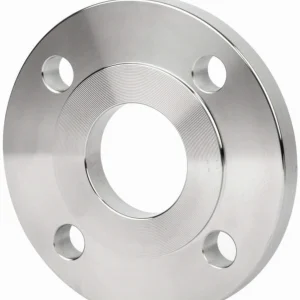
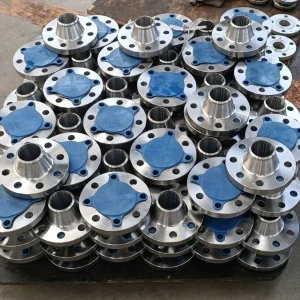
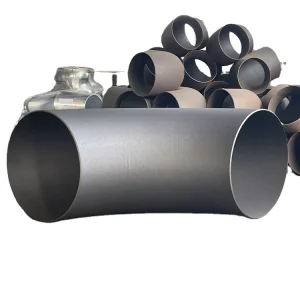
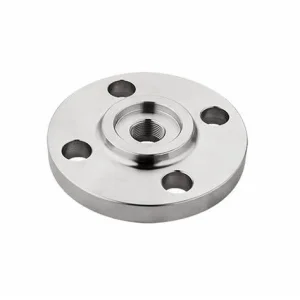
Explore complementary industrial components engineered to integrate with iron butterfly valves.