
Precision Piping Components & Flanged Assembly Solutions
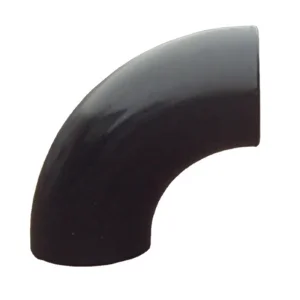
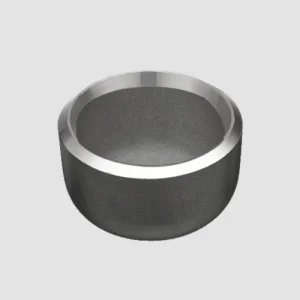
Explore our flagship high-pressure pipe fittings, forged flanges, and industrial strainers engineered for seamless integration across global oil, gas, chemical, and municipal infrastructures.
Fundamental Architecture & Fluid Mechanics of Flange Filters
An in-depth analysis of structural classifications, pressure drop hydrodynamics, and flange connection integrity for industrial pipeline filtration systems.
In modern industrial process lines, foreign particulate contamination—such as weld slag, mill scale, rust, and debris—presents a constant threat to downstream capital equipment including control valves, high-pressure pumps, turbines, and flow meters. Selecting and sourcing from a qualified flange filter manufacturer is a critical engineering decision that dictates long-term plant uptime, operational safety, and hydraulic efficiency.
Y-Type Flanged Strainers
Designed for compact, horizontal, or vertical pipeline runs with lower debris accumulation. Features a blow-off plug for line flushing without bonnet disassembly. Ideal for high-pressure steam and gas lines.
Basket / Bucket Strainers
Engineered for liquid applications requiring massive holding capacity and minimal pressure loss. Features a top-accessible removable basket, ideal for large-diameter oil, water, and chemical processing lines.
Duplex Flanged Filters
Incorporate twin basket chambers managed by a divert valve assembly. Enables continuous 24/7 online filtration during element maintenance without shutting down the primary process loop.
Optimal filtration performance depends on balancing the open area ratio (OAR) of the internal strainer screen relative to the pipe cross-sectional area. A minimum OAR of 4:1 is required for liquid applications to prevent rapid clogging and cavitation. When evaluating suppliers to buy flange filter manufacturer & service packages, verify screen mesh wire diameters (304SS/316SS/Monel/Hastelloy) and differential pressure thresholds before ordering.
Key Engineering Standards & Flange Dimensions
Industrial flange filters must conform to international dimensional and pressure containment specifications to guarantee leak-tight piping alignment. Below is a structural benchmark table across major international standards:
| Standard System | Flange Standard | Pressure Rating Range | Facing Options | Primary Application Areas |
|---|---|---|---|---|
| American (ASME/ANSI) | ASME B16.5 / B16.47 Series A/B | Class 150, 300, 600, 900, 1500, 2500 | RF (Raised Face), FF (Flat Face), RTJ (Ring Type Joint) | Global Oil & Gas, Petrochemical, Offshore Platforms |
| European (EN / DIN) | DIN EN 1092-1 / DIN 2501 | PN6, PN10, PN16, PN25, PN40, PN63, PN100 | Type A (Flat), Type B (Raised), Type C/D (Tongue/Groove) | European Process Plants, Power Generation, District Heating |
| Japanese (JIS/KS) | JIS B2220 / KS B1503 | 5K, 10K, 16K, 20K, 30K, 63K | RF, FF, Male-Female (MFM) | Marine Shipbuilding, East Asian Chemical Refineries |
| Chinese (GB/HG) | GB/T 9119, HG/T 20592 - 20615 | PN2.5 to PN400 / Class 150 to Class 2500 | RF, MFM, TG, RJ | Domestic EPC Power Infrastructure, Heavy Industry Exports |
Why Partner with China Flange Filter Manufacturers?
Understanding the competitive edge of Cangzhou’s industrial pipeline ecosystem: vertical integration, advanced metallurgy, and strict quality assurance.
Cangzhou Metallurgical & Forging Hub
Located in Hebei Province, Cangzhou represents the epicenter of China’s pipeline equipment manufacturing industry. Our facility operates within a complete supply chain cluster featuring nearby steel mills, high-precision forging shops, investment casting foundries, and multi-axis CNC machining centers. This proximity eliminates logistical lag, allowing for rapid raw material delivery (ASTM A105, A182 F304/F316L, A350 LF2, Duplex 2205) and reduced production lead times.
Stringent QA/QC Testing Infrastructure
Leading Chinese manufacturers adhere to international quality protocols. Every flange filter and piping component undergoes 100% Non-Destructive Testing (NDT), including Positive Material Identification (PMI) via optical emission spectrometers, Hydrostatic Shell & Seat Pressure Testing up to 1.5x design pressure, Radiographic Testing (RT) on critical welds, and Ultrasonic Flaw Detection (UT). Mill Test Certificates (MTC) are issued strictly according to EN 10204 3.1 / 3.2.
Custom Engineering & OEM/ODM Support
Global projects frequently require non-standard face-to-face dimensions, specialized internal lining materials (such as PTFE, Rubber, or Epoxy coating for sea-water desalination), or integrated high-pressure differential pressure gauges. Our in-house CAD/FEA engineering team customizes flange filter assemblies tailored precisely to client specification sheets.
Total Cost Efficiency & Scale Economies
By leveraging automated robotic welding cells, continuous casting facilities, and streamlined export logistics through Tianjin Port, Cangrun offers an exceptional quality-to-cost ratio. Global EPC buyers reduce capital expenditure (CAPEX) by 25% to 40% without compromising mechanical integrity or code compliance.
Global Industry Applications & Macro Solutions
Deploying heavy-duty flanged filtration systems in demanding environments across key global industrial sectors.
Petrochemical & Refining
Scenario: Upstream crude oil intake lines & downstream cracking units.
Solution: Heavy-wall Class 600# to 1500# WCB / Stainless Steel flanged Y-strainers with NACE MR0175 compliance for sour gas environments ($H_2S$ corrosion resistance).
Thermal & Nuclear Power Plants
Scenario: High-pressure boiler feed-water loops and steam condensate lines.
Solution: Chrome-Moly alloy steel strainers (ASTM A182 F11/F22/F91) engineered to withstand continuous operating temperatures up to 560°C and thermal cycling stress.
LNG Liquefaction & Cryogenics
Scenario: Liquefied Natural Gas transportation and re-gasification facilities.
Solution: Cryogenic flanged filters manufactured from low-temperature carbon steel (ASTM A350 LF2) or 316L SS, tested down to -196°C with extended bonnets.
Chemical Process & Fine Specialty
Scenario: Aggressive acids, alkalis, and reactive solvents.
Solution: Duplex 2205, Super Duplex 2507, or Hastelloy C276 strainers with fine 10-micron stainless steel sintered wire mesh filter elements.
Desalination & Marine Systems
Scenario: Seawater intake & reverse osmosis (RO) pre-filtration.
Solution: Rubber-lined or Bronze/Nickel-Aluminum Bronze (NAB) basket strainers featuring sacrificial zinc anodes to prevent marine bio-fouling and galvanic corrosion.
Municipal HVAC & Water Supply
Scenario: District heating, chilled water circulation, and fire protection pipelines.
Solution: Ductile iron (QT450-10) or carbon steel PN16 flanged strainers with quick-open cover mechanisms for rapid seasonal routine cleaning.
Next-Generation Trends in Industrial Flange Filtration
How automation, IoT monitoring, and decarbonization mandates are transforming flange filter design and sourcing.
1. Automated Self-Cleaning & IoT Integration
Traditional manual basket removal is increasingly replaced by automatic backwashing flanged strainers integrated with smart differential pressure sensors. As pressure drop reaches pre-set limits, an automated motor rotates an internal scanner screen to flush debris while maintaining uninterrupted process flow. Sensor data connects directly to plant SCADA systems via Modbus or WirelessHART.
2. Low Fugitive Emissions & Green Piping
Environmental standards such as ISO 15848-1 and TA-Luft mandate stringent leak tightness across flange connection joints. Advanced flange filter manufacturers now supply body-to-bonnet sealing faces with spiral-wound graphite gaskets, Ring Type Joints (RTJ), or double O-ring seals to eliminate volatile organic compound (VOC) fugitive emissions.
Global Buyer Procurement & Technical RFQ Guide
To ensure swift evaluation and precise commercial quotes, international engineering procurement contractors (EPCs) should prepare the following parameters when inquiring:
1. Dimensional Specs
Nominal Pipe Size (NPS / DN), Schedule / Wall Thickness, Flange Connection Standard (ASME B16.5 RF, DIN PN16, JIS 10K).
2. Process Conditions
Design Pressure (Bar/PSI), Operating Temperature (°C/°F), Flow Rate ($m^3/h$ or GPM), Allowable Maximum $\Delta P$.
3. Material Grade
Body Material (A234 WPB, A105, SS304/316, Duplex), Screen Mesh Mesh Size (20 Mesh to 400 Mesh / Micron rating).
4. Certifications
EN 10204 3.1 Material Certificate, Hydrostatic Test Certificate, NDT Radiography Reports, Third Party Inspection (SGS/BV).
Frequently Asked Technical Questions (FAQ)
Direct answers from our senior chief pipeline engineers regarding specification, maintenance, and international manufacturing standards.
What is the difference between a Y-Strainer and a Basket Flange Filter?
How do I determine the correct mesh or micron rating for my flange filter element?
Which flange facing type (RF, FF, RTJ) should be selected for high-pressure strainers?
How does Cangrun ensure quality compliance for international orders?
What is the standard lead time when I buy flange filter products directly from your factory?
Can you supply complete matched piping packages alongside flanged strainers?
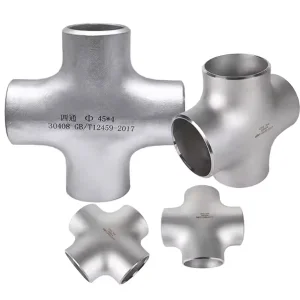
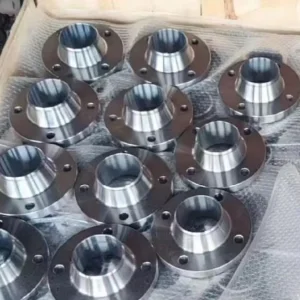
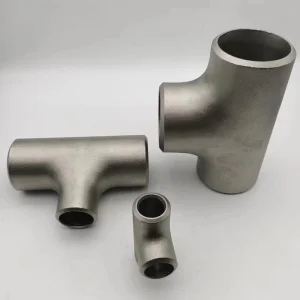
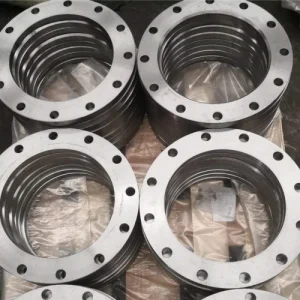
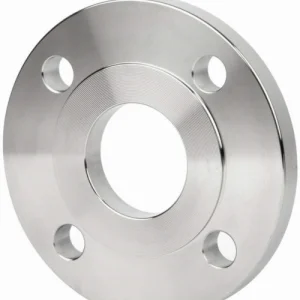
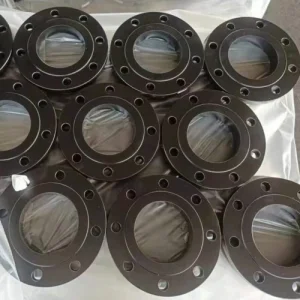
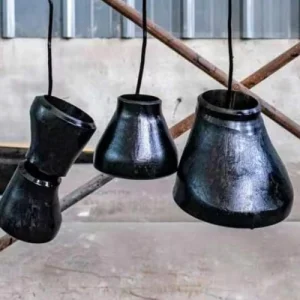
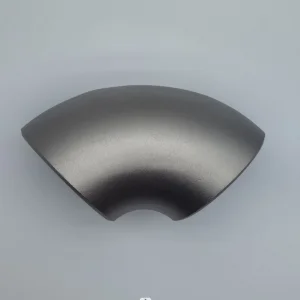
Industrial Flanges, Branch Connections & Reducing Fittings
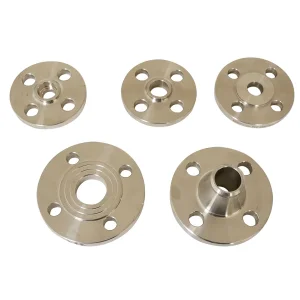
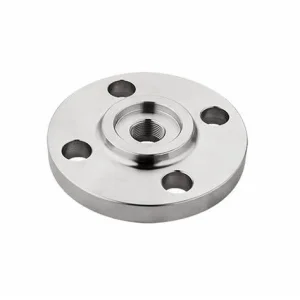
Complete your project procurement with our heavy-duty forged flanges, reducing outlet tees, concentric/eccentric reducers, and high-pressure pipe fittings.
Ready to Buy Flange Filter Systems or Request Factory Quotes?
Contact our expert engineering sales team in Cangzhou today. Send your material take-offs, custom CAD drawings, or RFQs for immediate factory-direct pricing and technical evaluation.