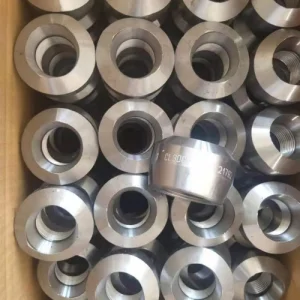
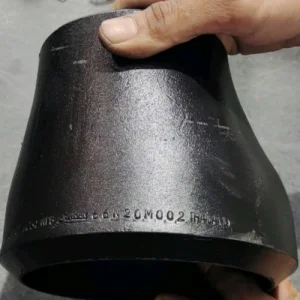
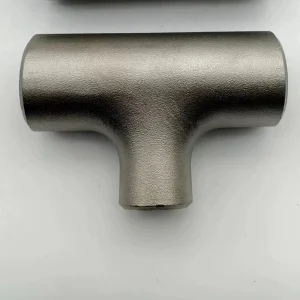
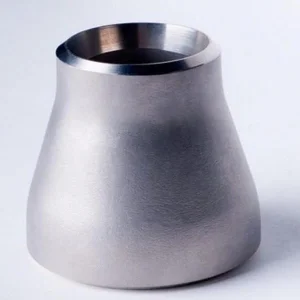
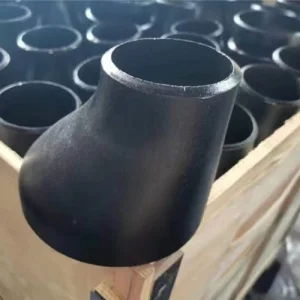
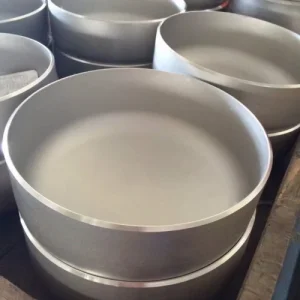
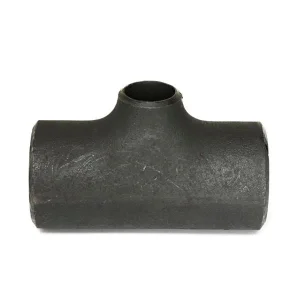
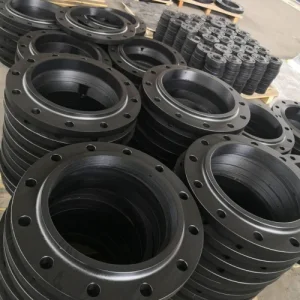
Featured High-Precision Stainless Steel Components
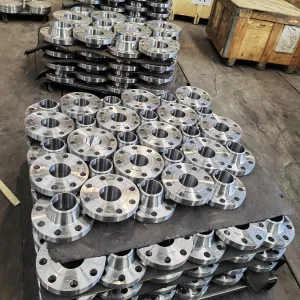
Direct factory manufacturing compliant with ASME B16.9, ASME B16.11, MSS SP-43, and EN 10253-4 specifications.
Executive Metallurgy & Structural Integrity Blueprint
Understanding Material Science, Pitting Resistance Equivalent Numbers (PREN), and Mechanical Performance under Extreme Operational Loads.
Austenitic Stainless Alloys (304/304L, 316/316L, 321, 347H)
Austenitic stainless steel pipe fittings form the backbone of global industrial fluid transfer. Grade 304/304L provides excellent baseline corrosion resistance, while 316/316L introduces 2.0-3.0% Molybdenum (Mo) to mitigate chloride-induced pitting. For elevated temperature applications (above 525°C), titanium-stabilized SS 321 and niobium-stabilized SS 347H eliminate chromium carbide precipitation during welding, preserving intergranular corrosion (IGC) resistance.
Duplex & Super Duplex Alloys (UNS S31803 / S32205, S32750)
Featuring a dual-phase microstructure (approx. 50% austenite and 50% ferrite), Duplex 2205 and Super Duplex 2507 pipe fittings deliver yield strength more than double that of conventional austenitic grades. Super Duplex S32750 achieves a Pitting Resistance Equivalent Number (PREN ≥ 42), rendering it virtually immune to stress corrosion cracking (SCC) in harsh marine environments, offshore platforms, and acid gas scrubbing systems.
Information Gain Technical Insight: The formula PREN = %Cr + 3.3(%Mo + 0.5%W) + 16%N quantifies the pitting susceptibility of stainless fittings. When procuring for high-salinity or acidic environments, verified PREN certification ensures your piping infrastructure avoids catastrophic localized crevice failure.
| Grade designation | UNS Code | Yield Strength (MPa Min) | Tensile Strength (MPa Min) | PREN Value Range | Primary Industrial Use Case |
|---|---|---|---|---|---|
| SS 304 / 304L | UNS S30400 / S30403 | 170 - 205 | 485 - 515 | 18.0 - 20.0 | General Chemical, Food & Beverage, Water Treatment |
| SS 316 / 316L | UNS S31600 / S31603 | 205 - 240 | 515 - 580 | 23.0 - 25.5 | Marine, Marine Chemical, Marine Off-shore, Pharma |
| Duplex 2205 | UNS S31803 / S32205 | 450 | 655 - 880 | 34.0 - 36.0 | Subsea Flowlines, Oil & Gas Separators, Pulp & Paper |
| Super Duplex 2507 | UNS S32750 | 550 | 750 - 1000 | ≥ 42.0 | Desalination High-Pressure RO, Geothermal Wells |
| Super Austenitic 904L | UNS N08904 | 220 | 490 | ≥ 34.0 | Sulfuric Acid Processing, Phosphate Fertilizers |
China Factory 4.0: Supply Chain Resilience & Smart Manufacturing
Combining Advanced Cold Forming, Hot Mandrel Pushing, and Automated Robot Plasma Welding with Direct Tier-1 Raw Material Traceability.
Hot Mandrel Pushing & Form Precision
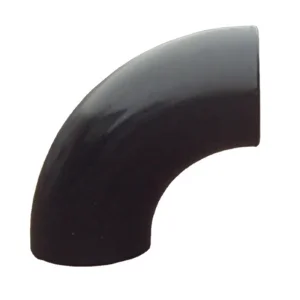
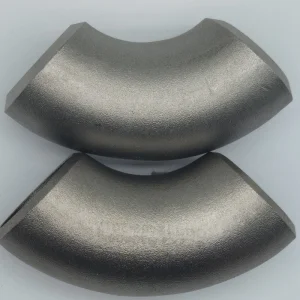
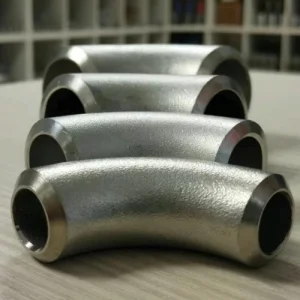
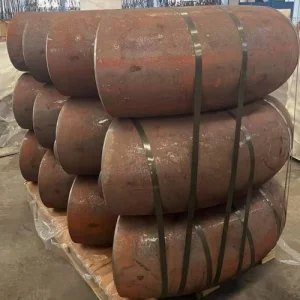
Utilizing hydraulic induction-heated mandrel bending machines to manufacture seamless 90° and 45° elbows (1/2" up to 48"). This process guarantees wall thickness uniformity across the outer arc (extrados) and inner radius (intrados), completely eliminating localized stress concentration zones common in low-tier manufacturing.
Solution Annealing & Ferrite Balance
Post-forming heat treatment is critical. All fittings undergo solution annealing at 1040°C–1150°C followed by rapid water quenching. This process fully redissolves chromium carbides back into the austenitic matrix, stress-relieving the fitting and ensuring a controlled Ferrite Number (FN 3–10) to prevent hot cracking during field welding.
Digitized Quality Passport & NDT
Every piece undergoes 100% Positive Material Identification (PMI) using X-ray fluorescence (XRF) analyzers prior to dispatch. Non-destructive testing (NDT) protocols include Ultrasonic Testing (UT) for internal voids, Liquid Penetrant Testing (PT) for surface integrity, and Hydrostatic testing up to 10,000 PSI.
Macro Industry Solutions & Sector-Specific Engineering
Engineered to Excel in Critical Operational Settings—From High-Purity Semiconductor Lines to Extreme Subsea Hydrocarbon Processing.
LNG lines operate at cryogenic temperatures down to -196°C, requiring materials that retain high impact toughness without undergoing ductile-to-brittle transition. Our SS 316L and Duplex 2205 butt-weld elbows and equal tees undergo Charpy V-Notch impact testing at cryogenic levels (-196°C) to guarantee structural safety under thermal contraction stress and high vibration shock.
Hydrogen gas embrittlement presents a catastrophic risk in high-pressure transport lines (up to 700 bar). We manufacture seamless SS 316/316L fittings with elevated Nickel content (≥ 12.0%), which stabilizes the austenite phase and mitigates hydrogen atom penetration. Electro-polished (EP) internal surface treatments achieve roughness values Ra ≤ 0.25 µm, ideal for semiconductor cleanrooms.
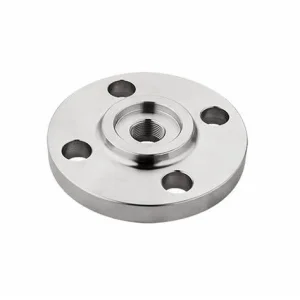
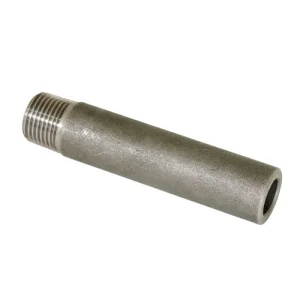
High-temperature cracking furnace lines and primary nuclear cooling loops require strict compliance with ASME Section III and RCC-M codes. Our heavy-wall SCH 160 and XXS stainless steel reducers and high-pressure forged Threadolets/Sockolets undergo 100% volumetric X-ray radiography (RT) to guarantee zero internal flaws under thermal fatigue.
Handling nitric, phosphoric, and organic acid concentrations demands custom alloy selection. From titanium-stabilized SS 321 for high-temperature nitric vapor to Super Austenitic 904L for hot concentrated sulfuric acid streams, our fittings offer specialized resistance against uniform oxidation and intergranular attack.
Global Enterprise Sourcing & Total Cost of Ownership (TCO) Standard
Eliminating Lifecycle Risk Through Rigid QA Protocols, Complete Material Traceability, and Standardized Procurement Workflows.
1. MTC & Certification Verification
All pipeline shipments are backed by EN 10204 3.1 Material Test Certificates, with optional EN 10204 3.2 independent third-party witnessing (SGS, TÜV, Bureau Veritas, DNV, Lloyd's Register). Certificates record exact chemical heat analysis, mechanical yield/tensile metrics, elongation percentage, hardness test results, and grain size evaluations.
2. Dimensional & Bevel Inspection
Precision fit-up is paramount for automated orbital site welding. Dimensional tolerances adhere strictly to ASME B16.9 and MSS SP-43. Pipe end beveling is executed via multi-axis CNC lathes, providing standard 37.5° ± 2.5° bevel angles with smooth root faces (1.6mm ± 0.8mm) to accelerate field weld speed and eliminate root burn-through.
3. Strategic Inventory & Emergency Buffer
To shield EPC contractors from market volatility and project delays, our factory maintains a perpetual 15,000-ton buffer stock of raw seamless stainless steel pipes and semi-finished forged blanks in standard grades (304L, 316L, 2205). Fast-track expedited production options enable container shipping within 7 to 10 days from order confirmation.
Global Compliance, Export Packaging & Freight Logistics
Ensuring Damage-Free Ocean Transit and Full Regulatory Adherence Across North America, Europe, Asia-Pacific, and the Middle East.
International Standards Compliance Matrix
Our stainless steel pipe fittings, forged flanges, and industrial valves are fully certified and manufactured in accordance with major global regulatory directives:
- Pressure Equipment Directive (PED 2014/68/EU): Full CE marking approval for pressure piping systems operating across the European Economic Area.
- Canadian Registration Number (CRN): Certified across all Canadian provinces for pressure vessel and piping installations.
- NACE MR0175 / ISO 15156: Compliance for sulfide stress cracking (SSC) resistant materials in sour gas oilfield environments.
- ATEX & ASME Boiler and Pressure Vessel Code (BPVC): Section VIII Division 1 manufacturing standards.
Export Packaging & Cargo Protection Standard
Ocean freight conditions present severe humidity and physical shift risks. To guarantee pristine arrival condition, our factory employs a multi-stage export packaging protocol:
- End Protection: Heavy-duty plastic bevel protectors and end caps installed on all fittings and flange faces.
- VCI Moisture Shielding: Vapor Corrosion Inhibitor (VCI) film wrapping inside sealed fumigation-free ISPM-15 wooden cases.
- Container Securing: Steel strapping and heavy timber chocking inside 20ft/40ft containers to eliminate sea transit movement.
Technology Roadmap & Future Industry Outlook (2025–2035)
Pioneering Next-Generation Metallurgy, Additive Manufacturing, Green Steel Pathways, and AI-Driven Quality Assurance.
Additive Manufacturing & Hybrid Fittings
Integrating Laser Powder Bed Fusion (LPBF) 3D printing for complex non-standard manifold fittings and custom internal flow geometries. Additive manufacturing reduces material waste by up to 60% while creating internal cooling jackets impossible to machine via traditional tooling.
Green Steel & Zero-Carbon Manufacturing
Partnering with Tier-1 steel mills utilizing Electric Arc Furnace (EAF) technology powered by 100% renewable energy and direct reduced iron (DRI) green hydrogen process. Our goal is to offer certified Net-Zero Embodied Carbon stainless steel fittings by 2030.
AI Autonomous Ultrasonic Inspection
Replacing manual ultrasonic testing with AI-driven automated multi-axis robotic phased array UT systems. Neural network models scan seamless fitting wall transitions in real time, detecting micro-subsurface inclusions down to 0.05mm with zero human error margin.
Technical Procurement Q&A (Frequently Asked Questions)
Expert Engineering Responses to Common Stainless Steel Pipe Fitting Specifications and Sourcing Enquiries.
Complete Pipeline System Product Portfolio
Explore Our Full Catalog of Steel Pipe Reducers, Butt-Weld Tees, Pipe Caps, Threadolets, and Heavy Industrial Flanges.